
Understanding Sharks in Kapalua Bay’s Protected Waters
Kapalua Bay sharks are a natural part of Maui’s marine ecosystem, but encounters are exceptionally rare in this protected, shallow bay. If you’re planning to snorkel or swim here, understanding the actual risk helps you enjoy the water with confidence rather than unnecessary fear.
Quick Facts About Kapalua Bay and Sharks:
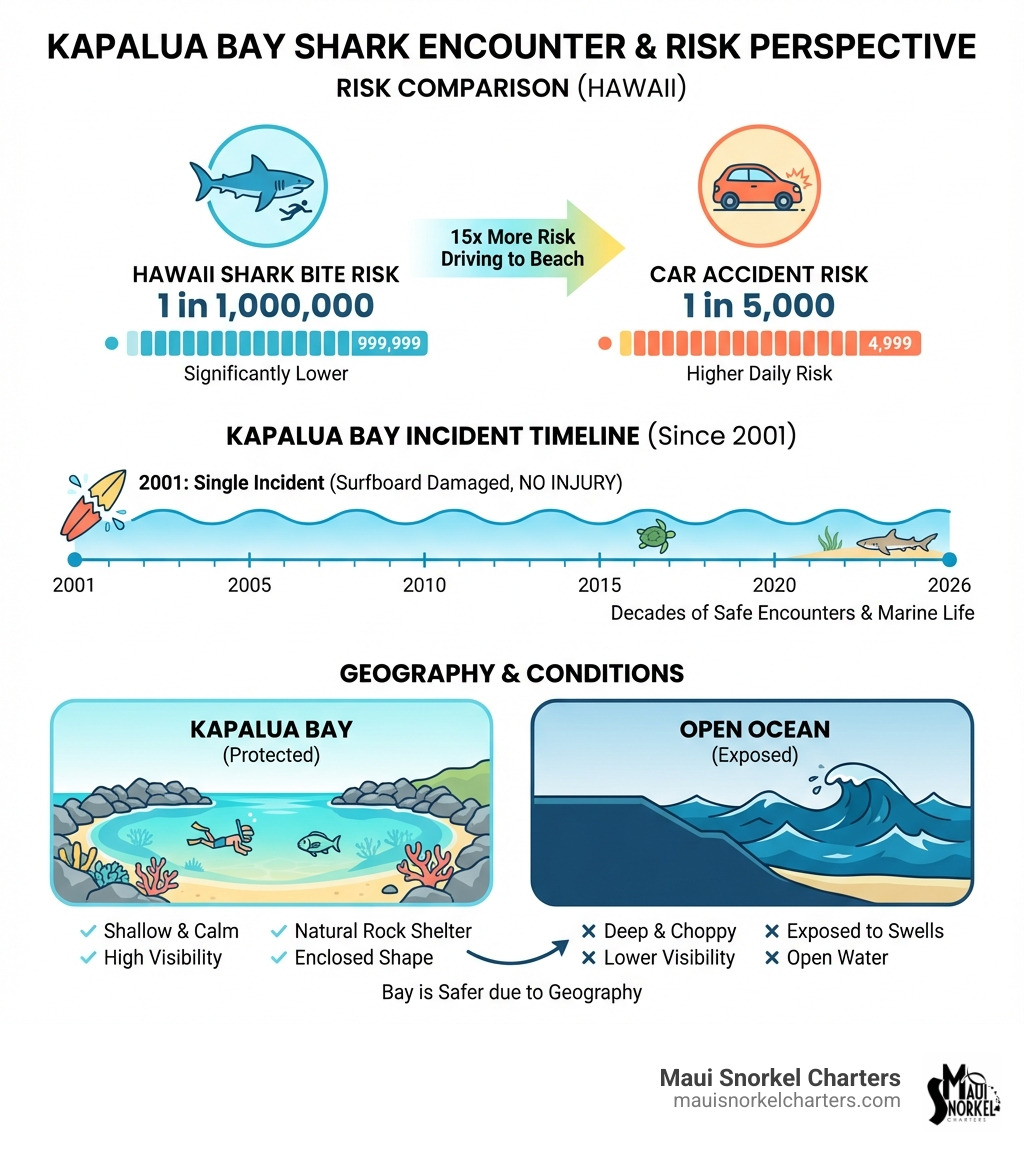
- Last Recorded Incident: 2001 (surfboard damaged, no injury to person)
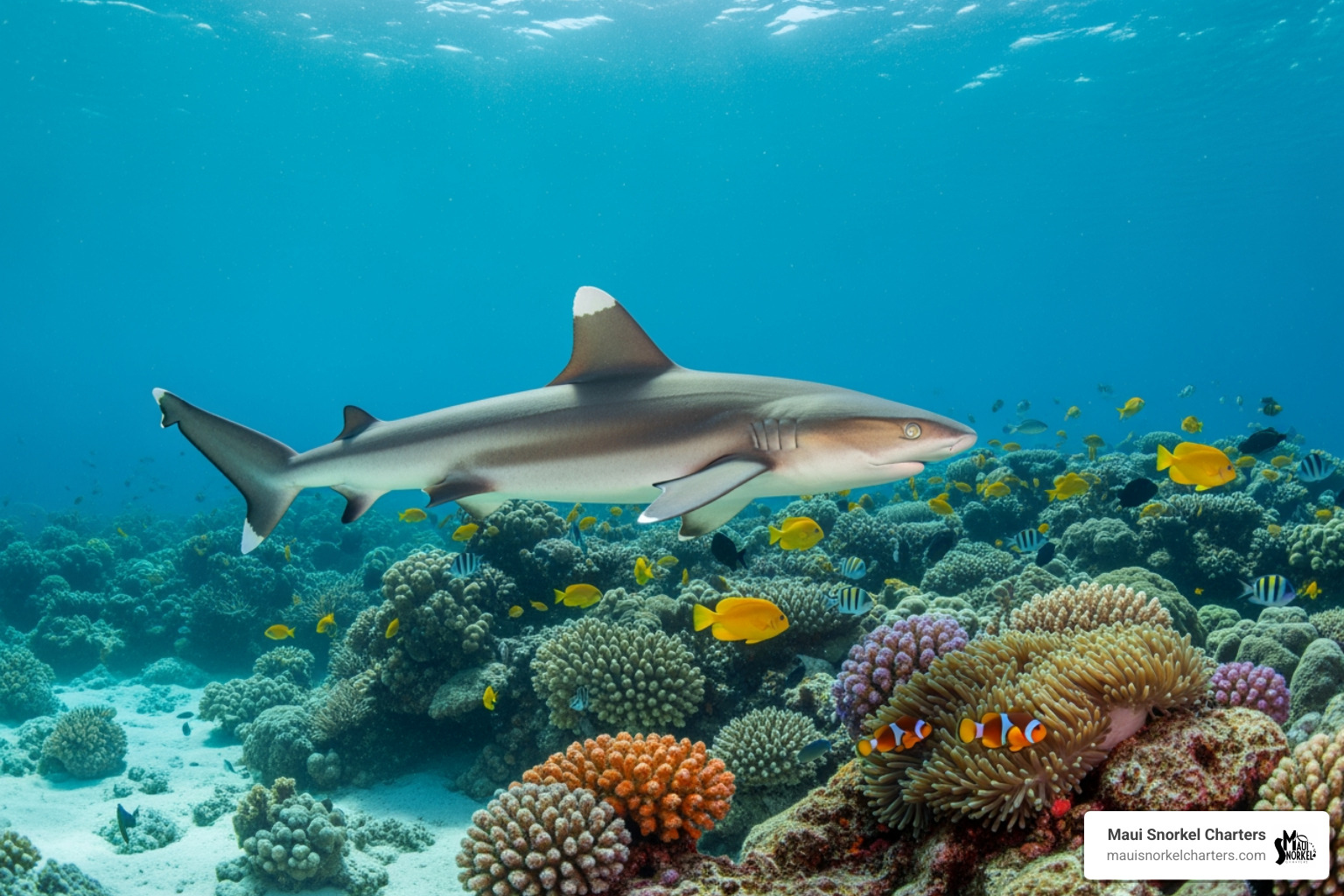
- Common Species: Harmless Whitetip reef sharks (typically resting on the seafloor)
- Bay Characteristics: C-shaped, geographically protected, calm and clear waters
- Risk Level: Significantly lower than open ocean beaches or murky water areas
- Your Actual Risk: Less than 1 in 1 million chance of a shark bite in Hawaii
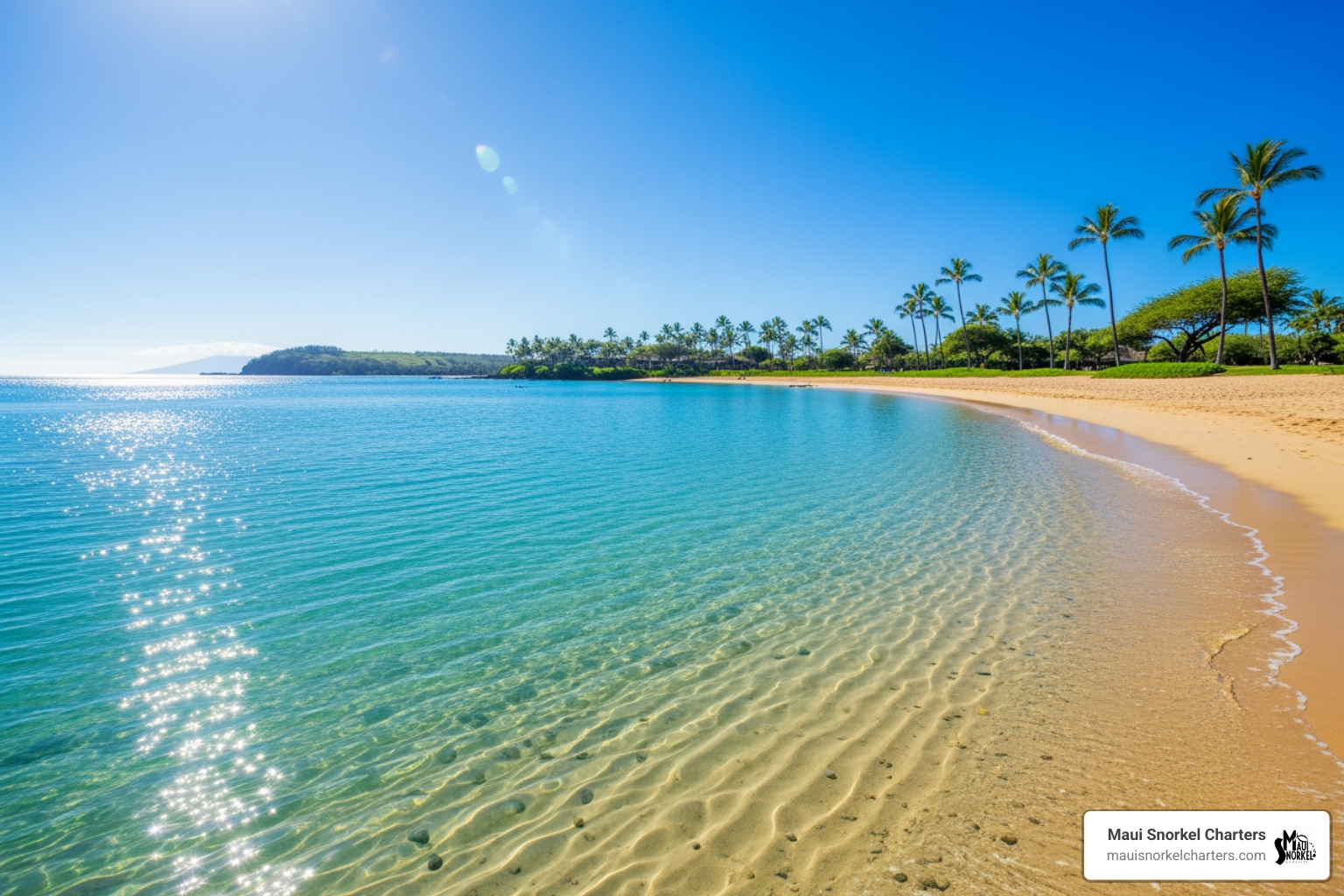
Kapalua Bay sits on Maui’s northwest coast as a postcard-perfect crescent of sand and calm water. The bay’s protected geography creates ideal conditions for families and beginning snorkelers. Its natural rock formations shelter the area from open ocean swells, resulting in clear, calm waters especially during morning hours.
While sharks do exist in Hawaiian waters, the conditions at Kapalua Bay make it one of the safer locations on Maui. The bay’s shallow depth, high visibility, and enclosed shape mean you’re far more likely to spot a green sea turtle than any shark. In fact, you face 15 times more risk driving to the beach than from any shark encounter in the water.
This guide will help us understand what types of sharks live in Maui’s waters, why Kapalua Bay remains a low-risk location, and how to follow simple safety practices that make our ocean adventure both safe and unforgettable.
The Reality of Sharks in Kapalua Bay
When we think of sharks, it’s easy for our minds to jump to dramatic movie scenes. However, the reality of sharks in places like Kapalua Bay is far more nuanced and, frankly, much less terrifying. Sharks are an integral part of our marine ecosystem, playing a crucial role in maintaining the health and balance of the ocean. Their presence here is a sign of a thriving natural habitat. For us, understanding their role helps us appreciate these magnificent creatures rather than fear them.
Common Shark Species and the Reality of Kapalua Bay Sharks
Maui’s waters are home to a variety of shark species, but not all are created equal in terms of interaction with humans, especially in protected bays like Kapalua. While the Hawaiian waters generally host species such as reef sharks, hammerhead sharks, and occasionally larger tiger sharks, the ones we are most likely to encounter in Kapalua Bay are the smaller, typically docile reef sharks.
The most commonly sighted shark in Kapalua Bay is the Whitetip reef shark. These neat creatures are often seen resting on the seafloor during the day, tucked into crevices or under ledges. They are generally shy and non-aggressive towards humans, preferring to hunt small fish, octopus, and crustaceans at night. We’ve often heard snorkelers express surprise and delight when they spot one of these beautiful sharks, usually from a respectful distance. Other reef sharks, like the Blacktip reef shark and the Scalloped hammerhead, might also be present in the broader Maui waters, but they are far less common within the sheltered confines of Kapalua Bay itself.
Larger species like the Tiger shark, while present in Maui’s deeper offshore waters, rarely venture into shallow, enclosed bays like Kapalua. These sharks are typically found along the insular shelf and deeper waters where there’s abundant marine life and optimal hunting conditions. When incidents do occur, they are often cases of mistaken identity, where a shark might investigate a swimmer or surfer, mistaking them for natural prey. Research suggests that tiger sharks are often “disinterested” or “actively avoiding” people. Our goal is always to respect their space and understand their natural behaviors.
The History of Kapalua Bay Shark Encounters
When considering ocean safety, especially regarding sharks, historical data provides valuable context. For Kapalua Bay, the record is remarkably reassuring. Our research indicates that the last ‘attack’ at Kapalua was recorded in 2001. This incident, however, involved only damage to a surfboard, with no injury to the person. This detail is crucial – it was an interaction with equipment, not a direct attack on a human.
To put this into perspective, the Hawaiian government maintains a comprehensive list of shark incidents, which we encourage everyone to review for a broader understanding of shark interactions across the islands. You can explore the detailed records and learn more about specific events on the official shark incidents recorded Maui is home to several species of sharks, including reef sharks, hammerhead sharks, and even the occasional tiger shark. While these sharks do live in Hawaiian waters, they are generally not a threat to humans.Shark attacks are rare, with only a fewshark incidents recordedeach year in the Hawaiian … list. The extreme rarity of incidents in Kapalua Bay, coupled with the fact that the last recorded event involved no personal injury, underscores its reputation as a safer snorkeling location.
Kapalua Bay’s geographically protected nature inherently minimizes exposure to the open ocean, which is where most shark encounters occur. The bay acts as a natural barrier, keeping larger, more pelagic shark species in deeper waters. This natural enclosure, combined with its popularity for calm water activities, contributes significantly to its low-risk status for marine life interactions. We often tell our guests that while sharks are part of the ocean, the chances of a negative encounter in Kapalua Bay are incredibly slim.
Understanding the Risk: Kapalua Bay Sharks and Ocean Conditions
To truly understand the presence of Kapalua Bay sharks and the associated risks, look at the specific characteristics of the bay and how they compare to other areas in Maui. Not all ocean environments are the same, and Kapalua’s unique features play a significant role in making it a relatively safe haven for ocean activities.
Kapalua’s Unique Water Conditions
Kapalua Bay is a gem on Maui’s coastline, and its calm demeanor is no accident. The bay’s distinctive C-shaped geography provides natural protection from the larger ocean swells. This natural barrier creates a tranquil, almost pool-like environment, especially compared to more exposed beaches. This enclosure means the waters are consistently calmer, making it an ideal spot for swimming and snorkeling.
Beyond its calm surface, Kapalua Bay boasts remarkable water clarity. With minimal surge and runoff, visibility is often excellent, allowing us to easily spot marine life, including any bottom-dwelling reef sharks, from a distance. The water depth within the bay is also generally shallow, particularly closer to shore, which is where most snorkelers and swimmers prefer to stay.
Our experience, and that of countless visitors, confirms that the mornings and early afternoons offer the calmest conditions. This is when the water is often at its clearest and the winds are typically at their lowest, enhancing both safety and enjoyment. These factors – the protected shape, high visibility, and calm conditions – collectively make Kapalua Bay a prime example of a low-risk location for ocean activities.
When and Where: Shark Activity in Maui
While Kapalua Bay offers a uniquely sheltered experience, it’s still part of the larger Maui ocean environment, and understanding general shark activity across the island can further inform our safety practices. Maui, as an island, does experience more recorded shark bites than other Hawaiian islands, partly due to the high volume of people in the ocean and its abundance of swimmable beaches that are often adjacent to deep offshore reefs. These deep reefs are considered ideal places for tiger sharks to mate, pup, and feed, contributing to higher activity in certain areas. You can dig deeper into Why Maui has more shark activity.
Research indicates that shark activity in Maui generally peaks between September and November. During these months, mature tiger sharks migrate south from the northwestern Hawaiian islands, increasing their presence near Maui’s shores. It’s also widely advised to avoid swimming at dawn and dusk, as these are periods when many shark species are more active and hunting. Similarly, murky waters, often caused by heavy rains or river runoff, can reduce visibility for both us and sharks, potentially leading to mistaken identity. We always advise against entering the water if it’s turbid or discolored.
However, it’s interesting to note that while dawn and dusk are periods of increased shark activity, statistics show that 70% of shark bites on Maui have occurred between 9 a.m. and 4 p.m. This isn’t necessarily because sharks are more active then, but rather because these are the hours of peak human activity in the water. More people in the water during these times statistically increases the chance of an interaction, even if the sharks themselves aren’t actively seeking out humans.
To help visualize the difference, here’s a comparison of Kapalua Bay’s low-risk factors against areas in Maui that might present higher risk:
| Factor | Kapalua Bay (Low Risk) | Higher-Risk Areas (e.g., open ocean, murky waters) |
|---|---|---|
| Geography | Enclosed, C-shaped bay, geographically protected | Open coastline, direct access to deep ocean |
| Water Clarity | Generally excellent visibility | Often murky, especially after rain or near river mouths |
| Depth | Shallow near shore, gradually deepening | Can be deep close to shore, drop-offs |
| Currents | Typically calm and gentle | Stronger, unpredictable currents |
| Human Activity | High, but concentrated in clear, shallow, protected areas | High, often in open, exposed waters (e.g., surfing, offshore swimming) |
| Shark Incidents | Extremely rare (1 surfboard incident in 2001) | More frequent, especially in areas with specific attractants |
Understanding these distinctions allows us to make informed decisions and enjoy the breathtaking beauty of Maui’s waters with peace of mind.
Swim Smart: Essential Safety Tips for Kapalua Bay
While the risks associated with Kapalua Bay sharks are minimal, adopting smart ocean practices is always a good idea. We believe that a little awareness goes a long way in ensuring a safe and enjoyable experience for everyone. These actionable tips are designed to minimize any potential risks and help us confidently engage with the marine environment.
Best Practices for Ocean Safety
When we venture into the ocean, we are entering a wild, natural environment. Just like we wouldn’t walk through a forest without awareness, we should approach the ocean with respect and a few common-sense precautions.
Here are our essential safety tips for enjoying Kapalua Bay and other Maui waters:
- Swim with a Buddy: Never swim or snorkel alone. Having someone with you means help is immediately available if needed. It’s also more fun to share the experience!
- Stay Close to Shore: Most snorkelers recreate between 10 to 15 yards from shore, and this is a great habit to maintain. Staying within a reasonable distance from the beach ensures quick access to safety.
- Avoid Dawn, Dusk, and Night: These are peak hunting times for many shark species. We recommend enjoying the water during daylight hours when visibility is best and sharks are generally less active.
- Steer Clear of Murky Water: Poor visibility makes it difficult for both us and marine life to see. Sharks may mistake a swimmer for prey in turbid, brown, or brackish water.
- Avoid Shiny Jewelry: Reflective objects can resemble fish scales, which might attract curious marine life. It’s best to leave the bling on the beach.
- Minimize Splashing: Excessive splashing can mimic the erratic movements of an injured animal, potentially attracting unwanted attention. Calm, deliberate movements are best.
- Heed Warning Signs: Always observe and obey any beach signage regarding current ocean conditions, currents, or marine life sightings. These signs are there for our safety.
- Do Not Provoke or Feed Marine Life: This includes sharks, turtles, and fish. Feeding wildlife can alter their natural behavior and make them less wary of humans, which can be dangerous for both parties.
- Exit Water Calmly if a Shark is Sighted: If you happen to spot a shark, remain calm. Keep your eyes on the shark and slowly and smoothly swim back to shore. Avoid sudden movements or excessive splashing.
- Stick to Protected Bays: Geographically protected bays like Kapalua offer a natural advantage, minimizing exposure to open ocean conditions where larger sharks are more prevalent.
Snorkeling with Awareness
Snorkeling in Kapalua Bay is a truly magical experience, allowing us to immerse ourselves in a vibrant underwater world. While we’re focused on spotting colorful fish and graceful sea turtles, maintaining an awareness of our surroundings is key.
One of the highlights of Kapalua Bay is its abundant green sea turtle population. We often see these gentle giants gliding through the water or resting on the sandy bottom. It’s crucial, and legally required, to maintain a comfortable distance – at least 10 feet – from turtles and all marine life. Never touch, chase, or harass them. Observing their natural behavior from a respectful distance is a privilege we cherish. The same goes for other fascinating creatures like the spotted eagle ray, which can occasionally be seen gracefully swimming by.
While surfing and certain other water sports might carry a slightly higher, albeit still very low, risk of shark encounters due to the silhouette of a board resembling potential prey, snorkeling in Kapalua Bay’s clear, calm, and shallow waters is considered incredibly safe. Our aim is to enjoy the ocean’s wonders, not to disturb them. By being present, observant, and respectful, we ensure that our snorkeling adventures are not only unforgettable but also safe for everyone, including the incredible marine inhabitants of Kapalua Bay.
Beyond the Bite: The Role of Sharks in Hawaiian Culture and Conservation
Our journey into understanding Kapalua Bay sharks wouldn’t be complete without acknowledging the profound cultural significance of sharks in Hawaii and the crucial role they play in the health of our oceans. Far from being just a creature to fear, sharks hold a revered place in Hawaiian tradition and are vital to the marine ecosystem.
Sharks as ʻAumākua: A Cultural Perspective
In Hawaiian culture, sharks, or mano, are often much more than just marine animals; they are revered as ʻaumākua. These are deified ancestors who take on animal forms, serving as family guardians and protectors. For families whose ʻaumākua is a shark, there is a deep spiritual connection and a profound sense of kuleana, or responsibility, to care for and respect these creatures.
This cultural reverence fosters a perspective of coexistence and respect rather than fear. Stories and traditions often emphasize the wisdom and power of the mano, teaching lessons about nature’s balance and our place within it. This viewpoint reminds us that when we enter the ocean, we are entering their home, and we do so as guests. This deep-seated respect is a beautiful aspect of Hawaiian traditions, encouraging a harmonious relationship with the natural world, including the powerful sharks that inhabit our waters.
Guardians of the Reef: Conservation in Maui
Beyond their cultural significance, sharks are indispensable to the health of our marine ecosystems. As apex predators, they play a vital role in maintaining the balance of life in the ocean. By preying on weaker or sick animals, sharks ensure the survival of the fittest and help control populations of other marine species, which is essential for a thriving and resilient reef system.
Healthy shark populations contribute to healthy reefs. For instance, their presence can influence the behavior of herbivorous fish, encouraging them to graze more effectively, which in turn helps prevent algae overgrowth and supports coral growth. This intricate web of life underscores why conservation efforts are so critical.
We are committed to supporting conservation initiatives that protect our marine environment. This includes advocating for responsible tourism, promoting the use of reef-safe sunscreen (now a legal requirement in Hawaii due to scientific evidence of harm from certain chemicals), and raising awareness about the importance of marine protected areas. Whether it’s Molokini Crater, Turtle Town, or our other cherished snorkeling spots, protecting the habitats where sharks and other marine life thrive is a shared responsibility. By understanding and respecting sharks, we contribute to the health and vitality of Maui’s spectacular underwater world for generations to come.
Frequently Asked Questions about Kapalua Bay Sharks
We know you might have more questions about Kapalua Bay sharks and ocean safety. Here are some of the most common inquiries we receive:
Is it safe to snorkel in Kapalua Bay?
Yes, it is considered one of Maui’s safer snorkeling spots due to its protected geography, calm and clear waters, and extremely low history of negative shark encounters. Following general ocean safety guidelines further ensures a safe experience.
What kind of sharks will I see in Kapalua Bay?
The most commonly sighted sharks are harmless Whitetip reef sharks, which are often seen resting on the seafloor during the day. While other species exist in Hawaiian waters, they are rarely seen inside the bay.
What should I do if I see a shark in Kapalua Bay?
Stay calm and do not panic or splash. Keep your eyes on the shark and calmly swim back to shore. Most sharks are simply curious and will move on. Do not attempt to touch or provoke the animal.
Conclusion: Accept the Beauty of Maui’s Waters with Confidence
Our exploration of Kapalua Bay sharks reveals a story not of danger, but of natural harmony and the beauty of a thriving marine ecosystem. While sharks are indeed part of Maui’s waters, Kapalua Bay stands out as a uniquely protected and calm environment where serious shark encounters are exceptionally rare. We’ve learned that understanding the bay’s geography, being aware of peak shark activity times across Maui, and practicing simple ocean safety tips are our best tools for a confident and joyful experience.
We encourage you to replace fear with respect and curiosity for these magnificent creatures and their vital role in our oceans. With informed decisions and adherence to best practices, the low risk of a shark encounter is far outweighed by the high reward of finding the stunning underwater world of Kapalua Bay. We are passionate about sharing the magic of Maui’s marine life with you, and we’re here to help you experience it safely.
Ready to explore the vibrant reefs and swim alongside incredible marine creatures? Discover Maui’s incredible marine life on our snorkeling excursions and start on an unforgettable adventure with us.