
Maui’s crystal-clear waters and vibrant marine ecosystems make it a premier destination for snorkeling enthusiasts. If you’re searching for the best snorkeling spot in Maui, look no further than a crescent-shaped underwater sanctuary teeming with tropical fish and sea turtles.
This guide reveals why this location stands out and how to plan an unforgettable snorkeling adventure. Whether you’re a beginner or experienced swimmer, you’ll discover everything needed to maximize your experience.
Why Molokini Crater Outperforms Every Other Maui Snorkeling Spot
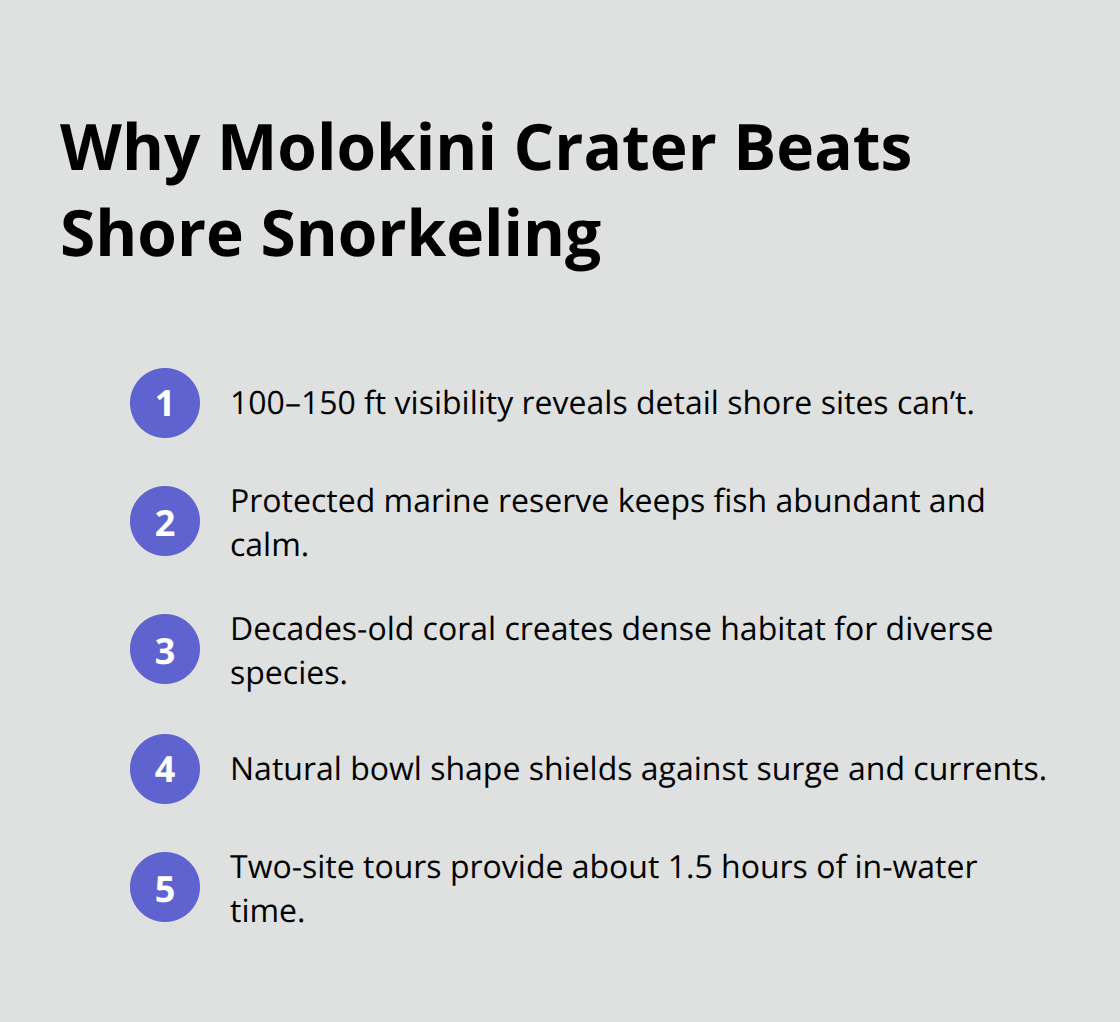
Molokini Crater sits three miles off Maui’s southern coast as a submerged volcanic caldera, and its marine conditions are objectively superior to shore-based alternatives. The crater’s bowl shape traps nutrient-rich water and creates a natural barrier against surge and currents that plague other Maui beaches. Visibility regularly reaches 100 to 150 feet on calm days, compared to the 20 to 40 feet typical at Honolua Bay or Kapalua Bay. This clarity matters because you’ll actually see the 250 fish species that inhabit the reef, not just vague shapes moving through murky water. The crater’s protected marine status means fishing is prohibited, so fish populations remain robust and unafraid. You’ll encounter ulua, manta rays, and monk seals in numbers that shore spots simply cannot match. The coral formations here have decades to establish without anchor damage or foot traffic, creating dense habitat that attracts everything from trumpetfish to Moorish idols.
Reef Structure That Rewards Exploration
The crater’s horseshoe topology concentrates marine life along predictable zones. The inside walls drop gradually, allowing snorkelers of varying abilities to explore at comfortable depths without feeling exposed to open ocean. Unlike Ahihi-Kinau or Five Caves, which demand advanced skills and unpredictable conditions, Molokini’s layout forgives positioning mistakes. You can drift along the wall and consistently encounter reef fish without navigating complex lava formations or managing strong currents. The backside of the crater, used as an alternate site when conditions shift, offers different reef characteristics and keeps the experience fresh even for repeat visitors. Tours typically allocate 1.5 hours in the water across two snorkeling sites, so you observe behavioral patterns rather than just snap photos and leave.
Why Shore Snorkeling Falls Short
Maluaka Beach, Napili Bay, and Black Rock deliver decent turtle encounters and cost nothing, but they face fundamental limitations from Maui’s unpredictable wind and swell patterns. Morning conditions might be calm, yet by noon, wind-driven chop reduces visibility and makes staying in position difficult. These beaches also see heavy foot traffic, which stresses turtle populations and degrades coral. Molokini’s distance from shore insulates it from these daily fluctuations. Early morning departures ensure you arrive when the crater’s conditions are optimal, before afternoon winds deteriorate visibility. Tour operators offer fast runs to the site, minimizing travel time and maximizing water time. The tour structure also includes instruction and safety briefings that casual beach snorkelers skip, reducing the risk of overestimating your abilities or entering hazardous zones.
What Sets Molokini Apart for Your Next Adventure
The combination of protected marine status, superior visibility, and structured tour experiences means you’ll encounter marine life that shore snorkeling cannot reliably deliver. Molokini’s isolation from daily wind patterns and foot traffic preserves both the reef and the wildlife that inhabit it. When you book a snorkeling tour to Molokini, you access a destination that professional operators have refined over years of experience, with routes and timing selected to match current conditions. This preparation transforms your snorkeling from a casual beach visit into a focused marine encounter where every minute in the water counts.
What You’ll Actually See at Molokini Crater
Marine Life That Rewards Clear Water
Molokini hosts over 250 fish species, and you will identify them clearly because visibility consistently reaches 100 to 150 feet on the days operators schedule tours. This means you won’t squint at shadows-you will watch yellow tangs, Moorish idols, parrotfish, and trumpetfish navigate the reef with distinct colors and behaviors visible from 30 feet away. Hawaiian green sea turtles patrol the crater regularly, particularly along the inner walls where they feed on algae. Sightings aren’t guaranteed, but they occur frequently enough that tours expect encounters on calm-weather days.
Larger Species and Seasonal Encounters
You will also spot ulua, which are large jacks that cruise the deeper zones, and manta rays occasionally pass through during certain seasons. The protected marine reserve status means these animals remain unafraid of snorkelers, so you observe natural behavior rather than creatures fleeing at first sight. The crater’s bowl shape concentrates life along predictable zones, so experienced guides know exactly where to position the boat for maximum encounters. Unlike shore snorkeling at Maluaka or Napili Bay, where marine life disperses across open water, Molokini’s geography funnels animals into observable areas.
Flexible Depths for All Abilities
The crater accommodates all skill levels because its gradual inner walls allow you to explore at depths between 15 and 40 feet without exposure to open ocean surge. Beginners stay shallow near the rim where visibility remains exceptional and currents stay minimal, while experienced snorkelers venture deeper along the walls to encounter larger fish and rays. This flexibility eliminates the anxiety of being forced into conditions beyond your comfort zone. Early morning departures mean you arrive when water temperature hovers around 75 degrees in summer and 70 degrees in winter, manageable with a light wetsuit or rash guard.
Preparation and Instruction Before You Enter
Tour operators offer fast runs on custom boats, minimizing nausea and seasickness compared to slower vessels. Pre-snorkel instruction covers entry techniques, hand signals, and safety zones, so you understand expectations before entering water. Tours typically allocate 1.5 hours in the water split between two sites, which gives you time to watch behavioral patterns-turtles feeding, fish schooling, rays hunting-instead of rushing through a quick beach visit. The combination of protected status, superior visibility, structured guidance, and predictable marine life encounters makes Molokini fundamentally different from free beach snorkeling.
With expectations set and marine life confirmed, the next step involves understanding how to prepare for your trip and select an operator that matches your needs and comfort level.
Preparing for Molokini Crater
Timing your Molokini trip requires attention to both seasonal patterns and daily weather windows. December through April brings calmer seas and lower winds, making morning departures from Ma’alaea Harbor ideal for maximum visibility and minimal seasickness. However, summer months offer warmer water temperatures, reducing the need for thick wetsuits. The critical detail most visitors miss is that Molokini’s conditions shift dramatically within hours-a 9am departure experiences vastly different water clarity than a noon departure. Tour operators deliberately schedule early morning runs to catch the crater during its optimal window before afternoon winds deteriorate visibility. Checking the Maui Snorkel Report daily ensures you depart only when conditions score above 7, indicating excellent visibility and manageable sea state. Avoid booking fixed dates weeks in advance; instead, book tours with flexible rescheduling policies so you can select the best weather window during your stay. Water temperature remains a secondary consideration since even winter conditions become comfortable with a light wetsuit or rash guard provided by most operators.
Essential Gear and Physical Preparation
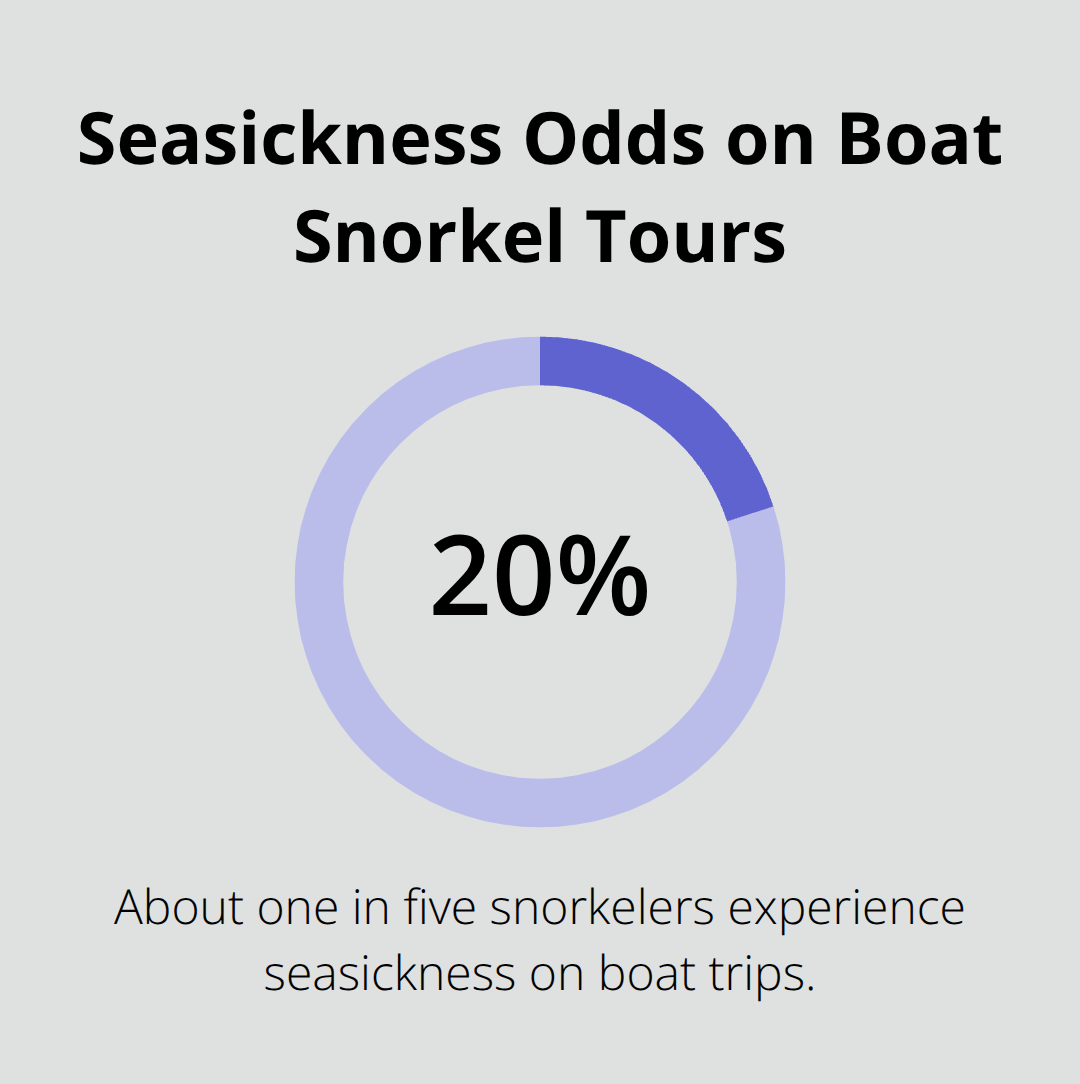
Pack a swimsuit, towel, and reef-safe sunscreen, but understand that reputable operators provide sanitized snorkel equipment and flotation devices, eliminating the need to rent or transport gear. Arrive at the harbor 30 minutes before departure for check-in, and budget roughly $6 total for Ma’alaea Harbor parking using their QR code payment system. Tours typically run five hours with approximately 1.5 hours spent in the water across two sites, so bring a light jacket for the boat ride and expect a light breakfast of coffee and banana bread plus lunch served onboard. Physical fitness matters less than comfort in water-Molokini’s gradual inner walls accommodate all abilities, but weak swimmers should practice in shallow water beforehand and inform guides of any anxiety. Seasickness affects roughly 20 percent of snorkelers on boat trips; if prone to motion sensitivity, take medication 30 minutes before departure and focus on the horizon during the ride to Ma’alaea Harbor. Tour operators follow strict safety protocols with trained crews and personal instruction before entering water, so your primary responsibility involves following hand signals and respecting designated snorkeling zones.
Selecting an Operator That Delivers Results
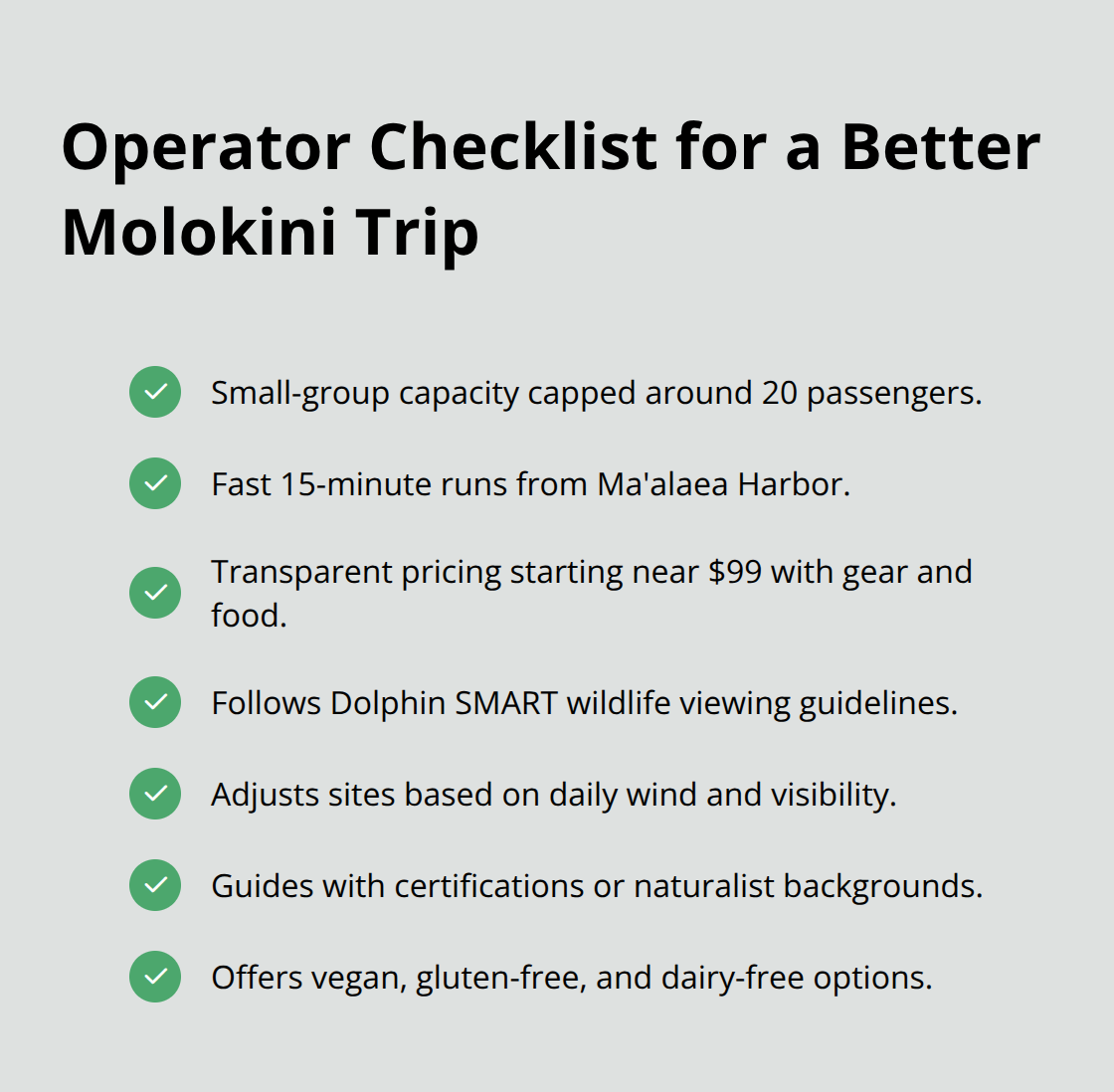
The difference between mediocre and exceptional Molokini experiences depends entirely on operator selection. Small-group tours capped at 20 passengers allow guides to position the boat precisely where marine life congregates, whereas larger commercial vessels cannot adjust routes flexibly. Fast 15-minute runs from Ma’alaea mean you spend more time observing turtles and fish instead of recovering from seasickness during slow crossings. Tours starting at $99 include gear, breakfast, snacks, and onboard photos, eliminating hidden fees that inflate prices at checkout. Verify that operators follow Dolphin SMART Guidelines, which ensure respectful observation of marine animals. Ask whether the operator adjusts snorkeling sites based on daily conditions rather than following a fixed itinerary-captains who choose between Molokini’s inside and backside based on wind direction maximize your visibility and encounters. Request information about guide certifications and years of experience; operators employing marine biologists or certified naturalists provide deeper ecological context that transforms snorkeling from simple observation into genuine learning. Finally, confirm dietary accommodations in advance-reputable operators offer vegan, gluten-free, and dairy-free meal options, ensuring lunch does not derail your trip.
Final Thoughts
Molokini Crater delivers what shore snorkeling cannot: predictable encounters with marine life in water so clear you’ll see details from 30 feet away. The crater’s protected status, superior visibility, and structured tour experiences combine to create Maui’s best snorkeling spot for travelers seeking genuine marine encounters rather than casual beach visits. Unlike Maluaka Beach or Napili Bay, where conditions fluctuate hourly and marine life disperses across open water, Molokini’s geography concentrates animals into observable zones where guides position boats for maximum sightings.
You’ll watch Hawaiian green sea turtles feed on algae, identify 250 fish species by their distinct colors, and potentially encounter manta rays or ulua in numbers that free beach snorkeling cannot reliably deliver. Check the Maui Snorkel Report daily and book tours only when conditions score above 7, ensuring excellent visibility and manageable seas. Select operators who cap group sizes at 20 passengers and adjust snorkeling sites based on daily wind patterns rather than following fixed itineraries, and arrive 30 minutes early for check-in with reef-safe sunscreen and a light jacket.
Search for small-group tour operators departing from Ma’alaea Harbor and verify they follow Dolphin SMART Guidelines for responsible wildlife viewing. Early morning departures between 7am and 8am ensure you arrive when the crater’s conditions are optimal and water temperature remains manageable with a light wetsuit. Flexible rescheduling policies allow you to select the best weather window during your stay rather than committing to fixed dates weeks in advance.