
Why Maui Is Perfect for First-Time Snorkelers
Learn to snorkel Maui and you’ll find one of the island’s most rewarding activities—floating face-down in warm, clear water while colorful fish and sea turtles glide beneath you. No swimming skills required, no expensive training, and no complicated equipment. Just a mask, a snorkel tube, and calm, protected waters.
Quick Answer: How to Learn to Snorkel in Maui
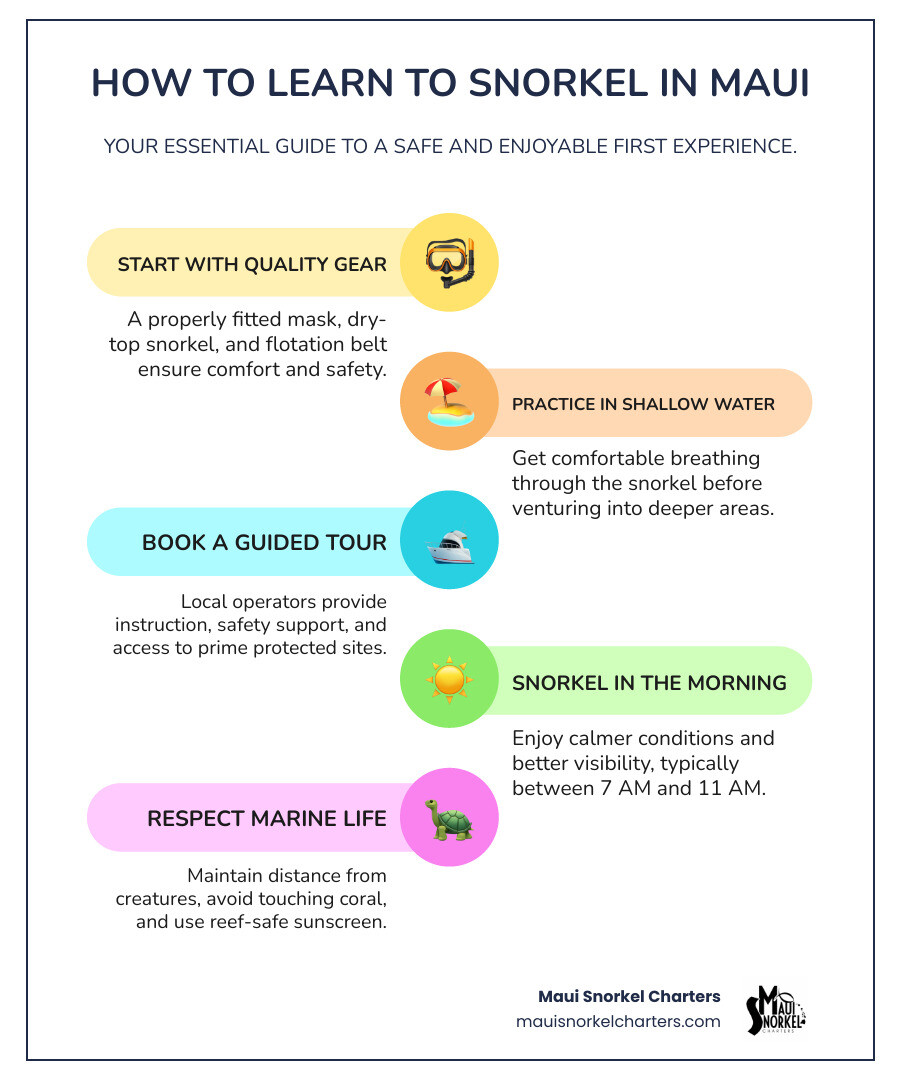
- Start with quality gear – A properly fitted mask, dry-top snorkel, and flotation belt
- Practice in shallow water – Get comfortable breathing through the snorkel before going deeper
- Book a guided tour – Local operators provide instruction, safety support, and access to protected sites like Molokini Crater and Turtle Town
- Snorkel in the morning – Calmer conditions and better visibility between 7 AM and 11 AM
- Respect marine life – Keep distance from turtles, avoid touching coral, and use reef-safe sunscreen
Maui’s warm water (75–80°F year-round), gentle entry points, and abundance of calm bays make it ideal for beginners. Unlike many snorkel destinations, Maui offers protected marine areas with excellent visibility and abundant sea life—perfect for your first underwater experience.
You don’t need to be a strong swimmer. With a flotation belt and proper instruction, snorkeling becomes a matter of relaxed floating and slow breathing. Many first-timers who were nervous about the water end up spending hours exploring Maui’s reefs.
I’m Brandon Mauna, owner of Maui Snorkel Charters, and I’ve spent years guiding first-time snorkelers through Maui’s waters—from nervous beginners to confident underwater explorers. In this guide, I’ll walk you through everything you need to learn to snorkel Maui safely and comfortably, so you can focus on the turtles and tropical fish instead of worrying about technique.
Ready to experience Maui’s reefs up close? Check availability for our small-group snorkel tours.
Essential Snorkel Gear: What You Need to Get Started
To truly enjoy your first time snorkeling in Maui, having the right gear is paramount. Quality equipment ensures comfort, safety, and a clear view of the underwater world, changing a potentially daunting experience into an unforgettable adventure.
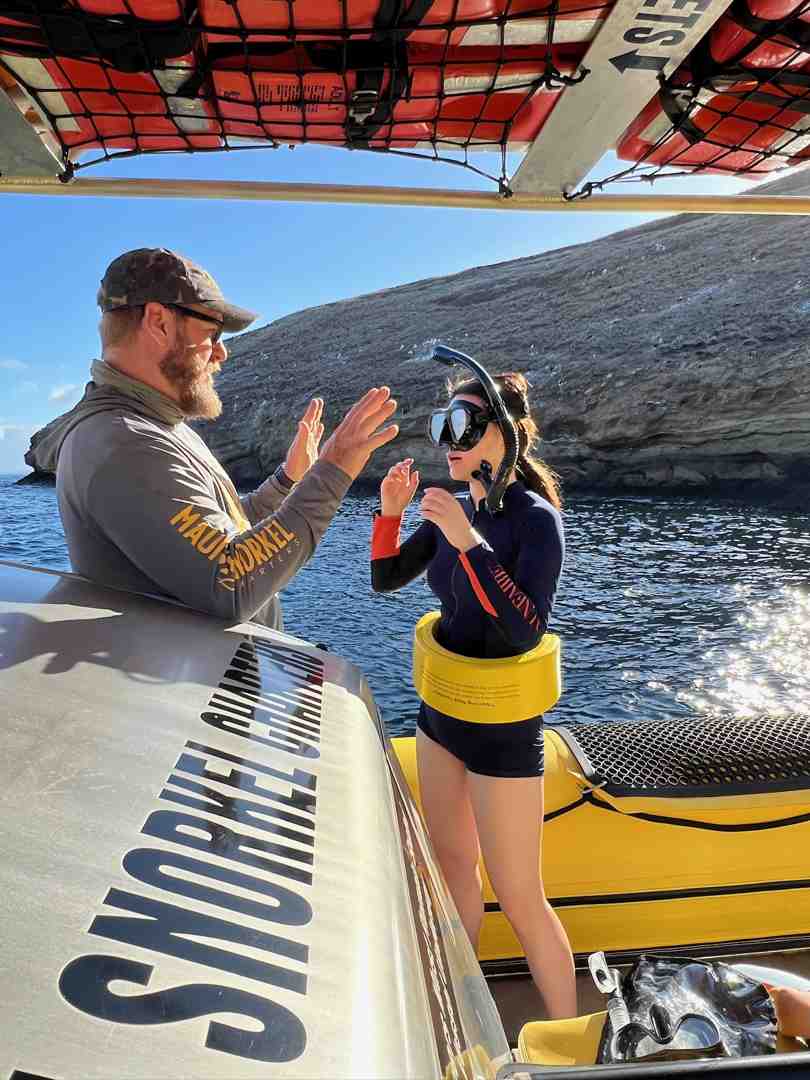
A standard snorkel set includes a mask, snorkel tube, fins, and some form of flotation. You will also want sun protection that is safe for Maui’s coral reefs. If you would like a more general overview of what first-time snorkelers can expect, you can also review this introductory snorkeling guide for context before your trip.
Choosing the Right Mask and Snorkel
The foundation of a great snorkeling experience starts with your mask and snorkel.
- Proper Mask Seal and Fit: A snorkel mask should fit snugly on your face without a tight strap behind your head. To test the fit, place the mask on your face without the strap, inhale gently through your nose, and hold your breath. If the mask stays in place without you holding it, you have a good seal. This prevents leaks and ensures clear vision. If you wear glasses or contacts, corrective lens masks are available, allowing everyone to see Maui’s vibrant marine life clearly.
- Avoiding Leaks and Discomfort: Leaks are the quickest way to ruin a snorkel trip. Ensure your mask fits well and consider using a defogger solution (a mix of baby shampoo and water works wonders) to keep your view crystal clear. If you have facial hair, a thin layer of Vaseline under the nose can help create a better seal.
- Traditional Snorkel Benefits: A traditional snorkel tube, often with a “dry-top” feature that prevents water from entering when submerged, is generally recommended. This allows for easy breathing and quick clearing if water does get in. Forcefully blowing out air through your mouth will push water out of the tube.
- Why to Avoid Cheap Full-Face Masks (CO2 Buildup Risk): While full-face snorkel masks seem convenient, we generally advise against them, especially for beginners. Many models do not circulate CO2 properly, potentially leading to a lack of oxygen and difficulty breathing. They can also be challenging to remove quickly if you encounter an issue. For safety and comfort, a traditional mask and snorkel setup is superior.
Fins and Flotation: Building Confidence in the Water
Fins and flotation devices are your best friends when learning to snorkel. They provide propulsion and essential safety, especially for non-swimmers.
- How Fins Help Conserve Energy: Short-blade fins are ideal for snorkeling. They provide sufficient propulsion to move through the water while conserving energy, making it easier to explore without quickly tiring. Ensure they fit snugly but comfortably to prevent blisters. You can wear them on the boat’s swim step or once you’re in shallow water, rather than walking on land with them.
- Flotation Belts: Best for Beginners: For anyone learning to snorkel, particularly non-swimmers, a snorkel belt or vest is absolutely essential. These devices provide buoyancy, allowing you to float effortlessly on the surface. This means you don’t need to actively swim to stay afloat, freeing you to focus on breathing and observing the underwater world. Flotation belts support your abdomen or chest, keeping your face comfortably submerged for viewing.
- Ensuring Buoyancy and Safety: With a flotation device, you can relax and trust that you’ll stay on the surface. This significantly reduces anxiety and builds confidence. We prioritize your safety, and our guided tours always ensure you have the appropriate flotation to feel secure.
- Building Comfort for Non-Swimmers: Snorkeling for non-swimmers in Maui is not only possible but also safe and incredibly rewarding with the right flotation and guidance. Many thousands of visitors enjoy our Maui snorkeling tours every year, regardless of their swimming ability. It’s about floating calmly and breathing, not performing swimming strokes.
Step-by-Step: Your First Time Snorkeling in Maui
Learning to snorkel is a simple process, and with our guidance, you’ll be exploring Maui’s vibrant reefs in no time. We’ve seen countless nervous beginners transform into confident underwater explorers, and you can too!
Practice in Calm, Shallow Water
The key to a successful first snorkeling experience is gradual immersion and practice.
- Getting Comfortable with Gear: Before you even enter the water, spend a few minutes on land trying on your mask, snorkel, and fins. Get a feel for how they fit.
- Breathing Through the Snorkel: Practice breathing through the snorkel tube on land. Breathe slowly and deeply through your mouth. This helps you get used to the sensation and relax.
- Clearing Water from the Tube: Understand how to clear your snorkel if water gets in. A strong exhale through your mouth will typically force the water out.
- Standing-Depth Practice: Once you’re ready, wade into calm, shallow water where you can comfortably stand. Put on your gear. Practice floating face down, breathing through your snorkel. This allows you to get accustomed to the equipment and the feeling of being in the water while knowing you can easily stand up if needed.
- Relaxation and Confidence-Building: The more relaxed you are, the easier snorkeling becomes. Focus on slow, steady breaths. Our guides are always there to offer reassurance and tips, helping you build confidence at your own pace.
Key Techniques for Beginner Snorkelers
Mastering a few basic techniques will improve your learn to snorkel Maui experience.
- Slow, Deep Breathing: This is crucial. Panicked, shallow breaths can lead to discomfort. Remember to breathe slowly and deeply through your snorkel.
- Floating Calmly: Let your flotation device do the work. Your body should be horizontal in the water. Resist the urge to stand up or tread water, which expends unnecessary energy.
- Proper Finning from the Hips: When you’re ready to move, use gentle, slow kicks from your hips, keeping your legs relatively straight. Avoid bicycling motions, which are inefficient and tiring. Short, gentle kicks are all you need for propulsion.
- Clearing a Flooded Mask: If water gets into your mask, don’t panic. Press the top edge of your mask against your forehead and gently lift the bottom seal. Then, tilt your head back slightly and blow hard through your nose to push the water out.
- Conserving Energy: Snorkeling should be a relaxed activity. Avoid overexertion. Move slowly, breathe steadily, and let the water support you.
- Simple Hand Signals for Buddy Communication:
- Okay: Thumb and forefinger forming a circle.
- Problem/Help: Waving one or both arms above your head.
- Look: Pointing in a direction.
- Up: Thumb pointing upwards.
- Down: Thumb pointing downwards.
Want expert guidance? See upcoming beginner-friendly snorkel trips.
Where to Snorkel: Why Choose a Guided Tour
Maui boasts incredible snorkeling opportunities, but knowing where to go and how to maximize your experience, especially as a beginner, is key. This is where a guided snorkel tour truly shines.
Why Guided Snorkel Tours Are Ideal for First-Timers
Opting for a guided snorkel tour, particularly with a local expert like Maui Snorkel Charters, offers distinct advantages for those new to snorkeling.
- Local Guides and Expert Instruction: Our experienced crew knows Maui’s waters intimately. They’ll provide comprehensive instruction, help you with your gear, and ensure you’re comfortable before entering the water. They can also point out fascinating marine life you might otherwise miss.
- Safety Crew and Support: Safety is our top priority. Our tours include trained crew members who are in the water with you, offering direct assistance and supervision. This is especially reassuring for non-swimmers or those who are a little nervous. We ensure proper flotation devices are available and used.
- High-Quality Gear Provided: Forget renting questionable gear. Our tours provide high-quality, well-maintained snorkeling equipment, including masks, snorkels, fins, and flotation devices. This eliminates the hassle and ensures a comfortable, leak-free experience.
- Access to Protected Sites (Molokini Crater, Turtle Town): Many of Maui’s premier snorkeling locations, such as the crescent-shaped Molokini Crater and the renowned Turtle Town, are best accessed by boat. These protected marine sanctuaries offer calm, clear waters and an abundance of marine life that are often difficult or impossible to reach from shore. Molokini’s unique shape shelters the inner reef, offering exceptional visibility, sometimes exceeding 100 feet.
- Ideal for Families and First-Timers: Our tours are designed to accommodate all ages and abilities, making them perfect for families and beginners. We create a supportive environment where everyone can enjoy the underwater wonders.
- Small-Group Experience and Local Knowledge: We offer small-group tours, ensuring a more personalized and intimate experience. Our local guides share insights into Maui’s marine ecosystem and Hawaiian culture, enriching your adventure beyond just seeing fish.
For a deeper dive into Maui’s best spots, explore Maui’s premier snorkel sites.
Comparing Top Maui Snorkel Spots for Beginners
Maui offers a variety of incredible snorkeling locations. Here’s a quick comparison of two of our most popular beginner-friendly destinations:
| Location | Access (Tour) | Typical Visibility | Key Marine Life | Best For |
|---|---|---|---|---|
| Molokini Crater | Guided Tour | Excellent | Reef fish, corals | Clear water, first-timers |
| Turtle Town | Guided Tour | Very Good | Green sea turtles | Families, turtle viewing |
Molokini Crater, a partially submerged volcanic crater, is a protected marine preserve that offers unparalleled clarity and a vibrant reef ecosystem. Turtle Town, located along South Maui’s coastline, is famous for its frequent sightings of Hawaiian Green Sea Turtles, often swimming among colorful reef fish and sometimes even octopuses.
Curious about Molokini or Turtle Town? Compare our tour options.
Snorkeling Responsibly: Protecting Maui’s Marine Life
As we explore Maui’s stunning underwater world, it’s crucial to remember our role in preserving its delicate ecosystem. Snorkeling responsibly ensures these vibrant environments remain healthy for future generations and for the marine life that calls them home.
The Snorkeler’s Code of Conduct
Adhering to a simple code of conduct helps protect Maui’s precious marine environment:
- Look, Don’t Touch: Observe marine life from a respectful distance. Never touch, chase, or harass any animals. This includes Hawaiian Green Sea Turtles, which are protected species. Give them space, especially if they are resting or feeding.
- Maintain Distance from Turtles and Marine Life: While it’s exciting to see a turtle up close, it’s vital to keep a healthy distance of at least 6 feet (2 meters). This prevents stress to the animals and potential harm to you.
- Never Stand On or Touch Coral: Coral reefs are living organisms that are incredibly fragile. Even a slight touch can damage them, and standing on coral can kill it. Always maintain buoyancy and avoid contact with the reef.
- Use Only Reef-Safe Sunscreen: Many common sunscreens contain chemicals harmful to coral reefs. Always choose mineral-based, reef-safe sunscreens that contain zinc oxide or titanium dioxide and apply it at least 30 minutes before entering the water. Better yet, wear a rash guard for sun protection.
- Leave No Trace: Pack Out What You Bring: Whatever you bring to the beach or on the boat, take it back with you. This includes all trash, food wrappers, and personal items. We strive to keep Maui’s beaches and waters pristine.
- Help Protect Maui’s Ecosystem for Future Generations: By following these guidelines, you become a steward of Maui’s natural beauty. Our guides will reinforce these practices throughout your tour, educating you on the importance of sustainable tourism.
Frequently Asked Questions: Learn to Snorkel Maui
We often hear similar questions from first-time snorkelers. Here are some of the most common ones to help you feel even more prepared for your Maui adventure.
Can I learn to snorkel if I can’t swim?
Absolutely, yes! This is one of the most common misconceptions about snorkeling. Learn to snorkel Maui even if you’re not a strong swimmer. Snorkeling primarily involves floating on the surface of the water, not active swimming strokes.
- Flotation belts provide buoyancy: With a quality snorkel belt or vest, you’ll float effortlessly. This takes away the need to tread water or swim to stay afloat, allowing you to relax and enjoy the view.
- Guided tours offer expert supervision: Our guided tours are specifically designed to support beginners and non-swimmers. Our instructors are by your side in the water, providing assistance, guidance, and ensuring your safety with flotation devices. We believe if you can breathe, you can snorkel!
- Focus is on floating, not swimming: You’ll spend your time face down, breathing through your snorkel, and observing the marine life below. The goal isn’t to swim laps, but to calmly exist in the water and take in the sights.
What is the best time of day to snorkel in Maui?
For the best experience, we always recommend snorkeling in the mornings.
- Mornings (7 AM–11 AM) offer calmer water and better visibility: The ocean tends to be much calmer in the early hours before the trade winds pick up. Calm waters mean better visibility and a more comfortable experience, especially for beginners.
- Less wind and fewer crowds: Early mornings also mean less wind, which can stir up the water, and fewer people, allowing for a more serene and private encounter with Maui’s marine life.
Is it better to snorkel from a boat or the beach?
While beach snorkeling can be convenient for some, guided boat tours offer significant advantages, especially for beginners and those looking to explore Maui’s most spectacular sites.
- Guided boat tours: Offer access to premier, protected sites like Molokini Crater and Turtle Town, which are often inaccessible or difficult to reach from the beach. Our boats provide a stable platform for entry and exit, and our expert guides offer instruction, ensure safety, and lead you directly to the best spots. This is invaluable for beginners who benefit from the added support and local knowledge. You’ll also find the best snorkeling conditions and marine life at these boat-accessible locations.
Your Maui Snorkeling Adventure Starts Here
We hope this guide has helped explain snorkeling and shown you that anyone can learn to snorkel Maui and enjoy its incredible underwater world. Snorkeling is a safe, accessible, and deeply rewarding activity that connects you directly with Hawaii’s natural beauty.
Remember:
- Snorkeling is safe and accessible for all, regardless of swimming ability, with the right gear and flotation.
- Guided tours are highly recommended for first-timers, providing expert instruction, safety, and access to Maui’s best locations.
- Maui Snorkel Charters combines local expertise with a focus on small groups and safety, ensuring an unforgettable adventure.
- Booking directly with us ensures the best availability and transparent pricing, allowing you to plan your perfect Maui snorkeling experience with confidence.
Ready to dive in? Explore family-friendly snorkeling cruises in Maui and find the magic that awaits.
Ready to learn to snorkel Maui with confidence? Book your small-group snorkel tour with Maui Snorkel Charters today.