
What Lives Beneath Maui’s Surface? A Quick Guide to Maui Marine Life
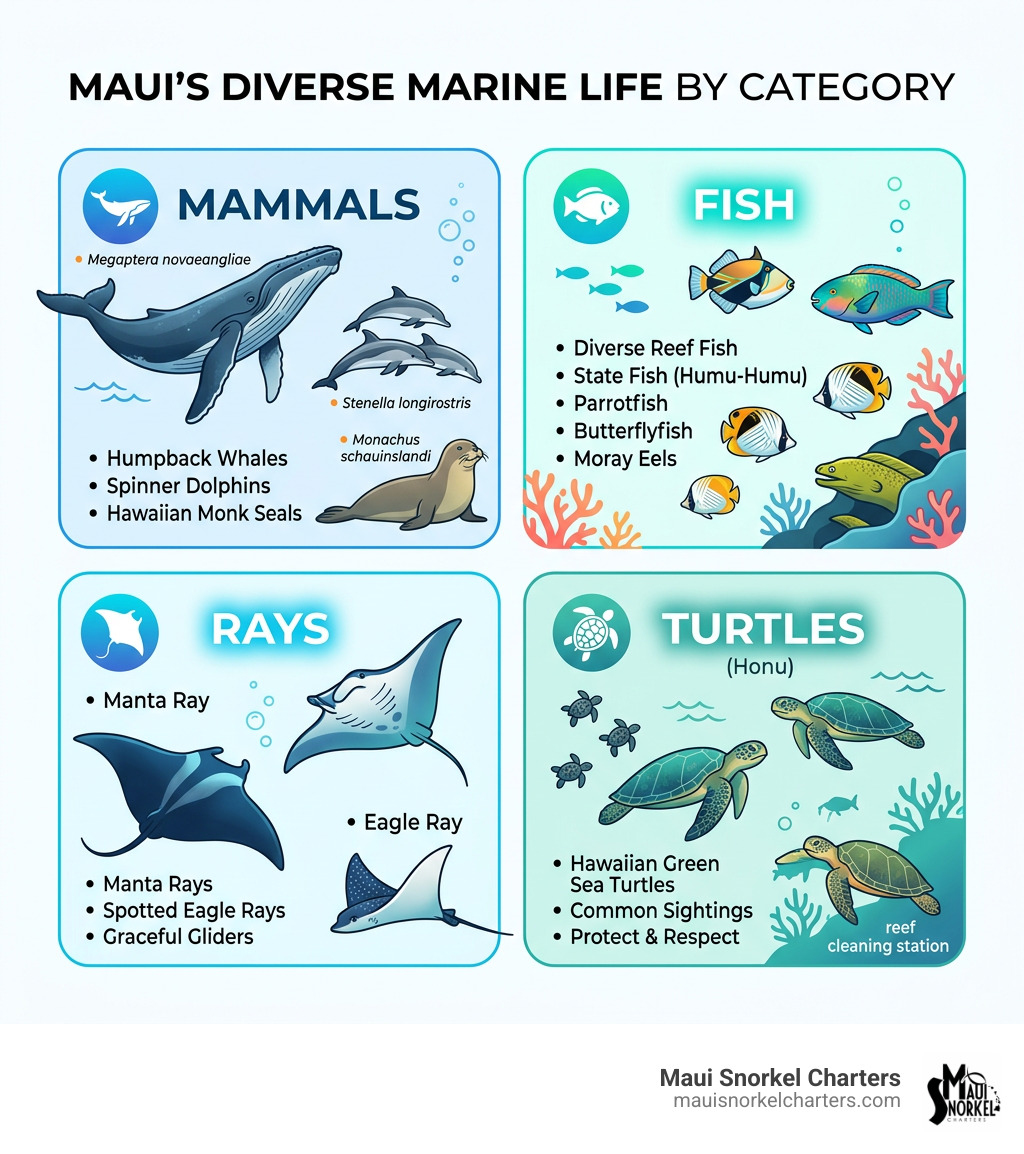
Maui marine life is some of the most diverse and accessible in the Pacific. Here’s a quick overview of what you’re likely to encounter:
- Hawaiian Green Sea Turtle (Honu) – Commonly spotted at reef cleaning stations like Coral Gardens and Turtle Town
- Humpback Whales – Visible December through April in West Maui waters
- Spinner Dolphins – Often seen riding bow waves or resting in coastal bays
- Hawaiian Monk Seal – Rare sighting; one of the world’s most endangered marine mammals
- Reef Fish – Including the state fish, humuhumunukunukuāpuaʻa, parrotfish, butterflyfish, and moray eels
- Manta Rays – Spotted at cleaning stations like Olowalu
- Day Octopus – A surprisingly common find for attentive snorkelers
Maui sits in the middle of one of the most biologically rich ocean environments on Earth. About 29% of Hawaii’s tropical fish species are found nowhere else in the world. That level of endemism means every snorkel trip here has the potential to show you something genuinely rare.
The reefs around Maui support hundreds of species — from tiny nudibranchs tucked into coral crevices to 45-foot humpback whales cruising the Au’au Channel. Whether you’re a first-time snorkeler or a seasoned diver, understanding what lives in these waters helps you know where to look, when to go, and how to act responsibly around protected species.
We’re lifelong Hawaii residents with years of experience guiding guests through Maui’s coastal reefs and open water. My deep familiarity with Maui marine life — from seasonal whale patterns to the best turtle cleaning stations — shapes every tour we run.
Maui marine life definitions:
Iconic Marine Mammals: Whales, Dolphins, and Seals
When people think of Maui marine life, the “big three” mammals often come to mind: Humpback whales, Spinner dolphins, and the elusive Hawaiian monk seal. These animals are federally protected, and seeing them in their natural habitat is a highlight of any Maui vacation.

Humpback Whales and Spinner Dolphins
Every winter, thousands of Humpback Whales make a staggering 3,500-mile journey from the nutrient-rich feeding grounds of Alaska to the warm, shallow waters of the Maui Nui Basin. This Hawaii Whale Migration Pattern peaks between December and April. During this time, it is common to see 40-ton whales performing acrobatic breaches or “slapping” the water with their pectoral fins.
While whales are seasonal visitors, Dolphins of Maui are year-round residents. When Exploring Dolphin Species Found in Hawaii, the Spinner dolphin is the most famous. Named for their habit of leaping and spinning up to seven times in the air, these social animals often travel in pods ranging from a few individuals to over a hundred.
The Rare Hawaiian Monk Seal
The Hawaiian Monk Seal is one of the rarest marine mammals on the planet. With less than 1,500 individuals remaining worldwide, they are endemic to the Hawaiian Islands. Known in Hawaiian as ‘Ilioholoikauaua (“dog that runs in rough seas”), these seals are often spotted resting on sandy beaches.
Monk seals spend about two-thirds of their time at sea but come ashore to pup, nurse, and undergo a “catastrophic molt” where they shed their top layer of skin and fur. If you encounter one, it is vital to keep your distance—at least 50 feet—to avoid disturbing their rest or risking a hefty fine.
Planning a trip? Check availability for our Molokini Crater snorkel tour to see these incredible animals from the safety of our custom boat, No Ka Oi.
The Hawaiian Green Sea Turtle (Honu): A Cultural Treasure
The Green Sea Turtle, or Honu, is perhaps the most beloved representative of Maui marine life. In Hawaiian culture, the Honu is often considered an Aumakua—a family guardian or ancestral spirit—symbolizing wisdom, good luck, and longevity.
From Honu to Hard Shell: Everything You Need to Know About Hawaiian Green Sea Turtles starts with their impressive recovery. Once heavily hunted, the Hawaiian Green Sea Turtle population has grown steadily over the last 30 years thanks to strict legal protections.
Unique Behaviors of Maui Marine Life
One of the most fascinating sights for snorkelers is a “turtle cleaning station.” These are specific spots on the reef where turtles congregate to have algae and parasites nipped off their shells by herbivorous fish.
Did you know?
- Navigation: Most Hawaiian green sea turtles migrate to the Northwestern Hawaiian Islands to nest, navigating thousands of miles using starlight and the Earth’s magnetic fields.
- Feeding: They return to the main islands like Maui to feed on seagrass and algae in shallow coastal waters.
- Growth: They can live for over 80 years and grow to weigh up to 350 pounds.
Vibrant Reef Fish and Unique Ocean Dwellers
The coral reefs of South Maui are home to a dizzying array of fish, each with a specific job to do. From the state fish with the long name to the “architects” that literally create our beaches, the diversity is astounding.
The State Fish and Reef Architects
The Reef Triggerfish, or Humuhumunukunukuāpuaʻa, is the official state fish of Hawaii. Its name translates to “triggerfish with a snout like a pig,” a reference to the grunting sound it makes when threatened.
Another vital resident is the Parrotfish, or Uhu. These colorful fish use their beak-like teeth to scrape algae off dead coral. In the process, they grind up the calcium carbonate and excrete it as fine white sand. A single large parrotfish can produce hundreds of pounds of sand per year! At night, some species of Uhu secrete a mucous “pajama” cocoon to hide their scent from predators like the Spotted Moray Eel.
For those looking for larger reef residents, the Manta Ray and Spotted Eagle Ray are frequent sightings. Manta rays, which can have wingspans of up to 30 feet (though 12-16 feet is more common), are graceful filter feeders often seen at cleaning stations like Olowalu.
Masters of Camouflage and Oddities
If you look closely at the reef structure, you might spot the Hawaiian Day Octopus, or He’e. These “ocean ballerinas” are masters of disguise, changing both their color and texture in milliseconds to match their surroundings.
Other “oddities” to look for include:
- Trumpetfish: Long, skinny fish that often hover vertically to blend in with sea fans or follow larger fish to ambush prey.
- Frogfish: Sedentary fish that look exactly like sponges and “fish” for prey using a lure on their heads.
- Nudibranchs: Tiny, brightly colored sea slugs that are a favorite for underwater photographers.
- Slate-pencil Sea Urchin: Recognized by their thick, blunt red spines which were once used as chalk in Hawaiian schools.
Best Snorkeling Spots to Encounter Maui Marine Life
Choosing where to go depends on what you want to see. Maui’s South Shore offers some of the most protected and life-filled waters in the state.
| Feature | Molokini Crater | Turtle Town (Makena) | Coral Gardens |
|---|---|---|---|
| Primary Draw | 150ft+ Visibility | Sea Turtles (Honu) | Diverse Coral & Fish |
| Marine Life | Reef Sharks, Trevally | Turtles, Octopus | Parrotfish, Eels |
| Best For | Intermediate/Advanced | Families/Beginners | Calm Water Lovers |
| Access | Boat Only | Boat or Shore | Boat Recommended |
Molokini Crater: A Marine Sanctuary
Molokini Crater is a partially submerged volcanic caldera and a strictly enforced marine life conservation district. Because it is miles offshore, the water is exceptionally clear. The Animal Life Around Molokini Crater includes over 250 species of fish. It is one of the best places to see Blacktip reef sharks, Bluefin Trevally, and large schools of Black Triggerfish.
Turtle Town and Coral Gardens
Located along the Makena coastline, “Turtle Town” is famous for its underwater lava arches and high concentration of green sea turtles. Further north, Coral Gardens sits at the base of the Pali cliffs, offering a sheltered environment perfect for seeing eels, octopus, and occasionally manta rays.
Ready for an adventure? See upcoming Turtle Town snorkel trips and book directly with us for the best local expertise.
Safety and Conservation: Respecting the Underwater Ecosystem
While Maui marine life is generally friendly, there are a few residents that require a “look but don’t touch” policy.
- Wana (Long-spined Sea Urchin): Their venomous spines break off easily in the skin. If stung, soaking the area in vinegar can help dissolve the spines.
- Tiger Sharks: While rare in snorkeling areas, they are top predators. Avoid snorkeling in murky water or near river mouths after heavy rain.
- Portuguese Man o’ War: These blue, floating siphonophores have long tentacles that can deliver a painful sting, even if they are washed up on the beach.
The best way to stay safe is to maintain a respectful distance from all animals and wear reef-safe sunscreen to protect the delicate coral polyps.
Protecting Maui Marine Life for Future Generations
Local conservation efforts are critical to maintaining this paradise. The Marine Institute at the Maui Ocean Center (MOCMI) does incredible work in our community. Their impact is measurable:
- 1,400+ sea turtles saved through their rehabilitation program.
- 1,000+ corals planted in their restoration nursery.
- 5,000+ students educated on marine stewardship.
You can learn more about their Sea Turtle Rescue and Rehab efforts to see how your visit supports local conservation.
Frequently Asked Questions about Maui Marine Life
What is the best time of year to see whales in Maui?
The official whale season runs from December 15th to May 15th, but the peak months are February and March. During this time, the “whale soup” in the Au’au Channel makes sightings nearly guaranteed from our boat.
Are the reef sharks in Maui dangerous to snorkelers?
Whitetip and Blacktip reef sharks are the species most commonly seen at Molokini and coastal reefs. They are generally shy, nocturnal hunters that have no interest in humans. Seeing one is considered a lucky event by most local guides!
How far should I stay away from sea turtles and monk seals?
The general rule of thumb is “give them space.” For sea turtles, stay at least 10 feet away. For Hawaiian monk seals, federal law requires a 50-foot distance (150 feet if it’s a mother with a pup). Never approach, chase, or feed any marine wildlife.
Conclusion
Exploring Maui marine life is more than just a vacation activity; it’s a chance to witness a perfectly balanced, ancient ecosystem. At Maui Snorkel Charters, we take pride in sharing this world with our guests using our custom-designed boat, No Ka Oi.
Our local expertise and family-run values ensure that you don’t just “see” the fish—you understand their role in the reef and the culture of Hawaii. Whether we are visiting the crystal-clear sanctuary of Molokini or the turtle-filled waters of Makena, our goal is to provide an unforgettable adventure rooted in environmental stewardship.
Book your Maui snorkeling tour directly with us for the best availability and a personalized, small-group experience. For more tips on planning your trip, check out our guide on family-friendly snorkeling cruises in Maui.