
Maui’s crystal-clear waters and vibrant coral reefs make it one of Hawaii’s premier snorkeling destinations. Whether you’re a seasoned snorkeler or exploring the underwater world for the first time, the island offers unforgettable experiences.
The best snorkeling on Maui combines accessible locations, abundant marine life, and expert guidance. This guide walks you through top destinations, what to expect on tours, and how to plan your perfect snorkeling adventure.
Where to Snorkel on Maui
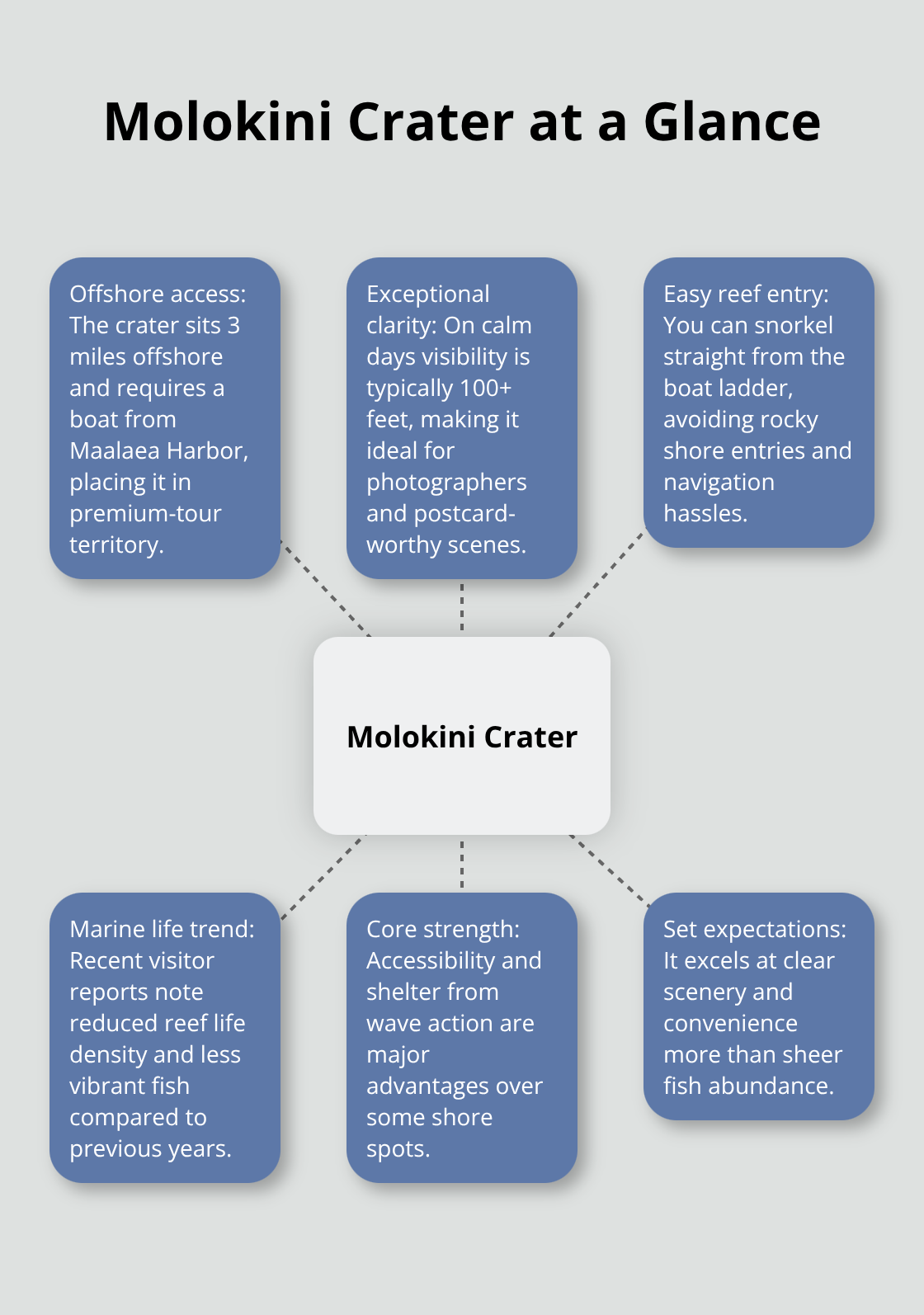
Molokini Crater dominates Maui snorkeling conversations, but it doesn’t represent the automatic choice most visitors assume. This crescent-shaped volcanic crater sits 3 miles offshore and requires a boat trip from Maalaea Harbor, placing it firmly in premium-tour territory. The crater delivers what it promises: crystal-clear water, a pristine coral reef, and shelter from wave action due to its unique geography. However, recent visitor reports indicate that reef life density has declined compared to previous years, and fish populations appear less vibrant than they once were. Water visibility remains excellent on calm days, typically 100+ feet, making it ideal for photographers and those seeking postcard-worthy underwater scenes. The real advantage of Molokini lies not necessarily in marine life abundance but rather in the accessibility of the reef itself-you can snorkel directly from the boat ladder without fighting shore entry or navigating rocky coastlines.
Turtle Town Delivers Consistent Encounters
Turtle Town near Wailea proves far more reliable for actual sea turtle sightings than Molokini, making it the pragmatic choice for visitors specifically hoping to encounter Hawaiian green sea turtles. South Maui beaches in the early morning-particularly Makena and the waters near Turtle Town-consistently produce turtle sightings, especially when you arrive before 9 AM when water conditions are calmest and marine life activity peaks. Napili Bay on the north shore and Honokeana Bay also rank as legitimate turtle hotspots, though Honokeana’s rocky access and private-property complications make guided tours the smarter option. Turtle Town itself sits accessible from shore or via kayak, but boat tours eliminate navigation uncertainty and position you directly where turtles feed and rest. The critical rule: maintain at least 6 feet of distance and never touch the animals, as contact is illegal and causes genuine harm. Most snorkel shops including Snorkel Bob’s and Auntie Snorkel staff can direct you toward current daily sightings, and checking the Maui Snorkel Report before heading out prevents wasted trips to sites with poor conditions that day.
Accessible Reef Beats the Hype
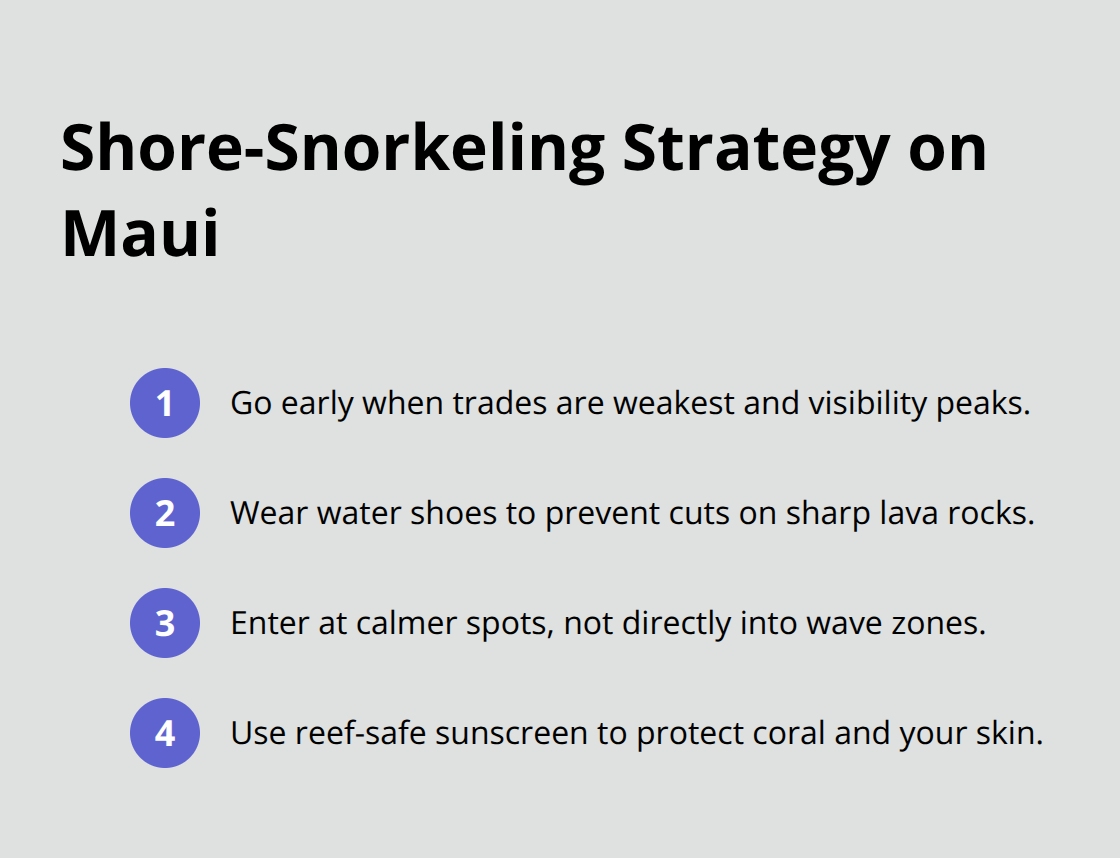
Ulua Beach in Wailea represents Maui’s most underrated shore snorkeling option, offering a long reef that extends directly from sandy shallows without requiring boat access or treacherous entry points. Rocky outcroppings at the ends of Kamaole beaches host abundant fish and turtles while remaining beginner-friendly, particularly Kamaole 1 and 2 where calm morning conditions create ideal visibility. Makena Landing and Maluaka Beach deliver varied rock formations and accessible entry points that beat fighting crowds at famous spots. Black Rock at Ka’anapali’s north end offers dramatic underwater topography and frequent turtle sightings but demands respect for strong currents near the rocky point itself. The practical strategy involves visiting early morning when trades weaken and visibility peaks, wearing water shoes to prevent cuts on sharp lava rocks, and entering at calmer spots rather than directly into wave zones. Reef-safe sunscreen isn’t optional-it protects both your safety and coral health.
Maximize Your Morning with Multiple Stops
Most serious snorkelers abandon the single-destination mentality entirely, instead hitting 2-3 South Maui spots in one morning to maximize wildlife encounters across different reef systems and increase odds of meaningful turtle encounters. This approach transforms your snorkeling day from a single location experience into a comprehensive reef exploration that reveals the true diversity of Maui’s underwater world. Small-group tours that offer flexible routing-adjusting destinations based on daily conditions rather than fixed itineraries-allow you to capitalize on optimal visibility windows and follow where marine life activity concentrates. Your next step involves selecting a tour operator that prioritizes these daily adjustments and maintains small enough groups to execute quick transitions between sites.
What to Expect on a Maui Snorkel Tour
Professional snorkel tours eliminate the guesswork that plagues independent snorkelers. Operators provide masks, snorkels, and fins calibrated for different face shapes and foot sizes-a critical detail since rental masks from generic shops often leak or fog, turning your experience into frustration rather than exploration. Quality gear makes the difference between seeing marine life clearly and struggling with water in your mask the entire time.
Guides Position You Where Marine Life Concentrates
The real advantage materializes underwater: guides position you directly where turtles feed and coral formations concentrate marine life, rather than you swimming randomly hoping to encounter something worthwhile. Local guides know daily current patterns, which reefs are producing that morning, and exactly where Hawaiian green sea turtles congregate based on season and water temperature. This knowledge translates into sightings-tours targeting Turtle Town and South Maui reefs consistently deliver turtle encounters when independent snorkelers at the same locations see nothing. Tours also provide breakfast aboard the boat, typically Hawaiian coffee and banana bread, preventing the hunger that derails afternoon snorkeling sessions.
Small Groups Enable Flexible Routes
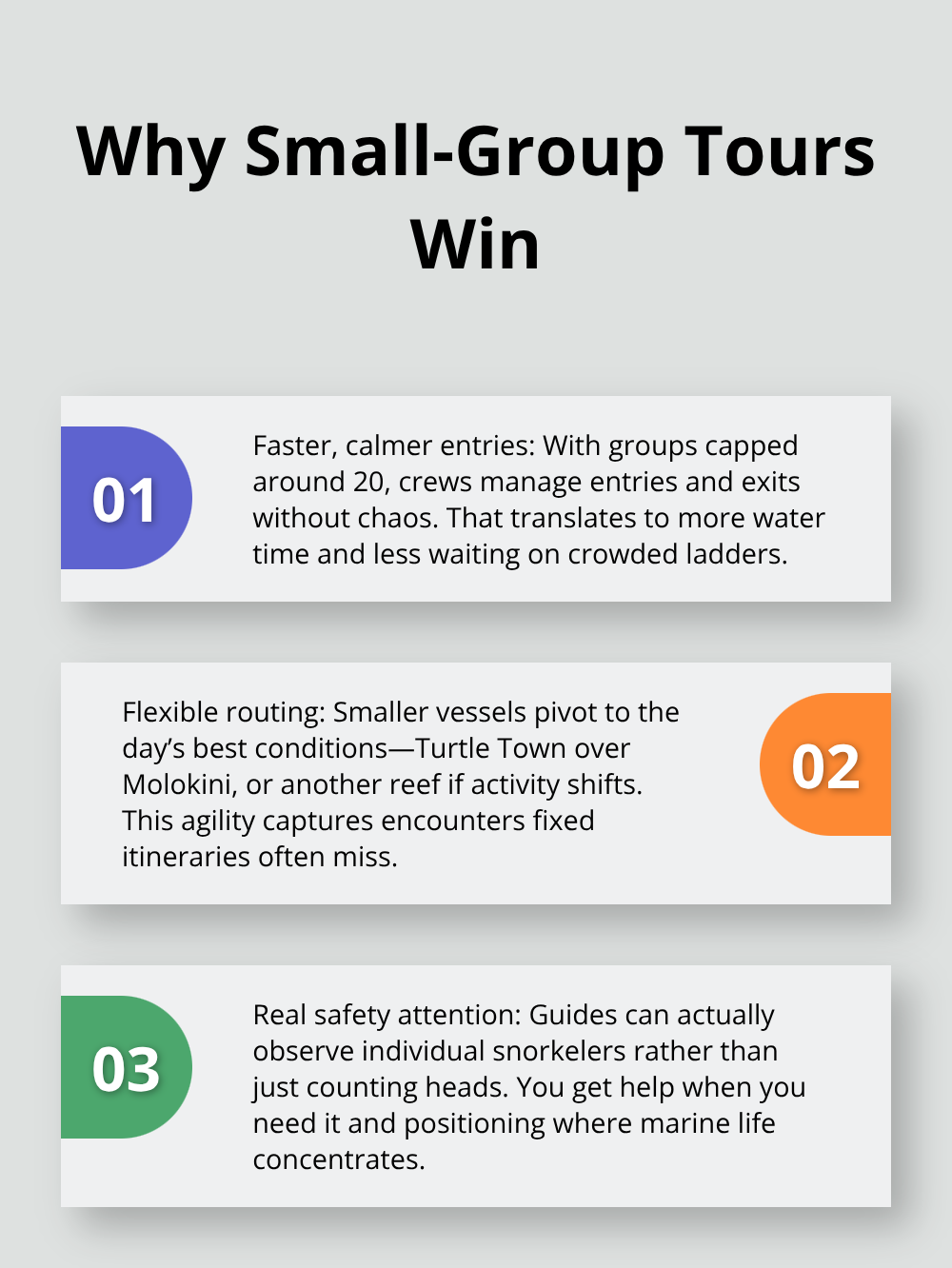
Small-group tours capped at 20 people operate fundamentally differently than the 50-person cattle-boat experience many expect. These smaller vessels allow guides to manage entry and exit without chaos, adjust routes based on conditions rather than following fixed itineraries, and actually observe individual snorkelers for safety rather than just counting heads. Operators that run flexible routing-changing destinations if morning conditions favor Turtle Town over Molokini, or pivoting to different reefs if turtle activity concentrates elsewhere-capture wildlife encounters that fixed-schedule tours miss entirely.
Crew Support Enhances Your Experience
Crew members assist with fin adjustment, mask fitting, and entry technique, particularly valuable for first-time snorkelers who typically struggle with backward water entry. Tours departing early, before 8 AM, position you in the water during peak marine activity windows when fish feeding and turtle movements concentrate. Many operators photograph snorkelers underwater and provide digital images, a service worth $50-75 at typical resort shops. The 15-minute run from Kihei to offshore sites means less travel time than driving between shore snorkel spots, leaving more water time for actual exploration.
Cost Comparison Favors Guided Tours
The cost structure for guided tours (starting around $99 per person with gear and breakfast included) undercuts independent beach snorkeling when you factor in rental expenses, failed attempts at inaccessible reefs, and wasted hours at poor-condition locations that morning. You invest less money and gain far more reliable wildlife encounters. With professional guidance and flexible routing locked in, your next decision involves selecting the right operator and understanding what specific tour options best match your skill level and marine life priorities.
When to Snorkel and How to Prepare
Timing determines snorkeling success far more than location choice. Early morning departures position you in the water during peak marine activity when Hawaiian green sea turtles feed actively and fish populations concentrate along reef structures. Trade winds typically strengthen in the afternoon, degrading visibility and creating choppy conditions that frustrate even experienced snorkelers. Winter months from December through April deliver excellent snorkeling across West and South Maui due to calmer seas, with the bonus of hearing humpback whales underwater during the migration season. Summer shifts snorkeling advantages northward to spots like Kapalua Bay and Honolua Bay where wind patterns favor clearer water, though daily variability remains significant year-round. Check the Maui Snorkel Report before committing to any location that morning, as conditions shift dramatically based on overnight swell and wind patterns.
Water Temperature and Seasonal Conditions
Water temperature hovers around 75 degrees Fahrenheit throughout most of the year, comfortable enough for extended sessions without a wetsuit. Many operators provide thin wetsuits that reduce sun exposure and offer minor thermal protection during longer outings. These seasonal patterns reward early planners who adjust their snorkeling strategy to match what the ocean delivers each month.
Essential Gear and Sun Protection
Bring reef-safe sunscreen without oxybenzone or octinoxate, as these chemicals damage coral ecosystems and Hawaii actively discourages their use through signage at every major beach. Wear water shoes with grip soles to prevent cuts from sharp lava rocks that line most entry points, a detail that prevents painful injuries that derail entire vacations. Pack a lightweight rash guard or swim shirt for sun protection rather than relying solely on sunscreen, which washes away quickly in saltwater. These items transform your experience from uncomfortable to genuinely enjoyable.
Preparation Before Your Tour
Arrive at your tour operator 30 minutes early to handle gear fitting properly, as mask leaks and ill-fitting fins create miserable experiences that no amount of marine life sightings can salvage. Eat a substantial breakfast beforehand since tour operators provide only light snacks, and hunger significantly impairs your ability to explore underwater. Professional operators calibrate all essential gear for different face shapes and sizes, eliminating the guesswork that plagues generic rental shops where masks fog constantly and snorkels fit poorly.
Choosing a Flexible Tour Operator
Small-group tours capped at 20 people allow crew members to adjust your mask fit and demonstrate proper backward entry technique before you hit the water, preventing the panic that first-time snorkelers often experience. Flexible routing means guides adjust destinations based on that morning’s conditions rather than forcing you to predetermined sites, maximizing your odds of meaningful turtle encounters and clear visibility windows. Tours departing from Kihei reach offshore sites within 15 minutes, preserving energy and water time compared to driving between multiple shore snorkel spots. Professional tours (starting at $99 per person with gear and breakfast included) eliminate the trial-and-error approach that independent snorkelers face when selecting between dozens of beach options with variable conditions and accessibility challenges.
Final Thoughts
Maui’s best snorkeling on Maui emerges when you combine reliable destinations with professional guidance and flexible routing that adjusts to daily conditions. Small-group tours outperform independent snorkeling because guides position you directly where turtles feed and coral concentrates marine life, rather than you swimming randomly hoping for sightings. Tours starting at $99 per person with gear and breakfast included cost less than renting equipment and attempting multiple beach locations independently, while delivering far more reliable wildlife encounters.
Early morning departures position you in the water during peak marine activity when conditions favor visibility and fish feeding patterns concentrate. Water temperature around 75 degrees Fahrenheit remains comfortable year-round, with winter months offering calmer seas and summer shifting advantages northward to specific reef systems. Professional operators provide properly fitted gear calibrated for different face shapes, include breakfast aboard the boat, and employ guides with current knowledge of daily turtle sightings and reef conditions.
Select a tour operator that prioritizes small group sizes, maintains flexible routing capabilities, and departs early enough to capture optimal marine activity windows. Check the Maui Snorkel Report before booking to understand that morning’s conditions, then commit to your tour with confidence that professional guidance transforms snorkeling from uncertain beach exploration into reliable underwater discovery.