
Maui’s crystal-clear waters and vibrant coral reefs make it a premier destination for snorkeling enthusiasts. Whether you’re a beginner or experienced swimmer, the best snorkeling places in Maui offer unforgettable encounters with tropical fish, sea turtles, and thriving marine ecosystems.
This guide covers three exceptional locations, what marine life you’ll encounter, and practical tips for planning your adventure. Discover why Maui stands out as one of Hawaii’s top snorkeling destinations.
Where Should You Snorkel in Maui
Top Three Snorkeling Destinations
Molokini Crater stands as Maui’s most reliable snorkeling destination, hosting 250+ species of tropical fish within its sheltered crescent-shaped waters. This partially submerged volcanic crater in the Alalakeiki Channel delivers consistently calm conditions and outstanding visibility that rarely disappoint, making it the obvious first choice for maximizing your underwater experience. The crater’s interior waters remain protected from strong currents, and the crystal-clear conditions mean you’ll spot vibrant tropical fish, Hawaiian green sea turtles, and intricate reef structures from the moment you enter the water.
Turtle Town in South Maui offers a fundamentally different experience focused on close encounters with Hawaiian green sea turtles and Hawksbill turtles, along with distinctive coral towers that create natural gathering points for marine life. This location demands respect for wildlife and a willingness to maintain appropriate distance, but the payoff is unmatched opportunities to observe these ancient creatures in their natural habitat.
Honolua Bay north of Kapalua delivers aquarium-like reef scenes with high visibility and diverse wildlife, though conditions vary significantly based on weather and water clarity. The rocky entry point requires you to walk backwards into the water with fins on, and quality fins help you navigate effectively, but on clear days the reef life visible from the surface rivals anything else on the island.
Optimal Timing and Water Conditions
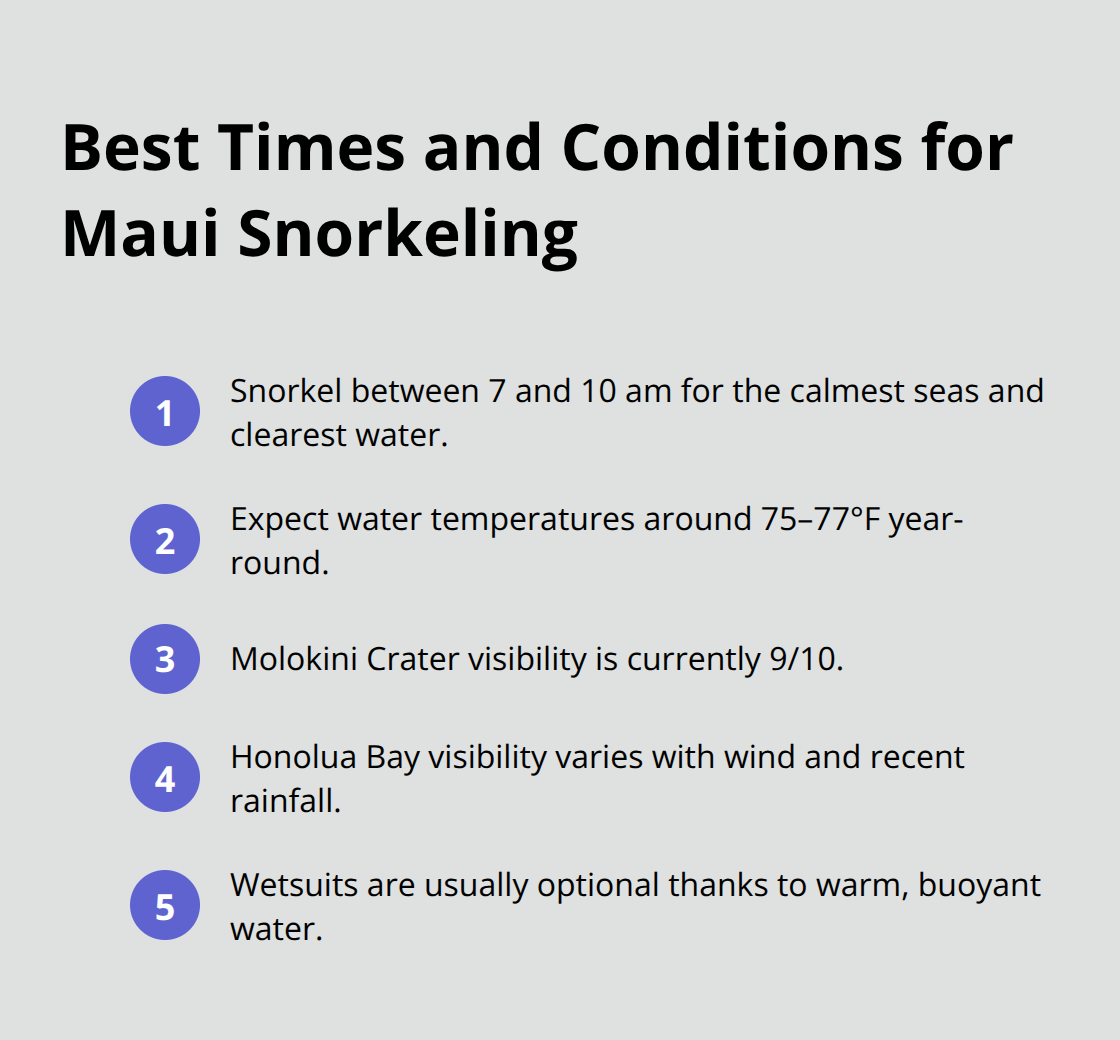
Morning sessions consistently outperform afternoon snorkeling across all three locations, with calm seas and superior clarity typically occurring between 7 and 10 am. Water temperatures hover around 75 to 77 degrees Fahrenheit year-round, making the water warm and buoyant enough for easy flotation without wetsuits. Visibility at Molokini Crater currently rates 9 out of 10 according to Boss Frog’s Maui Snorkel Conditions Report, while Honolua Bay’s conditions fluctuate more dramatically depending on wind and recent rainfall.
Choosing Your Snorkeling Approach
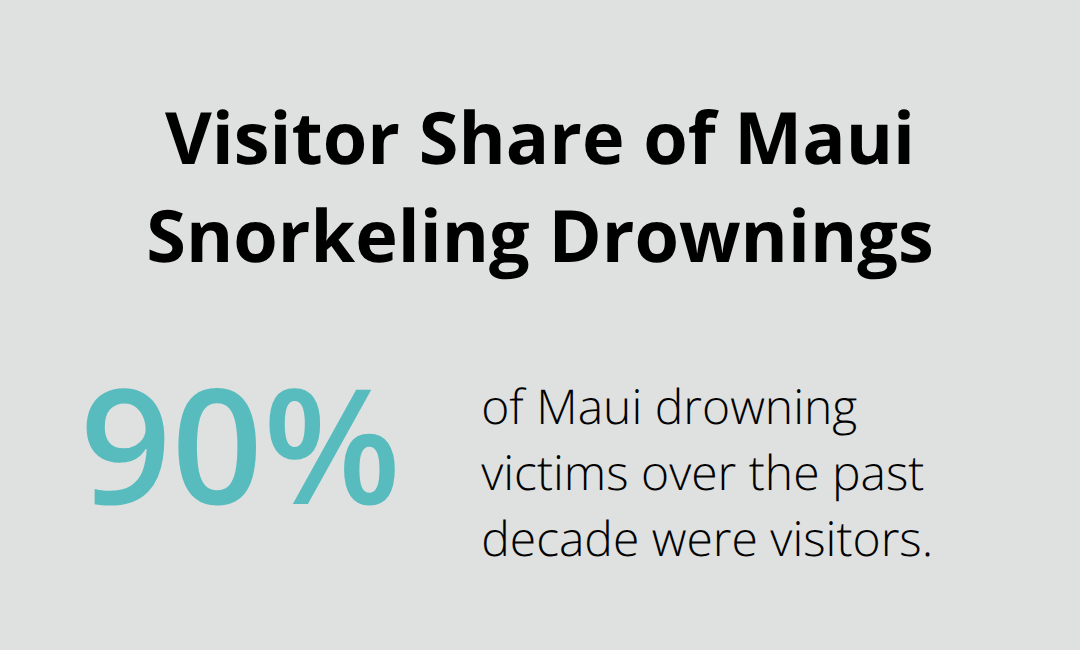
If you visit for a short timeframe, try Molokini Crater through a guided boat tour rather than attempting shore-based snorkeling, since the boat access eliminates travel logistics and guarantees you’ll reach the best reefs. Maui Snorkel Charters operates small groups of maximum 20 people on fast 15-minute runs from Kihei to Molokini and Turtle Town, with tours starting at $99 and including gear, Hawaiian coffee, banana bread breakfast, and free photos. SF Gate Hawaii reports that approximately 90 percent of Maui drowning victims over the past decade were visitors, underscoring the importance of choosing guided tours with professional safety oversight rather than attempting these locations independently if you lack experience.
Understanding these three premier locations and their distinct characteristics positions you to select the destination that best matches your skill level and interests. The next section explores what marine life and reef ecosystems you’ll encounter at each site.
What You’ll Encounter Underwater in Maui
Molokini Crater hosts over 100 coral species and approximately 250 fish species, creating one of Hawaii’s most biodiverse reef environments. You’ll spot Hawaiian green sea turtles, Humuhumunukunukuapua’a, octopuses, eels, bottlenose dolphins, and eagle rays depending on the season and location. Turtle Town attracts Hawaiian green sea turtles and Hawksbill turtles year-round, while late April occasionally delivers humpback whale sightings near the reef. Coral Gardens spans over 100 acres with corals exceeding 500 years old, offering a completely different reef structure from Molokini’s interior crater walls. The tropical fish population varies by depth and reef zone, but visibility at Molokini currently rates 9 out of 10 according to Boss Frog’s Maui Snorkel Conditions Report, meaning you’ll spot marine life clearly from the surface without descending deeply. Water temperatures remain consistently between 75 and 80 degrees Fahrenheit year-round, so wetsuits are optional rather than essential, though rash guards provide sun protection during extended sessions.
Morning Sessions Deliver Superior Visibility
Morning snorkeling between 7 and 10 am produces superior visibility and calmer seas across all three locations, while afternoon conditions deteriorate as wind picks up and water becomes choppy. Honolua Bay’s conditions fluctuate dramatically depending on wind direction and recent rainfall, with milky or green water appearing after rain that makes entry pointless-check current visibility before driving there. Molokini’s sheltered interior waters remain consistently calm regardless of outside conditions, making it the most reliable choice when weather forecasts predict rough seas elsewhere. Southside beaches like Turtle Town experience wind-driven conditions that intensify throughout the day, so arriving before 8 am dramatically improves your experience.
Weather Patterns Shape Your Safety
More than 128 visitors have drowned snorkeling in Hawaii’s waters since 2005, a statistic directly tied to afternoon snorkeling when conditions deteriorate and inexperienced swimmers underestimate changing water dynamics. Molokini Crater’s sheltered design protects you from the strong currents and rough conditions that affect shore-based locations. Daily condition ratings change significantly, requiring you to check reports the morning of your planned session rather than relying on week-old forecasts. Boss Frog’s provides live webcams and same-day ratings that accurately reflect current visibility, wind patterns, and reef conditions at each major site.
Seasonal Variations Rarely Disrupt Your Plans
Whale watching season runs through late April with occasional humpback sightings near Turtle Town, though this doesn’t impact snorkeling quality. The island’s consistent warm water year-round means you won’t encounter seasonal closures or temperature drops that plague mainland destinations. Tours operate daily regardless of season, with operators selecting routes based on real-time conditions rather than calendar dates, so flexibility in your booking window allows professionals to choose your optimal snorkeling day. Understanding these underwater conditions and seasonal patterns helps you prepare for what awaits beneath the surface-the next section covers the practical steps for selecting a tour operator and assembling the right equipment for your adventure.
Planning Your Snorkeling Adventure
Selecting a Reliable Tour Operator
Maui Snorkel Charters operates small groups of maximum 20 people on fast 15-minute runs from Kihei to Molokini Crater and Turtle Town, with tours starting at $99. The operator selects routes daily based on real-time conditions rather than fixed itineraries, so your guide navigates to whichever location offers superior visibility and calmer waters on your specific snorkeling day. Tours include all essential gear, Hawaiian coffee and banana bread breakfast, snacks, and free professional photos aboard their custom 40-foot vessel, eliminating the logistics burden of coordinating transportation, rentals, and meals separately. This approach directly addresses the statistic showing 90 percent of Maui drowning victims over the past decade were visitors attempting independent snorkeling without professional oversight.
Gear Rental and Equipment Essentials
Renting gear independently from beach vendors costs $25 to $40 daily, but weekly rentals offer better value if you plan multiple sessions across different locations. Fins prove absolutely essential for maneuvering effectively in currents and maintaining position over reefs, so invest in quality rental fins rather than accepting whatever equipment comes with budget packages. Enter the water by walking backwards with fins secured properly, then practice clearing your snorkel by exhaling forcefully before submerging completely. A snorkeling vest or flotation device boosts confidence and safety, particularly for beginners unfamiliar with ocean dynamics.
Non-Negotiable Safety Protocols
Never snorkel alone under any circumstances, as the buddy system creates mutual accountability and enables immediate assistance if someone experiences panic or physical distress. Check Boss Frog’s Maui Snorkel Conditions Report the morning of your planned session rather than relying on forecasts from previous days, since visibility and wind patterns shift dramatically within hours.
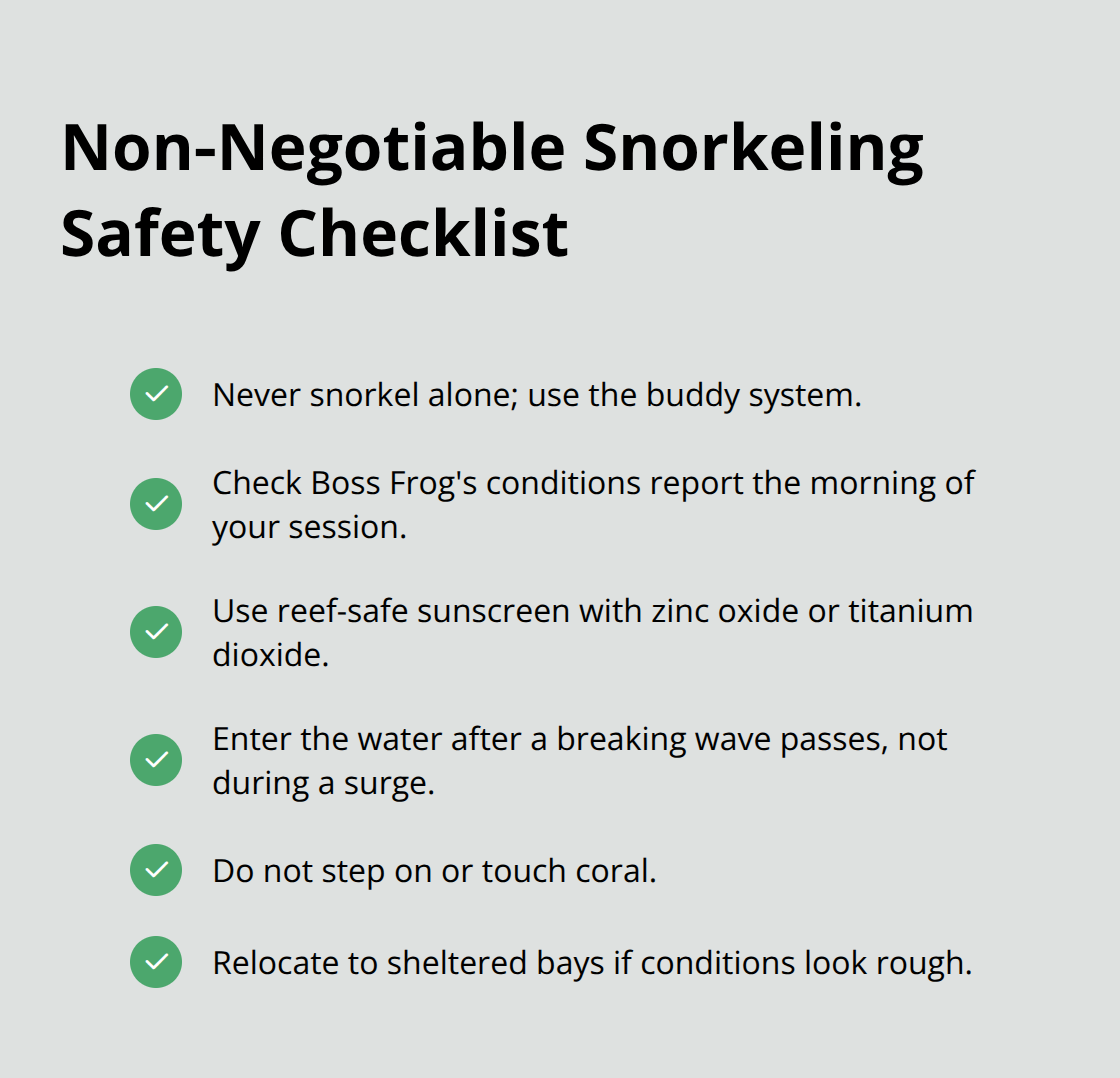
Use reef-safe sunscreen exclusively, which contains only mineral UV-blocking ingredients like zinc oxide and titanium dioxide. Time your entry after observing wave patterns, entering the water after a breaking wave passes rather than during swell surge. Avoid stepping on or touching coral, which kills centuries-old organisms and creates permanent damage visible for decades. If conditions appear rough when you arrive, move to sheltered locations like Kapalua Bay or Napili Bay instead of forcing entry at your originally planned site.
Final Thoughts
Maui’s best snorkeling places deliver unmatched underwater experiences that combine accessibility, marine biodiversity, and consistent water conditions year-round. Molokini Crater’s sheltered crescent waters, Turtle Town’s ancient sea turtle encounters, and Honolua Bay’s vibrant reef ecosystems each offer something different depending on your skill level and interests. The convergence of 250+ fish species, centuries-old coral formations, and reliable morning visibility creates opportunities to observe Hawaiian marine life in its natural habitat without advanced diving certifications.
Water temperatures remain consistently warm year-round, which eliminates seasonal barriers and allows both independent snorkelers and those preferring guided experiences with safety oversight to plan their trips flexibly. The statistic showing 90 percent of Maui drowning victims were visitors underscores why established operators and proven safety protocols transform snorkeling from a risky activity into a manageable adventure suitable for families and beginners. Professional tour operators, accessible shore-based locations, and daily condition monitoring remove guesswork from your planning process.
Your next step involves selecting your preferred snorkeling approach based on your timeframe and experience level. If you’re visiting for a short period, booking a guided tour through Maui Snorkel Charters eliminates logistics while guaranteeing access to the best reef conditions available on your specific snorkeling day. Check Boss Frog’s Maui Snorkel Conditions Report the morning of your planned session, confirm current visibility and wind patterns, and commit to morning departure times between 7 and 10 am when conditions consistently outperform afternoon sessions.