
Maui’s reefs are calling, and today’s snorkeling conditions are ideal for exploration. Whether you’re planning your first underwater adventure or returning to favorite spots, understanding current water temperature, visibility, and wave activity ensures you make the most of your time in the ocean.
This guide breaks down everything you need to know about snorkeling conditions in Maui right now, from the best locations to safety tips that keep your experience both memorable and secure.
What Are Today’s Water Conditions in Maui
Temperature and Seasonal Patterns
Water temperature in Maui hovers between 75 and 80 degrees Fahrenheit year-round, making wetsuits optional but rash guards essential for sun protection during extended sessions. Today specifically presents a cloudy morning with light showers expected, though sun will likely break through later. The south swell builds throughout the day, which directly impacts where you can safely snorkel. A High Surf Advisory remains in effect, signaling elevated hazard levels across multiple zones.
Current Conditions by Region
Northwest Maui’s protected bays show the calmest conditions this morning, with Honolua Bay reporting calm and very clear water, while Kapalua Bay is already too rough for safe snorkeling due to large waves. The south side tells a different story: Kamaole beaches remain calm early, but Ulua, Makena, and Wailea beaches already display larger surf and choppier water that will worsen as the day progresses. This narrow window means you must enter the water between 8:00 AM and 11:30 AM if you target Northwest Maui sites like Honolula, Kapalua, or Airport Beach. After that, trade winds build and conditions deteriorate rapidly.
Visibility Across Snorkeling Zones
Visibility varies dramatically depending on location and recent weather. Northwest Maui’s protected bays benefit from shelter against the heavy south swell, maintaining fair-to-good visibility despite overnight rain runoff affecting some streams. Honolua Bay this morning shows excellent clarity, but heavy rain could quickly turn the water murky and unsafe. Airport Beach rates 6.0 overall with fair visibility and manageable 2-4 foot waves, making it a solid backup if other Northwest spots decline.
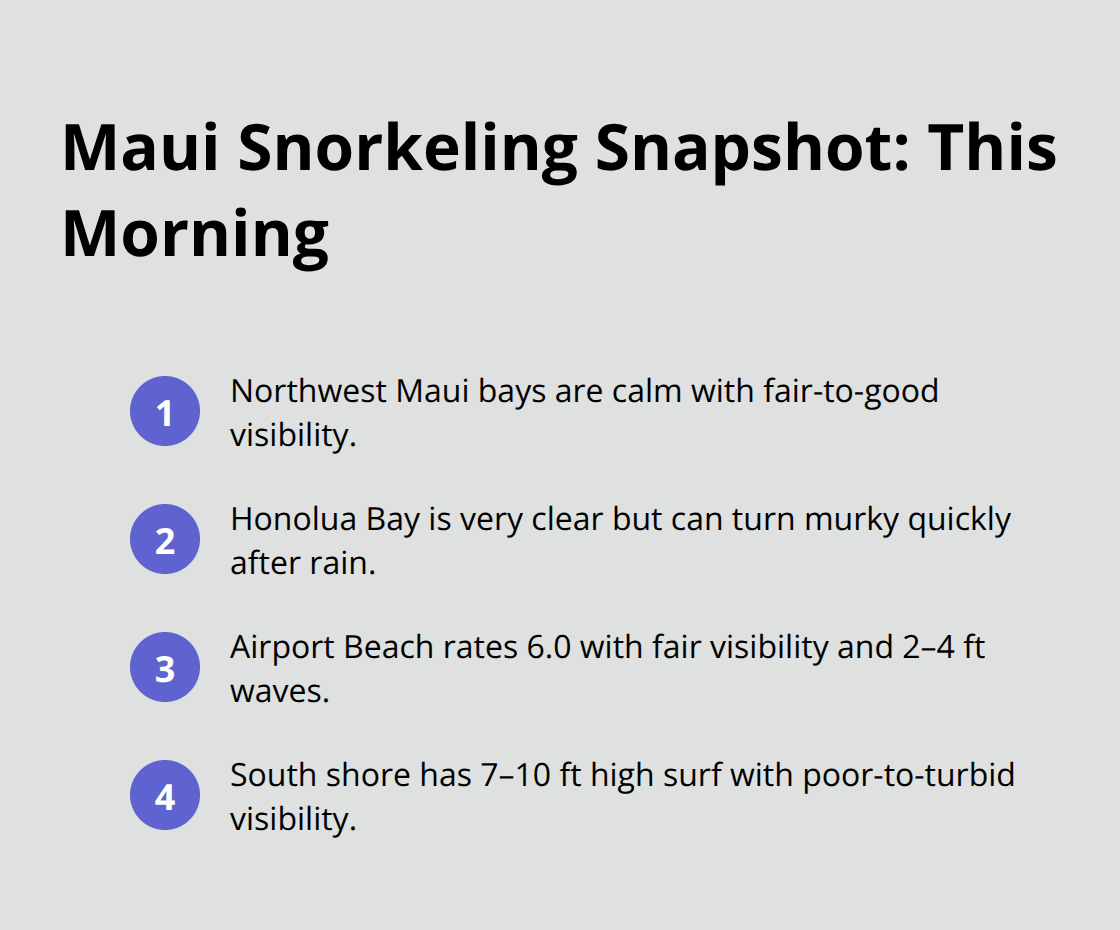
The south shore presents poor conditions across the board: Charlie Young, Kamaole 1-3, Ulua, Makena Landing, Maluaka, and Ahihi Bay all show low-to-turbid visibility with 7-10 foot high surf and strong surge. Olowalu rates even worse at 3.5 with poor-to-turbid visibility. If you commit to south-side snorkeling despite these conditions, try to arrive before 8:00 AM when visibility is marginally better, though you still face poor water clarity and dangerous currents.
Premium Alternative: Boat Access
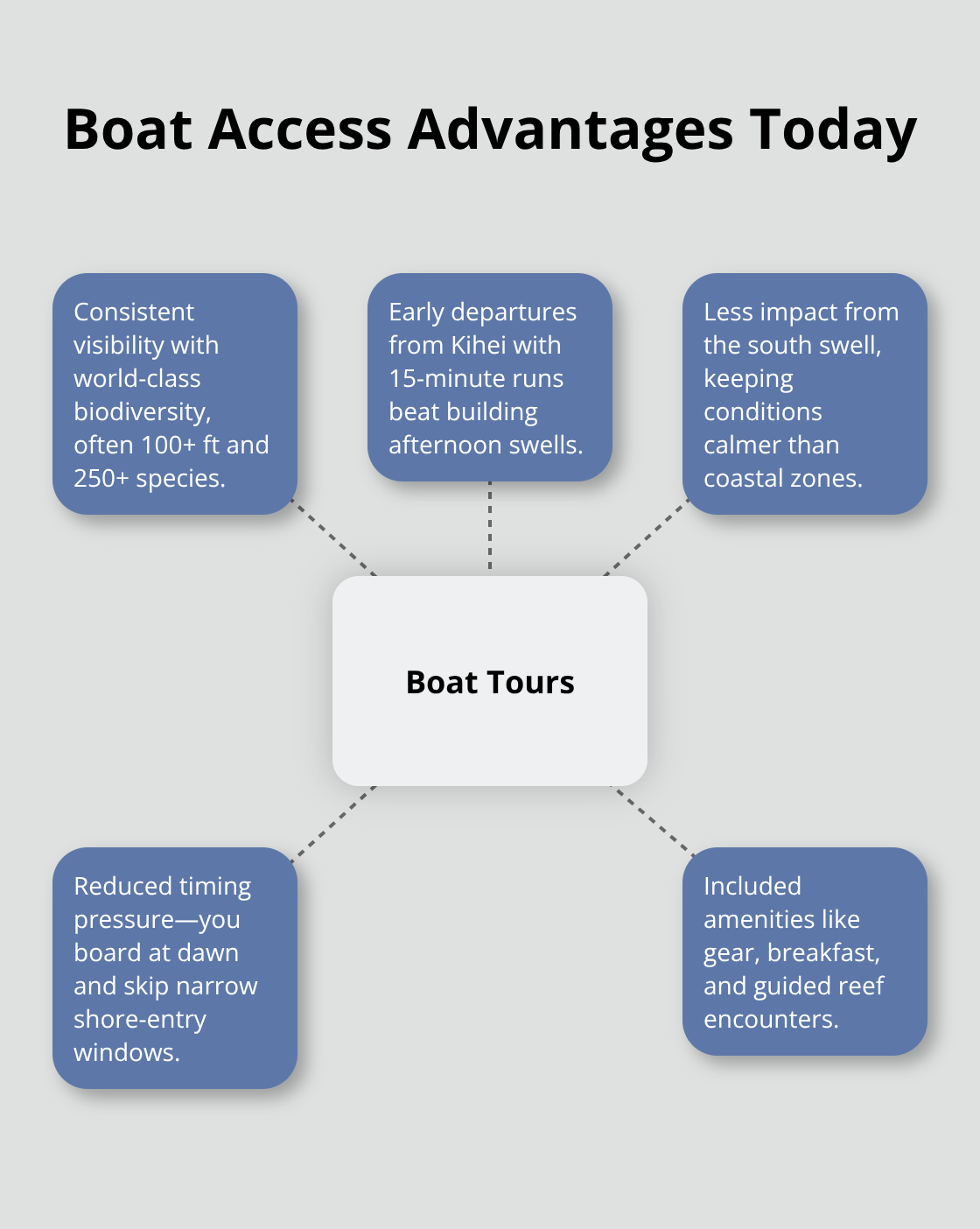
Molokini Crater remains Maui’s premier option with clear water hosting 250+ fish species. Boat tours provide access to this Marine Life Conservation District, where visibility can exceed 100–150 feet on clear days. This option eliminates the timing pressure that shore-based snorkeling demands, allowing you to experience world-class reef ecosystems regardless of morning conditions. Understanding these regional differences helps you select the right location and timing for your adventure.
Where to Snorkel Today Based on Real Conditions
Molokini Crater: Your Best Bet for Visibility
Molokini Crater dominates today’s snorkeling landscape as the premier choice when visibility matters most. Access requires a boat tour, but the payoff justifies the effort: visibility regularly exceeds 100 feet in this Marine Life Conservation District, hosting over 250 fish species plus occasional manta rays and reef sharks. Shore-based snorkeling cannot match these conditions. Small-group tours operate from Kihei with 15-minute runs to Molokini, departing early to maximize your time underwater before afternoon swells intensify. Tours include gear, Hawaiian coffee and banana bread breakfast, snacks, and guided encounters with reef ecosystems. This eliminates the timing pressure that shore snorkeling demands-you board at dawn and experience world-class reefs regardless of morning cloud cover or rain. The south swell building throughout today affects Molokini far less than coastal zones, making it your most reliable option for consistent visibility and calm conditions.
Honolua Bay: Your Shore-Based Window
If you stay on shore, Honolua Bay is your only serious contender this morning. The bay shows calm, very clear water right now, but this window closes fast. Heavy rain could murk the water within hours, so assess clarity at the Honolua Lookout before you descend. The left side hosts turtles while the right side delivers abundant reef fish; either direction works. Slaughterhouse Beach and Kapalua Bay both rate well as alternatives, though conditions can change rapidly. Northwest Maui’s protected bays shelter you from the heavy south swell, but only if you enter between 8:00 AM and 11:30 AM. After 11:30 AM, trade winds build and conditions deteriorate rapidly.
Backup Options and Timing
Airport Beach offers fair visibility and manageable waves as a backup if Honolua declines. The south shore presents poor conditions across all beaches-Ulua, Kamaole, Makena, and Ahihi all show high surf with strong surge and turbid water. Shore snorkeling there today wastes your time and risks your safety. Turtle Town, accessible only via boat tours from Kihei, provides an alternative to Molokini with reliable turtle sightings and reef fish encounters in protected waters.
Making Your Decision
The choice is straightforward: boat access delivers superior conditions and marine life encounters, while shore snorkeling works only if you commit to Honolua Bay before 8:30 AM. Your next step depends on how much time you have available and whether you prioritize guaranteed visibility or immediate beach access.
What You’ll Actually See and When to Go
Marine Life Encounters at Each Location
Molokini Crater delivers 250+ species without searching, including parrotfish, surgeonfish, yellow tangs, Moorish idols, and occasional manta rays within the first 15 minutes of entering the water. Shore-based snorkeling at Honolua Bay offers turtles along the left side and sergeant majors plus butterflyfish along the right, but the species diversity drops dramatically compared to boat access. If you chase sea turtles specifically, Turtle Town and Honolua Bay both guarantee sightings on calm mornings, though Turtle Town accessed via boat eliminates the timing gamble entirely.
Timing Windows for Shore and Boat Snorkeling
The critical timing window for shore snorkeling runs from 8:00 AM to 11:30 AM at Honolua Bay-after 11:30 AM, trade winds intensify and visibility collapses. Boat tours from Kihei operate on a different schedule, departing early morning with 15-minute runs to either Molokini or Turtle Town, meaning you enter the water during the optimal window regardless of when you technically board. The dry season (May to October) generally offers calmer seas and consistently sunny weather, so early morning entries consistently yield better visibility than mid-morning attempts, meaning if you choose shore snorkeling, you must arrive before 8:15 AM.
Pre-Entry Assessment and Water Conditions
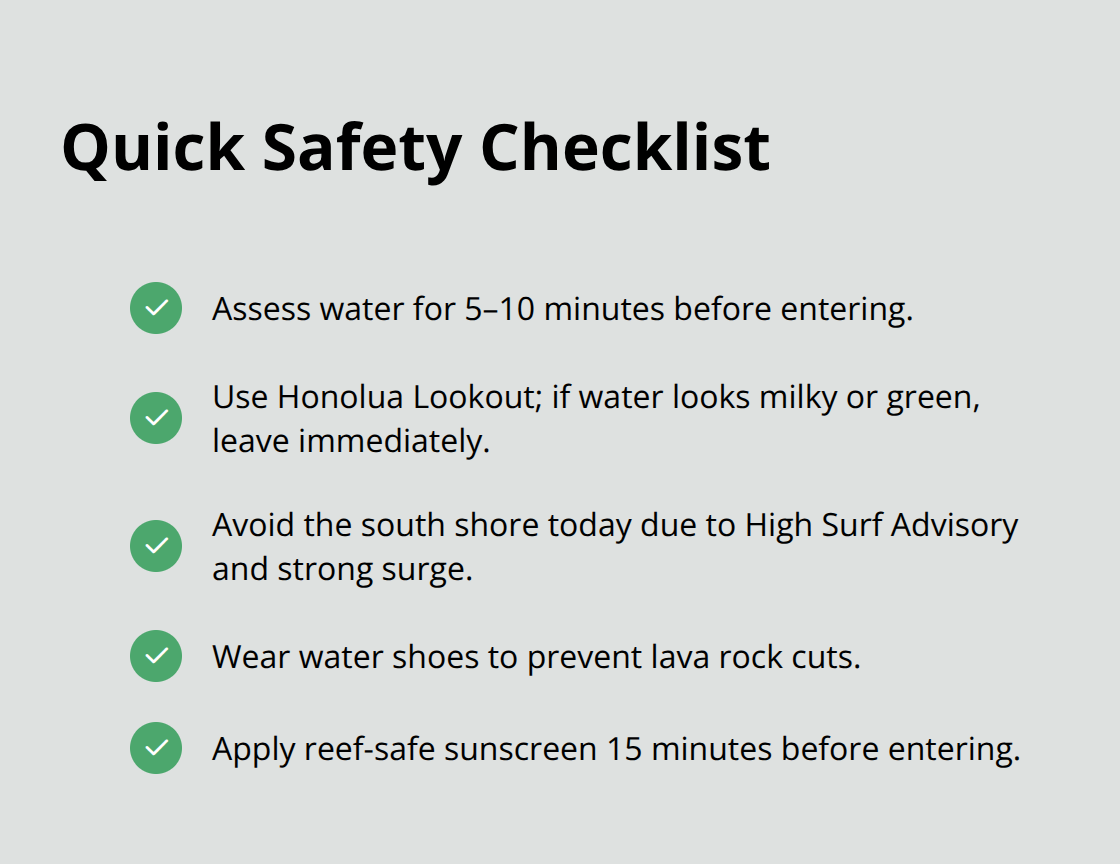
Safety demands you spend 5-10 minutes assessing conditions before entering any location. At Honolua Bay, use the lookout to check if water appears milky or green; if it does, leave immediately and head to Airport Beach instead. The High Surf Advisory currently active means strong surge and rip currents dominate the south shore, making Ulua, Makena, and Ahihi Bay genuinely dangerous today regardless of visibility ratings.
Boat Tour Preparation and Gear
If you select Molokini or Turtle Town via boat, inform the crew of any mobility issues, ear problems, or anxiety about deep water-guides adjust depth and location based on conditions and your comfort level. Wear water shoes at all entry points to avoid lava rock cuts, and apply reef-safe sunscreen 15 minutes before entering since standard sunscreen damages coral ecosystems (tours include gear and breakfast, so you arrive ready to explore).
Afternoon Conditions and Final Checks
Check conditions again at 10:00 AM if you plan an afternoon session; the south swell building throughout the day means morning conditions will not hold. Your safety depends on honest assessment rather than hoping conditions improve.
Final Thoughts
Today’s snorkeling conditions in Maui present a clear choice between guaranteed excellence and time-sensitive shore access. Northwest Maui’s protected bays deliver fair-to-good visibility through mid-morning, while the south shore remains compromised by high surf and turbid water throughout the day. Boat tours to Molokini Crater eliminate these variables entirely, offering 100+ foot visibility and encounters with 250+ fish species regardless of morning conditions or afternoon wind buildup.
Your decision hinges on one factor: how much certainty you need. Molokini and Turtle Town tours guarantee world-class reef ecosystems and marine life encounters, departing early enough to maximize your underwater time before the High Surf Advisory intensifies afternoon conditions. Shore-based snorkeling at Honolua Bay costs nothing but demands strict timing discipline and honest assessment at the Honolua Lookout before you enter.
Book your tour now if you want guaranteed visibility and professional guidance through protected marine sanctuaries, or arrive at Honolua Bay before 8:15 AM if you prefer immediate beach access and accept the timing risk. Either way, check current snorkeling conditions in Maui at 10:00 AM if you plan an afternoon session, wear water shoes to protect against lava rock, and spend 5-10 minutes assessing water clarity before entering. Your safety and satisfaction depend on honest evaluation rather than optimism.