
Maui’s underwater world offers some of the most spectacular snorkeling opportunities in Hawaii. Whether you’re a seasoned explorer or picking up a snorkel for the first time, good snorkeling in Maui delivers unforgettable encounters with vibrant coral reefs and native marine life.
This guide highlights the island’s premier destinations and helps you choose the right tour operator for your adventure. Discover what makes these waters so special and how to plan the perfect snorkeling experience.
Molokini Crater Snorkeling Experience
The Crater’s Exceptional Underwater Environment
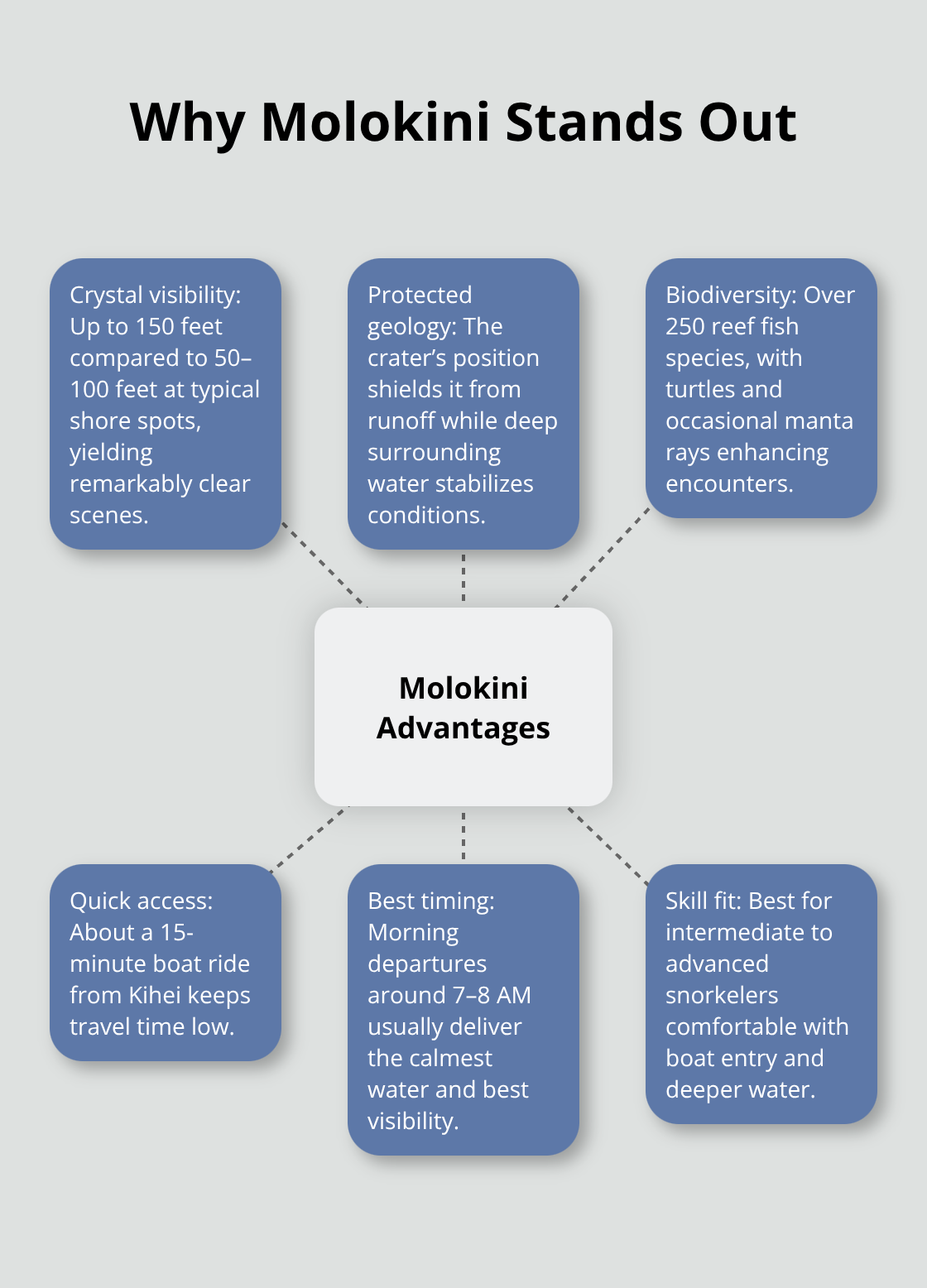
Molokini Crater sits three miles offshore and ranks as Maui’s most dramatic snorkeling destination. The crescent-shaped volcanic caldera offers visibility reaching 150 feet on optimal days, compared to 50–100 feet at typical shore spots. This exceptional clarity exists because the crater’s protected position shields it from coastal runoff and sediment, while deep water surrounding the site maintains stable conditions. Over 250 reef fish species inhabit the crater, including parrotfish, moorish idols, and trumpetfish that congregate along the steep reef walls. Hawksbill turtles and occasional manta rays appear regularly, though whale shark sightings remain rare.
Access and Operator Options
The boat ride itself takes 15 minutes from Kihei, making the destination accessible without exhausting travel time. Most operators charge between $70–$100 per adult and include breakfast, snacks, and gear rental. Small-group tours with maximum capacity of 20 people provide significantly better experiences than large commercial boats carrying 100+ passengers, as smaller groups create less disturbance and allow guides to focus on individual needs.
Timing and Seasonal Conditions
Morning departures between 7–8 AM deliver the calmest conditions and best visibility, as afternoon trade winds strengthen water chop. Summer months from May through October offer the most stable weather, with water temperatures between 78–82 degrees Fahrenheit. Winter snorkeling remains viable on calm days but requires checking conditions beforehand since north swells can make entry difficult.
What to Expect Underwater
The right side of the crater typically produces better snorkeling than the left, with more active reef fish and clearer water columns. Never stand on the crater floor or touch coral formations, as these 450-year-old ecosystems take decades to recover from damage. Maintain 10 feet from any sea turtles encountered, as Hawaiian law protects these animals.
Skill Level Requirements
Molokini works best for intermediate to advanced snorkelers comfortable with boat entry, deeper water, and swimming beyond visible bottom in some areas. First-time snorkelers should gain experience at shore-based locations before attempting the crater. Once you’ve built confidence in shallow reef environments, you’ll be ready to explore what makes Molokini special-and to discover why many operators recommend pairing your crater visit with a stop at Turtle Town for a complete South Maui experience.
Turtle Town and South Maui Reefs
Why Turtle Town Delivers Exceptional Value
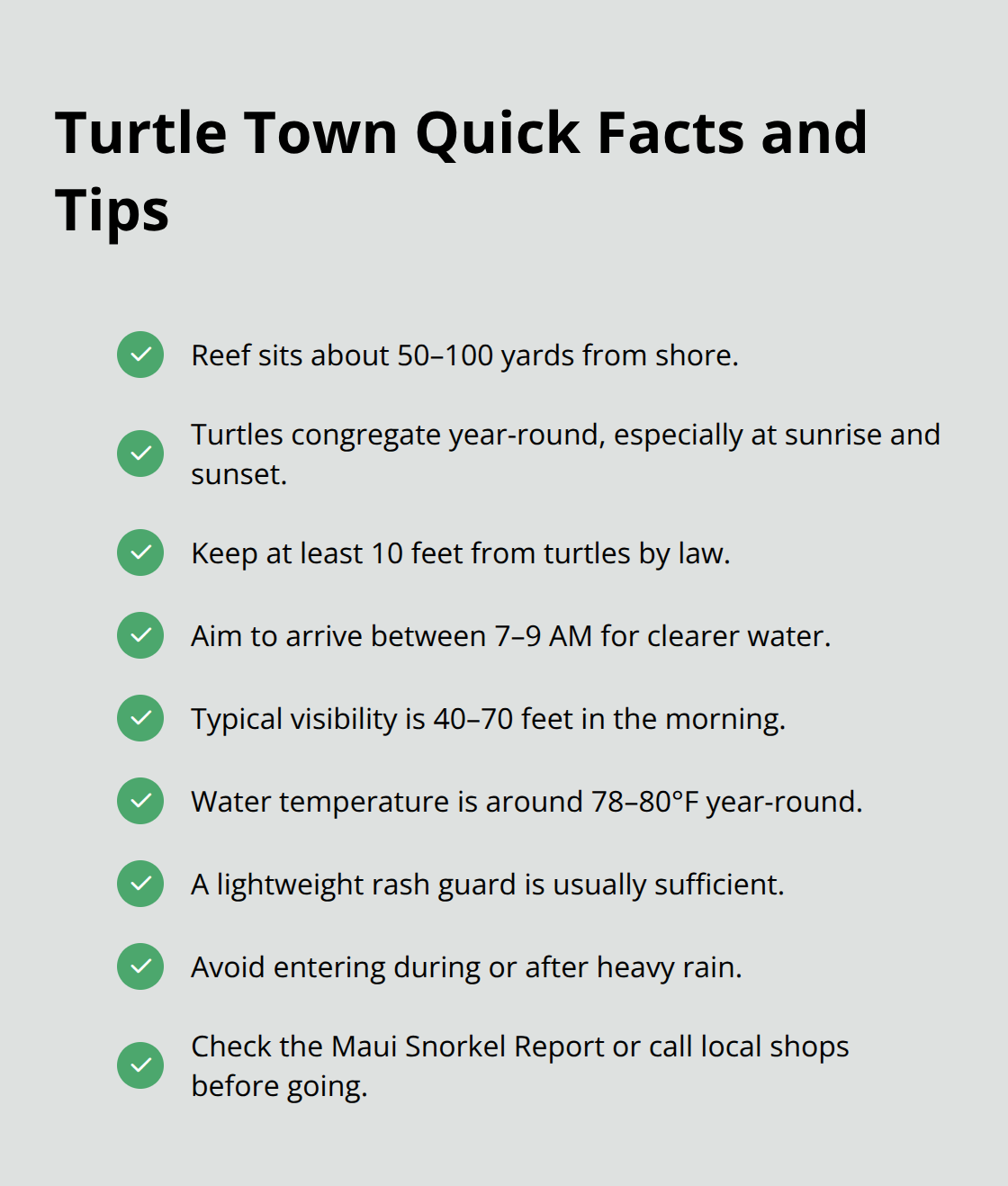
Turtle Town at Maluaka Beach offers what Molokini promises at a fraction of the cost and complexity. Located in South Maui near Makena, this shallow reef system sits just 50–100 yards from shore, making it accessible to swimmers of all abilities without requiring a boat. The site earned its name because Hawaiian green sea turtles congregate here year-round, particularly at sunrise and sunset when they feed on the algae-covered lava formations that define the reef structure. These turtles are not aggressive, but Hawaiian law mandates a 10-foot distance minimum-approach slowly and avoid sudden movements that trigger defensive behavior.
Reef Structure and Marine Life
The lava rock formations that create this feeding ground also trap sediment and nutrients, supporting dense populations of parrotfish, sergeant majors, and moorish idols in surprisingly shallow water. Visibility typically ranges from 40–70 feet in morning hours before afternoon trade winds churn the surface, so try to arrive between 7–9 AM for optimal conditions. Water temperature hovers around 78–80 degrees Fahrenheit year-round, so a lightweight rash guard offers adequate protection without the bulk of a full wetsuit.
Exploring the Broader South Maui Ecosystem
The entire South Maui reef system functions as a continuous ecosystem where you’ll encounter the same fish species and turtle populations across multiple entry points. Ulua Beach offers the easiest entry with its long sandy approach and reef running parallel to shore, while Keawakapu Beach provides similar conditions with fewer crowds. The critical advantage of South Maui shore snorkeling over boat-based alternatives is the ability to enter and exit on your schedule, adjust depth instantly if conditions feel uncomfortable, and return to shore within seconds if needed.
Building Skills at Protected Beaches
Beginners should start at Kamaole Beach Park, where three adjoining beaches create a protected zone ideal for practicing skills before venturing to deeper reef edges. The right side of Kamaole III consistently produces the highest fish density and turtle sightings. Never enter during or immediately after heavy rain, as freshwater runoff reduces visibility to near zero and pushes turtles deeper offshore. Check the Maui Snorkel Report or call local rental shops before departing, as conditions shift dramatically between morning calm and afternoon chop-a 15-minute phone call prevents wasted trips and dangerous entries.
Preparing for Your South Maui Adventure
Once you’ve mastered the shallow reefs and turtle encounters at these accessible South Maui locations, you’ll be ready to consider what separates a good snorkeling experience from an exceptional one: the right tour operator and equipment standards that ensure both your safety and the health of Maui’s marine ecosystems.
Choosing the Right Snorkeling Tour Operator
Small-Group Tours Deliver Superior Experiences
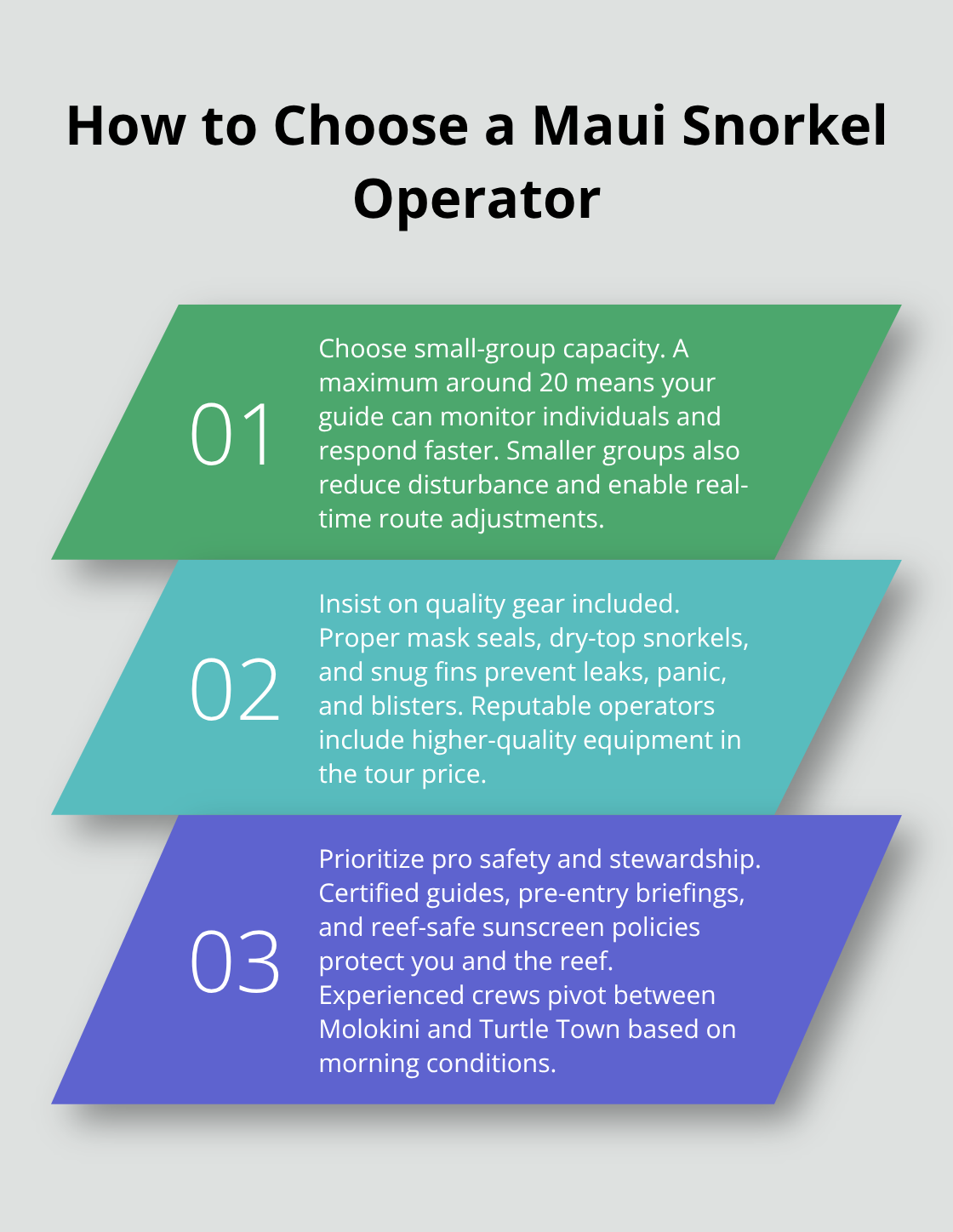
Small-group operators outperform large commercial boats on every metric that matters to snorkelers. A 20-person maximum capacity allows your guide to actually see you, answer questions, and adjust routes based on real-time conditions rather than process 100+ passengers through a predetermined schedule. This size restriction means guides monitor individual swimmers continuously, which translates to faster response times if anyone needs assistance. Large operators typically charge $70–$100 per adult but provide minimal personalized attention, generic breakfast offerings, and rigid itineraries that ignore daily wind and swell changes. Small-group tours starting at $99 per person often include superior equipment, quality breakfast items, and the flexibility to pivot between Molokini Crater and Turtle Town based on morning conditions.
This adaptability matters enormously in Hawaii, where trade winds intensify dramatically between 9 AM and noon, making an operator’s willingness to shift locations the difference between exceptional visibility and murky water.
Equipment Quality Separates Mediocre from Memorable
Equipment quality separates mediocre experiences from memorable ones, yet most visitors accept whatever rental shops provide without inspection. Demand masks that seal properly to your face, not generic one-size-fits-all models that leak constantly. Verify that snorkels have dry tops that prevent water entry when waves pass overhead, a feature that eliminates panic and exhaustion in choppy conditions. Fins should fit snugly without rubbing blisters into your feet during extended swims. Reputable operators outfit their vessels with quality gear included in tour pricing, eliminating the need to rent separately or compromise with substandard equipment. Ask operators directly about their safety protocols, their guides’ training certifications, and whether they conduct pre-entry briefings on mask clearing and entry techniques.
Local Knowledge and Professional Guidance
Guides who work the same reefs daily understand turtle movement patterns, seasonal fish migrations, and which sections of Molokini produce the best encounters on any given morning. Operators offering free photos aboard their boats add unexpected value, providing professional-quality images without smartphone struggles underwater. Verify that your operator uses reef-safe sunscreen and enforces the 10-foot distance rule for turtles, ensuring your adventure protects the ecosystems you traveled to experience. Local knowledge proves invaluable because experienced guides anticipate conditions and position you where marine life congregates most actively. This expertise transforms a basic snorkel into an educational encounter where you understand what you’re observing and why certain species favor particular reef sections.
Safety Standards and Operator Credentials
Safety protocols separate trustworthy operators from those cutting corners. Inquire about guide certifications, emergency response procedures, and whether the operator maintains current first-aid training. Operators should conduct thorough pre-trip briefings that cover entry techniques, mask clearing procedures, and what to do if conditions feel uncomfortable. Ask how many years the operator has worked Maui’s reefs and whether they adjust routes based on real-time observations rather than fixed schedules. Operators with established relationships with local marine biologists and conservation organizations demonstrate commitment to sustainable practices. These credentials matter because your safety depends on guides who recognize dangerous conditions and respond appropriately rather than prioritize tour completion over your well-being.
Final Thoughts
Maui’s snorkeling landscape offers something for every skill level, from the dramatic depths of Molokini Crater to the accessible turtle encounters at Turtle Town. Success depends equally on preparation and operator selection, so assess your abilities honestly before entering the water. Beginners should invest time at protected South Maui beaches like Kamaole or Keawakapu, where shallow entry points build confidence without overwhelming exposure.
Morning departures between 7 and 9 AM consistently deliver calmer conditions and superior visibility compared to afternoon sessions when trade winds intensify. Check the Maui Snorkel Report or contact local rental shops before each outing, as conditions change dramatically between locations and days. This simple habit prevents wasted trips and dangerous entries into unsuitable conditions.
Your operator choice ultimately determines whether you experience good snorkeling in Maui or exceptional snorkeling. Small-group tours with experienced guides who adjust routes based on real-time observations outperform large commercial operators on every measure that matters, and professional guides verify equipment quality, confirm safety certifications, and enforce reef-safe practices that transform a basic tour into an educational experience.