
Every winter, humpback whales migrate over 3,000 miles to Hawaiian waters, and Maui becomes one of the best spots to witness this natural spectacle. From January through March, these magnificent creatures fill our oceans, offering unforgettable encounters for anyone seeking adventure on the water.
At Maui Snorkel Charters, we’ve spent years perfecting the art of connecting visitors with these incredible animals. Whether you’re planning your first whale watching experience or you’re a seasoned ocean explorer, this guide will help you make the most of Hawaii whale watching in Maui.
When to Book Your Whale Watch
January through March delivers the highest concentration of humpback whales around Maui, with the Hawaiian Islands Humpback Whale National Marine Sanctuary reporting peak activity during this window. January stands out as the sweet spot-whales spread across the island, displaying active behaviors like breaches and tail slaps that create unforgettable moments. February shifts focus toward mothers and calves in calm coastal areas such as Wailea and Ma’alaea Bay, where calves often practice breaches beside their mothers. March remains excellent with high whale density and favorable weather conditions, making it ideal for combining whale watching with other activities like snorkeling or hiking.
Water conditions shape your experience more than most people realize
Morning departures between 7 and 10 AM offer the calmest seas and clearest visibility for spotting whale blows and breaches. Midday viewing from 11 AM to 2 PM remains solid but sun glare can reduce visibility, while afternoon and sunset outings from 3 PM onward often feature magical lighting and renewed whale activity. Water temperatures in Hawaiian waters hover around 74 to 78 degrees Fahrenheit during winter, which is why humpbacks migrate here to breed and nurse calves-the warm, shallow channels between Maui, Molokai, and Lanai concentrate more than 12,000 humpback whales annually. The Auau Channel specifically acts as a natural gathering point, making Maui one of the world’s premier whale-watching destinations.
Timing matters for weather and sea conditions
March actually offers the best combination of whale sightings and pleasant weather without the December holiday crowds or February’s focus on nursery behavior. Calmer seas in early morning hours mean you’ll spot whale blows more easily and experience less motion on the boat. Afternoon trips often reward you with renewed whale activity and golden-hour lighting that transforms your photos into something special.
Book early in your trip for maximum flexibility
Scheduling your whale watch during the first few days of your Maui vacation gives you a critical advantage: if weather cancels your tour, you have time to reschedule. Many operators offer sighting guarantees, meaning they’ll rebook you at no charge if whales don’t appear-but this only helps if you have open days remaining. Booking in advance during peak months secures better pricing and guarantees your preferred departure time, since peak season fills quickly. With your whale watch locked in early, you can then plan the rest of your itinerary around confirmed ocean activities.
Where to Watch Whales From Boat and Shore
Boat tours outperform shore viewing by a dramatic margin
You have two fundamentally different whale watching experiences available around Maui, and the choice between them determines what you’ll actually see. Shore-based viewing costs nothing and requires zero planning, but boat tours deliver what matters most: proximity, expertise, and dramatically higher sighting rates. Visitors on guided boat tours see whales on roughly 90 percent of winter departures, while shore viewers often spot nothing on any given day. The Hawaiian Islands Humpback Whale National Marine Sanctuary operates a visitor center in Kihei that provides free educational exhibits and occasional breach views from the parking area, but this remains a lottery compared to being on the water where whales actually congregate. If you want to witness whale behavior rather than hope for a distant spout, a boat tour is the only realistic choice.
South Maui concentrates the whales you came to see
South Maui’s geography makes it the whale watching capital of the islands because the shallow channels between Maui, Molokai, and Lanai concentrate warm water where mothers and calves stay during winter. Wailea, Kaanapali Beach, and Maalaea Bay serve as the primary nursery areas, and tours departing from Maalaea Harbor access this zone in under 15 minutes. McGregor Point Lookout and Olowalu offer the best shore-based vantage points if you want to try free viewing first, though both require patience and binoculars to spot distant whales.
Smaller vessels give you what larger boats cannot
Private charters outpace larger commercial tours because smaller vessels navigate shallow areas where calves play and mothers nurse, plus captains adjust routes daily based on recent sightings rather than following fixed itineraries. Larger catamarans and sailboats offer comfort and amenities, but they sacrifice the proximity and flexibility that make whale watching memorable rather than just comfortable. A custom 40-foot vessel with a maximum of 20 passengers means you’re not competing with hundreds of other tourists for viewing angles, and fast 15-minute runs to prime whale habitat let you spend more time observing behavior instead of traveling.
Your next decision shapes the entire experience
The vessel you select determines not just comfort, but how close you’ll actually get to whales and how much their natural behavior you’ll witness. Smaller boats position you near enough to hear whale blows and watch tail slaps unfold in real time, while larger vessels keep you at a respectful distance that feels more like watching from shore. This choice becomes especially important when mothers and calves appear in shallow bays-smaller operators can position themselves where the action happens, while larger boats must maintain greater distances from nursing pairs.
What Happens on the Water
Six whale behaviors transform your understanding of their world
Humpback whales display six distinct behaviors you’ll witness during winter tours, and knowing what to expect transforms a boat ride into an educational experience. Breaches occur when whales launch their 40-ton bodies nearly clear of the water, tail slaps involve lifting the flukes and striking the surface with tremendous force, spy hopping means the whale pushes its head vertically above water to look around, and pectoral fin slaps create massive splashes using their long front flippers. Blows are the visible spray from their blowholes as they breathe, while fluke dives happen when whales lift their tail flukes high before descending. The Hawaiian Islands Humpback Whale National Marine Sanctuary reports that peak breeding season from January through March delivers the most active displays, meaning you’ll see multiple behaviors during a single tour rather than just distant spouts. Mothers and calves in February engage in gentler interactions like synchronized swimming and practice breaches, which feel more intimate than the dramatic displays of breeding season.
Your guide explains the science behind every movement
Guides point out behaviors and explain why whales perform them, connecting what you’re seeing to their life cycle and social structure. This context transforms random splashes into meaningful communication and mating displays. You’ll understand that tail slaps serve multiple purposes-from establishing dominance to attracting mates-rather than viewing them as simple spectacle.
Federal rules protect whales while maximizing your view
Federal regulations require all vessels maintain at least 100 yards from humpback whales, though smaller boats position themselves strategically within that distance to maximize your view without violating rules. Captains receive daily briefings on recent whale locations and adjust routes accordingly rather than following fixed paths, which means you’ll spend more time observing whales and less time traveling. This flexibility separates intimate whale encounters from crowded tour experiences where dozens of boats compete for position.
Pack smart to capture and protect the experience
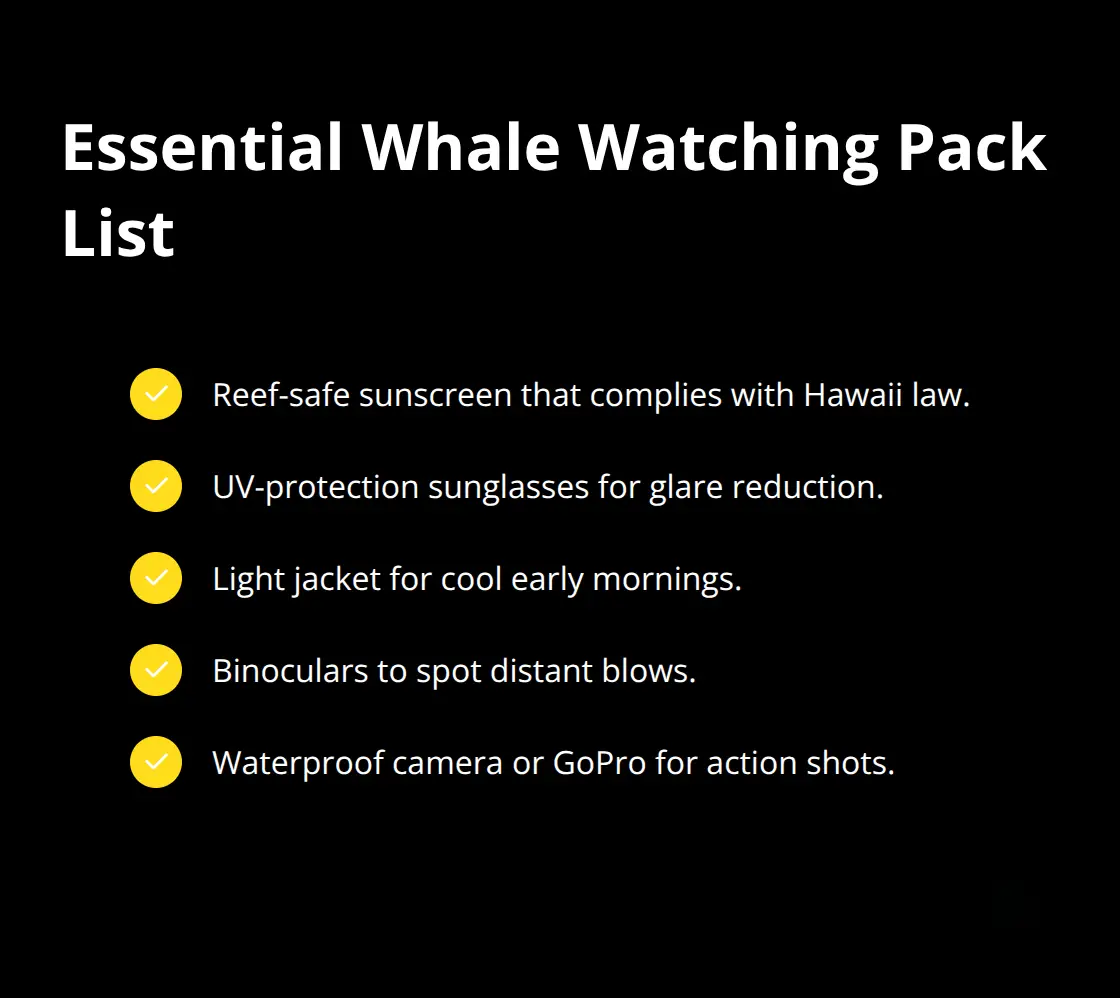
Bring reef-safe sunscreen because Hawaii law restricts oxybenzone and octinoxate formulas that damage coral reefs where whales feed when they return to Alaska. Pack sunglasses with UV protection, a light jacket for early morning chill, binoculars for spotting distant blows, and a waterproof camera or GoPro to capture behaviors. Position yourself on the starboard side during morning trips when the sun won’t create harsh shadows across the water, then move to port side for afternoon departures.
Photography techniques that honor the whales
Avoid using flash photography since sudden bright lights startle whales, and instead use your camera’s natural light or video mode to capture movement. Try focusing on the whale’s behavior rather than framing a perfect still shot, since the most memorable moments happen when you’re watching directly instead of through a viewfinder. The whales reward your attention with displays that no photograph can fully capture.
Final Thoughts
Maui’s whale watching season delivers something rare: a predictable window where you witness one of nature’s most dramatic migrations with genuine confidence. From January through March, roughly 12,000 humpback whales fill Hawaiian waters, and the shallow channels between Maui, Molokai, and Lanai concentrate them where you can actually see them. This isn’t theoretical whale watching-it’s a seasonal reality backed by decades of migration data and thousands of successful tours.
Winter tours offer unforgettable experiences because they combine reliable whale presence with the behaviors that make these animals unforgettable. Breaches, tail slaps, and mothers with calves practicing their own jumps create moments that photographs cannot fully capture. You’ll witness communication and mating displays that reveal intelligence and social complexity most people never encounter outside documentaries, while guides explain what you’re seeing in real time.
Planning your Maui adventure means booking early in your trip to secure flexibility if weather interferes, choosing morning departures for calmer seas, and selecting a vessel that prioritizes proximity over amenities. We at Maui Snorkel Charters operate small-group tours with a maximum of 20 passengers aboard our custom 40-foot vessel, giving you the close encounters and flexible routing that larger commercial boats cannot match. Book your Pacific Humpback Whale watch with us during winter season and experience Hawaii whale watching in Maui the way it’s meant to be experienced-up close, guided by experts, and with the flexibility to chase whales wherever they appear that day.
Call 808-270-8776