
Every winter, humpback whales migrate over 3,000 miles to Hawaiian waters, and Maui becomes one of the best spots on Earth to witness them. At Maui Snorkel Charters, we’ve watched thousands of visitors experience the magic of whale watching excursions in Maui firsthand.
These gentle giants put on incredible displays-breaching, tail slapping, and singing underwater-and you’ll want to know exactly when and where to catch the action. This guide covers everything you need to plan an unforgettable encounter with these magnificent creatures.
When to Visit Maui for Whale Watching
January through March stands as the absolute best window for whale watching in Maui, and there’s no debate about it. North Pacific humpback whale migration peaks during these months, with January marking the height of activity as whales arrive from Alaska to breed and birth their calves. February becomes peak calving season, meaning you’ll see mothers and newborns in calm coastal waters near Ka’anapali, Wailea, and Ma’alaea Bay, particularly during early-morning tides. March rounds out the optimal viewing period with high whale numbers combined with favorable weather that makes both ocean conditions and photography ideal. Try mid-January through mid-March if you can only visit once. The whale season technically runs December through April, but December sees spotty arrivals while April features whales departing. Calves typically arrive after late January, which means visiting before then means fewer opportunities to witness mothers caring for young whales.
Morning Hours Deliver Better Sightings
Timing your tour matters enormously. Early morning between 7 and 10 AM produces the calmest seas and best visibility for spotting whale behavior. The water sits glassier at dawn, making it easier to spot blowholes and the distinctive plume of vapor that indicates an active whale at the surface. Midday viewing between 11 AM and 2 PM still works but brings sun glare that reduces contrast, making whales harder to photograph. Late afternoon to sunset (3 to 6 PM) offers renewed whale activity and magical light, though conditions depend on daily weather patterns. Morning departures consistently yield the most productive encounters. The water temperature hovers around 78 to 79 degrees Fahrenheit during peak season, comfortable enough for extended time on the water without excessive cold. Winter swells occasionally push from the north, but January through March typically features gentler conditions compared to summer months when trade winds dominate.
West Maui Offers Superior Conditions
West Maui experiences less wind than other regions during winter whale season, which is why Lahaina operates as the preferred location for consistent tours. South Maui can work well but sometimes sees heavier conditions. Expect variable weather on the water regardless of shoreline forecasts-sun protection remains essential even on cloudy days, and spray occurs regularly when whales surface nearby. Pack reef-safe sunscreen with non-nano zinc oxide or titanium dioxide, polarized sunglasses to reduce glare, and a brimmed hat with a chin strap. A long-sleeved UV shirt and light jacket protect against wind and unexpected cooling. Visibility underwater peaks during calm morning conditions, which matters if you combine whale watching with snorkeling activities. The warmth of Hawaiian waters during winter makes extended time on deck comfortable for most visitors, unlike cold-water whale watching destinations that require heavy gear.
Now that you understand the optimal timing and conditions, the next section covers what actually happens once you step aboard a whale watching tour and what behaviors you’ll witness.
What to Expect on a Whale Watching Tour
Humpback whales perform predictable behaviors that repeat throughout the day, and knowing what to watch for transforms a boat ride into a genuine wildlife experience. Whales launch their entire 40-ton bodies out of the water during whale breaching, creating an unforgettable splash visible from miles away. Tail slapping occurs when whales smack their flukes against the surface repeatedly, likely communicating with other whales in the area. Spy hopping lets whales poke their heads straight up to look around, while fluking shows their distinctive tail pattern as they descend into deeper water. Your tour operator may include a hydrophone so you can listen to their underwater songs, which Pacific Whale Foundation tours offer as standard. These vocalizations happen constantly during winter season, with whales producing complex songs that last 10 to 20 minutes each. Mothers and calves stay close together in shallow coastal waters, often within 100 yards of your boat if conditions align.
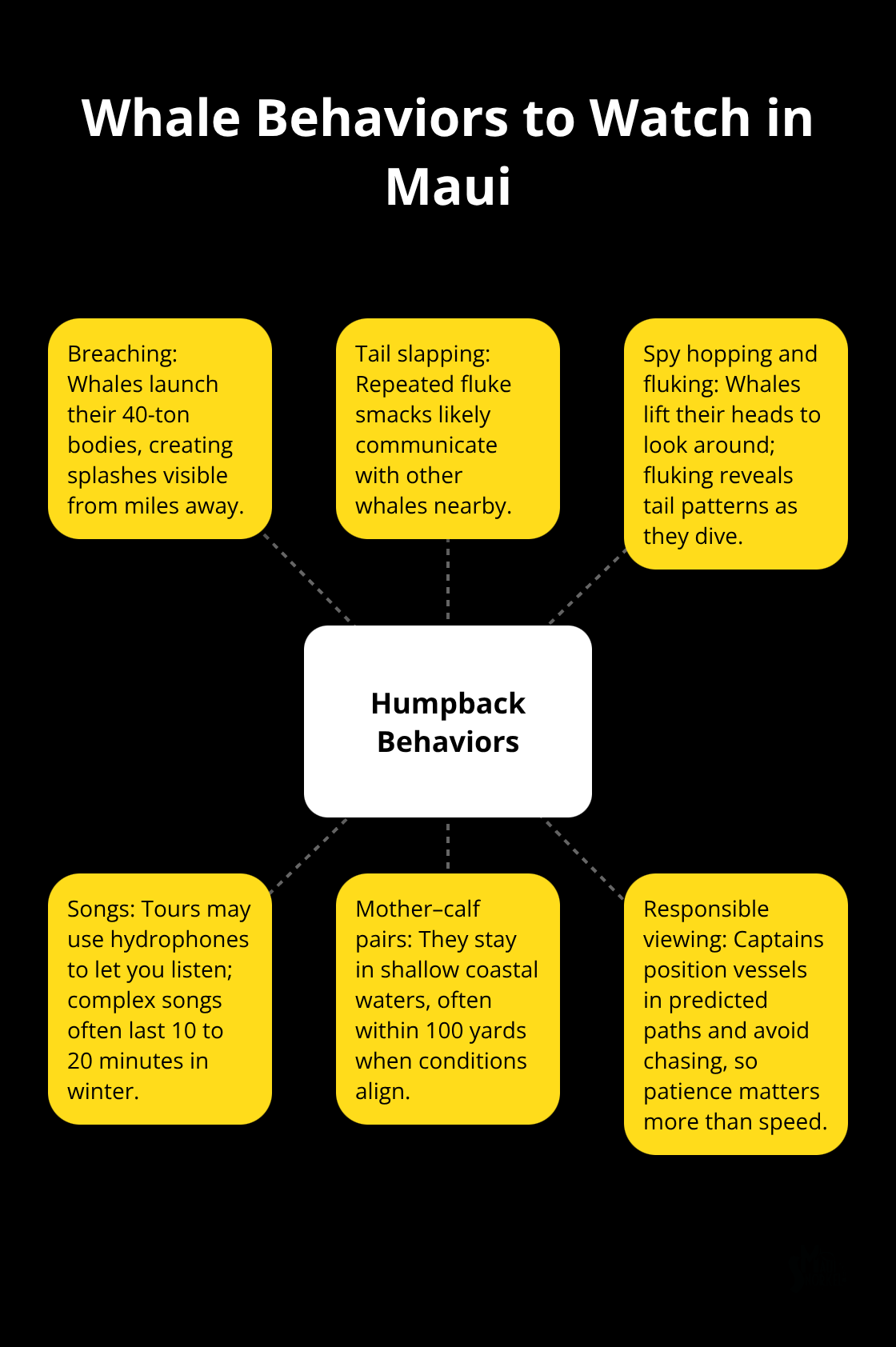
The 100-yard rule isn’t just law under Hawaii state regulations and NOAA Fisheries guidelines-it protects the whales and keeps everyone safe. Your boat captain positions the vessel in predicted whale paths rather than chasing animals, which means patience matters more than speed.
Capture Whale Moments With the Right Gear
Photography requires specific equipment and technique if you want usable images. Bring a camera with optical zoom rather than digital zoom, since digital zoom produces blurry results at distance. Polarized sunglasses reduce glare off the water and help you spot whales before they surface, giving you seconds to prepare your shot. Early morning light creates the sharpest images with minimal glare, while midday sun causes harsh shadows and washed-out colors. Never use flash near whales, as it startles them and violates responsible wildlife photography practices.
Dress for Ocean Conditions
Ocean spray soaks everything within five feet of whale activity, and wind cools quickly once you’re moving. Wear reef-safe sunscreen with non-nano zinc oxide or titanium dioxide, a brimmed hat with a chin strap so it doesn’t blow overboard, and water shoes that dry fast. Layers protect you from unexpected temperature drops and spray exposure. Bring a waterproof case or dry bag for your phone and camera, and consider a GoPro if you want hands-free footage.
Understand Boat Operations and Guarantees
Boat operators intentionally avoid booking tours to capacity, which means you get better viewing angles and personal space rather than fighting crowds. Most operators won’t guarantee specific whale sightings, but some offer free return trips if no whales appear, removing the financial risk from your booking. This approach reflects how seriously professional operators take your experience on the water.
Now that you understand what happens aboard a whale watching tour and how to prepare yourself, the next section reveals the specific locations around Maui where whales congregate most reliably.
Top Whale Watching Locations Around Maui
West Maui’s Superior Conditions
West Maui’s Lahaina coastline dominates whale watching because conditions there outperform everywhere else on the island during winter. The waters between Lahaina and Ka’anapali stay calmer in the early morning, since West Maui experiences less wind during peak season. Operators position boats in the channel between Maui and neighboring islands where whales concentrate for breeding and calving, and this predictability allows your captain to know exactly where to station the vessel. The 50-foot raft used by operators in Lahaina represents the largest in the state, providing stability that matters when whales surface nearby and create unexpected wave action. Early morning departures from Lahaina consistently deliver the smoothest rides and calmest water conditions, which directly translates to better visibility and more comfortable viewing for everyone aboard.
Mala Ramp in Lahaina serves as the launch point for many tours, offering convenient beach loading that eliminates harbor crowds entirely. Ka’anapali Beach itself provides excellent shore-based viewing without paying for a tour, though boat-based encounters put you within feet of whales rather than hundreds of yards away. The Marriott Maui Ocean Club along Ka’anapali Beach offers another solid free viewing spot if you want to test whale activity before committing to a paid excursion.
South Maui’s Protected Waters
South Maui waters around Wailea and Ma’alaea Bay concentrate mothers and newborn calves during February through March because shallow, protected waters create ideal nursing conditions. Wailea Beach Walk provides a family-friendly morning option where you can spot whales without leaving solid ground, and paid parking lots make access straightforward. Kamaole 3 Beach Park offers sunset viewing with panoramic ocean views, though afternoon conditions sometimes bring rougher seas compared to morning hours. Ma’alaea Bay historically sees consistent whale activity but occasionally experiences heavier ocean conditions than West Maui, so check daily forecasts before booking South Maui tours.
Molokini Crater lies in deeper channels where whales pass through during migration, and combined snorkel-and-whale-watch tours sometimes catch whale activity. However, dedicated whale watching tours yield significantly more sightings than combination trips. The trade-off means you sacrifice whale-spotting probability if you want snorkeling in the same outing.
East Maui and Scenic Viewpoints
East Maui’s deep water channels near Haleakala’s underwater slopes attract whales during active migration periods, but rougher conditions and longer travel times from main ports make East Maui less practical for most visitors. Papawai Scenic Lookout along the Honoapiilani Highway provides an accessible pullover spot with expansive ocean views where morning light conditions favor whale spotting. McGregor Point Lookout hosts a free whale-watching information station from December 1 through May 15, staffed with resources from Pacific Whale Foundation to help you identify whale behaviors and understand seasonal patterns.
Multiple daily tour departures mean you can pick morning, afternoon, or sunset slots based on your schedule and weather forecasts that morning. We at Maui Snorkel Charters offer Pacific Humpback Whale watches during the winter season for those seeking dedicated whale encounters in South Maui waters.
Final Thoughts
Book your whale watching excursions in Maui between mid-January and mid-March for the highest probability of unforgettable encounters. January peaks with arriving whales, February brings calving season with mothers and calves in shallow waters, and March combines peak numbers with favorable weather. Early morning departures consistently outperform afternoon options, so try 7 to 10 AM slots when seas run calmest and visibility peaks.
Preparation transforms a boat ride into a genuine wildlife experience. Pack reef-safe sunscreen, polarized sunglasses, a brimmed hat with chin strap, and layers for wind and spray-these items eliminate anxiety and maximize your comfort on the water. Arrive early to your departure point, listen carefully to your captain’s safety briefing, and respect the 100-yard rule that protects both whales and passengers.
We at Maui Snorkel Charters operate Pacific Humpback Whale watches during winter season from our South Maui location, combining whale encounters with our expertise in small-group ocean adventures. Your whale watching excursion in Maui becomes a lifelong memory when you plan strategically, prepare properly, and trust knowledgeable captains who know exactly where whales congregate each season.
Call 808-270-8776