
Every winter, Maui transforms into the world’s premier whale watching destination. Between January and March, humpback whales migrate over 3,000 miles from Alaska to our warm Hawaiian waters, creating an unforgettable spectacle.
At Maui Snorkel Charters, we’ve guided thousands of guests on whale watching tours in Maui, Hawaii, and we know exactly where and when to spot these magnificent creatures. Whether you’re watching from shore or joining us on the water, this guide will help you experience the magic of these gentle giants.
When to Spot Whales in Maui
Peak Season: January Through March
January through March is absolutely the window for whale watching in Maui, and there’s no point planning a trip outside these months if whales are your main goal. NOAA estimated in October 2024 that approximately 11,278 North Pacific humpbacks migrate to Hawaiian waters each winter, and Maui’s shallow Nui Basin concentrates them like nowhere else on earth. The whales travel roughly 3,500 miles from Alaska, covering that distance in about 4 to 6 weeks at speeds of 3 to 7 miles per hour.
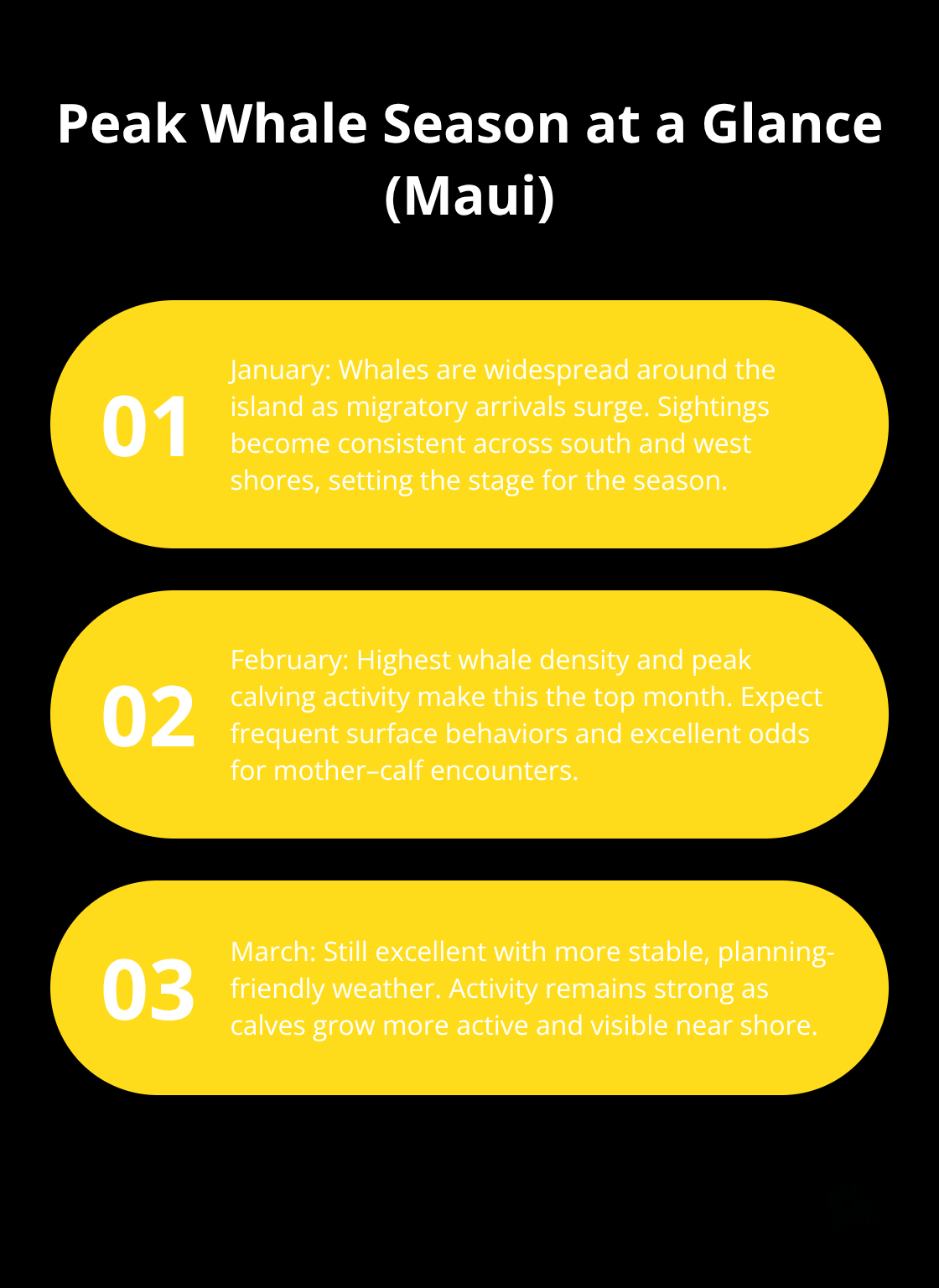
January brings whales everywhere across the island. February delivers the highest whale density and peak calving activity, making it the gold month for sightings. March remains excellent with reliably good weather that makes planning easier.
If you want to see calves specifically, try planning for late January onward when mothers begin nursing their young in warm waters. Calm coastal waters near Wailea and Kaanapali make it easier to spot mothers teaching calves to breach and spy hop during February.
A Conservation Success Story
The humpback population itself tells a remarkable conservation story. All populations of humpback whales were greatly reduced, most by more than 95 percent, before a final moratorium on commercial whaling in 1985. Each whale has unique tail fluke patterns like fingerprints, allowing researchers to track individuals across seasons and years. Humpbacks don’t feed while in Hawaii-they survive on fat reserves built during Alaska’s abundant feeding season-so they spend winter focused on breeding, calving, and nursing.
Best Times and Locations for Viewing
Whale behaviors are dictated generally by environmental factors, so both morning and afternoon can deliver excellent viewing opportunities. From shore, binoculars become essential-scan the surface for the distinctive blow or plume that marks a whale’s breath, then watch for tail flukes or breaches. Maui’s south and west coasts deliver reliable land-based sightings, especially along Highway 30 between Maalaea and Lahaina, plus spots in Kihei and Wailea.
The McGregor Point Lookout offers a free information station from December 1 to May 15 with seasonal updates on whale activity. If you’re on a boat, captains position vessels to anticipate whale movements, waiting in likely paths to create close encounters within the legal 100-yard safety boundary. This strategic positioning transforms your experience from a casual observation into an intimate encounter with these magnificent creatures.
How to Experience Whale Watching in Maui
Boat Tours: Your Best Chance for Close Encounters
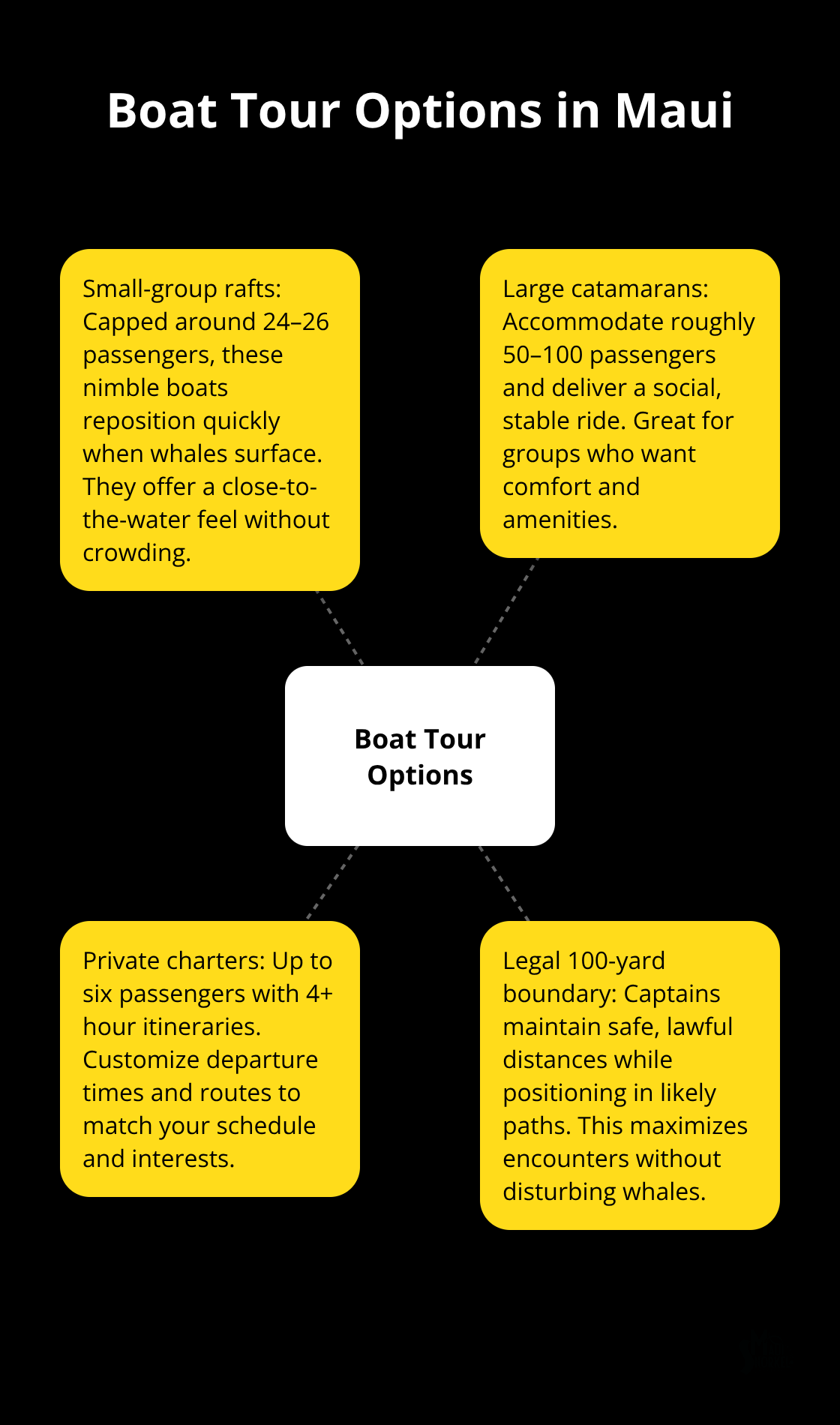
Maui offers genuine flexibility for whale watching, and your choice depends entirely on what kind of experience matters most to you. Boat tours dominate the market because they deliver unmatched proximity to whales within the legal 100-yard boundary. Small-group raft tours capping at 24 to 26 people offer closer quarters and faster positioning when whales surface. Larger catamaran tours from Lahaina and Ma’alaea Harbor accommodate 50 to 100 passengers and feel more social. Private charters for up to six passengers run 4+ hours and let you customize departure times and locations to match your schedule.
Sail Maui operates multiple daily departures from Lahaina with morning, midmorning, golden hour, and Ma’alaea mid-day options, giving you real scheduling control. Pacific Whale Foundation leads six different tour variations across vessel types, all with certified marine naturalists on board and a free re-ride guarantee within a year if whales aren’t spotted. Redline Rafting runs compact 1.5-hour tours from Kihei Harbor January through March, capped at 24 passengers, with a $10 discount incentive that makes sense if you’re based in South Maui.
Shore-Based Viewing: Free and Surprisingly Effective
Shore-based viewing costs nothing and works surprisingly well along Maui’s south and west coasts, particularly Highway 30 between Maalaea and Lahaina where you can pull over safely and scan with binoculars. Wailea and Kihei deliver consistent sightings from beach level, and spots like Hoʻokipa Beach Park on the north shore offer elevated vantage points that cut through surface glare. The free McGregor Point Lookout information station remains open December 1 to May 15 with real-time activity updates, making it worth a stop if you’re driving the island.
Timing Your Tour for Optimal Conditions
Morning departures between 7 and 10 AM deliver the calmest seas and best visibility for spotting blows. Afternoon golden-hour tours from 3 to 6 PM offer magical lighting when whale activity often picks up again. Kayak-based options from Olowalu and Makena Landing combine snorkeling with whale watching in a single outing, though these tours prioritize reef exploration over whale positioning.
What You’ll Experience Aboard
Boat tours include naturalist narration explaining behavior, migration patterns, and hydrophone technology that lets you hear male humpback songs underwater up to 12 miles away. Many operators provide binoculars, sunscreen, and safety equipment included in your ticket price, eliminating surprise costs. Expect 1.5 to 4 hours depending on your choice, with most departures handling 20 to 100 people across different vessel styles.
Preparing for Your Whale Watch Adventure
Your next step involves selecting the right tour type and timing that fits your schedule and comfort level. Whether you choose a boat or shore experience, the preparation phase determines how much you’ll enjoy the encounter.
Making the Most of Your Whale Watch
What to Wear and Pack
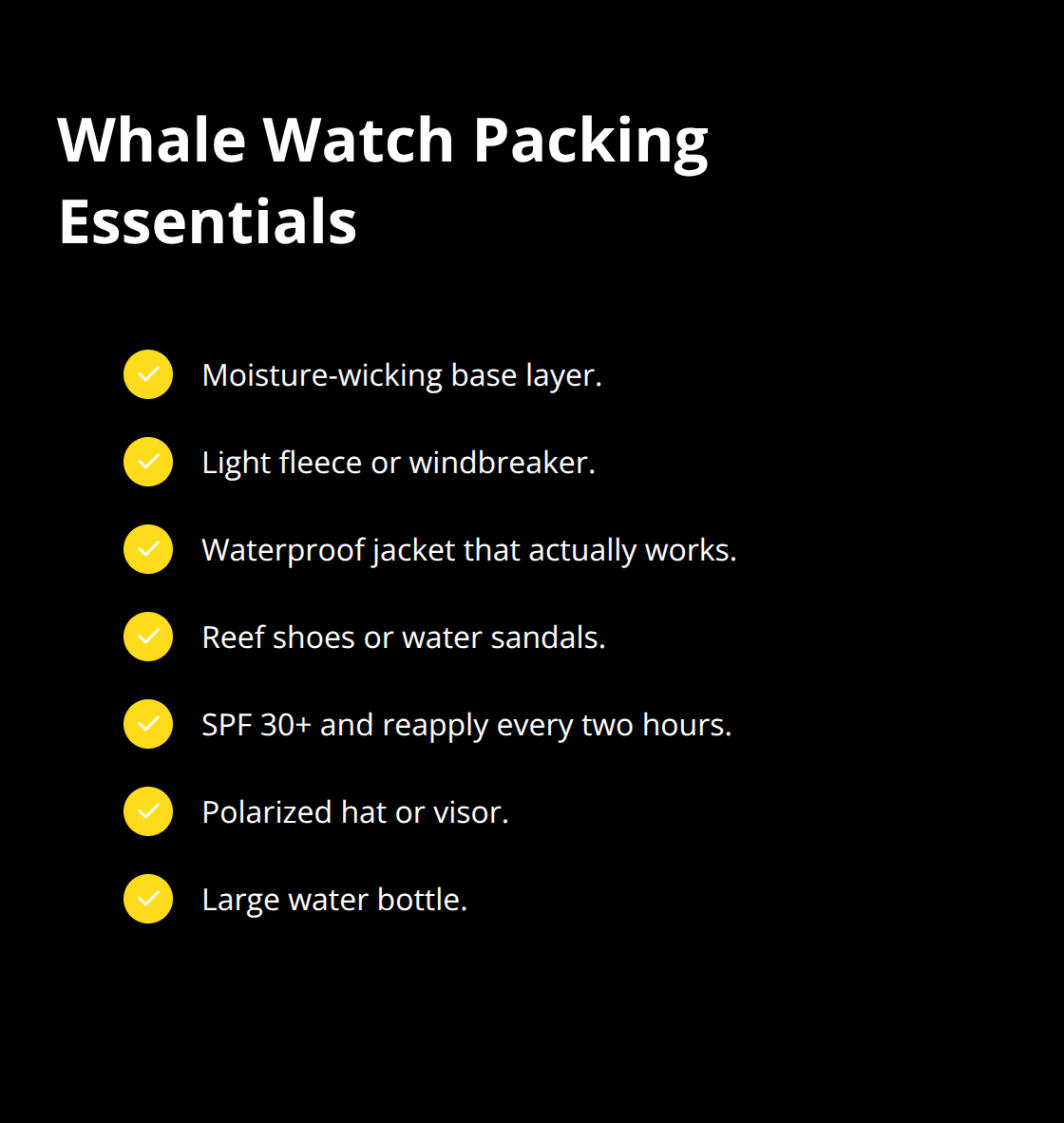
Ocean conditions shift fast, and the difference between a comfortable experience and a miserable one hinges on what you wear. Start with a moisture-wicking base layer, add a light fleece or windbreaker for the boat ride out, and bring a waterproof jacket that actually works-not the flimsy kind that tears on a cleat. Reef shoes or water sandals grip wet decks better than flip-flops, which cause more slip-and-fall incidents than any other footwear choice.
Sunscreen matters more than most people realize; you reflect off the water and burn faster than on land, so apply SPF 30 minimum and reapply every two hours. Bring a polarized hat or visor to cut water glare, which makes spotting whale blows exponentially easier. Pack a large water bottle-dehydration sneaks up quickly when you focus on scanning the surface, and boat operators rarely provide unlimited fresh water.
Binoculars and Camera Gear
Binoculars transform what you see from blurry shapes to distinct whale behaviors, so invest in quality optics rather than cheap versions that strain your eyes. Look for 7×50 or 8×42 magnification designed for marine use; these handle the water’s glare and movement better than terrestrial binoculars. If you bring a camera, use a telephoto lens of at least 200mm to capture detail without disturbing whales-zoom matters more than proximity.
Shoot in aperture-priority mode during morning hours when light stays consistent, and switch to shutter-speed priority in afternoon golden hour to freeze breaching action. Most whale behaviors last seconds, so continuous shooting mode captures the frame you need rather than hoping for a single perfect shot. Leave your phone’s camera zoom alone; digital zoom destroys image quality, and you regret it when reviewing photos later.
Federal Whale Watching Rules
Responsible whale watching means never approaching closer than 333 yards, never blocking a whale’s path, and stopping your boat if a whale swims toward you-these aren’t suggestions but federal law under Marine Mammal Protection Act guidelines. Hydrophone technology lets you hear whale songs without disturbing them, and certified naturalist-led tours include this experience on their trips. Teach your group to stay quiet during whale encounters since sudden noise can startle mothers and calves, disrupting nursing behavior critical for calf survival.
Move slowly and deliberately on boats rather than rushing to the rail; aggressive movement triggers avoidance responses that end your viewing opportunity. If you view from shore, never scramble across rocks or venture into dangerous areas for a better view-the whales surface elsewhere, and a broken ankle ruins your entire vacation.
Final Thoughts
Maui stands alone as Hawaii’s premier whale watching destination, and the numbers prove it. With roughly 11,278 humpback whales migrating to Hawaiian waters each winter and the Maui Nui Basin concentrating them in shallow, protected channels, you’re looking at the best odds on earth for close encounters with these magnificent creatures. The combination of warm water, calm conditions, and predictable whale behavior from January through March creates a window that doesn’t exist anywhere else.
Your whale watching tour in Maui Hawaii works best when you match your preferences with the right operator and timing. If you want guaranteed proximity and expert guidance, boat tours deliver unmatched access within legal boundaries, while shore-based viewing costs nothing and works surprisingly well along Highway 30 and South Maui beaches if you bring binoculars and patience. The McGregor Point Lookout information station gives you real-time activity updates that improve your odds whether you choose water or land.
We at Maui Snorkel Charters know that whale watching pairs perfectly with other ocean adventures, and our small-group approach means you get personalized attention and flexible routing based on daily conditions. Starting at $99, our Pacific Humpback Whale watches include everything you need for a comfortable, educational experience on the water. A single whale breach, a calf practicing its spy hop, or the underwater song of a male humpback creates memories that last decades.
Call 808-270-8776