
Every winter, humpback whales travel over 3,000 miles to Maui’s warm waters, and knowing the right Maui whale watching schedule transforms your ocean adventure from hopeful to guaranteed.
At Maui Snorkel Charters, we’ve guided thousands of visitors to unforgettable encounters with these magnificent creatures during peak season. The timing, location, and preparation matter far more than luck when it comes to seeing whales up close.
When Humpback Whales Arrive in Maui
January through March is your window
Humpback whales travel over 3,000 miles from Alaska’s Gulf of Alaska to Maui’s warm waters around early January, with peak populations between mid-January and early March. This timing follows a predictable pattern-Maui’s ocean waters cool to approximately 74-76 degrees Fahrenheit by late December, which triggers the whales’ migration from their summer feeding grounds. The National Oceanic and Atmospheric Administration tracks these patterns annually, and the data remains remarkably consistent year after year. Most humpbacks depart by late March as water temperatures begin warming again, making the three-month window your most reliable timeframe for sightings. If you’re flexible with travel dates, mid-February offers the absolute highest concentration of whales in Maui waters, with population estimates reaching 10,000 to 12,000 individuals across the Hawaiian Islands during peak season.
Water temperature controls everything
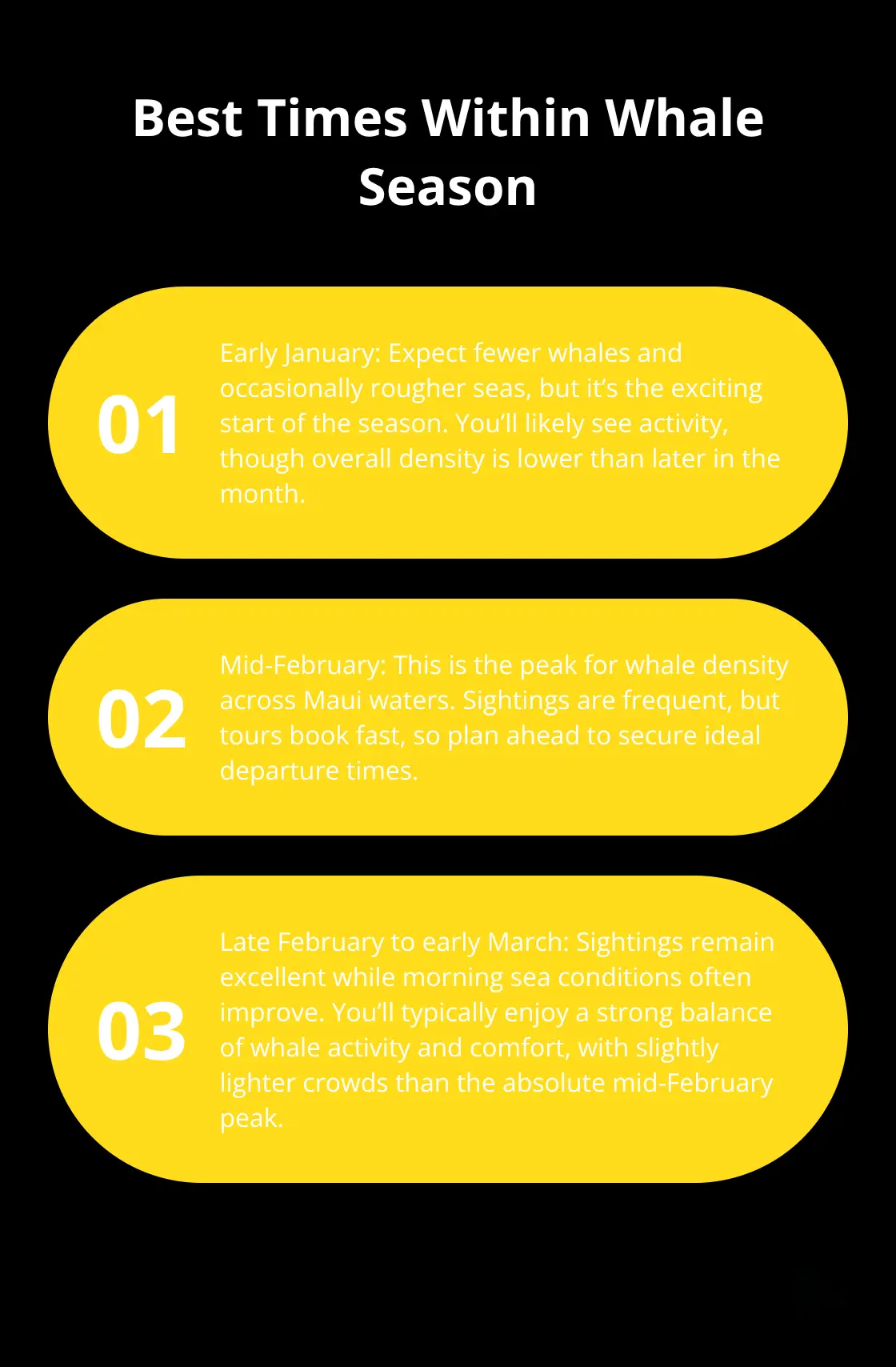
The water temperature trigger affects not just whale arrival but also the conditions you’ll experience on the water. Cooler winter waters create calmer surface conditions in the mornings, which means better visibility and steadier boats for viewing. Late-season arrivals in February and early March offer another advantage-the whales become more active and move closer to shore as they prepare for breeding. If you book a tour in early January, you might see whales, but you’ll encounter fewer of them and potentially rougher seas. Late February through early March combines the highest whale density with increasingly predictable morning conditions (and the bonus of fewer crowds than peak mid-February dates).
Why timing shapes your entire experience
The exact timing matters because it determines both what you’ll see and how comfortable you’ll be while seeing it. Early January tours present a trade-off: fewer whales but the start of the season’s excitement. Mid-February represents the sweet spot for whale encounters, though booking fills up quickly during this window. Late February and early March still offer excellent sightings with slightly better sea conditions than the absolute peak. We at Maui Snorkel Charters offer Pacific humpback whale watches during the winter season, and we structure our departure times to capture optimal conditions when water temperatures and whale behavior align for your experience. Your choice of when to visit directly impacts your odds of seeing these magnificent creatures up close.
Best Times and Locations for Whale Watching
Morning departures outperform afternoon tours
Ocean physics favors early departures, not afternoon tours. Maui’s trade winds strengthen throughout the day, creating choppier waters by midday and afternoon. Tours that leave between 7 and 9 AM catch calmer surface conditions, which means steadier viewing platforms and better visibility for spotting whale behaviors like breaching and tail slapping. Your comfort and viewing quality depend on catching the ocean before wind conditions deteriorate. Afternoon tours expose you to rougher seas and shorter sighting windows, which translates to fewer photo opportunities and potentially higher seasickness risk for sensitive travelers.
South Maui routes deliver superior whale encounters
South Maui routes from Kihei consistently outperform West Maui departures, primarily because humpback populations concentrate in the Maui Channel between South Maui and Molokini Crater during winter months. The channel’s deeper waters and specific bathymetry create ideal breeding and nursing habitats, which means whales spend more time in these areas rather than off West Maui’s shallower coastline. Tours operating from South Maui ports reach prime viewing zones within 15 to 20 minutes, while West Maui charters typically require 45 to 60 minutes of travel time to reach comparable whale-watching areas. This difference matters significantly-shorter travel times mean more actual whale-watching time and less seasickness exposure for passengers.
Weather patterns favor South Maui locations
Weather patterns strongly favor South Maui; the leeward western side experiences stronger afternoon winds, while South Maui’s position creates more protected morning conditions. Real-time weather forecasts from the National Weather Service show South Maui waters average 1 to 2 knots calmer wind speeds during peak morning hours compared to West Maui locations. We at Maui Snorkel Charters operate from Kihei in South Maui, positioning you for optimal conditions and shorter travel times to whale-watching zones. Choose South Maui operators if calm waters and reliable sightings rank high on your priority list-the geography and weather patterns simply work in your favor.
How to prepare for variable ocean conditions
Sea conditions shift rapidly, so pack layers and bring a light jacket for morning departures (the ocean breeze feels cooler than land temperatures). Wear non-slip shoes with good grip, as boat decks become slippery when wet. Sunscreen rated SPF 50+ protects your skin from intense ocean reflection, and polarized sunglasses reduce glare while helping you spot whale movements in the water.
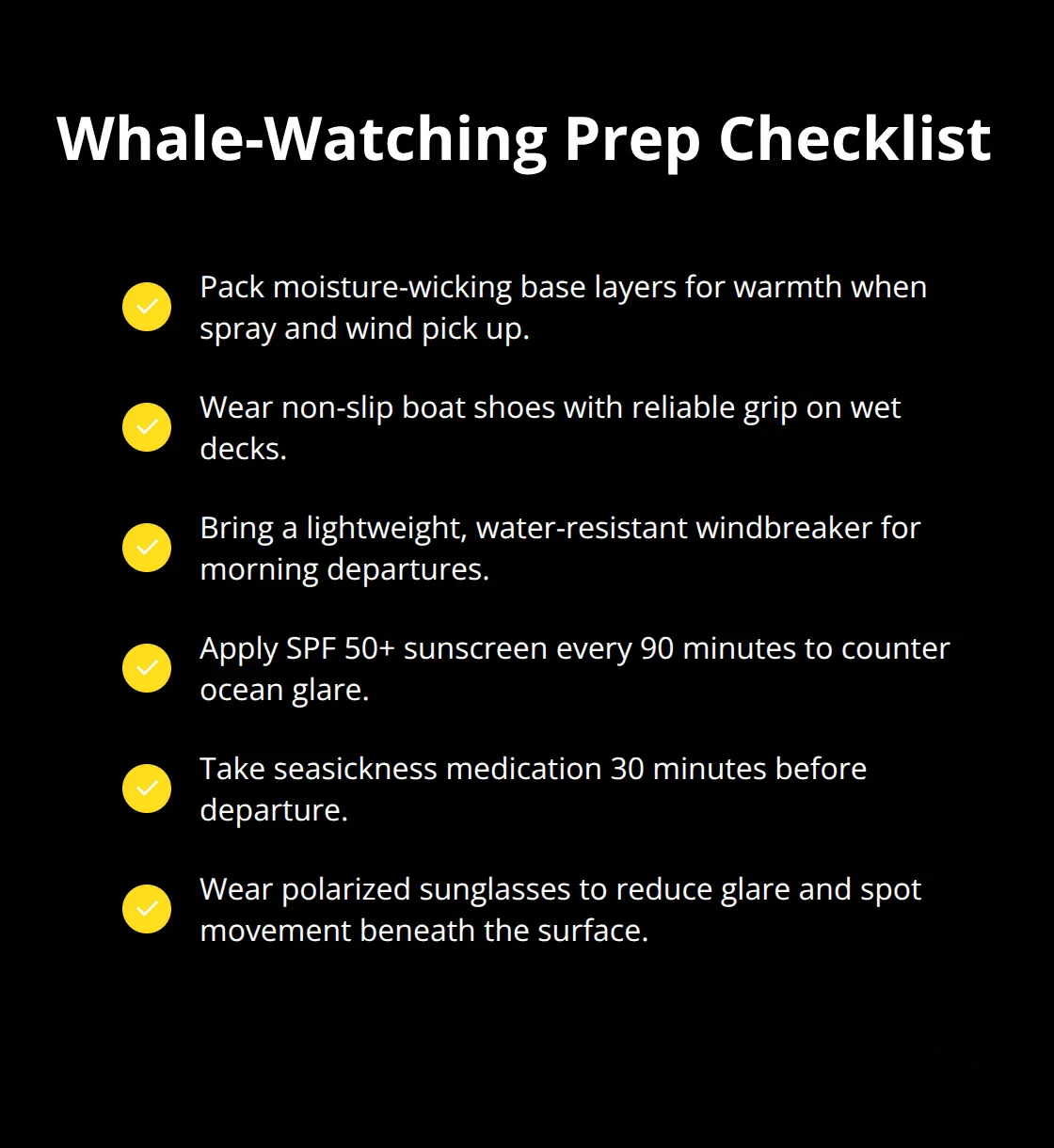
Seasickness medication taken 30 minutes before departure works far better than waiting until you feel queasy. Your preparation directly affects how much you actually enjoy the experience rather than spending the tour feeling uncomfortable.
Preparing for Your Whale Watching Adventure
What to wear for ocean conditions
Ocean conditions differ dramatically from land environments, and most visitors underestimate how cold and wet the experience becomes. Moisture-wicking base layers outperform cotton, which absorbs water and traps cold against your skin-synthetics handle marine environments far better than natural fibers. A lightweight windbreaker that resists water spray matters more than cheap rain jackets, which fail within minutes on the water. Your feet need non-slip boat shoes with genuine grip; Crocs or similar foam shoes provide better traction than sneakers when decks become wet, which happens constantly during winter tours.
Sun protection and visibility on the water
SPF 50+ sunscreen applied every 90 minutes protects your skin far more effectively than you’d expect; ocean reflection intensifies UV exposure by up to 30 percent, meaning your face burns faster on the water than at the beach. Polarized sunglasses reduce glare and actually help you spot whale movements beneath the surface, which standard sunglasses cannot do. The combination of proper sun protection and quality eyewear transforms your comfort level throughout the entire tour.
Managing seasickness before it starts
Seasickness medication taken 30 minutes before departure works far more effectively than waiting until you feel nauseous-absorption has already been compromised once motion sickness sets in. If you’ve experienced motion sensitivity previously, this preventive approach saves your entire tour experience. The ocean’s motion affects most people differently, so preparation matters more than hoping you’ll feel fine once aboard.
Understanding humpback whale behavior
Humpback whales breach, tail slap, and spy-hop when socializing and establishing dominance hierarchies, not randomly for entertainment-these behaviors signal specific communication between individuals in the water. Federal Marine Mammal Protection Act regulations require vessels maintain 100 yards distance from whales, so you’ll observe behavior from a distance rather than up close, which actually provides better context for understanding what you’re watching. Never assume a whale is aggressive; humpbacks are curious but fundamentally non-threatening to humans, and the distance requirement exists to protect whales from vessel strikes, not to protect you from whales.
Respecting mothers and calves during peak season
Mothers with calves require extra respect during late February and March when nursing occurs in shallow South Maui channels-these protective behaviors look dramatic but reflect normal parental care. The whales’ natural instincts to protect their young create some of the most powerful moments you’ll witness on the water. Observation matters more than photography; the whale-watching experience has measurably higher satisfaction rates when people put phones down and simply observe, according to research from the Journal of Ecotourism.
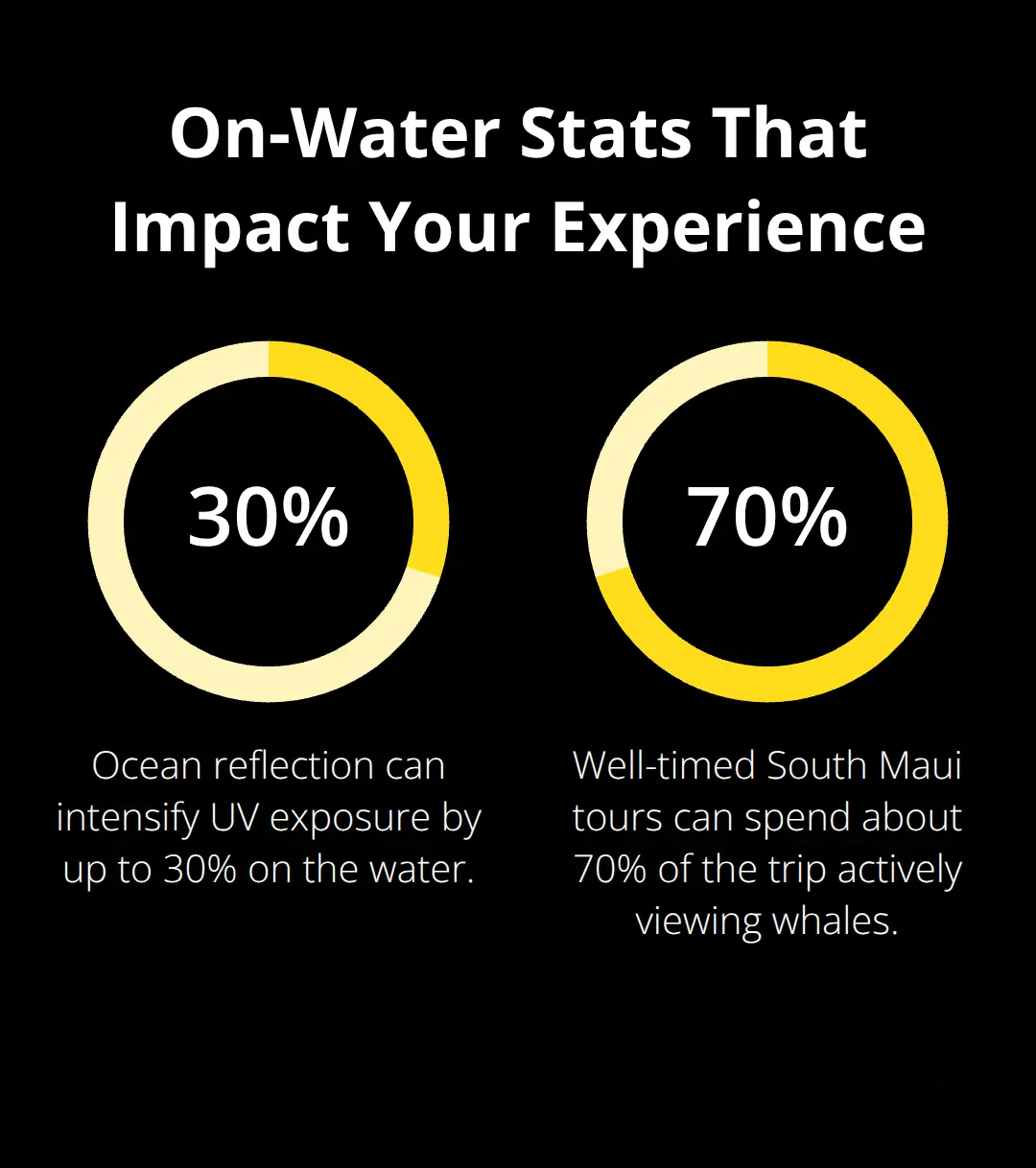
Tours departing between 7 and 9 AM from South Maui positions you for optimal conditions and shorter travel times to the Maui Channel, where you’ll spend 70 percent of your tour actually viewing whales rather than traveling to viewing zones.
Final Thoughts
Your Maui whale watching schedule transforms the entire experience, from whale populations you’ll encounter to your comfort level on the water. Mid-January through early March remains your optimal window, with mid-February offering peak populations and late February providing the best balance between whale density and calmer seas. Water temperature triggers migration patterns, and ocean conditions improve as the season progresses into late February and March.
South Maui consistently outperforms other locations because humpback populations concentrate in the Maui Channel between South Maui and Molokini Crater during winter months. The geography works in your favor-shorter travel times mean more actual whale-watching time, and morning departures catch calmer waters before trade winds strengthen throughout the day. Weather patterns favor South Maui’s leeward position, delivering steadier viewing conditions and higher sighting success rates compared to West Maui alternatives.
We at Maui Snorkel Charters operate from Kihei in South Maui, positioning you for optimal conditions with fast 15-minute runs to prime whale-watching zones. When you book your winter whale watch adventure with us, you’re choosing a location and operator that understands how seasonal timing, geography, and ocean conditions work together to create unforgettable encounters with these magnificent creatures.
Call 808-270-8776