
Maui’s crystal-clear waters and vibrant coral reefs make it one of Hawaii’s premier snorkeling destinations. Whether you’re seeking encounters with sea turtles or exploring untouched marine ecosystems, the island offers unforgettable underwater experiences.
Discover the top snorkeling in Maui by exploring destinations that range from famous crater formations to hidden coastal gems. Each location offers distinct advantages, depending on your preferences and the season you visit.
Why Molokini Crater Dominates Maui Snorkeling
Unmatched Visibility and Water Clarity
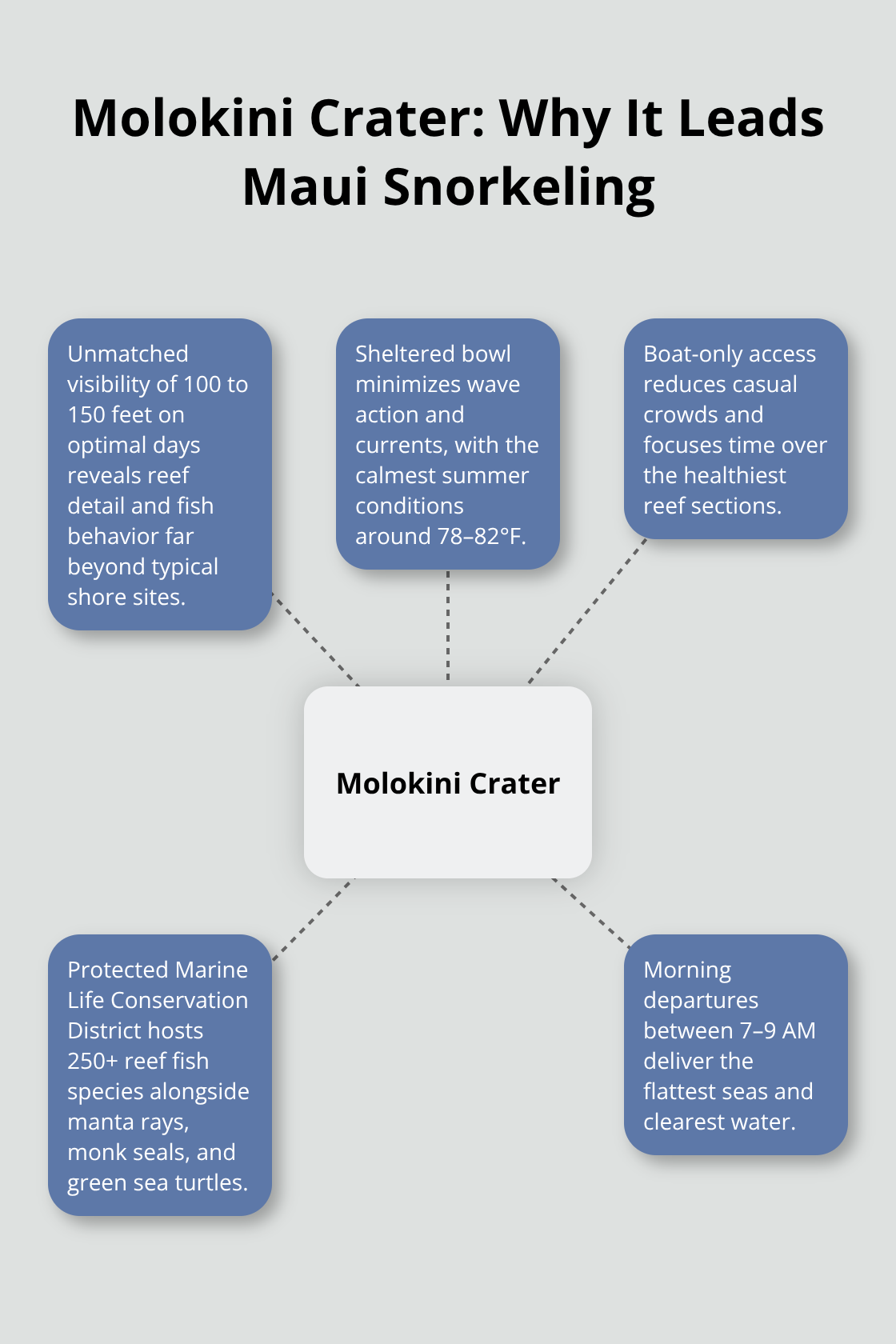
Molokini Crater sits three miles offshore as a crescent-shaped volcanic caldera that delivers visibility reaching 100 to 150 feet on optimal days, making it the clearest snorkeling destination in Maui’s waters. The crater’s protected status means coral health exceeds most Hawaiian reefs, and the offshore location filters out the runoff and sediment that clouds visibility at mainland beaches. This Marine Life Conservation District and Bird Sanctuary hosts over 250 reef fish species, including parrotfish, butterflyfish, yellow tang, and Moorish idols, alongside manta rays, monk seals, and green sea turtles.
Geography and Manageable Conditions
The crater’s unique geography creates a sheltered bowl where wave action remains minimal and currents stay manageable for snorkelers of varying experience levels. Summer months deliver the calmest conditions with water temperatures around 78 to 82 degrees Fahrenheit, though winter snorkeling remains viable on South Maui’s sheltered side. Morning departures between 7 and 9 AM guarantee the flattest seas and clearest water before afternoon trade winds churn the surface.
Boat Access and Crowd Control
Boat access is mandatory, which eliminates the casual swimmers and crowds that plague shore-based spots and delivers a more focused underwater experience. Tours depart from Kihei and South Maui, with operators running fast 15-minute passages aboard custom vessels and flexible routes that adapt to daily conditions, ensuring you encounter the healthiest reef sections on any given morning. Tours typically include breakfast, snacks, and all gear, eliminating equipment hassles and allowing you to maximize bottom time.
Superior Reef Exploration
The 100-plus-foot visibility transforms reef exploration into an entirely different experience compared to shore snorkeling, where 30 to 50 feet is standard. This clarity reveals fish behavior and coral detail that remain hidden in murkier conditions, making Molokini the ideal destination for snorkelers who want to observe marine life in its natural habitat. With such exceptional underwater visibility and protected marine ecosystems, Molokini sets the standard that other Maui snorkeling spots aspire to match-yet few achieve.
Where to Find Hawaiian Green Sea Turtles in Maui
Turtle Town: Maui’s Most Reliable Turtle Destination
Turtle Town at Maluaka Beach ranks as Maui’s most reliable destination for guaranteed sea turtle encounters, delivering consistent sightings that outperform every other shore-accessible snorkeling location on the island. Located on South Maui’s leeward side, this shallow reef system hosts Hawaiian green sea turtles year-round, though seasonal patterns shift dramatically based on water temperature and food availability. Summer months from June through September produce the highest turtle density, with morning sessions between 7 and 9 AM offering peak visibility before afternoon chop reduces underwater sight lines to 20 to 30 feet. Winter conditions remain viable on protected South Maui reefs, but northern exposure sites experience larger swells that reduce both safety and visibility. Incoming tides concentrate turtles along reef edges where they feed on algae, making mid-tide to high-tide windows superior to low-tide periods when turtles disperse across deeper channels. Tours departing from Kihei to Turtle Town typically run 20 to 30 minutes offshore, positioning you directly above coral towers where turtles cruise predictably. Water temperatures hover around 75 to 77 degrees Fahrenheit in winter and climb to 78 to 82 degrees in summer, requiring either a lightweight rash guard or minimal wetsuit depending on your cold tolerance.
Legal Distance and Respectful Observation
Hawaiian law mandates a 10-foot minimum distance from turtles, yet most snorkelers violate this requirement through ignorance or impatience. Position yourself downstream of approaching turtles and allow them to pass naturally rather than pursuing or cornering them against reef formations. Turtles navigate specific feeding routes daily, so positioning yourself stationary along their path yields sightings without stressful chasing. Avoid touching, feeding, or blocking turtle movement, as these actions cause stress that disrupts their natural behavior and feeding cycles. Guided experiences prove invaluable because experienced crew members identify turtle highways and position groups strategically, multiplying encounter probability while enforcing legal distance standards.
Navigating Currents and Conditions
Snorkeling conditions at Turtle Town demand respect for currents that flow perpendicular to shore, particularly on the outer reef edge where water depths exceed 40 feet and drift becomes pronounced. Enter from sandy beach areas on the western end and work eastward along the reef, using visual landmarks to track your position relative to shore entry points. Afternoon trade winds typically arrive by 11 AM, roughening surface conditions and reducing visibility significantly, which explains why early departures dominate successful Turtle Town operations.
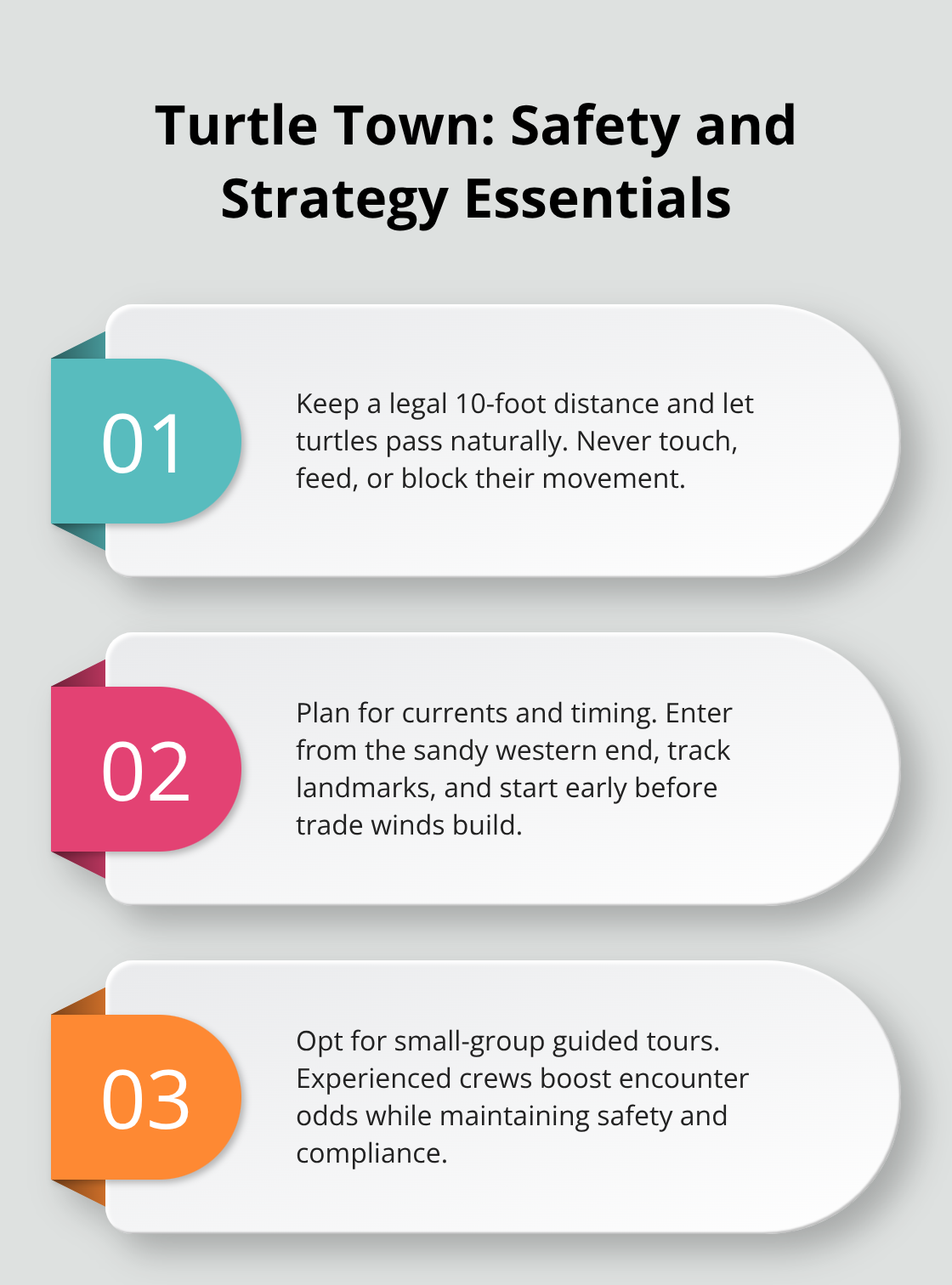
Small-group tours with experienced guides navigate these variables effectively, positioning you in optimal locations while maintaining safety standards throughout your underwater exploration.
South Maui’s Underrated Snorkeling Alternatives
Exceptional Reef Systems Beyond Turtle Town
South Maui extends far beyond Turtle Town, offering three distinct coastal environments that deliver exceptional snorkeling without the crowds and boat fees. Ahihi-Kinau Natural Area Reserve sits at Maui’s southern tip, protecting pristine reef and volcanic shoreline where visibility regularly reaches 60 to 80 feet on calm mornings. This reserve enforces strict no-take policies that have rebuilt fish populations to densities rarely seen elsewhere on the island, meaning schools of parrotfish, surgeonfish, and jacks patrol the lava formations in numbers that dwarf typical shore spots. Entry requires a short walk across volcanic rock to reach sandy access points, and the effort filters out casual visitors who plague easier beaches.
Wailea and Ulua: Contrasting Coastal Gems
Wailea Beach and Ulua Beach anchor the mid-South Maui coastline with contrasting characteristics: Wailea delivers a long sandy entry with calm conditions ideal for families, while Ulua Beach sits immediately adjacent and features a linked coral reef system that extends 50 to 100 yards offshore with consistent 40 to 50-foot visibility. The rocky fingers at Ulua concentrate fish activity and turtle sightings, particularly along the left side where morning light penetrates clearest. Both beaches offer showers and facilities, eliminating post-snorkel logistics that complicate remote locations. Water temperatures remain consistent year-round at 75 to 77 degrees in winter and 78 to 82 degrees in summer, so a lightweight rash guard suffices for most snorkelers.
Seasonal Patterns and Optimal Timing
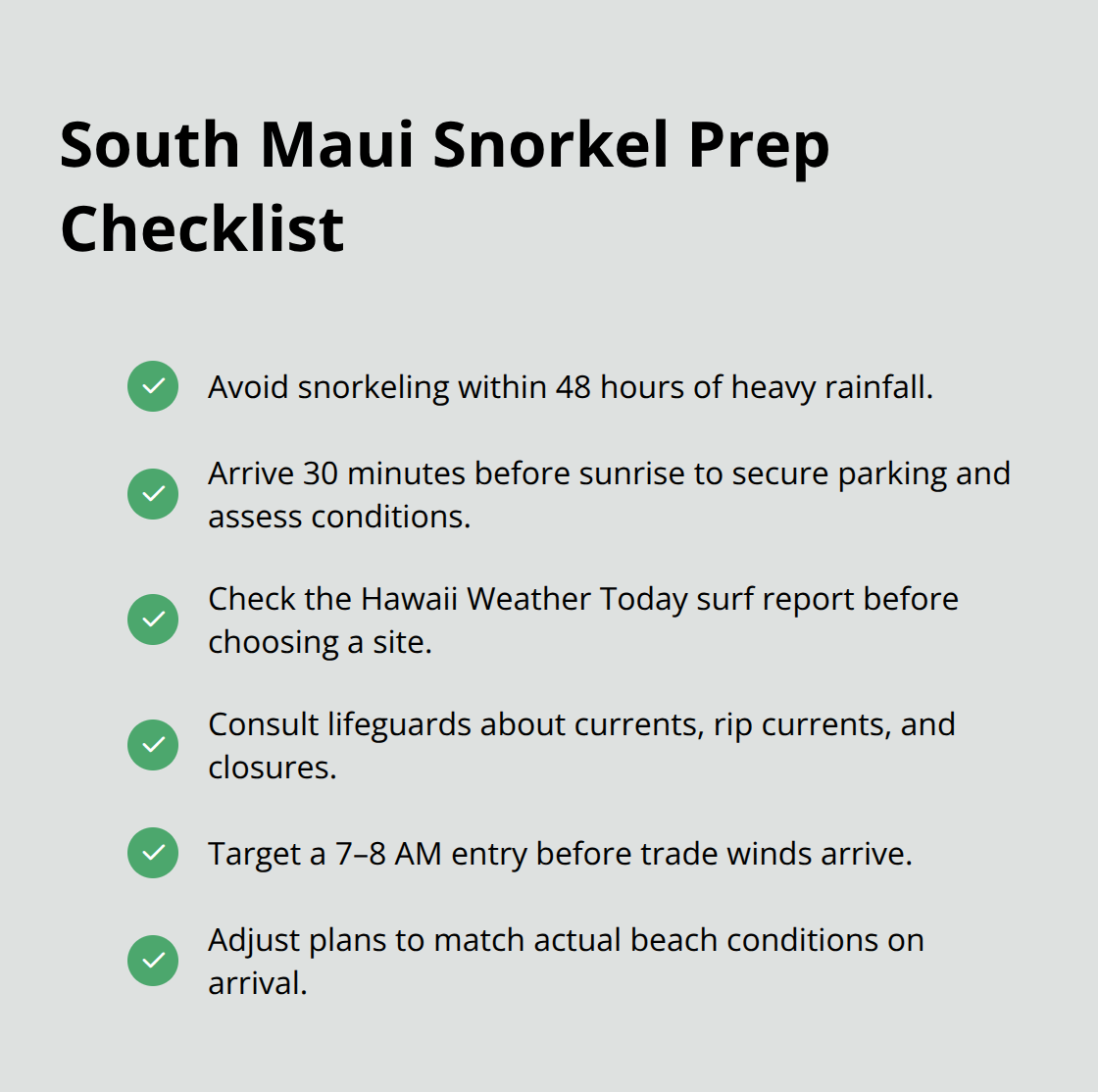
Timing determines success across all three locations more dramatically than equipment or technique. Early morning departures between 7 and 8 AM guarantee flat seas before trade winds arrive around 11 AM, compressing your optimal snorkeling window to roughly three hours maximum. Winter swells from November through March create dangerous conditions at exposed northern shores but leave South Maui’s leeward side manageable, making December through March prime months despite cooler water temperatures. Summer visibility peaks from June through September when offshore winds minimize surface chop and water clarity extends beyond 100 feet at Ahihi-Kinau.
Weather Assessment and Daily Conditions
Avoid snorkeling during heavy rainfall within 48 hours prior, as runoff clouds visibility across all South Maui sites and degrades water quality significantly. Check the Hawaii Weather Today surf report before committing to any location, and position yourself at your chosen beach 30 minutes before sunrise to claim parking and assess actual conditions against forecast predictions. Lifeguards staff Wailea and Ulua beaches daily, so consult them about current conditions, rip currents, and any closures before entering.
Equipment Selection and Local Expertise
Rent gear from established shops rather than hotel concierges, as rental-shop staff provide honest assessments of daily conditions and steer you toward realistic options when your first choice lacks adequate visibility. South Maui coastal snorkeling rewards early risers and flexible planners who adapt to daily conditions rather than insisting on predetermined destinations.
Final Thoughts
Your ideal snorkeling location depends on three factors: your experience level, available time, and seasonal timing. Beginners benefit from guided boat tours that handle navigation, safety protocols, and equipment logistics while positioning you in optimal viewing zones. Experienced snorkelers seeking independence gravitate toward shore-based locations where early morning departures and flexible scheduling maximize bottom time. Summer visitors enjoy peak visibility and warmest water temperatures across all sites, while winter travelers should prioritize South Maui’s leeward exposure where swells remain manageable and turtle activity persists despite cooler conditions.
Plan your Maui snorkeling adventure by checking Hawaii Weather Today before committing to any location, arriving 30 minutes before sunrise to assess actual conditions, and consulting lifeguards about currents and closures. Rent gear from established shops rather than hotel concierges, as rental staff provide honest daily assessments and steer you toward realistic options when visibility falls short. Book boat tours in advance during peak seasons, particularly December through February and July through August when accommodations and charter availability tighten significantly.
Whether you choose Molokini’s world-class clarity, Turtle Town’s guaranteed encounters, or South Maui’s hidden coastal gems, the top snorkeling in Maui rewards preparation, flexibility, and respect for marine ecosystems. Your underwater experience transforms when you arrive early, check conditions honestly, and select locations that match your skill level and available time. Start planning your Maui snorkeling trip today and discover why these destinations rank among Hawaii’s most unforgettable underwater experiences.