
Every winter, humpback whales migrate thousands of miles to Maui’s warm waters, creating one of Hawaii’s most spectacular natural events. Between January and March, these magnificent creatures fill the channels between islands, and we at Maui Snorkel Charters see firsthand how this season transforms the ocean into a wildlife sanctuary.
Whether you’re planning your first whale watching adventure in Maui or you’re a seasoned ocean explorer, this guide covers everything you need to know about timing, locations, and preparation for an unforgettable experience.
Best Time to Watch Humpback Whales in Maui
Peak Season Runs from January to March
Peak humpback whale season on Maui runs from December to March, offering your best chance for consistent sightings and active whale behavior. During these months, humpback whales populate Maui’s waters after they migrate from Alaska-one of the longest migrations of any mammal. The months deliver distinct experiences: January sees whales spread throughout the channels with frequent breaches and tail slaps, February brings mothers and newborn calves into view near calmer coastal waters, and March typically delivers reliable whale encounters alongside stable weather patterns. Book your trip for the heart of this season rather than the shoulder months, as sightings drop significantly after March when mothers and calves start their journey back north.
Water Temperature and Migration Patterns
The Auau Channel between Maui, Molokai, and Lanai concentrates the vast majority of whale activity, which is why most tours depart from Maui’s western side near Lahaina and Maalaea. Water temperatures in this region stay warm year-round, but the whales arrive specifically to breed, calve, and nurse their young in these shallow, protected waters. Humpbacks fast entirely during their Hawaiian stay, living off blubber reserves. This biological reality means the whales you’ll encounter focus entirely on reproduction and calf care, making their behaviors more predictable and active.
Timing Your Tour for Maximum Visibility
Early morning and late afternoon tours offer the calmest seas and best visibility, while late afternoon viewing from 3 to 6 p.m. provides magical golden-hour lighting for photography. Midday viewing (11 a.m. to 2 p.m.) presents challenges-glare becomes problematic and whale activity typically decreases. The timing you choose directly affects what you’ll witness, so plan your tour around these optimal windows rather than whatever fits your schedule. With the right timing and location, you’ll position yourself to encounter these massive creatures in their breeding grounds during their most active season.
Where to Find Whales Around Maui
The Auau Channel: Whale Central
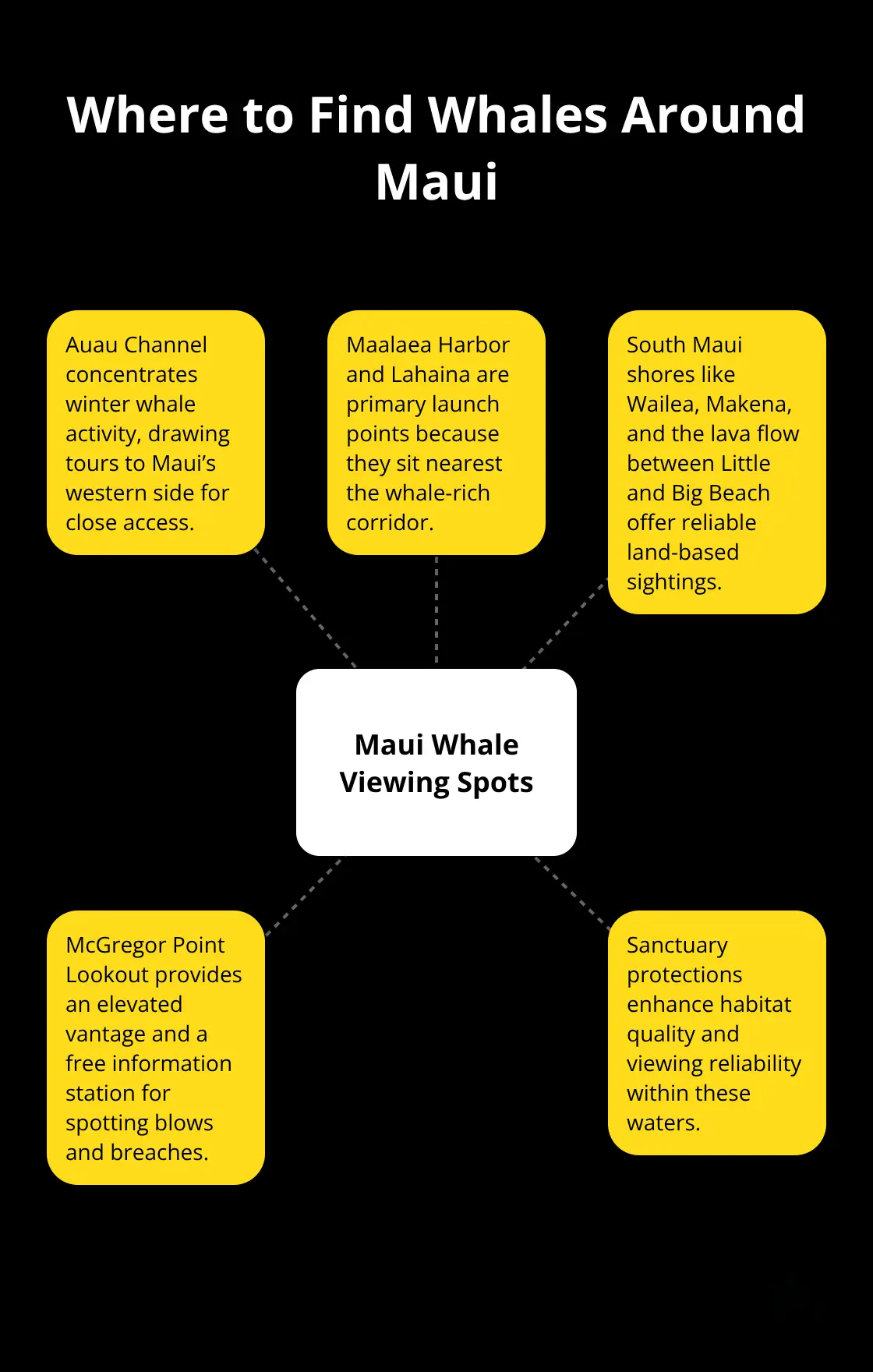
The Auau Channel between Maui, Molokai, and Lanai concentrates roughly 10,000 to 12,000 humpback whales each winter, which is why nearly every tour operator departs from the western side. Maalaea Harbor and Lahaina serve as the primary launch points because they sit closest to this whale-rich corridor. The Auau Channel’s status as part of the Hawaiian Islands Humpback Whale National Marine Sanctuary means these waters receive federal protection that enhances whale habitat quality and viewing reliability.
Shore-Based Viewing in South Maui
If you’re staying in Kihei or South Maui, you occupy prime territory-the shallow waters near Wailea, Makena Beach Park, and the rocky lava flow between Little and Big Beach deliver reliable sightings without paying for a tour. McGregor Point Lookout, located between Lahaina and Maalaea along the Honoapiilani Highway, hosts a free information station operated by the Pacific Whale Foundation and provides an elevated vantage point for spotting whale blows and breaches from land. These shore-based spots cost nothing and work well for budget-conscious travelers or those who prefer land-based observation.
Boat Tours for Closer Encounters
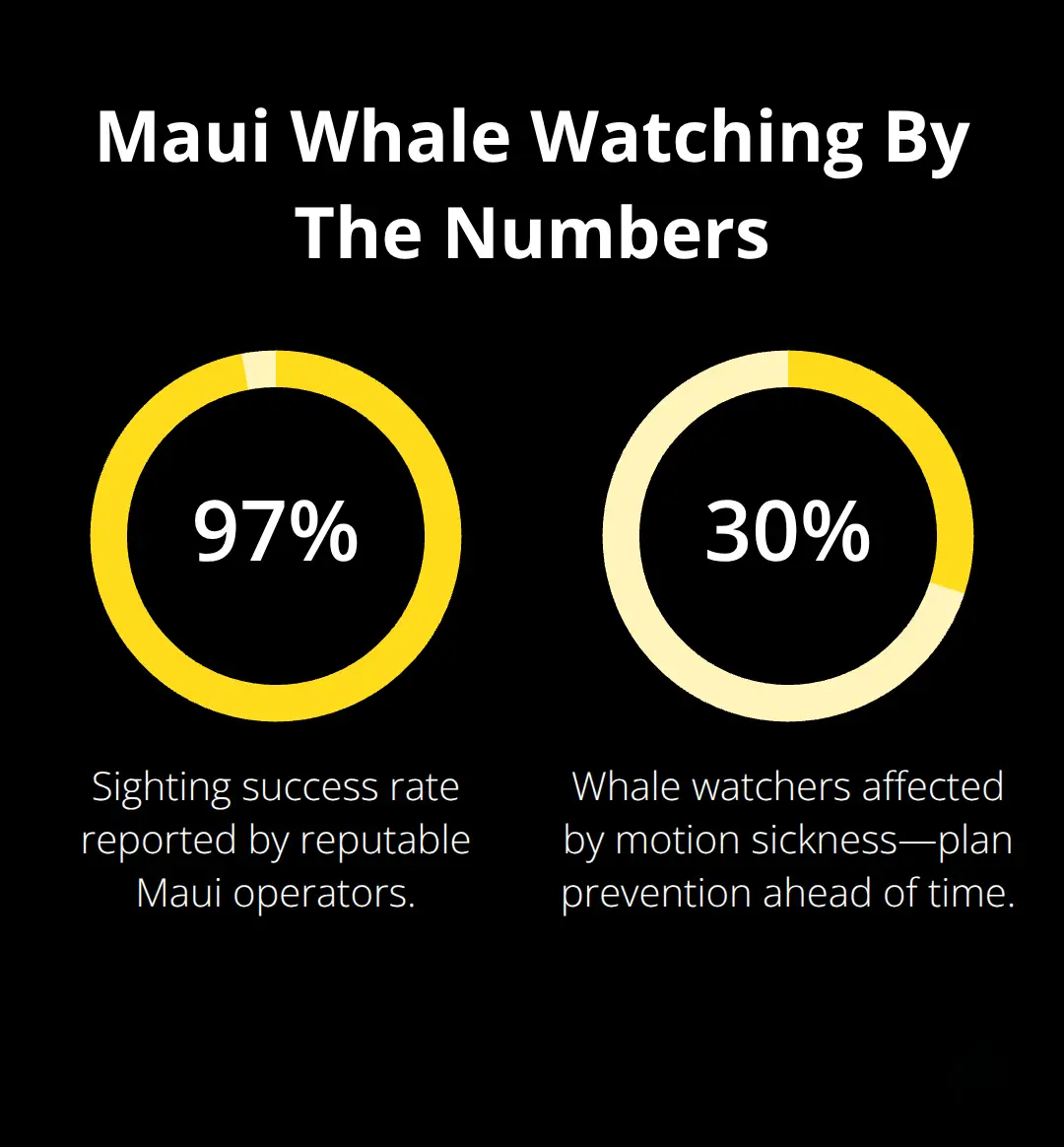
Boat tours beat shore viewing if you want closer encounters and active behavior. Federal law requires vessels to maintain 100 yards of distance from whales, but captains position boats strategically in likely whale paths to maximize your odds of near-limit approaches. A 97% sighting success rate is standard among reputable operators, with guarantees allowing free rebooking if you don’t see whales. Onboard hydrophones let you hear male whale songs underwater-an experience impossible from shore.
Tour Types and Pricing
Catamaran tours accommodate 100+ passengers at affordable prices, sailboat experiences hold about 60 passengers with open bars and premium pricing, and zodiac rafts carry roughly 20 passengers for eye-level viewing with higher costs and seasickness risk. Tours typically run two hours, with check-in 45 minutes before departure at Maalaea Harbor locations or Lahaina docks. Adults pay around $99, children aged 5 to 12 cost approximately $55, and children under 4 go free.
Timing Your Boat Tour
Morning tours departing around 7 a.m. offer calmer seas and better visibility than midday departures, while late afternoon cruises from 3 p.m. onward provide superior lighting for photography and fewer crowds. Biodiesel-powered vessels and reef-safe practices have become standard across quality operators, reflecting Maui’s commitment to sustainable whale watching. Your choice of tour type and timing directly shapes what you’ll experience on the water, so consider both your budget and your preferred level of activity before you book.
What to Pack for a Whale Watching Adventure
Dress for Ocean Conditions
Ocean conditions on Maui’s whale watching tours demand specific preparation, and showing up unprepared ruins the experience faster than rough seas. Wear flat shoes with good grip-boat decks become slippery, and the railing needs one free hand at all times for safety. A light waterproof jacket protects you on morning tours that depart around 7 a.m., when water temperatures feel cold despite warm air on land. Apply reef-safe sunscreen 15 minutes before boarding, then reapply every two hours-the sun reflects intensely off water and causes severe burns in just a few hours.
Protect Your Gear and Stay Hydrated
Pack a dry bag for your phone and camera, as salt spray reaches everywhere on deck and corrodes electronics quickly. Stay hydrated throughout your tour; dehydration accelerates motion sickness and exhaustion, so drink water consistently rather than waiting until you feel thirsty. Binoculars rentals cost extra on some tours and depend on inventory, so bring your own quality pair if you have one-this single item transforms distant whale blows into clear sightings.
Combat Motion Sickness Before It Starts
Motion sickness affects roughly 30 percent of whale watchers, making prevention worth the effort before discomfort strikes. Take ginger supplements or ginger candy 30 minutes before departure; studies show ginger reduces nausea without the drowsiness that comes from medication. If you prefer pharmaceutical options, take motion sickness medication an hour before boarding-waiting until symptoms appear wastes the medication’s effectiveness. Focus your eyes on the horizon rather than the moving deck, as your inner ear stabilizes when your vision locks on something stationary.
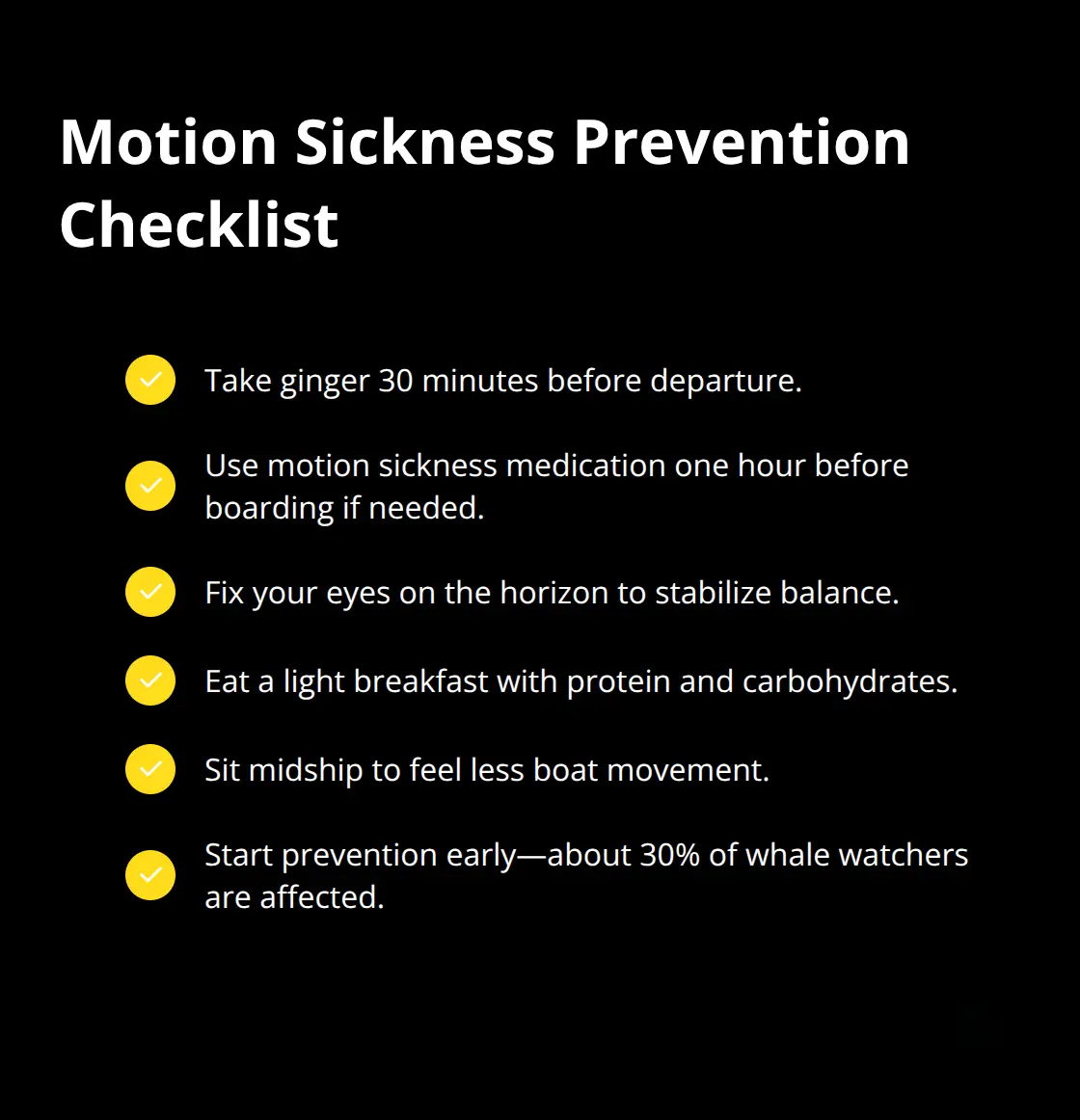
Eat a light breakfast with protein and carbohydrates; an empty stomach increases nausea, but heavy meals cause different problems. Sit midship where boat movement feels least pronounced rather than near the bow or stern.
Capture Whales With Your Camera
For photography, a zoom lens (300mm or higher) lets you capture breaching whales from safe distances without needing to approach closer than the required 100 yards. Use a fast shutter speed of at least 1/1000th of a second to freeze whale movement, especially during breaches. Shoot in early morning light between 7 and 10 a.m. when backlighting creates dramatic whale silhouettes and the ocean reflects less glare. Afternoon tours from 3 to 6 p.m. offer golden-hour warmth but require exposure compensation to handle bright skies. Mount your camera on a tripod or use image stabilization to compensate for boat motion, and keep your camera in a waterproof housing or dry bag between shots (salt spray corrodes electronics quickly).
Final Thoughts
Maui’s whale watching season transforms the islands into a marine wildlife destination unlike anywhere else in Hawaii, with roughly 10,000 to 12,000 humpback whales filling the Auau Channel from January through March. Whether you choose shore-based viewing at McGregor Point Lookout or Makena Beach Park, or you book a boat tour from Maalaea Harbor or Lahaina, you position yourself to witness one of nature’s most remarkable migrations. A 97% sighting success rate among reputable operators means you’ll almost certainly encounter these magnificent creatures, with guarantees allowing free rebooking if whales don’t appear.
Your preparation transforms a good experience into an exceptional one-reef-safe sunscreen, flat shoes, a dry bag for electronics, and motion sickness prevention ensure comfort throughout your tour. Early morning tours between 7 and 10 a.m. deliver calm seas and optimal visibility, while late afternoon departures from 3 to 6 p.m. provide golden-hour lighting that elevates your photographs. Quality binoculars or a zoom lens reveal whale behavior that distant viewing misses entirely, turning fleeting moments into lasting memories.
We at Maui Snorkel Charters offer Pacific Humpback Whale watches during the winter season, combining expertise in small-group marine experiences with professional guidance on whale behavior and ocean conditions. Book your whale watching adventure with us and experience whale watching Maui Hawaii the way it’s meant to be experienced, with personalized attention and local knowledge that transforms a tour into a lifelong memory.
Call 808-270-8776