
Every winter, humpback whales migrate thousands of miles to Maui’s warm waters, creating one of the world’s most spectacular natural events. Between January and March, these magnificent creatures fill our ocean with their songs and breaches, and we at Maui Snorkel Charters have front-row seats to this incredible show.
Whether you’re a first-time visitor or a seasoned ocean explorer, Maui whale watching offers unforgettable moments you won’t find anywhere else. This guide walks you through everything you need to know to make the most of your adventure.
When to Catch Maui’s Whale Season
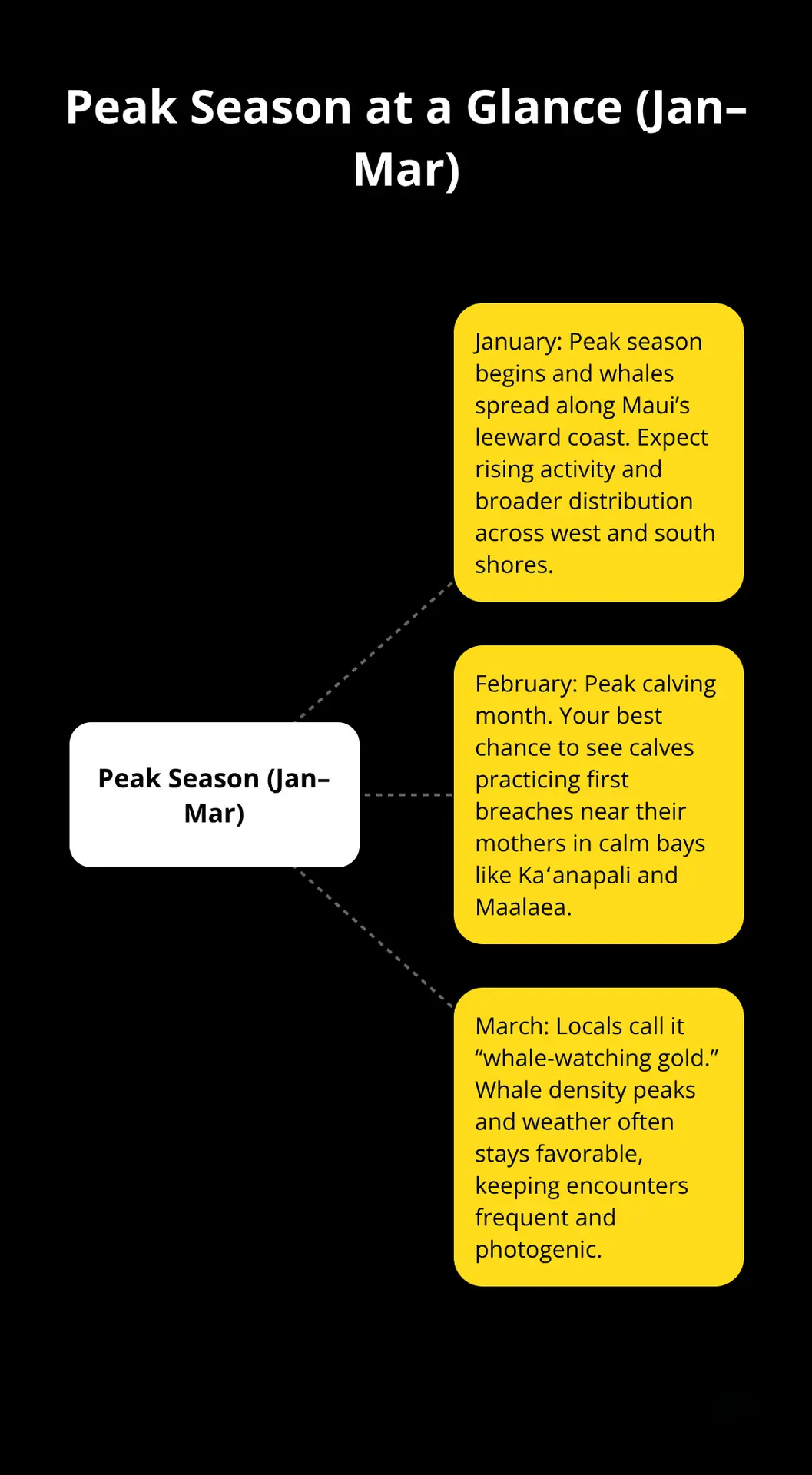
Humpback whales arrive in Maui’s waters starting in November, but the real action unfolds between mid-January and mid-March. During these eight weeks, you’ll find the highest concentration of whales, the most dramatic breaches, and the best odds of seeing mothers with newborn calves. January marks the beginning of peak season when whales spread throughout the island’s leeward coast. February is actually peak calving month, meaning you’re most likely to witness calves practicing their first breaches near their mothers in calm areas like Kaʻanapali and Maalaea Bay. March earns the nickname “whale-watching gold” from locals because whale density peaks and weather conditions typically remain favorable.
If you’re flexible with your dates, plan your trip during these three months rather than December or April, when sightings drop noticeably. The Hawaiian Islands Humpback Whale National Marine Sanctuary, headquartered right here on Maui, protects an estimated 26,000 humpback whales that migrate from Alaska each winter, making our island the densest concentration of these whales in the world.
Early Morning Delivers Your Best Shots
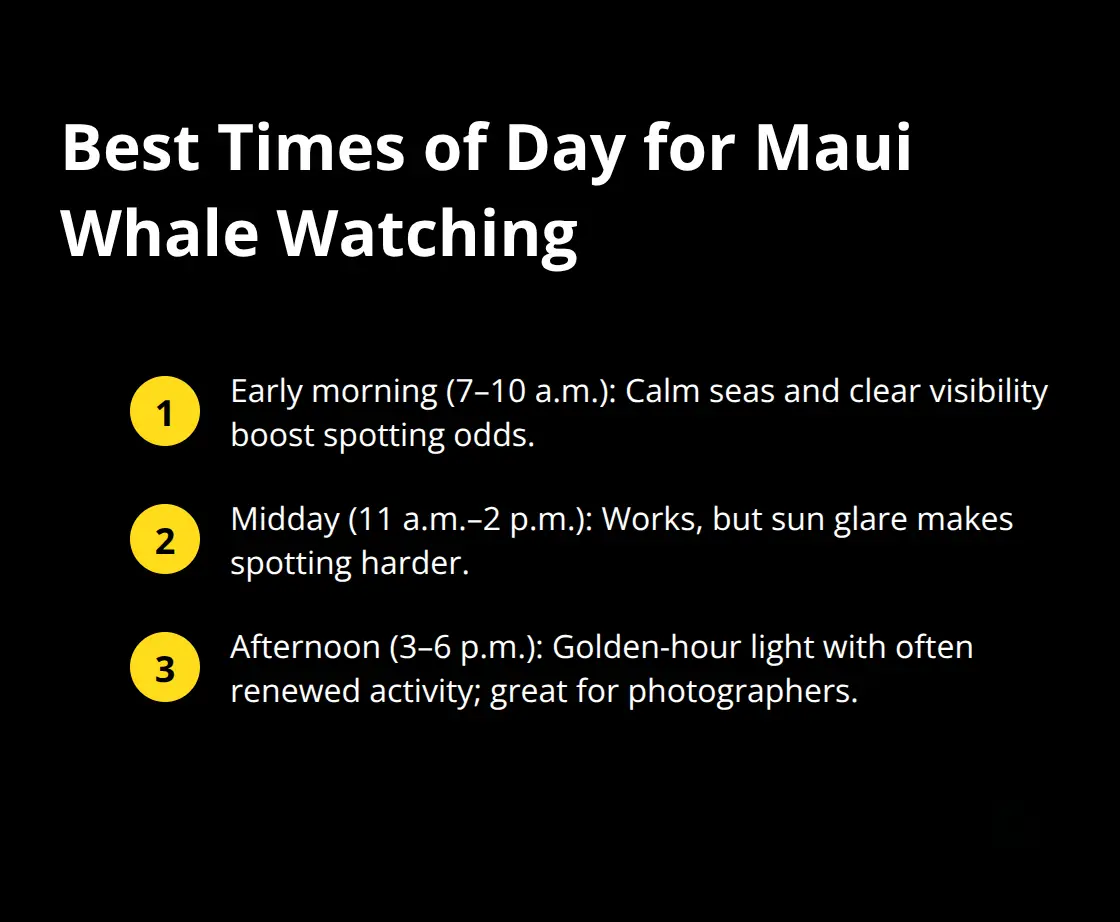
The time of day matters more than most visitors realize. Early morning departures between 7 and 10 a.m. offer calm seas, clearer visibility of whale spouts, and the best lighting for spotting breaches from distance. Midday viewing from 11 a.m. to 2 p.m. works but suffers from sun glare that makes spotting whales harder. Afternoon tours from 3 to 6 p.m. bring that magical golden-hour light and often see renewed whale activity, so if you’re a photographer, this window has real appeal. Morning departures consistently deliver the most reliable sightings across Maui’s whale watch operators.
Water Conditions Support Winter Whale Watching
Water temperatures in winter range from 74 to 78 degrees Fahrenheit, which feels refreshing but not cold. Visibility underwater typically reaches 80 to 100 feet during winter months, though it varies based on recent weather and wave action. Sea conditions remain generally calmer on the leeward (west and south) coasts where most whales congregate, compared to the windward side. These protected channels rarely experience conditions rough enough to cancel tours during peak season.
Avoid the Shoulder Months
November sees early arrivals with unpredictable sightings and fewer crowds, but unless you specifically want solitude over whale encounters, it’s not worth the gamble. April marks the migration back to Alaska, so whale activity drops sharply after mid-April. Mothers and calves linger longest, but booking early April tours means you’re betting on stragglers rather than the main population. May through October is completely off-season with far fewer whales, so plan other Maui activities like Haleakalā hikes during these months instead.
Weekday Tours Often Feel More Intimate
Weather patterns from January to March bring occasional rain and wind, but these conditions rarely cancel tours on the leeward coast where protected channels stay relatively calm. Booking your whale watch for a weekday rather than weekend sometimes means smaller crowds and more intimate viewing experiences, though whale activity itself doesn’t change based on the day of the week. With the timing locked in, you’ll want to understand exactly what you’ll encounter once you’re out on the water.
What You’ll Actually See Out on the Water
Humpback whales dominate Maui’s whale watching tours, and for good reason. The Hawaiian Islands Humpback Whale National Marine Sanctuary protects North Pacific humpbacks that migrate here each winter, making Maui home to the world’s densest concentration of these animals. When you’re out on the water between November and April, you’ll witness these 45 to 55-foot giants breach completely out of the water, slap their massive pectoral fins against the surface, and smack their tail flukes with explosive force. Spy hops, where whales poke their heads straight up to look around, happen regularly during peak season. You’ll also witness mothers with newborn calves, especially in February and March, practicing their first breaches while staying close to their mothers in calm bays.
Occasionally you might encounter false killer whales, which measure 15 to 20 feet and hunt yellowfin tuna near the channels between Maui and Lanai, though humpbacks remain your primary sighting. The key insight most first-time watchers miss is that whales stay submerged for 10 to 15 minutes between breaths, so patience beats excitement. Scan the horizon constantly for the first blow or spout, then watch that area closely because the whale will surface again within minutes.
Legal Distance and Responsible Positioning
Hawaii law prohibits approaching within 100 yards of any whale, and tour operators must immediately stop their vessel if a whale swims closer than that distance. This rule protects whales from stress and injury, and NOAA enforces it strictly. Reputable operators position their boats along predictable whale migration routes rather than chasing animals, which increases your odds of close encounters while respecting legal requirements. This strategy separates quality operators from those who prioritize thrills over whale welfare.
Practical Gear and Viewing Tips
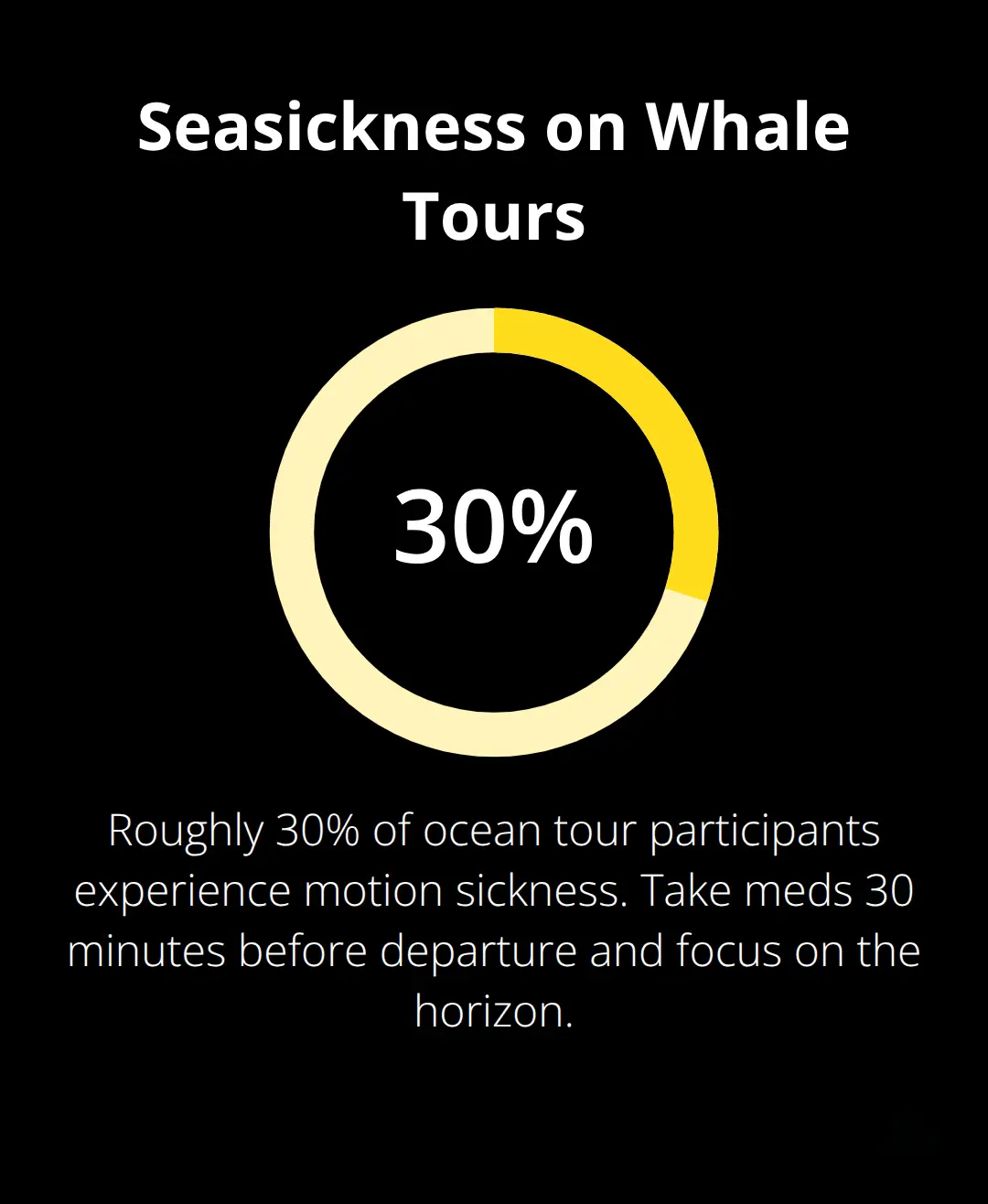
Seasickness affects roughly 30 percent of ocean tour participants, so take medication 30 minutes before departure if you’re prone to motion sickness, and focus your eyes on the horizon rather than the boat deck during the ride. Wear polarized sunglasses to cut glare and spot whale spouts from greater distances. Bring a zoom lens or quality binoculars because whales often surface 200 to 300 yards away initially, and binoculars let you spot them before they move closer.
Hydrophones, which amplify underwater whale songs, appear on most reputable tours and add an unforgettable auditory dimension to your experience.
Choosing the Right Vessel Size
Smaller boats with 6 to 30 passengers deliver dramatically better viewing than massive vessels carrying 140 plus people, so choose operators carefully. The intimate setting means you’ll hear whale songs more clearly through hydrophones and spot behaviors that larger crowds miss. Your responsible behavior matters too-stay seated until a whale surfaces, avoid sudden movements, and keep voices low during sightings because loud noise stresses animals. With these viewing expectations and safety practices in mind, selecting the right operator becomes your next critical decision.
Choosing the Right Whale Watching Operator
Vessel Size Determines Your Viewing Quality
Vessel size separates mediocre whale watching from genuinely memorable encounters, and this choice matters more than most visitors understand. Operators running 140-plus passenger mega-boats create crowded decks where half your group won’t see whales clearly, while smaller vessels with 6 to 30 passengers deliver dramatically superior viewing angles and personal attention from crew. Captain Steve’s Early Bird raft-style tours max out at 30 passengers and depart at 7:30 a.m. with guaranteed whale sightings during season plus hydrophones included. Aloha Blue Charters operates a 30-passenger catamaran from Maalaea Harbor with an onboard naturalist and carries an A rating from Hawaii Better Business Bureau. Trilogy runs smaller catamarans between 36 and 54 passengers from multiple Maui harbors with naturalists and hydrophones. Pacific Whale Foundation offers multiple departures from Lahaina and Maalaea with education-focused programming, hydrophones, and a strong guarantee policy where you return free if you don’t see whales during peak season. Gemini sails from Kaanapali Beach in a 49-passenger vessel with underwater viewing ports and direct beach boarding. The critical difference: smaller operators deliver better sightings because fewer people compete for rail space and crew attention focuses on actual whale behavior rather than crowd management.
Crew Knowledge Transforms Your Experience
Crew expertise transforms a boat ride into genuine marine education, and this expertise comes from local knowledge combined with formal training. Naturalists aboard reputable tours provide context about whale migration, behavior patterns, and Hawaiian marine ecology that casual deck hands simply cannot match. These trained professionals explain what you’re witnessing in real time, turning random whale sightings into educational moments that stick with you long after your trip ends.
Tour Duration and Pricing Structure
Tour duration varies significantly across Maui operators, with most offering 2-hour experiences though some extend to 3 or 4 hours with classroom segments beforehand. Pricing ranges from $86 for public tours up to $950 for private experiences with 12 passengers, and higher price doesn’t automatically guarantee better whales since sightings depend on ocean conditions rather than what you paid. Early morning departures command premium prices but deliver the calm seas and clear visibility that actually increase whale encounter odds, making that investment worthwhile during peak season. Afternoon tours from 3 to 6 p.m. cost less and offer magical lighting but sacrifice the sea conditions that reliably produce sightings. Mid-range operators charging $100 to $200 per person typically deliver better value than budget options because they invest in smaller boat sizes, naturalist staff, and hydrophone equipment rather than cutting corners on crew quality.
Boat Type Affects Comfort and Suitability
Raft-style boats like Captain Steve’s provide thrilling close encounters but ride rougher than catamarans, making them unsuitable for pregnant travelers, people with back problems, or young children (confirm boat type before booking if you fall into these categories). Catamaran vessels offer smoother rides and better stability, though they sometimes sacrifice the intimate feel that smaller raft operations deliver. Your physical comfort during the tour directly impacts your ability to spot whales and enjoy the experience, so honest assessment of your tolerance for motion matters when selecting your operator.
Final Thoughts
Maui whale watching stands apart because of the sheer concentration of humpback whales, the accessibility of viewing from both land and sea, and the protected marine sanctuary that keeps these animals safe year after year. The combination of warm shallow waters, predictable migration patterns, and operators who genuinely respect whale welfare creates conditions you simply won’t find elsewhere. When you book a tour during peak season with a reputable small-group operator, you invest in an experience backed by decades of local knowledge and genuine commitment to marine conservation.
Your success depends on three practical decisions made before you leave shore. Commit to early morning departures between January and March because calm seas and clear visibility directly increase your odds of witnessing breaches and spy hops. Choose operators running vessels with 30 passengers or fewer because smaller boats deliver better sightings and more personal attention from naturalists who explain whale behavior in real time.
Beyond whale watching, consider pairing your ocean adventure with snorkeling to maximize your time on the water. We at Maui Snorkel Charters offer year-round snorkel tours to Molokini Crater and Turtle Town, giving you flexibility to combine marine experiences based on conditions and your interests. Whether you’re watching whales breach or swimming alongside sea turtles, Maui’s ocean delivers moments that reshape how you see the natural world.
Call 808-270-8776