
Every winter, humpback whales migrate thousands of miles to Maui’s warm waters, creating one of the most spectacular natural events in Hawaii. If you’re planning whale watching trips to Maui, timing and choosing the right operator can transform your experience from good to absolutely unforgettable.
We at Maui Snorkel Charters know what makes these encounters truly special. This guide walks you through everything you need to know to see these magnificent creatures up close.
When to Visit Maui for Whale Watching
Humpback whales arrive in Maui’s waters starting in November, but January through March marks the peak season when you’ll encounter the highest concentration of them. This three-month window matters because more whales translate to better odds of sightings and more dramatic behaviors like breaching and tail slaps. If your travel dates allow flexibility, try scheduling your trip between mid-January and late February for the absolute best chances. The water temperature hovers around 74–76 degrees Fahrenheit during these months, which is warm enough for whales to breed and calves to thrive, and water visibility typically ranges from 80 to 120 feet, letting you spot whale activity from a comfortable distance on the boat.
Peak Season Delivers the Most Consistent Encounters
January through March concentrates the largest whale populations in Maui’s waters. More whales in the area mean you’ll witness more frequent surface activity and behavioral displays. Calves born after late January add another layer of excitement, as mothers and young whales create some of the most memorable interactions. The combination of warm water and abundant food sources keeps these animals active and visible throughout the day.
Water Conditions Support Ideal Viewing
Winter months provide the perfect environment for both whales and observers. The 74–76 degree water temperature attracts breeding populations, while visibility between 80 and 120 feet allows you to track whale movements from the boat without straining. These conditions rarely align outside the peak season, making January through March the window when tour operators report their highest success rates.
Book Three to Four Weeks Ahead
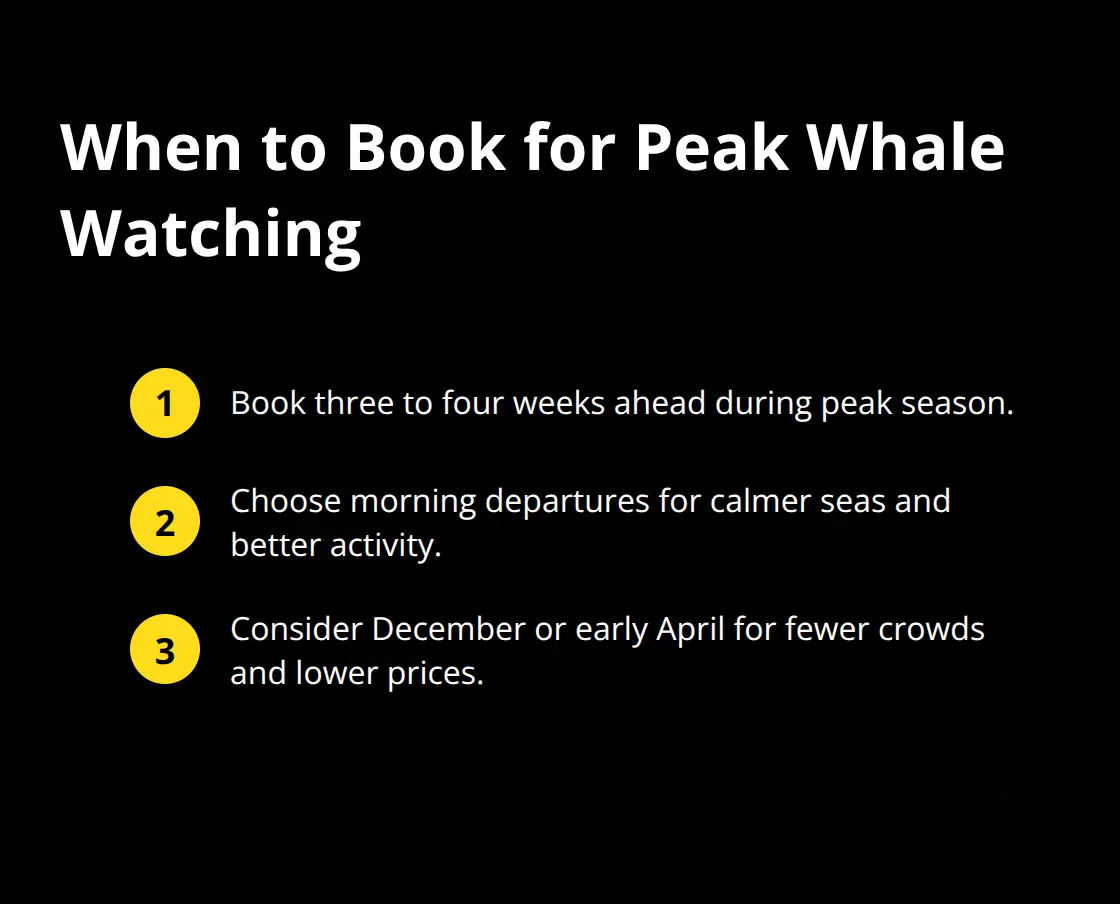
Tour operators across Maui fill their schedules quickly during peak season, especially for morning departures when conditions tend to be calmest. Advance reservations three to four weeks out secure your preferred time slot and prevent you from landing on afternoon tours when wind picks up and seas roughen. Late bookings often force you into less ideal conditions or leave you waitlisted entirely. December and early April still offer decent whale sightings since migration overlaps those months, but they’re less crowded and often cheaper if budget matters more than peak-season reliability.
With your timing locked in and your booking confirmed, the next step involves understanding what actually happens once you step aboard a whale watching vessel.
What You’ll Actually See on a Whale Watching Boat
Breaches, Tail Slaps, and Surface Behaviors
Stepping onto a whale watching vessel in peak season means entering a world where humpback whales command your attention for the next two hours. The moment your boat reaches the hunting grounds between Lahaina and Maalaea, your guide scans the water for the telltale plumes of vapor rising from blowholes. When whales surface, the action happens fast-you might see a massive tail flukes breach completely clear of the water, sending spray 15 feet into the air, or witness a full body launch where a 40-ton animal propels itself halfway out of the ocean before crashing back down. These behaviors carry meaning; male humpbacks breach to communicate with other whales and establish dominance, while tail slaps serve similar signaling purposes. Mother-calf pairs often display the most dramatic behaviors since mothers protect their young and younger whales haven’t yet learned restraint.
How Close You Actually Get to the Whales
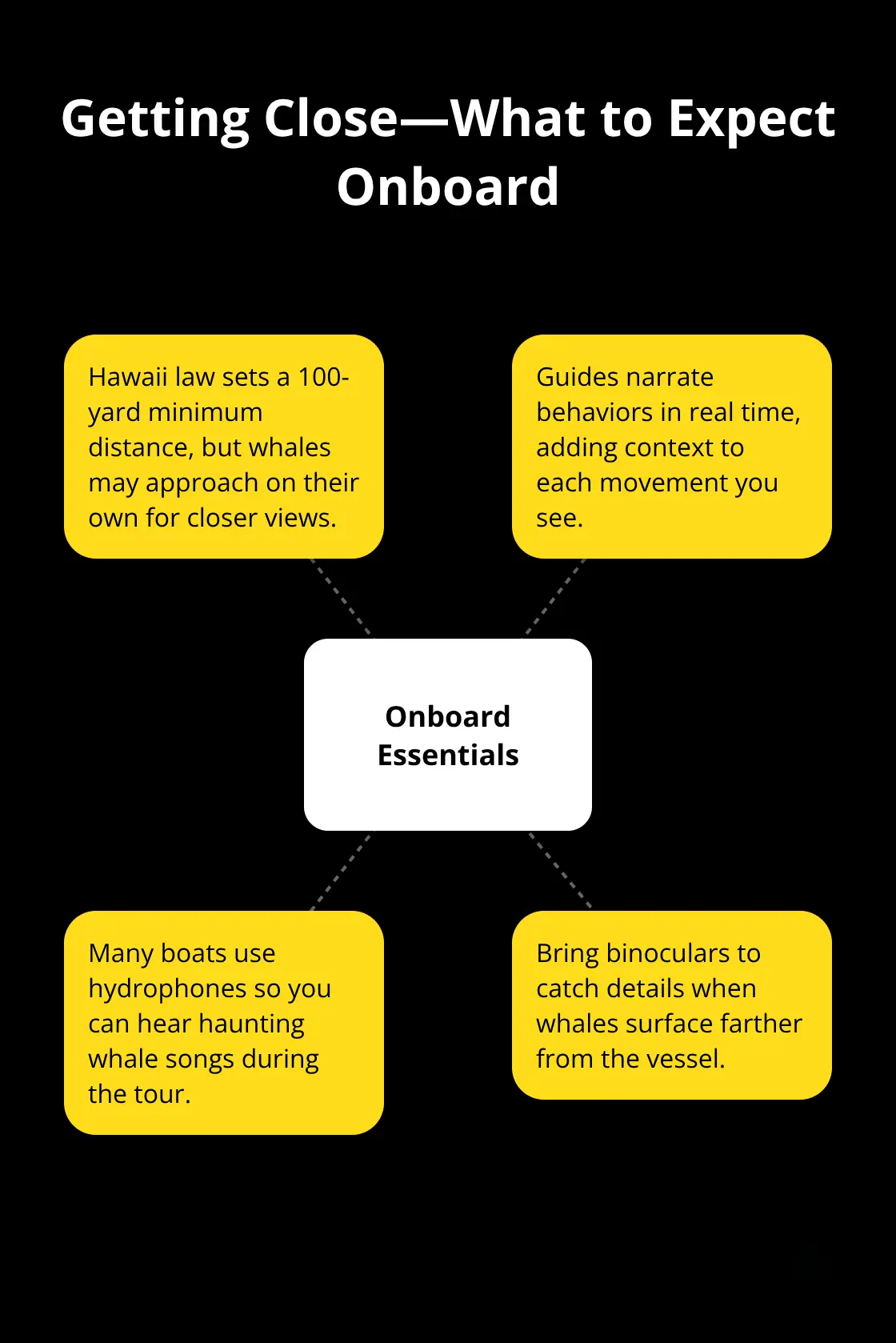
Hawaii law requires boats to maintain at least 100 yards from whales, but curious animals frequently approach the vessel voluntarily, sometimes closing that distance to 30 or 40 feet for spine-tingling close-ups. Your guide will narrate what’s happening in real time, explaining the significance of each movement. Many Maui operators now use onboard hydrophones, allowing you to hear the haunting songs of male whales singing underwater-a sound that transforms how you understand these creatures. Bring binoculars even on a boat tour, as whales often surface at distances where optical magnification reveals details you’d otherwise miss.
What Your Guide Actually Knows
Certified marine naturalists aboard quality operators understand humpback migration patterns, breeding behaviors, and why calves born after late January spend their first weeks in Maui’s protected waters before the journey back to Alaska. They point out the difference between a spy hop (where a whale pokes its head straight up for a look around) and a pec slap (where it repeatedly smacks the water with its pectoral fin), and they read whale body language to predict what might happen next. Guides working for operators with strong reputations take pride in knowing individual whale markings and can sometimes identify returning animals year after year. The quality of narration separates forgettable tours from ones you’ll describe for decades-operators like Alii Nui employ naturalists who broadcast live whale songs while explaining the biology, making each breach feel like part of a larger story rather than just a spectacle.
Why Operator Quality Matters for Your Experience
The experience culminates not in seeing a single whale but in understanding that you’ve witnessed a behavior shaped by millions of years of evolution, all happening within arm’s reach of your boat (or sometimes much closer). Your guide transforms surface activity into meaningful context about whale society, reproduction, and survival. This knowledge separates a casual boat ride from a genuine marine education. With this understanding of what awaits you on the water, selecting the right operator becomes your next critical decision-and that choice determines whether you’ll have a comfortable, safe, and truly memorable encounter.
Which Operator Gives You the Best Whale Watching Experience
Maui hosts roughly a dozen whale watching operators, and the differences between them shape whether you’ll spend two hours in genuine wonder or fighting for elbow room on a crowded catamaran. Boat size fundamentally changes what you’ll experience, but it’s not the only factor that matters.
Boat Size and Comfort Trade-Offs
Alii Nui operates a 65-foot catamaran carrying up to around 65 passengers, offering stability and onboard amenities like bathrooms and an open bar with Maui Brewing Co. beer. Smaller operators like Ultimate Whale Watch run Zodiacs with roughly 18 passengers, positioning you close enough to feel the ocean spray from a breaching whale. The tradeoff is real: larger boats provide creature comforts and smoother rides in choppy seas, but smaller vessels deliver proximity that transforms the experience. We at Maui Snorkel Charters offer private charters that let you control group size, vessel choice, and departure timing-meaning you’re not competing with 60 strangers for the best viewing angles.
Guide Expertise and Marine Knowledge
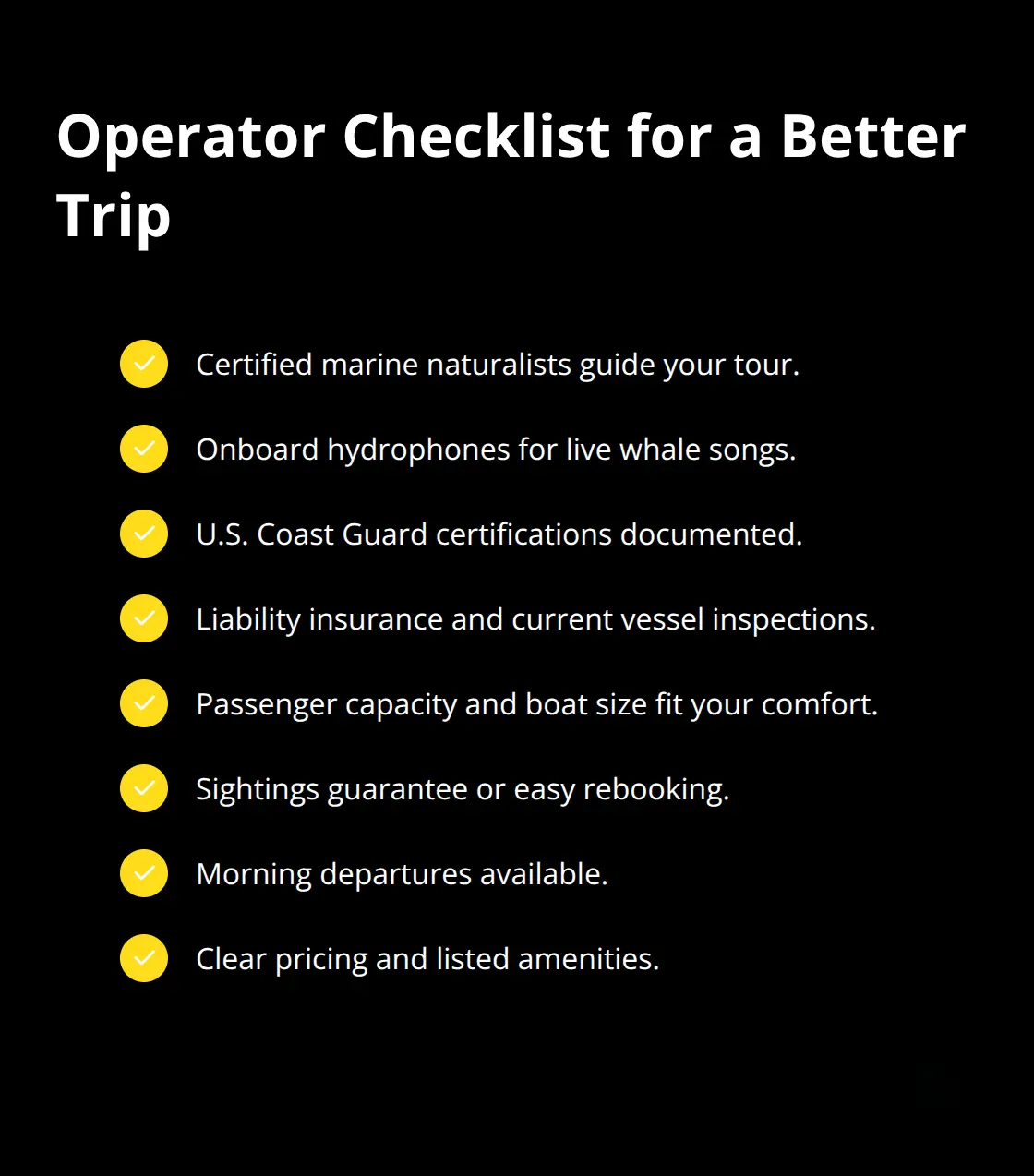
Your guide’s expertise matters equally to vessel choice. Alii Nui employs certified marine naturalists who broadcast live humpback songs through onboard hydrophones while narrating behavior, whereas budget operators sometimes staff boats with minimal training. Certified guides understand humpback migration patterns, breeding behaviors, and the significance of each surface movement. They read whale body language to predict what might happen next and sometimes identify returning animals year after year.
Safety Records and Operational Standards
Safety records vary significantly between operators. Check if your chosen operator carries liability insurance, maintains current vessel inspections, and employs captains with multi-season Maui experience. Operators holding federal Coast Guard certifications and documented safety procedures matter more than price alone. Established harbors like Maalaea (where Alii Nui departs from Slip 56) indicate professional operations versus informal launch points.
Tour Duration, Inclusions, and Guarantees
Most operators offer two-hour trips, but inclusions separate mediocre from exceptional. Alii Nui provides professional photography, while others charge extra. Alii Nui guarantees humpback sightings or offers full refunds or rebooking-a confidence statement about their knowledge and positioning. Pricing ranges from $119 to $300 per person depending on boat size and amenities, with early bookings often unlocking discounts.
Timing and Operator Features
Morning departures consistently deliver calmer seas and better whale activity than afternoon tours, so try operators offering early slots. Ask specifically whether your operator uses hydrophones, whether guides are certified marine naturalists, and what amenities they include. The operator you select determines not just comfort but the depth of understanding you’ll gain about these animals and their remarkable journey to Maui’s waters.
Final Thoughts
Winter in Maui transforms the ocean into a stage for one of nature’s most dramatic migrations, and whale watching trips Maui offers deliver encounters that stay with you long after you return home. The three-month window from January through March concentrates humpback populations in warm waters where calves thrive and breeding behaviors create unforgettable moments. Timing your visit during peak season and booking three to four weeks ahead removes the guesswork from planning, securing your spot on a vessel when conditions favor close encounters and dramatic surface activity.
Your operator choice determines everything about what happens next. A 65-foot catamaran with certified marine naturalists, onboard hydrophones, and professional photography creates a fundamentally different experience than a budget operator with minimal training and no amenities. Smaller vessels position you closer to breaching whales and tail slaps, while larger boats provide stability and creature comforts-the best operators guarantee sightings or offer full refunds, employ guides who understand humpback migration patterns and behavior, and depart from established harbors during morning hours when seas run calmest.
We at Maui Snorkel Charters offer Pacific Humpback Whale watches during the winter season alongside our year-round snorkel tours to Molokini Crater and Turtle Town. Our small-group approach means you never compete with crowds for viewing angles, and our custom 40-foot vessel delivers the proximity and personalized attention that transforms a boat ride into genuine marine education. Book with us to experience the difference between a good memory and an absolutely unforgettable one.
Call 808-270-8776