
Maui Hawaii snorkeling offers some of the world’s most spectacular underwater experiences. Crystal-clear waters and thriving coral reefs await you just offshore.
Whether you’re a seasoned snorkeler or exploring the ocean for the first time, Maui delivers unforgettable encounters with sea turtles, tropical fish, and vibrant marine ecosystems. This guide reveals the best spots, what to expect, and how to plan your perfect snorkeling adventure.
Where Should You Snorkel in Maui
Molokini Crater: Unmatched Clarity and Marine Abundance
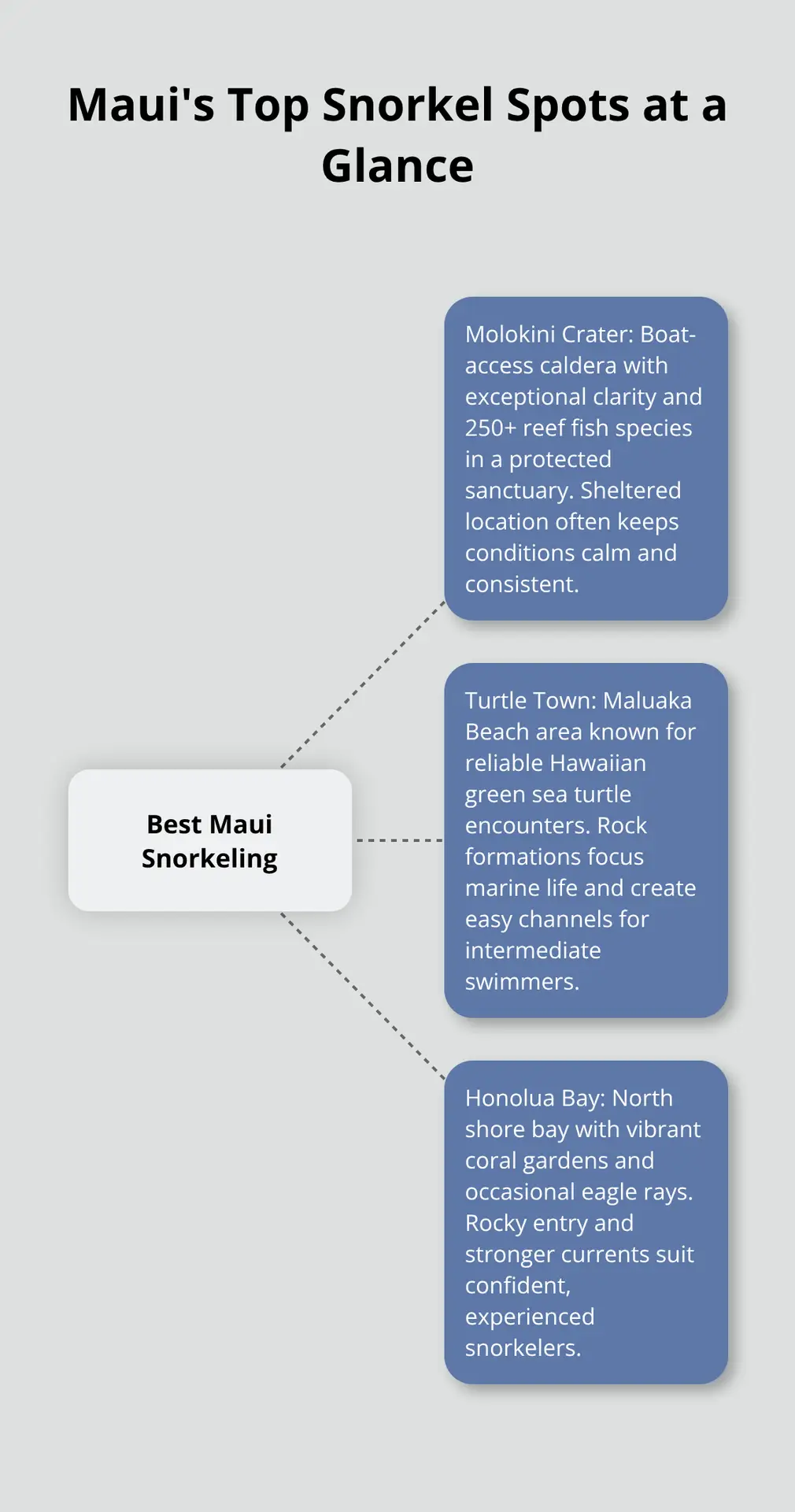
Molokini Crater dominates Maui snorkeling because the water clarity is excellent on clear days, and the crescent-shaped caldera hosts more than 250 reef fish species in a protected marine sanctuary. Access requires a boat, which filters out casual swimmers and keeps crowds manageable compared to shore-based spots. The crater’s sheltered position blocks afternoon swells, making it reliable even when other sites turn choppy. Tours typically spend 90 minutes here, allowing time to explore both the inner reef and the deeper wall section. The three-mile offshore location means you’ll spend 15–20 minutes in transit, but the water clarity and fish density justify the journey.
Turtle Town: Predictable Wildlife Encounters
Turtle Town at Maluaka Beach delivers what its name promises: consistent encounters with Hawaiian green sea turtles in their natural habitat. The site features dramatic towering rock formations that concentrate fish and create ideal turtle feeding grounds. Sightings happen regularly, though you must maintain a strict 10-foot distance and never touch or chase these animals. The rock formations provide natural channels for snorkeling and make navigation straightforward even for intermediate swimmers. What separates Turtle Town from casual beach snorkeling is the predictability and the density of marine life around those rocks.
Honolua Bay: Advanced Conditions and Vibrant Reefs
Honolua Bay offers excellent visibility on Maui’s north shore when summer swells subside, with parrotfish, butterflyfish, and occasional eagle rays patrolling vibrant coral gardens. The rocky entry point demands fins and careful footwork, making it less forgiving than sandy-entry spots, and currents can surprise inexperienced snorkelers. The bay’s designation as a Marine Life Conservation District means strict protection rules apply. Choose Honolua only if you’re comfortable with rockier conditions and stronger water movement.
Which Spot Suits Your Skill Level
For most visitors, Molokini Crater and Turtle Town deliver superior safety, accessibility, and wildlife encounters than chasing the sometimes-challenging Honolua experience. Your choice depends on your comfort level in the water and how much time you want to spend traveling offshore. Understanding these three destinations helps you select the right fit before you book your tour.
What to Expect on a Maui Snorkeling Tour
Structure and Safety First
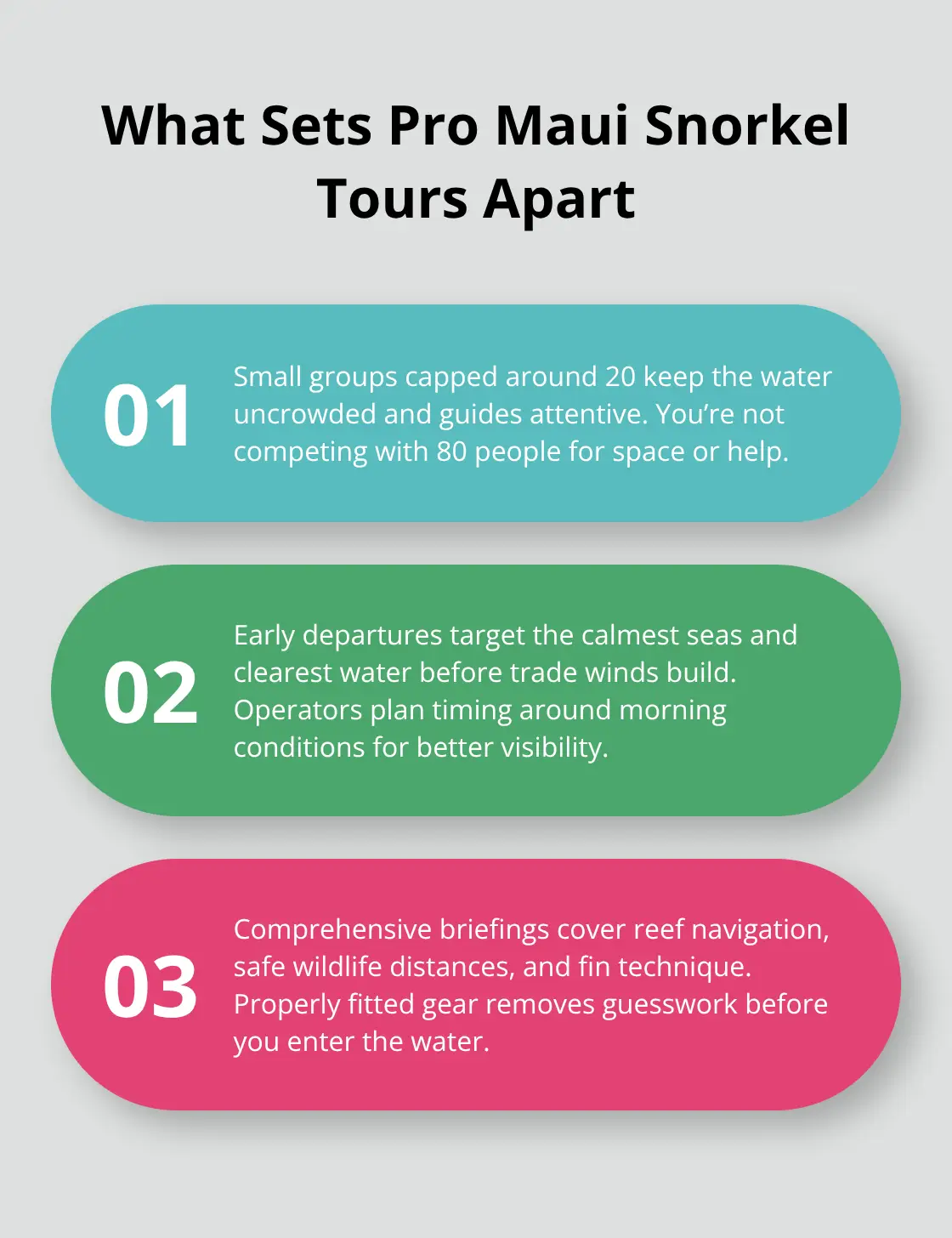
A quality Maui snorkeling tour operates with intentional structure that separates the experience from casual beach snorkeling. The best operators cap group sizes at 20 passengers or fewer, which means you won’t compete with 80 other snorkelers for space in the water or fight for the guide’s attention. Tours depart early, typically between 7 and 8 AM, because morning trade winds conditions and timing deliver the clearest water and calmest seas before afternoon trade winds kick in. Your guide will brief you on reef navigation, wildlife distances (maintain 10 feet from turtles, 50 feet from dolphins or monk seals), and proper fin technique before you enter the water.
Gear arrives fitted and tested, which eliminates the guesswork around mask seal and snorkel comfort.
What You’ll Receive and Experience
Most operators provide reef-safe mineral sunscreen on-site because the alternative damages the very reefs you’re paying to see, and many tours include breakfast and snacks so you won’t feel hungry during your time in the water. The actual snorkeling experience differs dramatically based on your destination. Molokini Crater tours spend roughly 90 minutes at the site itself, which allows you to explore both the inner crescent reef and the deeper wall section, with visibility often exceeding 100 feet on clear days. Turtle Town visits concentrate on the rock formations where Hawaiian green sea turtles feed, and guides position themselves to help you spot turtles without disturbing them.
Personalized Routes and Expert Guidance
Private charters amplify this advantage by letting you choose your route based on daily conditions rather than follow a fixed itinerary. Operators use fast transit times to Molokini, reducing your total travel burden and maximizing your time in the water. Tours that include photography services or allow you to bring an underwater camera capture memories without forcing you to juggle equipment while snorkeling. The guided component isn’t just safety theater; experienced guides know exactly where parrotfish congregate, which rock formations hide trumpetfish, and how to position you for optimal viewing without damaging coral or disturbing wildlife. This structured approach transforms snorkeling from a solo activity into a curated marine experience where you see substantially more marine life in less time than you would exploring independently.
Your choice between a standard group tour and a private charter depends on your budget, group size, and how much flexibility you want in your itinerary. Understanding what each tour type offers helps you select the experience that matches your expectations before you commit to a booking.
When to Snorkel and What to Pack
Timing Your Snorkeling Trip for Optimal Conditions
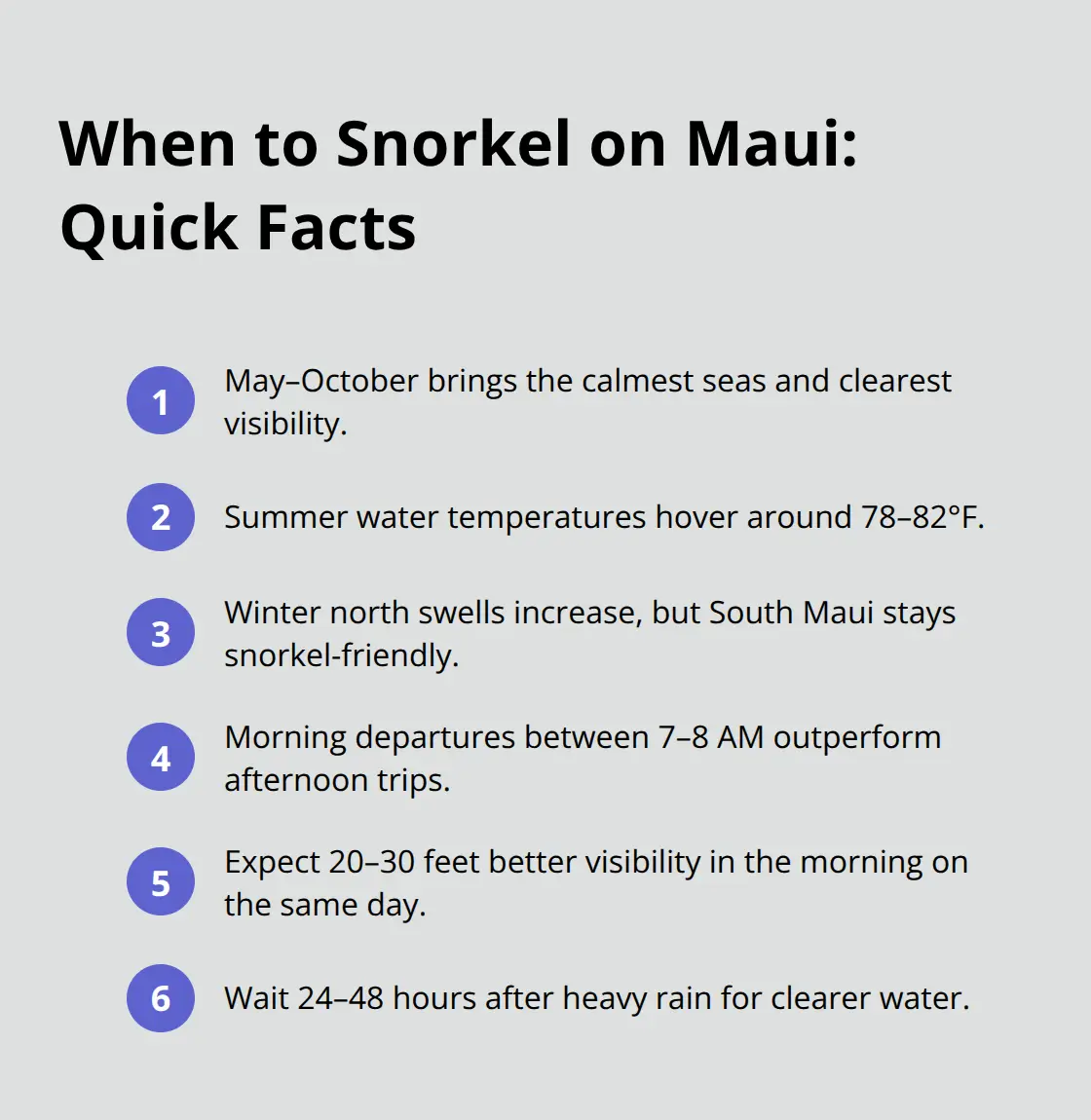
Summer months from May through October deliver the calmest seas and clearest visibility on Maui, with water temperatures hovering around 78–82°F and visibility extending to 100 feet on optimal days. Winter brings larger swells on the north shore from December through April, but South Maui’s sheltered bays remain snorkeling-friendly with water temperatures around 75–77°F. Morning departures between 7 and 8 AM consistently outperform afternoon trips because trade winds haven’t yet churned the water, meaning you’ll encounter visibility that exceeds afternoon conditions by 20–30 feet on the same day. Avoid scheduling snorkeling trips immediately after heavy rain, as runoff reduces visibility and degrades water clarity for 24–48 hours.
Peak visitor seasons in December through February and July through August mean tour slots fill weeks in advance, so book accommodations and tours at least four weeks early if you’re traveling during these windows. Late April presents a rare opportunity for whale sightings during snorkeling trips, though remember that snorkeling with whales isn’t permitted-you’ll observe them from a respectful distance while exploring nearby reefs.
Essential Gear and Sun Protection
Pack reef-safe sunscreen as your non-negotiable item; chemical sunscreens damage the coral ecosystems you’re paying to experience, and most tour operators provide this on-site. Wear a rash guard over your torso to reduce sunburn and provide an extra layer of protection against the sun’s intensity at sea level. Bring an underwater camera like a GoPro if you want to capture turtle encounters and coral formations without fumbling with a phone or waterproof case while in the water.
Water Entry Techniques and Flotation Support
Enter the water backwards using your fins to avoid slipping on rocks. If you’re a non-swimmer or uncomfortable with open water, a boogie board or flotation device transforms your confidence level at sites like Honolua Bay where currents run stronger. Local shops like Snorkel Bob’s and Boss Frogs offer weekly gear rentals that cost substantially less than daily options and give you flexibility to snorkel independently on days when you skip organized tours.
Selecting the Right Tour Type
Small-group tours capping at 20 passengers deliver superior experiences compared to massive boats carrying 80 people, so verify passenger limits before booking. Private charters suit groups of four to six people who want flexibility to chase conditions rather than follow fixed itineraries, with morning and afternoon options letting you customize your schedule around other activities or rest days.
Final Thoughts
Maui Hawaii snorkeling delivers world-class marine experiences across three standout destinations that suit every skill level and preference. Molokini Crater remains unmatched for crystal-clear water and abundant reef fish, Turtle Town offers reliable encounters with Hawaiian green sea turtles in their natural habitat, and Honolua Bay rewards confident swimmers with vibrant coral gardens and diverse tropical species. Your choice depends on your comfort level in the water, available time, and how much travel you’re willing to invest for superior visibility and marine life density.
Small-group tours fundamentally outperform casual beach snorkeling and massive commercial boats because they cap passenger counts at 20 or fewer, which means you receive personalized attention from experienced guides who know exactly where marine life congregates. Early morning departures between 7 and 8 AM consistently deliver clearer water and calmer seas than afternoon alternatives, and structured safety briefings ensure you understand wildlife distances and proper technique before entering the water. Guides position you for optimal viewing without disturbing coral or animals, transforming snorkeling into a curated experience where you see substantially more marine life in less time.
Booking your snorkeling adventure requires planning ahead, especially during peak seasons from December through February and July through August when tour slots fill weeks in advance. Contact a reputable operator at least four weeks early, confirm that they provide reef-safe sunscreen and proper gear fitting, and verify passenger limits before committing. Pack an underwater camera to capture memories, wear a rash guard for sun protection, and check current water conditions the day before your trip to maximize your Maui snorkeling experience.