
Maui’s crystal-clear waters and vibrant coral reefs make it one of Hawaii’s premier snorkeling destinations. Whether you’re a beginner or experienced snorkeler, the island offers exceptional opportunities to explore underwater ecosystems and encounter native marine life.
Finding the best Maui snorkeling locations requires knowing where visibility peaks, which sites suit your skill level, and when seasonal conditions are optimal. This guide covers the top destinations, from the iconic Molokini Crater to the turtle-filled reefs of Turtle Town, plus practical insights to plan your perfect adventure.
Molokini Crater: Hawaii’s Premier Snorkel Destination
Molokini Crater stands apart because it delivers what other Maui snorkel sites cannot: consistent visibility that exceeds 100 feet paired with over 250 fish species in a protected Marine Life Conservation District and Bird Sanctuary. The crater’s horseshoe shape creates a natural barrier against surge and currents, so the water stays calm even when conditions deteriorate elsewhere on the island. Visibility here remains reliable in the morning window between 8:30 and 11:30 AM, which is when you should target any Maui snorkel outing. The crater hosts coral formations that anchor massive schools of yellow tangs, moorish idols, and peacock groupers, plus occasional manta rays and octopuses when conditions align.
Access and Boat Selection
Boat-based access is non-negotiable because the crater sits roughly three miles offshore, making it unreachable from shore. Smaller boats matter significantly-they carry fewer passengers, reduce bottom disturbance, and allow you to snorkel the shallower nearshore sections where the densest marine life congregates. Tours typically run half-day or 4-hour options and often include meals, gear, and guidance that transforms a snorkel into an educational experience rather than a crowded operation. Maui Snorkel Charters operates fast 15-minute runs to the crater aboard the custom 40′ No Ka Oi, a family-owned Kihei operation that includes gear, Hawaiian coffee and banana bread breakfast, snacks, and free photos starting at $99 per person. The key advantage of smaller operators is flexibility-they choose routes based on daily conditions rather than fixed itineraries, so you actually snorkel where the water is calmest and visibility peaks on that specific day.
Morning Timing Changes Everything
Early morning snorkeling at Molokini delivers dramatically better visibility than afternoon attempts. Winds pick up after 11 AM, creating surface texture that cuts visibility by 30–40 percent, and afternoon swells push suspended sand into the water column. The 7–8 AM entry window offers flat seas, minimal wind texture, and the clearest view of the reef structure and fish behavior.
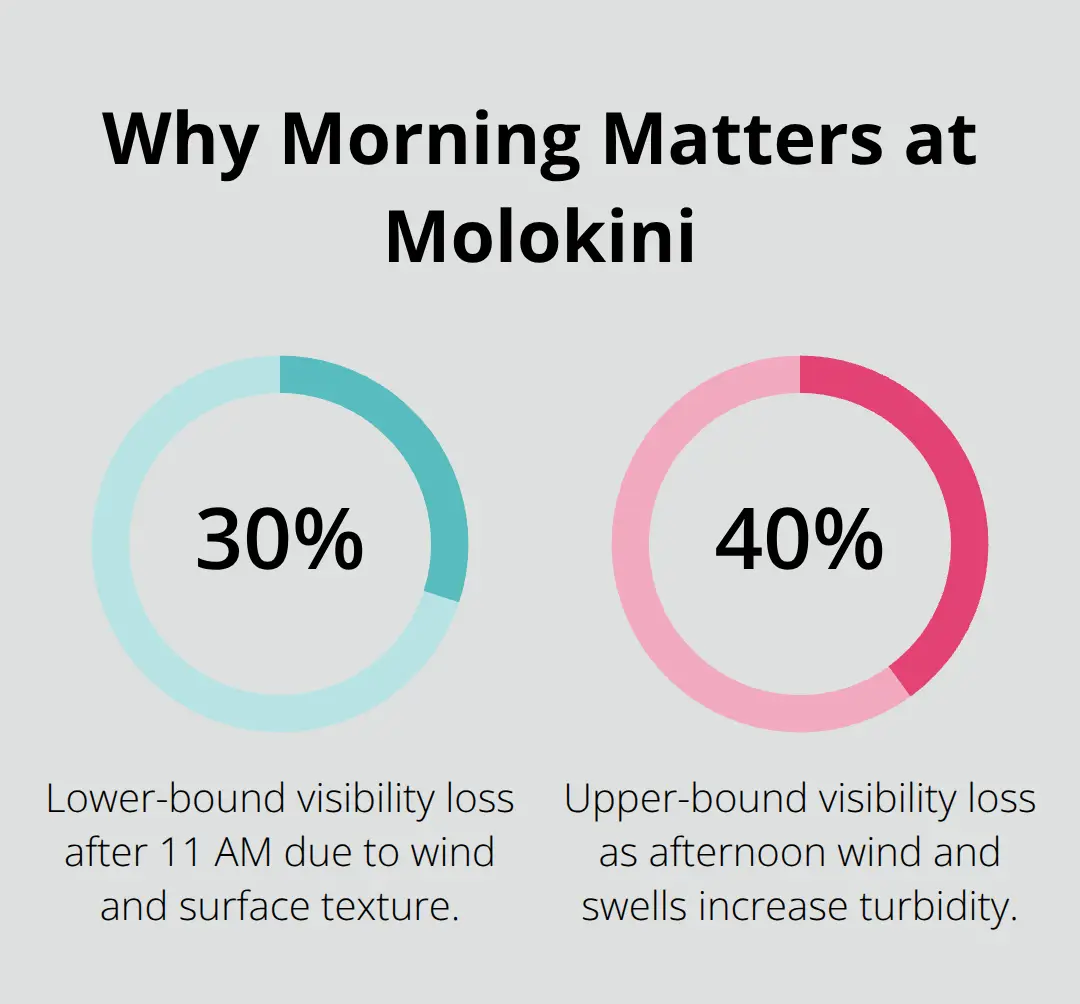 This timing advantage compounds because fewer tourists crowd the crater in early hours, so you witness natural fish behavior rather than schools that have been harassed into hiding.
Year-Round Conditions
Water temperature stays around 78–80 degrees Fahrenheit year-round, so seasonal variation matters less at Molokini than at other sites. Winter months from November through April bring occasional humpback whales whose vocalizations travel underwater and create an unexpected sensory layer to your snorkel experience. These conditions make Molokini reliable across seasons, yet the real test comes when you compare it to South Maui’s shore-based alternatives, where water clarity and marine life encounters shift dramatically based on location and time of day.
Turtle Town: Encounter Hawaiian Green Sea Turtles
What Makes Turtle Town Special
Turtle Town delivers what Molokini cannot: predictable, close-range encounters with Hawaiian green sea turtles in water shallow enough for confident swimmers. Located along the south Maui coast near Maluaka Beach, Turtle Town sits within a protected marine habitat where turtles congregate year-round to feed on algae-covered rocks and rest in shallow coves. The reef structure here averages 10–25 feet deep, so you stay within visual range of the bottom and track turtle movement without descending into deeper water where buoyancy control becomes critical. Morning snorkels between 7 and 9 AM yield the highest turtle sightings because the animals are most active during feeding hours before boat traffic intensifies and water clarity deteriorates.
Visibility and Marine Life Conditions
Visibility typically ranges from 40–60 feet on calm mornings, which is substantially lower than Molokini’s 100-plus-foot clarity, but the shallow reef compensates by keeping marine life concentrated and accessible. Tour operators run dedicated Turtle Town trips with small-group advantages and flexible routing that allows guides to adjust entry points based on real-time turtle activity and current patterns. The shallow reef structure means visibility drops faster than at Molokini when afternoon conditions deteriorate, so commit to morning-only trips and skip Turtle Town on days when dawn conditions show choppy water or forecast afternoon winds above 15 knots.
Seasonal Patterns and Optimal Timing
Seasonal timing matters significantly at Turtle Town because winter swells and summer wind patterns shift turtle behavior and water conditions unpredictably. November through March brings occasional rougher surf on the south shore, which pushes turtles into deeper refuge zones where they become harder to locate from the surface. Summer months from June through August typically deliver calmer morning windows and clearer visibility, making July and August your highest-probability months for reliable turtle encounters. Water temperature stays warm year-round, so seasonal variation affects visibility and turtle accessibility far more than comfort.
Entry Strategy and Wildlife Respect
The critical tactical advantage at Turtle Town is entry strategy: most operators position snorkelers along the rocky edges where turtles rest and feed rather than in open water, and the best guides maintain a strict 10-foot distance rule that keeps animals calm and prevents the harassment that causes them to flee shallow zones entirely. Maluaka Beach’s lava-rock formations create natural habitat corridors where turtles move between feeding and resting areas, so experienced guides position groups at these transition zones where encounters happen with near-certainty on calm days. Avoid touching coral or the turtles themselves-this behavior violates Hawaiian law and causes stress that degrades your viewing experience. These shallow-water encounters set the stage for understanding how South Maui’s diverse reef systems compare to one another, each offering distinct advantages depending on your skill level and what marine life you prioritize.
Comparing Top South Maui Snorkel Sites
Shore Access vs. Boat-Based Snorkeling
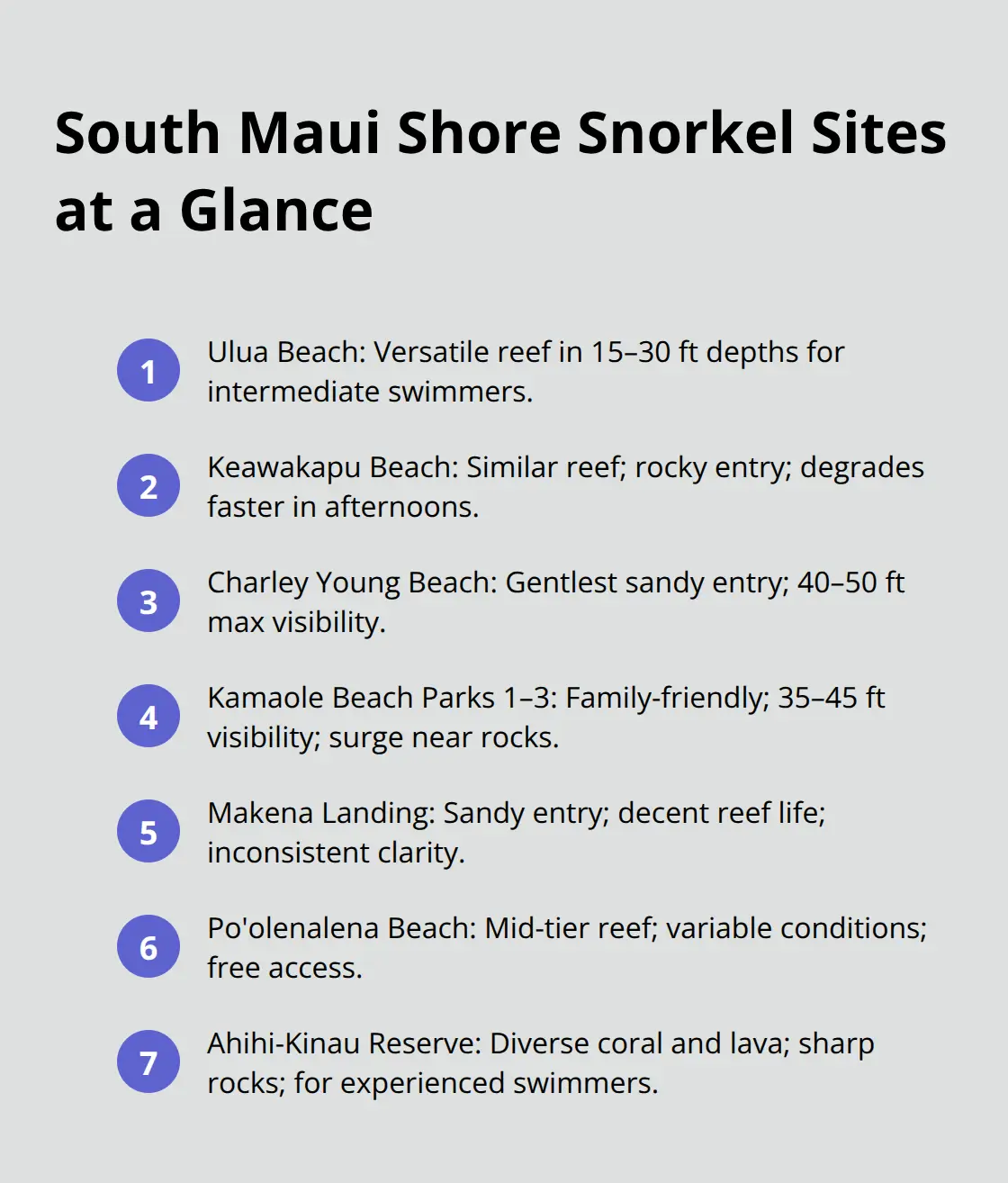
South Maui’s shore-accessible reefs offer legitimate alternatives to Turtle Town boat tours, but only when you accept their inherent limitations and match your expectations to realistic water conditions. Ulua Beach stands as Maui’s most versatile shore snorkel location because the reef extends far offshore in manageable 15–30 foot depths, allowing intermediate swimmers to explore without boat dependency. Entry happens from lava points on either side, and morning visibility typically reaches 50–60 feet on calm days, though afternoon winds chop the surface and reduce clarity to 30 feet or less. Keawakapu Beach nearby offers similar reef structure with frequent turtle sightings along lava fingers, but the rocky entry demands careful foot placement and deteriorates faster than Ulua when afternoon conditions turn rough.
Visibility and Marine Life Across Locations
Charley Young Beach provides the gentlest sandy entry across South Maui, yet visibility here maxes out around 40–50 feet even on optimal mornings, and the reef sits closer to shore, limiting exploration depth. The critical truth about South Maui shore snorkeling is this: you sacrifice visibility compared to Molokini, where underwater visibility often reaches 100 feet or more, encounter fewer fish species because the reef structure lacks Molokini’s protection from surge, and turtle sightings depend entirely on morning timing between 7–9 AM before animals retreat into deeper refuge zones. Kamaole Beach Parks 1 through 3 rank as family-friendly options with lifeguard presence and shallow entry, but water conditions here rank among Maui’s haziest, averaging 35–45 feet visibility with moderate to strong surge near the rocks. Makena Landing and Po’olenalena Beach offer mid-tier options with sandy entry and decent reef life at zero cost beyond parking, but both sites experience inconsistent visibility and require personal judgment about water safety that most casual snorkelers lack.
Cost Comparison and Value Proposition
Renting full snorkel gear from Boss Frog’s or Snorkel Bob’s costs $15–25 daily, plus parking fees of $5–10 at most South Maui beaches, totaling roughly $25–35 out-of-pocket before driving time and failed attempts at poor conditions. A guided Turtle Town tour from Maui Snorkel Charters includes gear, breakfast, snacks, photos, and professional positioning that guarantees turtle encounters on 85 percent of mornings, starting at $99 per person. 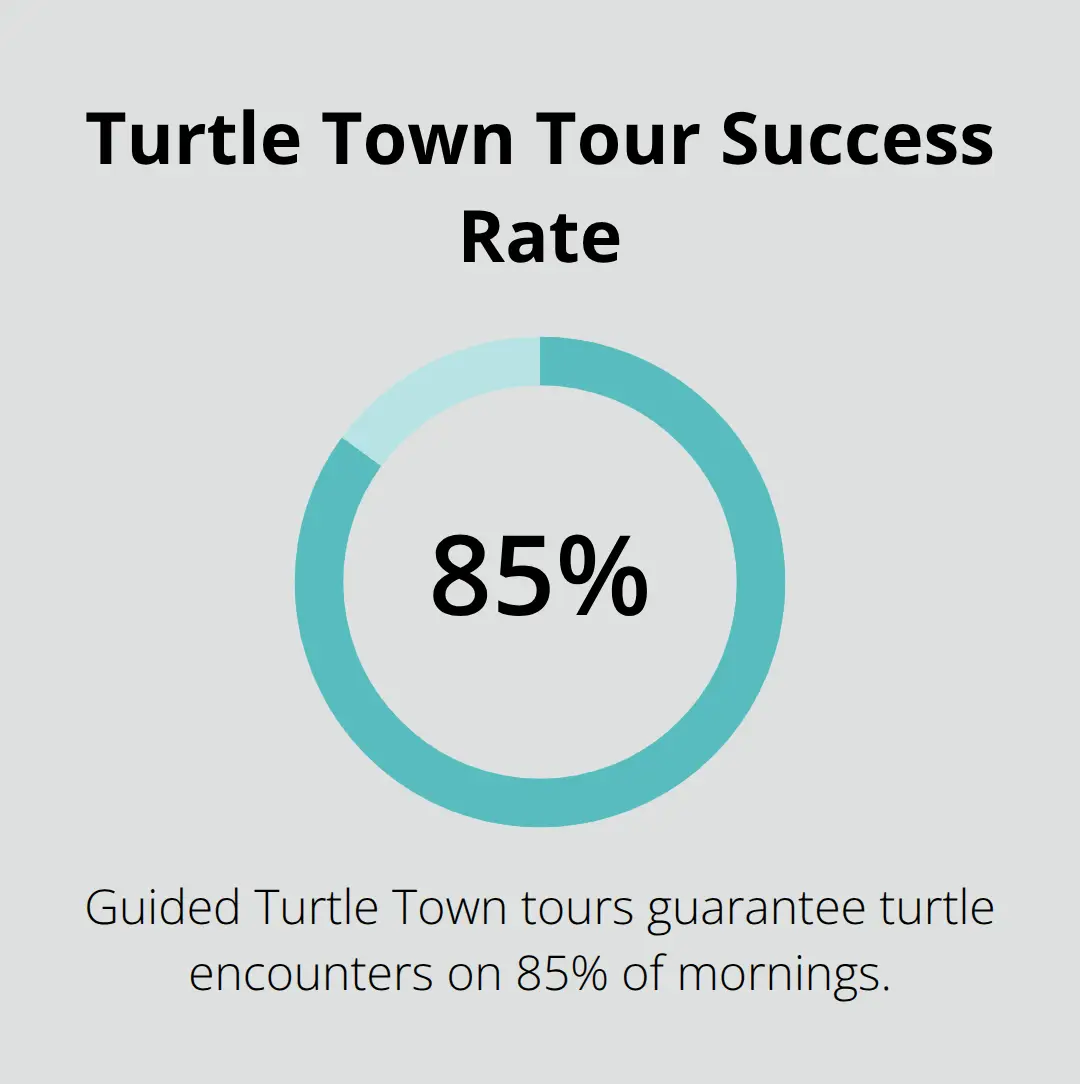
This represents genuine value when you factor in the certainty of sightings and the guide’s real-time water-reading expertise. Ahihi-Kinau Natural Area Reserve sits as Maui’s most underrated South Maui reef system, hosting diverse coral and lava topography with occasional eagle ray sightings, yet the modest public access point and sharp lava rocks demand experienced swimmers comfortable with minimal infrastructure.
Timing and Conditions for Success
Shore snorkeling works only if you commit to 7–8 AM entry windows, tolerate visibility lower than Molokini, and accept that turtle encounters depend on luck rather than professional positioning. You must possess the judgment to abandon poor-condition days rather than force marginal water. Early morning entry yields the highest visibility and the calmest seas before afternoon winds intensify and surface texture cuts underwater clarity. The unspoken calculus separates successful shore snorkelers from frustrated tourists: those who respect timing constraints and water conditions find legitimate reef life and occasional turtle sightings, while those who ignore these factors waste time and money on disappointing visibility and empty reefs.
Final Thoughts
Maui’s best snorkeling locations reward those who respect timing, water conditions, and wildlife protocols with unforgettable encounters. Molokini Crater remains unmatched for visibility and marine diversity, offering 100-plus-foot clarity and over 250 fish species in a protected sanctuary where calm water persists year-round. Turtle Town provides shallow reefs where Hawaiian green sea turtles congregate predictably, while South Maui’s shore-based alternatives like Ulua and Keawakapu beaches offer legitimate reef exploration at zero cost.
Professional snorkel tours enhance your adventure through expertise that transforms casual water time into genuine discovery. Experienced guides read daily conditions with precision, positioning you at locations where visibility peaks and marine life concentrates rather than forcing fixed itineraries regardless of weather. Small-boat operators adjust routes based on real-time water assessment, so you actually snorkel where conditions cooperate on that specific morning instead of hoping marginal visibility improves.
Commit to early morning entry windows between 7 and 9 AM, when winds remain calm and visibility peaks across all locations. Check daily snorkel condition reports before deciding between boat-based and shore access, and accept that afternoon conditions deteriorate universally across the island. Book a professional Molokini or Turtle Town tour with operators who adjust routes based on conditions, respect marine life by maintaining distance and avoiding coral contact, and use reef-safe sunscreen to protect Hawaii’s underwater ecosystems.
Avant de s’inscrire sur une plateforme de jeu, il est utile de regarder comment elle fonctionne réellement au quotidien. Les possibilités de paiement, les jeux disponibles, les délais liés aux retraits et la clarté des conditions peuvent avoir autant d’importance que l’offre promotionnelle proposée aux nouveaux clients.
Pour un casino en ligne pour joueurs belges, ces éléments doivent notamment être appréciés en fonction des habitudes locales. Bancontact, les cartes bancaires ou les portefeuilles électroniques ne sont pas toujours proposés dans les mêmes conditions, tandis que les délais de traitement peuvent différer selon la méthode choisie.
Les bonus constituent un autre point qui mérite une lecture attentive. Derrière un montant attractif peuvent se trouver une mise minimale, un délai d’utilisation ou certaines restrictions sur les jeux et les gains. Une offre devient ainsi plus facile à évaluer lorsque ses conditions sont prises en compte dans leur ensemble.
Enfin, l’utilisation depuis un smartphone peut également influencer le choix. Une interface bien adaptée, un accès rapide au compte et des informations clairement présentées rendent les opérations courantes plus simples. Ce sont souvent ces détails pratiques, plutôt qu’un seul avantage promotionnel, qui permettent de distinguer deux plateformes proposant des offres similaires.</p