
Maui’s crystal-clear waters and vibrant coral reefs make it one of Hawaii’s premier snorkeling destinations. Whether you’re a seasoned snorkeler or exploring underwater life for the first time, the best snorkeling in Maui offers unforgettable encounters with sea turtles, tropical fish, and thriving ecosystems.
This guide covers everything you need to plan your perfect snorkeling adventure, from top destinations to practical tips for staying safe and comfortable in the water.
Where to Snorkel in Maui
Molokini Crater: The Premier Offshore Destination
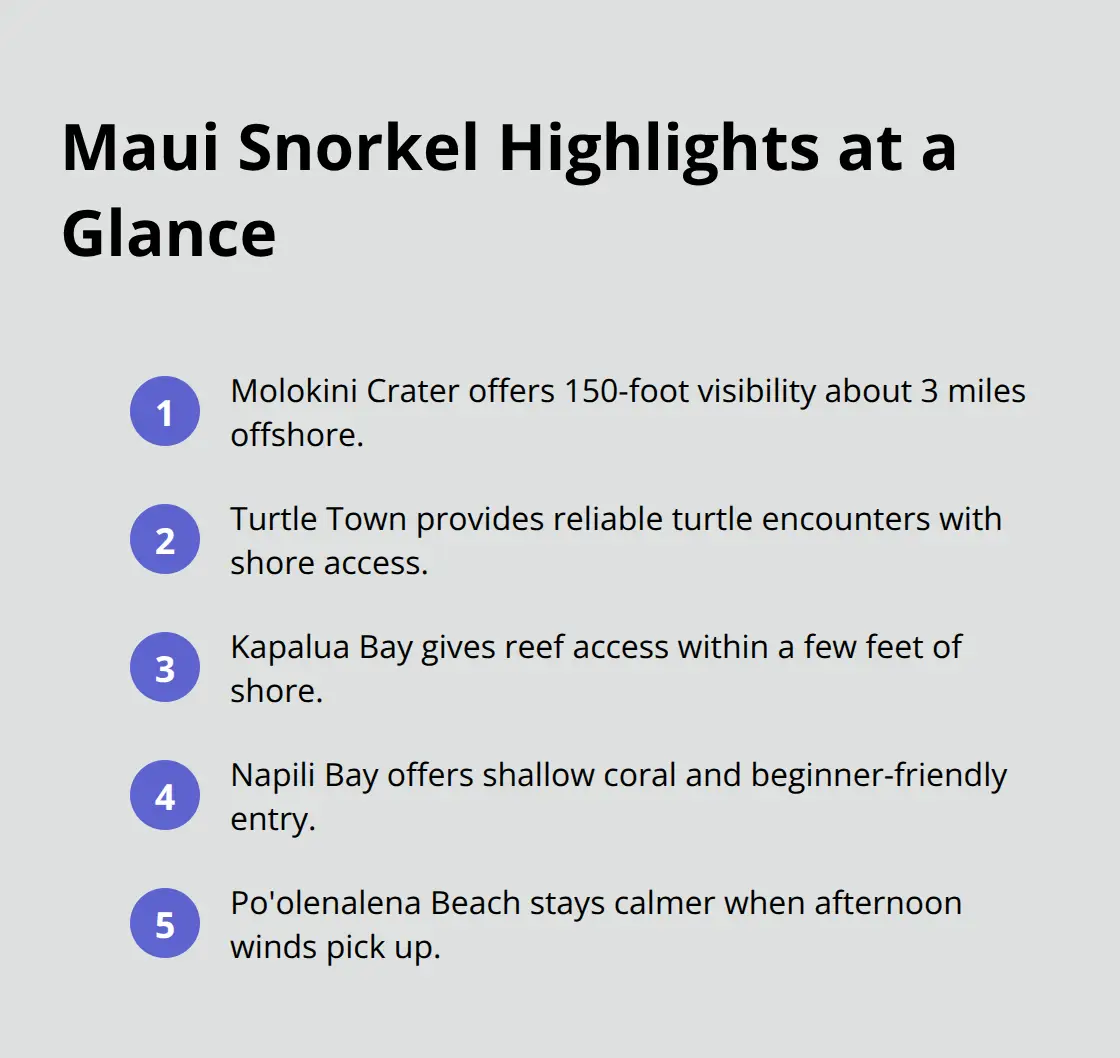
Molokini Crater stands as Maui’s most celebrated snorkeling destination, and the reputation is earned. This crescent-shaped volcanic crater sits roughly 3 miles offshore and delivers visibility that frequently exceeds 150 feet. The crater’s protected waters create a natural amphitheater for marine life, with reef sharks, eels, and dense schools of tropical fish concentrated in a relatively small area. The downside is obvious: Molokini attracts crowds, as dozens of boats converge on the same reef simultaneously. The solution is straightforward-book early morning departures around 7:00 AM when visibility peaks and the reef feels less congested.
Turtle Town: Accessible Shore-Based Encounters
Turtle Town near Maluaka Beach offers a different appeal. This shallow reef zone consistently delivers close encounters with Hawaiian green sea turtles, and unlike Molokini, you can access it from shore without a boat. The reef sits close enough to the beach that beginners gain confidence quickly, and the calm, protected waters make it ideal for first-time snorkelers. Maui Snorkel Charters operates guided tours to Turtle Town with fast 15-minute boat runs from their Kihei base, keeping the experience intimate with maximum 20 passengers per tour and including gear, breakfast, and free photos.
Shore Snorkeling: Value and Flexibility
Shore snorkeling along Maui’s coral gardens delivers exceptional value and flexibility that boat tours cannot match. Kapalua Bay and Napili Bay on West Maui offer reef access within a few feet of shore, with observable fish and coral formations in water shallow enough for confidence-building. Po’olenalena Beach in Makena provides calm entry with close-to-shore reef life, making it particularly reliable on days when afternoon wind picks up elsewhere. You’ll encounter the same tropical fish and reef ecosystems as boat passengers-just without the seasickness risk or $200+ per-person expense.
Timing and Conditions: The Strategic Advantage
The critical tactic involves timing: snorkel between 9:30 and 11:00 AM when visibility remains high and afternoon chop hasn’t developed. Check the daily Maui snorkeling conditions report delivered around 8:00 AM via email subscription-this single tool determines whether you’ll encounter vibrant reefs or murky visibility. The report tells you which coast to target that day and whether west or south Maui offers superior conditions. Central Maui grows progressively windier as afternoon arrives, pushing waves onto Kihei’s coastline, so flexibility matters.
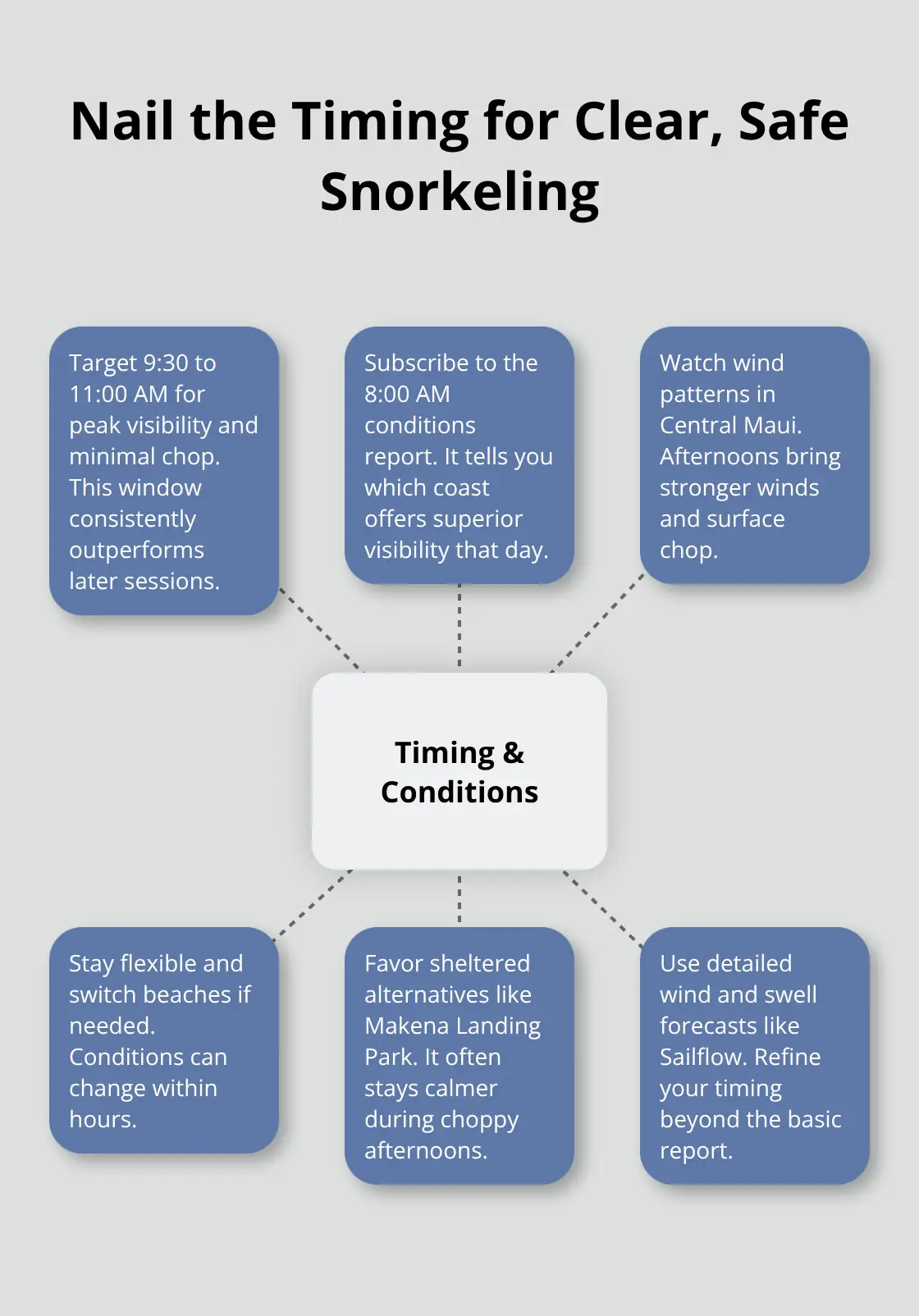
If morning conditions disappoint at your chosen beach, the report guides you toward sheltered alternatives like Makena Landing Park, which maintains calmer waters even during choppy afternoons. Rent gear from local operators like Snorkel Bob’s or Auntie Snorkel to complete your setup without major expense.
Preparing for Your Water Entry
Before you enter the water, watch the ocean for about 15 minutes to assess conditions and time your entry with a breaking wave to reach deeper water safely. Move through shallow water and time your transitions with the next swell to avoid being pulled out. Stay mindful of currents and never step on or touch coral-maintain distance from reef structures to protect both your safety and the delicate ecosystem. If conditions feel doubtful, switch beaches rather than push through, since Maui offers multiple beginner-friendly options with similar marine life. With the right timing, location, and preparation, you’ll maximize your snorkeling experience and set yourself up for the guided tour experience that many visitors prefer for their first major reef encounter.
What to Expect on a Maui Snorkel Tour
How Tour Operators Optimize Your Experience
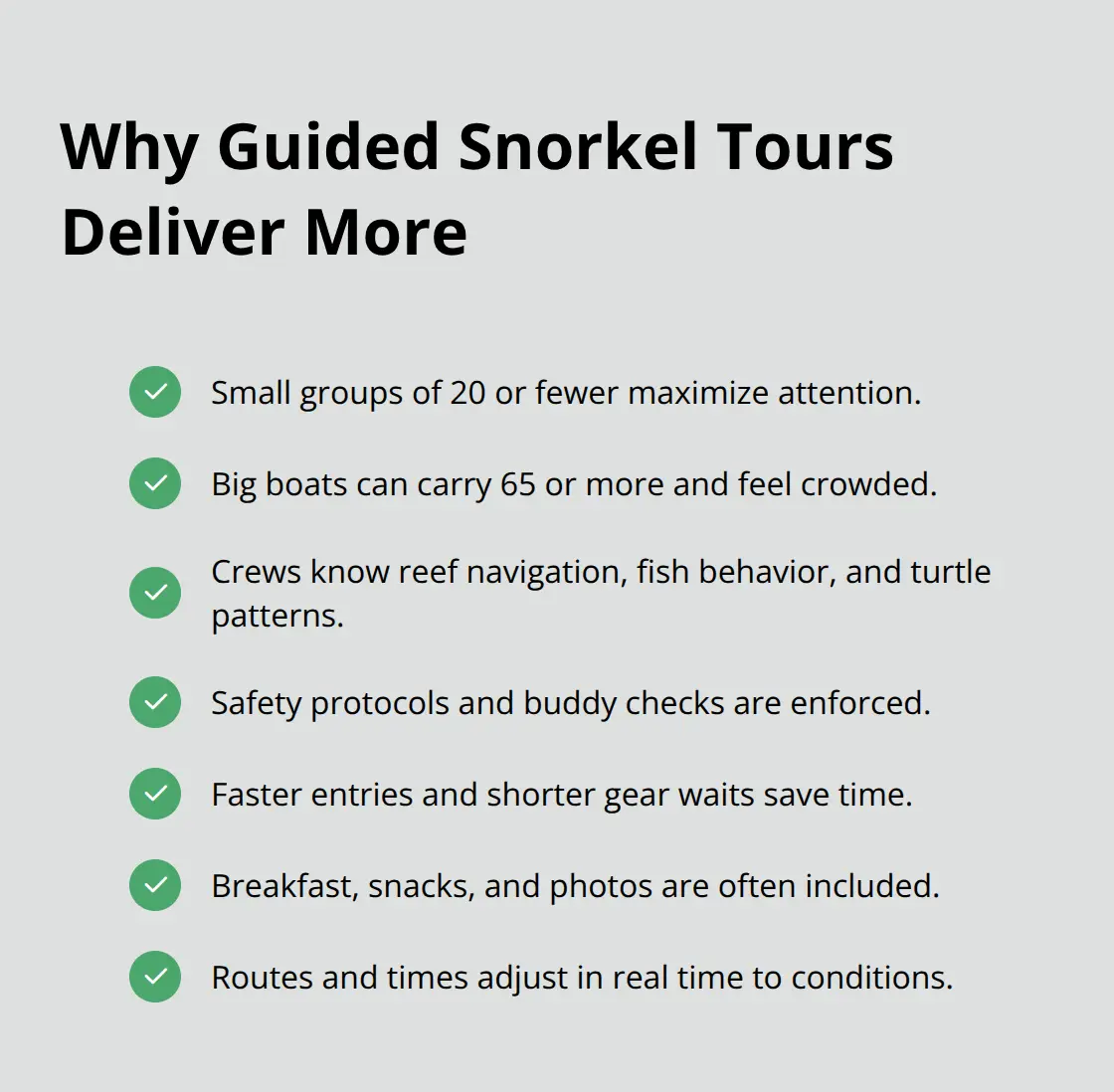
Booking a guided snorkel tour eliminates the guesswork that plagues independent shore snorkelers. Tour operators monitor daily conditions, select the optimal departure time, and adjust routes based on real-time water quality and wind patterns. This matters because a mediocre snorkel day at shore often transforms into an excellent tour day when professionals steer you toward protected waters and prime reef zones. Most reputable operators cap group sizes deliberately-quality small-group tours limit participants to 20 or fewer, which contrasts sharply with crowded commercial vessels that pack 65 or more bodies onto a single boat. Smaller groups mean shorter waits for gear, faster entries into the water, and actual interaction with guides rather than processing through a line.
The Value of Professional Crew and Knowledge
The crew aboard quality operators functions as a trained team, not just deck hands. They know reef navigation, fish behavior, and turtle patterns intimately. When your guide points out a moray eel hidden in coral or identifies a reef shark, that knowledge transforms a generic snorkeling experience into an educational encounter. Tours include breakfast and snacks, which eliminates the need to manage your own provisions while also dealing with seasickness or water entry anxiety. Complimentary underwater photography removes the burden of operating a camera while navigating entry and exit procedures.
Practical Advantages of Structured Tours
Equipment arrives properly maintained and fitted to your body, removing the friction of rental shop visits and sizing confusion. Fast boat runs minimize seasickness exposure compared to longer offshore trips. Guides enforce safety protocols consistently: they conduct buddy checks, monitor water conditions throughout your time in the water, and establish clear communication signals before entry. Tours position themselves as competitive with quality gear rental plus parking plus potential fuel costs if you drive between multiple shore spots searching for good conditions. The value argument strengthens further when you factor in the guide’s ability to position you directly above the most active reef sections and identify marine life that independent snorkelers miss entirely.
Why Beginners Benefit Most from Guided Tours
Beginners especially benefit from this structured approach because guides provide confidence-building reassurance and immediate assistance if panic sets in underwater. Tours also eliminate the isolation risk inherent to shore snorkeling, where a sudden cramp or equipment malfunction leaves you managing a problem alone in open water. Professional operators select departure times and routes that maximize your chances of encountering sea turtles, reef sharks, and vibrant coral formations. With these advantages in place, you’re ready to understand what specific tour options deliver and how to select the operator that matches your skill level and preferences.
Planning Your Snorkeling Visit for Optimal Conditions
Subscribe to Daily Condition Reports
Start your snorkeling day by subscribing to the daily Maui snorkeling conditions report, delivered via email around 8:00 AM. This single decision determines success more than any other factor. The report specifies wind speed, wave height, visibility forecasts, and which coast-west Maui around Kaanapali and Lahaina or south Maui near Kihei and Makena-offers superior conditions that specific day. Central Maui grows progressively windier as afternoon arrives, which means the window for quality snorkeling closes by early afternoon. Use Sailflow’s detailed forecast for wind gusts, wave period, and cloud cover to refine your timing beyond the basic daily report. Conditions shift dramatically within hours, so flexibility matters more than rigid planning. If your chosen beach disappoints on any given morning, the report guides you toward sheltered alternatives like Makena Landing Park, which maintains calmer waters during choppy afternoons when other south Maui spots deteriorate.
Target the Mid-Morning Window
Try the 9:30 to 11:00 AM window when visibility peaks and afternoon chop hasn’t developed. Avoid dusk and dawn entirely due to shark activity risk; daytime snorkeling between mid-morning and early afternoon provides the safest conditions. If you book a guided tour, operators monitor these conditions continuously and adjust departure times and routes in real time, eliminating the guesswork entirely. Early departures around 7:00 AM capitalize on peak visibility before crowds arrive and wind strengthens. Conditions shift dramatically within hours, so flexibility matters more than rigid planning.
Prepare Your Gear and Sun Protection
Pack reef-safe sunscreen and apply it away from the water before entry, then reapply after each exit-standard sunscreen damages coral ecosystems and offers inferior protection during extended water time. Wear a snorkeling vest or use a flotation aid like a pool noodle or boogie board, especially if you’re a beginner building confidence; this significantly boosts safety and reduces panic in deeper sections of the reef. Rent or bring your own snorkel gear from reputable local shops like Snorkel Bob’s or Auntie Snorkel rather than relying on hotel rentals, which often fit poorly and leak constantly.
Master Safe Water Entry and Exit
Watch the ocean for approximately 15 minutes before entering to assess breaking wave patterns and current strength, then time your entry with a breaking wave to reach deeper water safely. Move deliberately through shallow water and synchronize your exit transitions with the next swell to avoid being pulled seaward. Never step on or touch coral-maintain clear distance from all reef structures to protect the ecosystem and avoid cuts from sharp coral edges. Perform quick buddy checks every few minutes if you’re shore snorkeling with friends; never snorkel alone regardless of your experience level.
Adjust Your Plans Based on Conditions
If conditions feel unstable or your instinct signals concern, switch beaches rather than push through; Maui offers numerous beginner-friendly alternatives with identical marine life. The difference between a mediocre experience and an exceptional one often comes down to reading conditions correctly and acting decisively. Conditions shift dramatically within hours, so flexibility matters more than rigid planning.
Final Thoughts
Maui’s accessible shore reefs and world-class offshore destinations establish it as one of Hawaii’s premier snorkeling locations. The best snorkeling in Maui emerges not from a single perfect spot but from matching your skill level and preferences to the right location and timing. Beginners thrive at shallow bays like Kapalua and Napili where reef life congregates within arm’s reach of shore, while experienced snorkelers pursue Molokini Crater’s 150-foot visibility and dense marine populations.
Quality tour operators distinguish themselves through small group caps that preserve personalized attention, professional crews trained in reef navigation and safety protocols, and real-time condition monitoring that eliminates guesswork. Reputable companies maintain consistent standards across multiple departures, provide included meals and photography services, and hold strong ratings from thousands of verified guests. Avoid overcrowded commercial vessels that prioritize volume over experience; instead, seek operators with transparent group size limits and crew expertise that transforms a generic reef visit into an educational encounter with Hawaiian marine ecosystems.
Start your snorkeling adventure by subscribing to the daily conditions report and committing to mid-morning timing between 9:30 and 11:00 AM. Pack reef-safe sunscreen, rent quality gear from established shops, and enter the water with a buddy and clear safety protocols. Book a guided tour to Turtle Town or Molokini and discover why visitors return to Maui year after year for underwater experiences found nowhere else in Hawaii.