
Maui’s crystal-clear waters and thriving coral ecosystems make it one of Hawaii’s premier snorkeling destinations. Whether you’re seeking encounters with sea turtles or exploring vibrant reefs, the best snorkeling in Maui offers unforgettable underwater experiences for all skill levels.
This guide covers the top spots, what marine life to expect, and how to choose the right tour operator. Plan your perfect snorkeling adventure with our insider tips and recommendations.
Where to Snorkel in Maui
Molokini Crater: World-Class Visibility and Marine Diversity
Molokini Crater stands out as Maui’s most reliable snorkeling destination, delivering world-class visibility. This crescent-shaped volcanic crater sits in sheltered water, creating calm conditions even on days when other spots turn rough. The crater hosts over 250 fish species and thriving coral formations, making the boat trip from shore worthwhile. Most tour operators depart early morning to maximize visibility and minimize crowds. You’ll encounter reef sharks, eels, and occasionally manta rays alongside colorful tropical fish and sea turtles. The crater’s protected status ensures marine life thrives here, rewarding your investment of around $198 for a full-day excursion that includes breakfast, lunch, and two snorkeling stops.
Turtle Town: Shore-Based Encounters with Hawaiian Green Sea Turtles
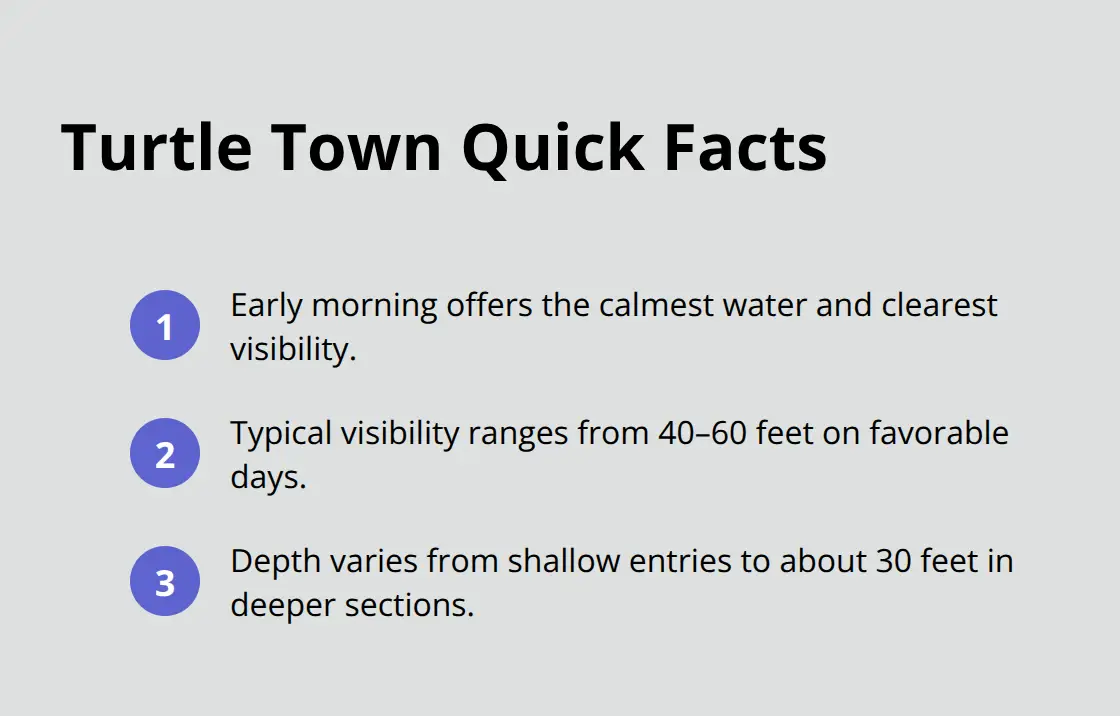
Turtle Town, located in South Maui near Maluaka Beach, delivers what Molokini offers but from the shore, eliminating the need for a boat charter. This rocky reef system concentrates Hawaiian green sea turtles reliably, particularly when you snorkel early morning before crowds arrive. The reef features tall coral towers and dense fish populations, creating an intimate underwater experience. Water depths range from shallow entry points to deeper sections around 30 feet, so you control your exploration level. Morning snorkeling here yields the best visibility and calmest conditions, with visibility typically 40–60 feet on favorable days.
Honolua Bay: Vibrant Reefs for Experienced Snorkelers
Honolua Bay presents Maui’s most vibrant coral ecosystem, but it demands respect and skill despite what some guides claim. This protected marine sanctuary hosts pristine reefs teeming with Hawaiian reef fish, and encounters with sea turtles and occasional manta rays happen frequently. The entry point requires careful technique-wear fins, approach from the rocky edges rather than sandy sections, and walk backward into the water to maintain balance on slippery rocks. The bay’s deeper water and occasionally strong currents mean non-swimmers should bring flotation like a boogie board. You must exit the water the same way you entered, timing your departure just after a breaking wave to avoid surge pulling you into rocks. Morning visits in calm weather provide the safest conditions; check daily forecasts before heading out, as afternoon swells make this spot dangerous. If you feel comfortable in the water and respect the entry technique, Honolua Bay rewards you with some of Maui’s most productive reef life and the highest probability of seeing manta rays during specific seasons.
Planning Your Snorkeling Day Around Conditions
The three destinations above represent Maui’s premier snorkeling options, yet each demands different preparation and timing. Early morning departures consistently deliver the calmest water and clearest visibility across all three spots. Afternoon conditions deteriorate as winds pick up and swells increase, particularly along south and west Maui coasts. You should check daily snorkeling condition reports before selecting your destination, as wind and wave patterns shift constantly. Tour operators adjust their routes based on real-time conditions, so flexibility in your plans ensures you experience the best underwater life available that day. Understanding these variables prepares you to make informed decisions about which operator and destination suit your skill level and schedule.
What to Expect When Snorkeling in Maui
Water Temperature and Seasonal Conditions
Spring water temperatures in Maui range from 75–80°F, warm enough to feel comfortable but cool enough that reef-safe sunscreen becomes essential rather than optional. Late April trips occasionally coincide with humpback whale season’s tail end, offering rare chances to spot whales and calves from shore or during boat transits. West and south Maui coasts calm first in the morning, making Kaanapali and Lahaina your safest bets for early departures.
Timing Your Snorkel for Optimal Conditions
Morning conditions deliver the decisive advantage: winds remain lightest between 7:00 and 11:00 am, visibility peaks before afternoon swells develop, and crowds stay manageable. The Maui Snorkel Report, published daily around 8:00–8:30 am, forecasts wind speed, wave height, and wave period for each region, allowing you to select your destination based on real conditions rather than guesswork. Plan to finish snorkeling by 1:00 pm because afternoon heating intensifies wind across central Maui, pushing larger swells toward south-facing beaches. If you must snorkel in the afternoon, Makena Landing Park remains sheltered longer than other south Maui spots.
Marine Life Encounters and Behavior
You’ll encounter Hawaiian green sea turtles at nearly every snorkeling destination, but they demand distance and respect-never crowd or touch them, and observe from at least arm’s length away. Reef fish diversity depends on location: shallow sandy-bottom sites like Baby Beach host fewer species but suit nervous swimmers, while deeper reefs at Turtle Town and Honolua Bay concentrate vibrant populations including Moorish idols, butterflyfish, goatfish, and trumpetfish. The buoyant Maui water makes flotation effortless, but diving deep without fins proves nearly impossible, so fins dramatically improve your underwater maneuverability and comfort.
Essential Safety Practices in the Water
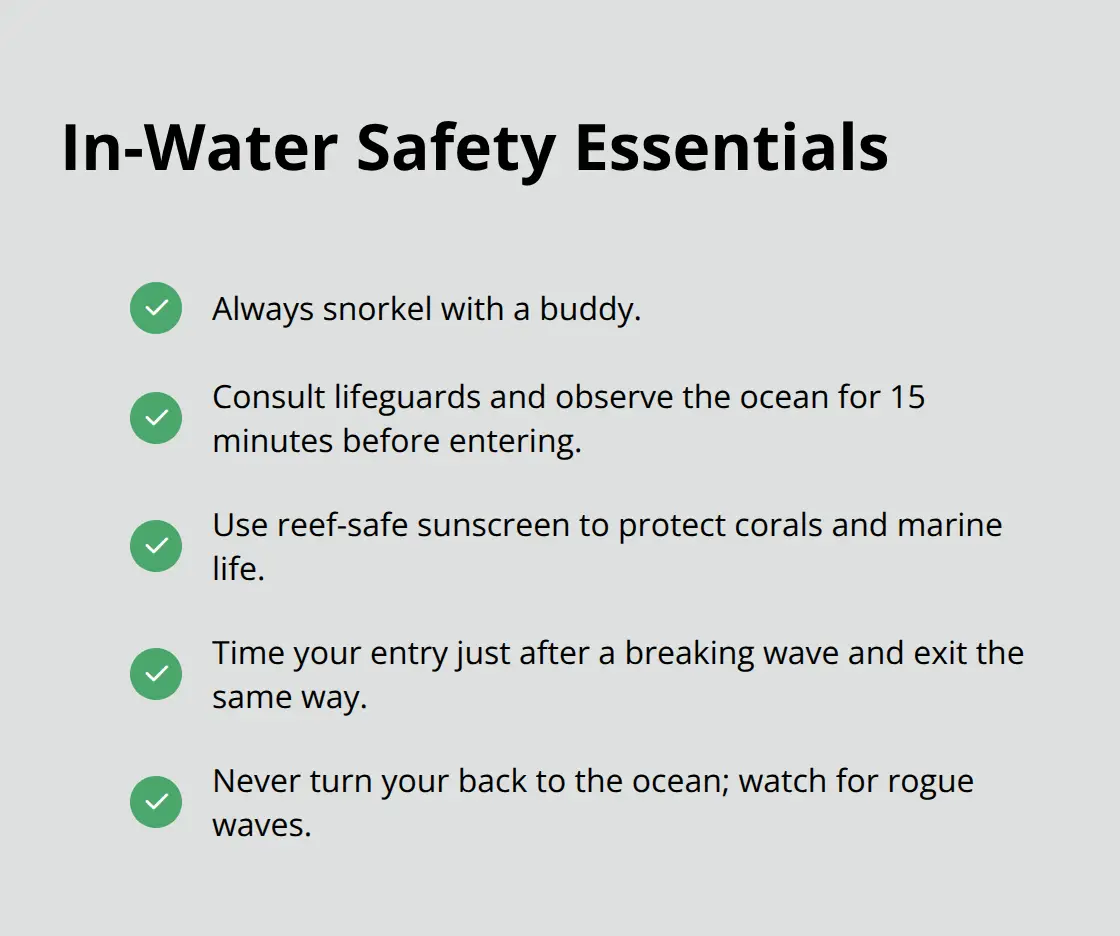
Always snorkel with a buddy and never alone; check in with lifeguards about current conditions before entering, and observe the ocean for 15 minutes to assess swells and currents. Wear reef-safe sunscreen because UV filters found in chemical sunscreen can harm aquatic life, including corals. Enter the water just after a breaking wave, then move to deeper sections, and exit using the same technique to avoid surge pulling you into rocks. Never turn your back on the ocean while snorkeling, and stay alert for rogue waves that can occur without warning.
Preparing for Your First Snorkel Adventure
Understanding these conditions and safety practices prepares you to make informed decisions about which destination suits your skill level and schedule. Your next step involves selecting a tour operator that matches your comfort level and preferences, whether you prefer the structure of a guided experience or the flexibility of shore-based snorkeling on your own terms.
Choosing the Right Snorkeling Tour Operator
Large Commercial Operations vs. Small-Group Tours
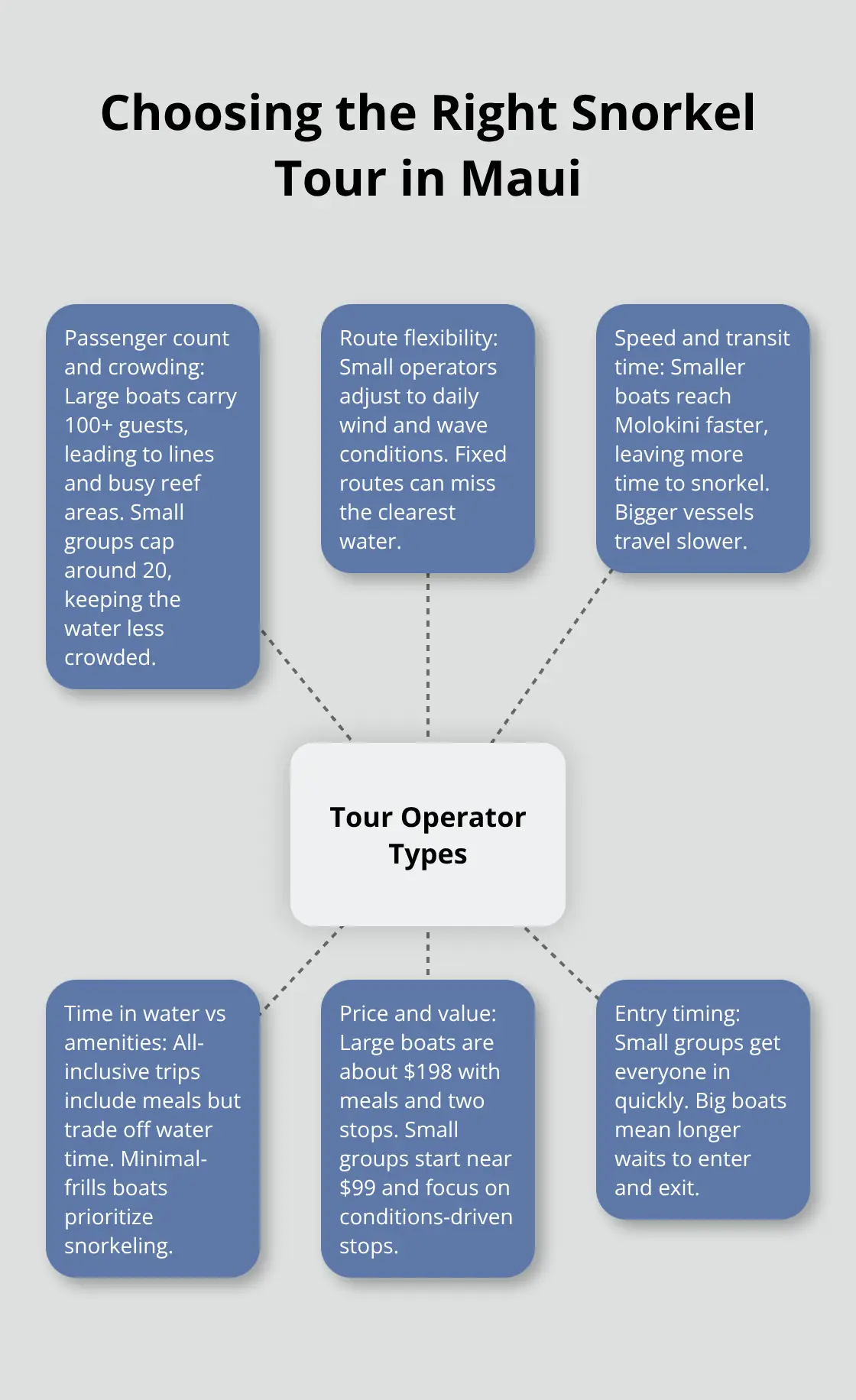
Large commercial boats like Pride of Maui carry 100+ passengers, offer two snorkeling stops for around $198, and include breakfast and lunch, making them ideal if you want a structured, all-inclusive day without decision-making. Small-group operators cap boats at 20 passengers maximum, charge $99 and up, and adjust routes daily based on real conditions rather than fixed itineraries. The practical difference matters: on a 100-person boat, you spend 20 minutes waiting to enter the water and compete for space around the best reef sections, while a 20-person operation gets everyone in the water within minutes and maintains closer proximity to marine life. Small-group boats also run faster-reaching Molokini in 15 minutes versus 45 minutes on larger vessels-meaning more time snorkeling and less time traveling. If you prefer a predictable experience with guaranteed food service and don’t mind crowds, large operations work fine.
If you’re an experienced snorkeler comfortable making decisions about conditions and willing to skip meals for water time, small-group operators deliver superior value.
Equipment Quality and Local Knowledge
Equipment quality and local knowledge separate operators who deliver consistent underwater encounters from those who don’t. Reputable local shops like Snorkel Bob’s and Auntie Snorkel rent quality gear and provide current intel on which beaches are calmest that day, while resort rentals often feature outdated masks and fins that reduce visibility and maneuverability. Operators with flexible routing-those who check the daily Maui Snorkel Report and adjust destinations based on wind and wave forecasts-consistently position you at the calmest, clearest spots available. Fixed-route operators commit to Molokini regardless of conditions, which sometimes means turbid water and rough entries.
Identifying Operators with Genuine Local Expertise
Ask potential operators whether they adjust routes daily and whether guides actively search for turtle concentrations rather than simply taking you to a predetermined location. Guides with genuine local experience know seasonal patterns, fish behavior, and how currents shift throughout the day, transforming a generic reef visit into a targeted encounter with specific marine life. Small operators source local knowledge because their captains and guides work the same waters year-round, whereas large commercial operations rotate staff and rely on scripted presentations. Your investment in a small-group tour with flexible routing and local expertise yields measurably better underwater experiences than the cheapest large-boat option.
Final Thoughts
Maui’s premier snorkeling destinations deliver world-class underwater experiences across all skill levels, from Molokini Crater’s protected marine sanctuary to Turtle Town’s reliable sea turtle encounters and Honolua Bay’s vibrant coral ecosystems. Each location demands different preparation, timing, and respect for ocean conditions, yet all reward early morning departures and flexibility based on daily weather forecasts. The best snorkeling in Maui happens when you match your skill level to the right destination, check the Maui Snorkel Report before committing to a location, and select an operator whose local knowledge and flexible routing position you at the calmest, clearest spots available that day.
Large commercial operations offer predictability and all-inclusive meals, while small-group tours with flexible routing deliver superior underwater encounters and faster access to marine life. Always snorkel with a buddy, wear reef-safe sunscreen, observe the ocean before entering, and respect marine life by maintaining distance from sea turtles and avoiding contact with coral formations. Contact local operators or small-group charter companies to discuss current conditions and which destination suits your experience level.
Check the daily Maui Snorkel Report to confirm wind and wave forecasts, then commit to an early morning departure between 7:00 and 11:00 am when visibility peaks and conditions remain calmest. Snorkel Bob’s and similar local providers can help you select gear and identify which spots offer the calmest conditions that day. With proper planning, the right operator, and respect for ocean safety, your Maui snorkeling adventure will deliver unforgettable encounters with Hawaiian sea turtles, vibrant reef fish, and pristine coral ecosystems.