
Maui’s crystal-clear waters and vibrant coral reefs make it a snorkeler’s paradise. Whether you’re a beginner or experienced, the best snorkeling spots on Maui offer unforgettable encounters with tropical fish, sea turtles, and pristine underwater ecosystems.
This guide reveals where to go, what to expect, and how to choose the right tour operator for your adventure. Discover why Maui’s premier snorkeling destinations should be at the top of your travel itinerary.
Where Should You Snorkel on Maui
Molokini Crater stands as Maui’s premier snorkeling destination and frankly, it deserves that reputation. The water clarity reaches 150+ feet of visibility, transforming the experience into something genuinely exceptional rather than merely good. Boat tours operate from Maalaea Harbor with typical sessions running from 7:00 AM to 12:00 PM or 1:00 PM to 4:00 PM, and you’ll encounter colorful reef fish, eels, small reef sharks, and octopuses in abundance. The crater’s horseshoe shape creates a natural amphitheater of marine life that shore snorkeling simply cannot replicate. Turtle Town complements Molokini perfectly as your second stop on the same excursion, offering frequent Hawaiian green sea turtle sightings when you visit early before larger tour boats arrive mid-morning. The combination delivers both reef diversity and the close wildlife encounters that make snorkeling memorable. Honolua Bay, located beyond Kapalua on West Maui, provides an excellent alternative for those who seek shore-based access without boat logistics. The bay features interesting coral formations and diverse fish species, though entry requires you to time your approach with wave breaks and respect the rocky lava terrain that borders the water.
Practical Timing Matters More Than Location
Morning snorkeling consistently outperforms afternoon sessions due to calmer seas and superior visibility. The daily snorkel report, typically issued around 8:00 to 8:30 AM, identifies which coast offers the best conditions that specific day-West Maui spots like Kaanapali and Lahaina frequently top the recommendations. Mid-morning snorkeling around 9:30 to 11:00 AM balances accessibility with favorable water conditions, avoiding both the dawn crowd and afternoon wind that progressively worsens throughout the day.
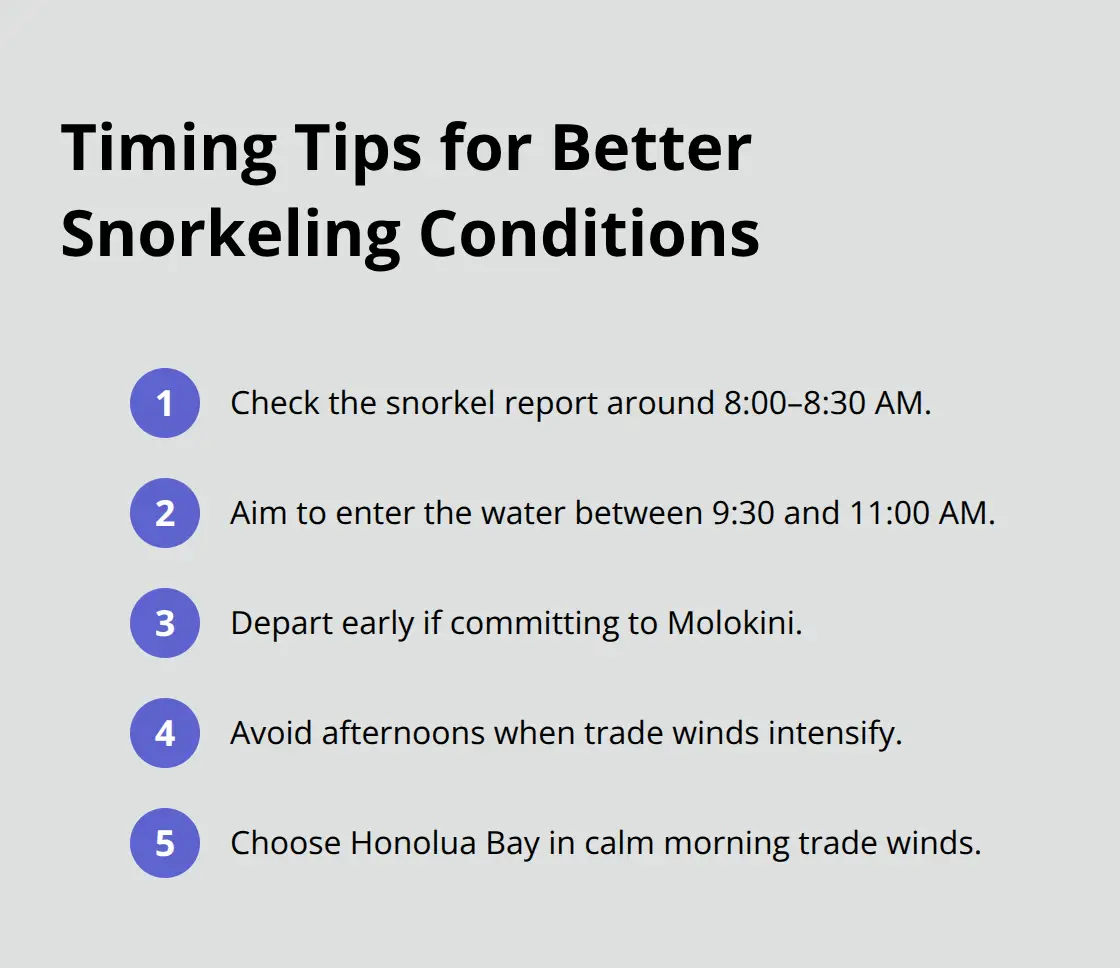
Tour operators deliberately choose routes based on real-time conditions rather than fixed itineraries, meaning flexibility yields superior experiences. If you commit to Molokini specifically, depart early; waiting until afternoon guarantees choppy water and reduced visibility. Honolua Bay performs reliably in the morning when trade winds remain minimal, though afternoon sessions become increasingly risky as conditions deteriorate.
Why Boat Tours Outperform Shore Snorkeling
Quality operators limit passenger groups to smaller numbers, ensuring you’re not competing with hundreds of snorkelers for viewing space. Tours include professional-grade gear, breakfast, lunch with options like poke and grilled chicken, and on-board photography services that capture encounters you’ll struggle to photograph yourself.
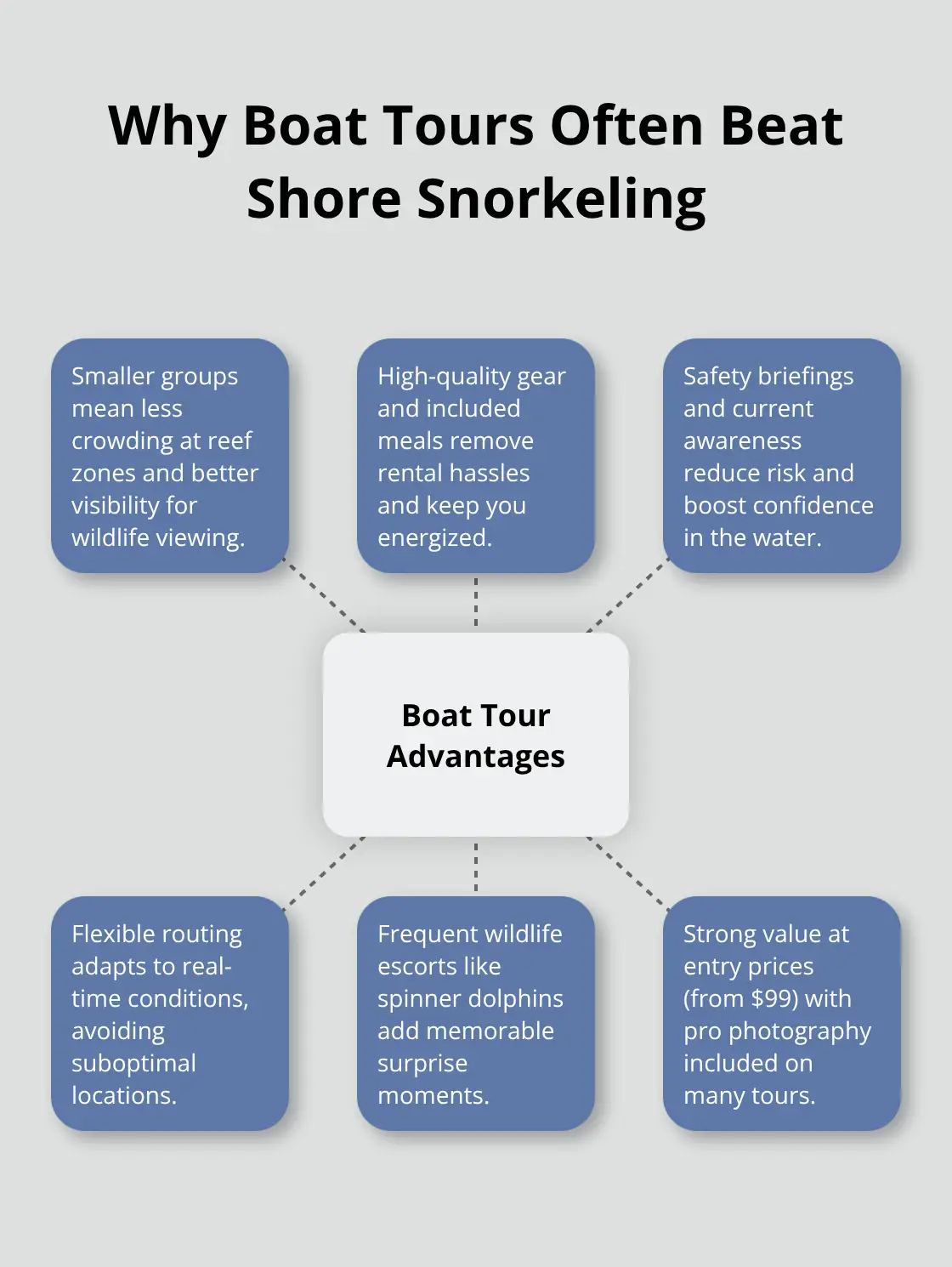
The crew provides safety briefings, current awareness, and route flexibility that prevents you from wasting time at suboptimal locations. Spinner dolphins frequently escort boats to Molokini, and occasional whale or monk seal sightings add unpredictability to the experience. Shore snorkeling saves money upfront but wastes time as you test multiple locations, deal with gear rental hassles, and accept whatever conditions exist at your chosen beach. Tours starting at $99 represent genuine value when you factor in included meals, professional photos, and guaranteed access to Maui’s most biodiverse underwater environments.
Choosing Between Boat Access and Shore Entry
Boat tours to Molokini and Turtle Town operate from Maalaea Harbor and deliver you to prime snorkeling zones in minutes rather than hours of travel and setup. Shore snorkeling at Honolua Bay or other West Maui beaches eliminates boat costs but requires you to navigate parking, gear logistics, and variable water conditions on your own. Small-group operators (typically 20 passengers or fewer) provide personalized attention and faster access to the best reef zones compared to larger commercial vessels. If you value convenience, professional guidance, and wildlife encounters, boat tours justify their cost through included meals, gear, and photography services. The choice ultimately depends on whether you prioritize budget savings or optimized snorkeling conditions and wildlife access.
Now that you understand where to snorkel and why timing and tour selection matter, the next section explores what marine life you’ll actually encounter and how to stay safe in Maui’s waters.
What to Expect in Maui’s Waters
Seasonal Patterns and Daily Timing
Maui’s snorkeling conditions shift dramatically between seasons, and understanding these patterns prevents wasted days chasing poor visibility or dangerous currents. Winter months from November through March bring occasional swell and reduced visibility on exposed coasts, though West Maui’s leeward side remains relatively protected. Summer delivers calmer seas and exceptional clarity, particularly June through September, when 150+ foot visibility at Molokini becomes the norm rather than the exception. Trade winds intensify as afternoon approaches on virtually every day, which is why the snorkel report issued around 8:00 AM proves invaluable for identifying which coast offers optimal conditions that specific day. Mid-morning departures between 9:30 and 11:00 AM consistently outperform both early dawn sessions and afternoon attempts, positioning you in the water when seas have calmed but before afternoon wind deterioration. Southern Maui’s Makena Landing Park offers sheltered afternoon snorkeling when western coasts deteriorate, serving as a reliable backup when morning conditions fail to materialize.
Marine Life Encounters and Wildlife Respect
Marine life encounters in Maui waters depend entirely on which depth zone you enter and how early you arrive before crowds disperse the larger species. Molokini Crater’s protected waters host colorful reef fish, eels, small reef sharks, and octopuses in densities that rival commercial aquariums, while Hawaiian green sea turtles at Turtle Town appear most frequently during early-morning sessions before larger tour boats arrive mid-morning. Spinner dolphins regularly escort boats to Molokini, and occasional whale or monk seal sightings add genuine unpredictability to the experience. Maintain at least 10 feet from turtles, never chase or touch them, and use an underwater camera rather than physical proximity for memorable encounters. This respect for wildlife ensures both your safety and the animals’ wellbeing.
Equipment and Confidence Building
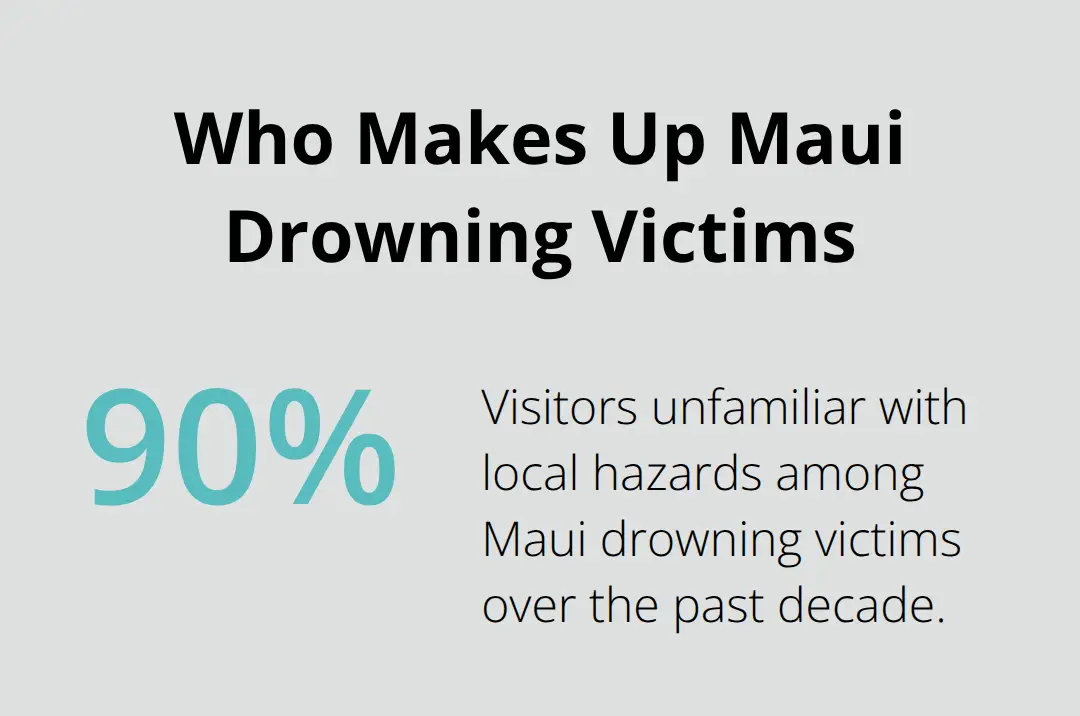
Proper snorkeling gear transforms the experience from uncomfortable struggle to genuine exploration. Bring your own mask if possible since rental masks frequently fog, or rent full-week packages from established operators starting around $10. Flotation vests or devices boost confidence substantially for nervous swimmers and reduce drowning risk significantly, as reports indicate 90 percent of Maui drowning victims over the past decade were visitors unfamiliar with local hazards.
Water Entry, Exit, and Ocean Awareness
Enter and exit water by timing your movement with breaking waves-move quickly after a wave breaks, progress to deeper water, then reverse the sequence when leaving. Never turn your back on the ocean, stay vigilant for rogue waves, and retreat immediately if conditions worsen unexpectedly. Avoid snorkeling at dawn or dusk since sharks feed during these windows, and stick exclusively to daylight hours when visibility and safety align. These precautions establish the foundation for safe snorkeling, but selecting the right tour operator amplifies both your safety and your chances of encountering Maui’s most spectacular marine environments.
Selecting a Tour Operator That Prioritizes Your Experience
Small-Group Advantages Over Large Commercial Vessels
Small-group operators outperform large commercial vessels because they cap passenger counts at 20 or fewer, which eliminates the chaos of competing with hundreds of snorkelers for viewing space. Larger tour boats carrying 65 or more passengers create congestion that disperses marine life and forces you to navigate crowded reef zones where visibility deteriorates from kicked-up sediment. The crew on smaller vessels knows each passenger by name, provides individualized safety briefings, and adjusts routes in real-time based on actual water conditions rather than predetermined itineraries. Tours starting at $99 include professional-grade snorkeling gear, breakfast, snacks throughout the day, and complimentary professional photography that captures encounters you cannot photograph yourself.
What Quality Tours Include
This pricing structure represents genuine value because shore snorkeling requires you to rent gear separately, purchase meals at inflated resort prices, and accept whatever conditions exist at your chosen beach without flexibility. Quality operators provide Hawaiian coffee with banana bread for breakfast, ensuring you start your day fueled and ready for extended underwater exploration. Professional photography services capture wildlife encounters that most snorkelers struggle to photograph themselves, delivering lasting keepsakes from your Maui adventure. The custom 40-foot vessels used by quality operators navigate shallow reef zones and access prime snorkeling areas that larger commercial catamarans cannot safely reach.
Local Knowledge and Real-Time Route Decisions
Local knowledge separates exceptional operators from mediocre ones because experienced crews understand how daily wind patterns, seasonal swells, and tidal movements affect specific reef zones. Operators using real-time forecasts choose routes that maximize visibility and wildlife encounters rather than defaulting to crowded, overfished locations. Professional crews identify where sea turtles concentrate at specific times, position you for optimal wildlife viewing, and enforce the critical 10-foot distance rule that protects both animals and snorkelers. The difference between booking a random tour operator and selecting one with genuine local expertise determines whether you encounter 150-foot visibility with abundant reef fish and occasional spinner dolphins, or you waste time at mediocre locations with poor conditions and sparse wildlife.
Safety Practices and Reef Protection
Tour operators that emphasize safety briefings, reef-friendly practices, and flexible route planning directly correlate with higher satisfaction ratings and genuine wildlife encounters rather than disappointing sessions where you see minimal marine life. Safety briefings establish protocols for water entry, current awareness, and emergency procedures that reduce drowning risk substantially. Reef-friendly practices (such as reef-safe sunscreen and no-touch policies) protect fragile ecosystems while ensuring your safety around sharp coral and lava formations. Flexible route planning allows operators to abandon underperforming locations and redirect toward zones where conditions and wildlife activity align with your expectations.
Final Thoughts
Maui’s best snorkeling spots on Maui deliver unforgettable underwater experiences when you prioritize timing and select the right access method. Molokini Crater’s 150-foot visibility, Turtle Town’s reliable sea turtle encounters, and Honolua Bay’s accessible shore entry each offer distinct advantages for different preferences and skill levels. Professional guided tours amplify your experience far beyond what independent shore exploration can deliver, providing safety briefings that reduce drowning risk, professional photography that captures wildlife encounters you cannot photograph yourself, and included meals that eliminate logistical hassles.
Quality operators limit passenger counts to small groups, allowing you to explore prime reef zones without competing with hundreds of snorkelers for viewing space. Local crews understand daily wind patterns and seasonal conditions, positioning you in locations where visibility and marine life activity align with your expectations rather than defaulting to crowded, overfished beaches. The choice between boat tours and shore snorkeling ultimately depends on your priorities-budget-conscious travelers can access free shoreline spots, though this approach requires navigating parking, gear logistics, and variable water conditions independently.
Your Maui snorkeling adventure begins with understanding that morning departures between 9:30 and 11:00 AM consistently outperform afternoon sessions due to calmer seas and superior visibility. Check the daily snorkel report issued around 8:00 AM to identify which coast offers optimal conditions that specific day, then commit to early departure rather than waiting for afternoon windows when trade winds intensify. Start planning your snorkeling experience today by researching operators that emphasize safety practices and reef protection, bring reef-safe sunscreen, and maintain the critical 10-foot distance from sea turtles.