
Spotting dolphins in their natural habitat is one of those moments that stays with you forever. A dolphin encounters Kihei tour puts you right where these incredible marine mammals live and play.
We at Maui Snorkel Charters know these waters inside and out, and we’re excited to show you what makes this experience so special. Whether you’re a first-time visitor or a seasoned ocean lover, this adventure delivers genuine connection with nature.
What You’ll Actually See on a Kihei Dolphin Tour
The Dolphins You’ll Encounter
Spinner dolphins are the stars of Kihei waters, and they live here year-round. These sleek marine mammals reach about 6 feet long and earned their name from their habit of spinning out of the water, sometimes completing several rotations before splashing back down. You’ll also encounter bottlenose dolphins, which are larger at around 8-12 feet and tend to be more curious about boats. The Hawaiian Islands host spinner dolphins that frequent the shallow bays, and Kihei’s protected coastline makes it one of the most reliable spots to see them.
Bottlenose dolphins are less predictable but show up regularly, especially during summer months when food sources are abundant. The key difference between the two species matters for your experience: spinners are more active and acrobatic in early mornings, while bottlenose dolphins often hunt during midday hours when they’re faster and more aggressive feeders.
Peak Seasons for Sightings
Your best chances come from May through October when water temperatures peak and fish populations explode, bringing dolphins closer to shore. Winter months from December through March still offer sightings, but they’re less frequent because dolphins spread out across deeper waters. This seasonal pattern means timing your tour correctly can significantly increase what you actually see.
How a Typical Tour Unfolds
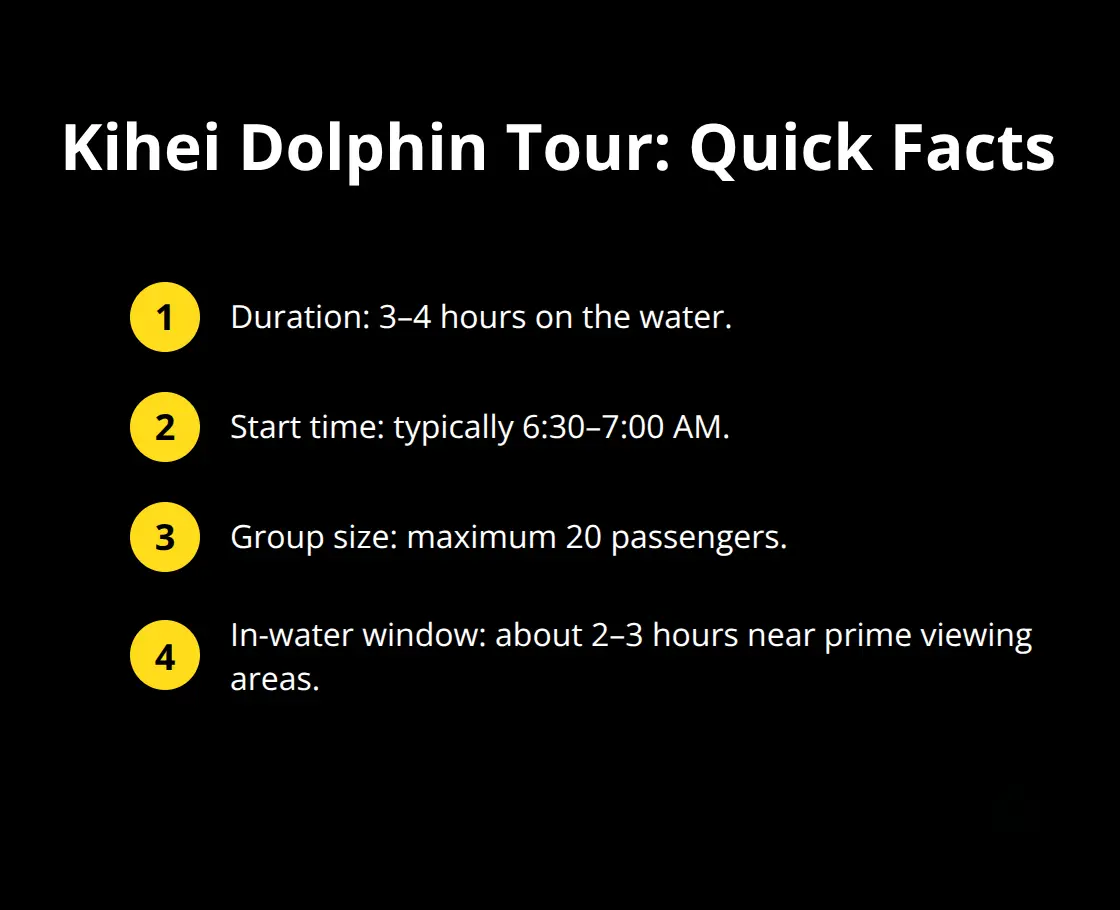
A standard tour lasts three to four hours and heads out on a boat with a maximum of 20 passengers, giving you genuine space to move around and observe without feeling crowded. Tours start early, usually between 6:30 and 7:00 AM, because dolphins are most active during dawn when they’ve finished feeding and are ready to socialize and rest. You’ll spend the first hour traveling to prime viewing areas, then another two to three hours in the water where sightings happen.
Most encounters last anywhere from 15 minutes to over an hour depending on the dolphins’ mood and behavior that day. The experience is passive observation only-federal law prohibits chasing or pursuing dolphins, and operators follow strict guidelines to let them approach rather than the other way around. This approach protects the animals while still giving you an authentic connection to their world.
Now that you understand what happens during a typical tour and which dolphins you’ll meet, the location itself plays a huge role in making these encounters possible.
Why Kihei Stands Out for Dolphin Watching on Maui
Geography Works in Your Favor
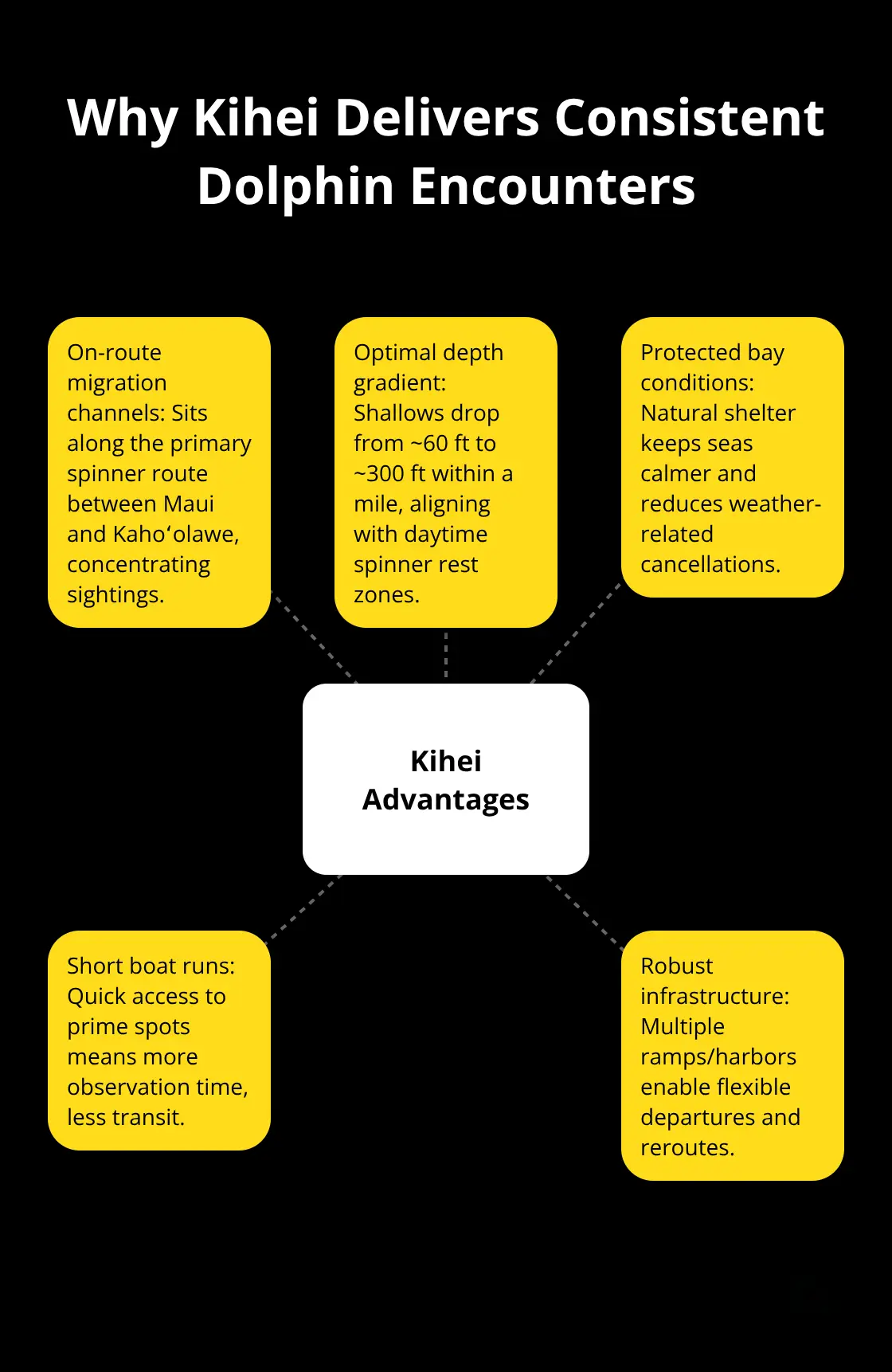
Kihei’s location makes it the strongest choice for dolphin encounters on Maui, and the numbers back this up. Spinner dolphins migrate through specific channels between the Hawaiian Islands, and Kihei sits directly along their primary route between Maui and Kahoolawe. The shallow waters here drop from about 60 feet near shore to 300 feet within a mile offshore, creating the exact depth range where spinners rest during daylight hours. This isn’t random luck-it’s predictable marine biology.
Water Conditions Favor Consistent Tours
The protected bay keeps waves manageable even when trade winds pick up elsewhere, meaning you’re actually on the water observing instead of dealing with rough conditions that force cancellations or shortened trips. Kihei’s natural shelter from the island’s topography creates calmer seas than you’ll find on the north or west shores. This consistency matters because rough water doesn’t just make you uncomfortable-it cuts into observation time and reduces your chances of meaningful dolphin contact.
Proximity Maximizes Your Time on Water
What makes Kihei operationally superior is the short boat run to prime viewing areas. This proximity means more time watching dolphins and less time traveling, which matters when your tour window is only three to four hours. Small boats navigate the tight spaces where dolphins congregate, keeping groups intimate and focused. If you’re staying anywhere in Kihei (whether that’s a resort along the main strip or a vacation rental in North Kihei), you’re already positioned at the launch point. No 45-minute drive from Wailea or Kapalua. No logistics headaches.
Infrastructure Supports Reliable Operations
The town itself has multiple boat ramps and harbors, so tour operators have backup access if one fills up. This accessibility means tours run consistently rather than getting delayed by infrastructure problems, which directly improves your chances of a quality experience on the water. Operators can adjust departure times and routes based on real-time conditions, something that becomes harder when you’re traveling from distant resort areas.
With Kihei’s geography and infrastructure locked in your favor, what you bring and how you prepare becomes the next piece of the puzzle.
Getting Ready for Your Dolphin Tour
Preparation separates a good dolphin encounter from a great one, and the details matter more than you’d think. Sun protection ranks first because the reflection off water intensifies UV exposure, meaning sunscreen rated SPF 30 or higher needs reapplication every two hours. A rash guard or lightweight long-sleeve shirt works better than sunscreen alone, since reapplication becomes difficult once you’re on the boat observing dolphins. Ocean breezes cool you down faster than you expect, especially during early morning departures around 6:30 AM, so a light layer like a fleece or windbreaker matters.
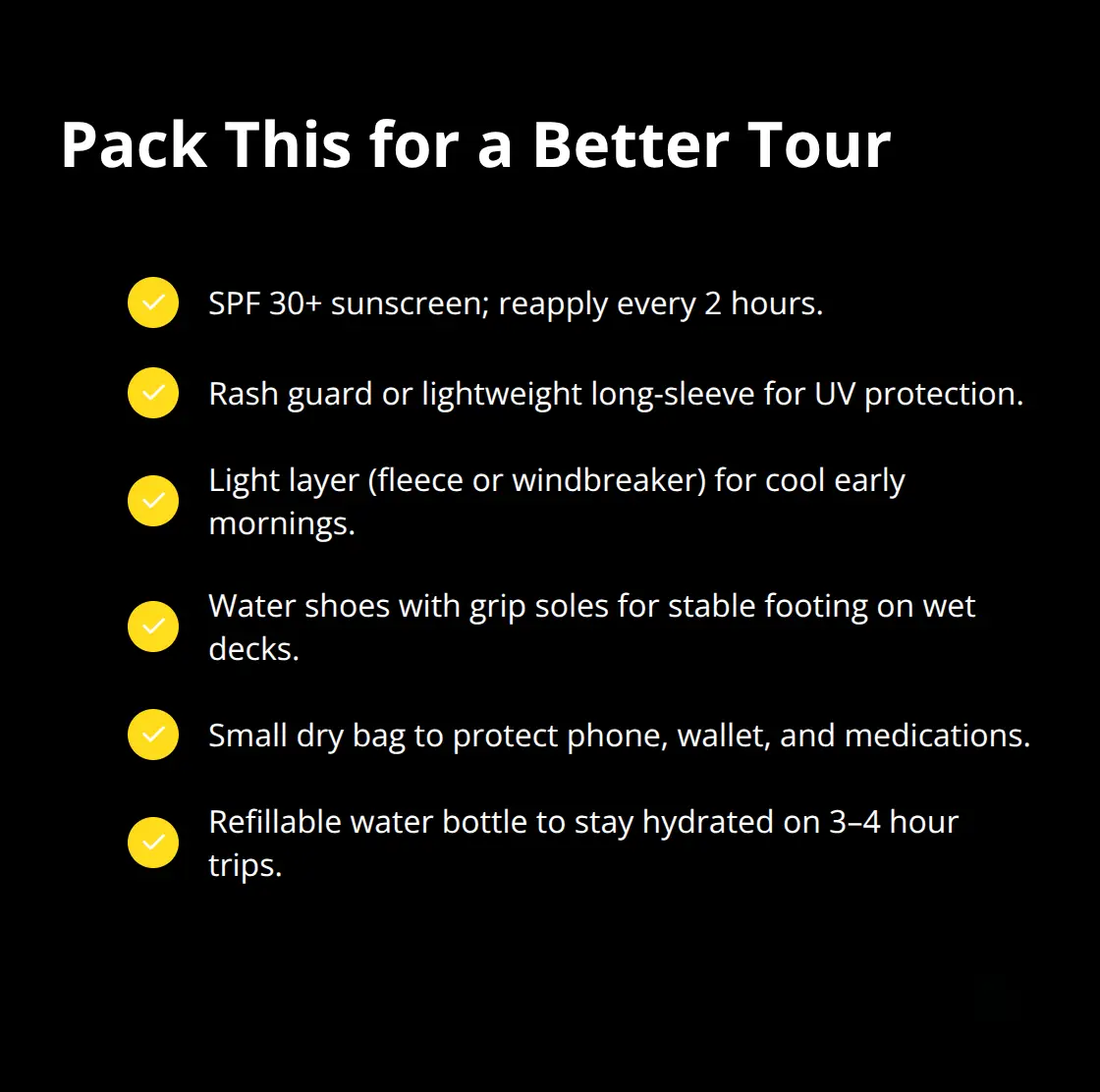
Water shoes with grip soles keep you stable on slippery boat decks, and your footing counts when you’re trying to spot dolphins without losing balance. A small dry bag protects your phone, wallet, and medications from salt spray that corrodes electronics quickly. A refillable water bottle prevents dehydration during three to four hours in direct sun and salt air, and most boats have fresh water available to refill throughout the tour.
Physical Comfort and Motion Sickness
Physical demands on a dolphin tour remain minimal compared to snorkeling, but you need basic mobility and comfort with moving water. You’ll spend most of the tour standing or sitting on the boat rather than swimming, so seasickness affects some people more than others. If you’re prone to motion sickness, take ginger supplements or medication like Dramamine at least 30 minutes before departure, not after you’re already queasy. This timing makes the difference between a pleasant experience and a miserable one.
Camera Gear and Photography Strategy
A camera with optical zoom (rather than digital zoom) captures sharp detail when dolphins surface at distance, and a telephoto lens of 200mm or longer produces the best results. Stabilize your camera with both hands and brace yourself against the boat’s railing to reduce blur from boat movement. A GoPro mounted on a selfie stick actually discourages dolphins from approaching, since they get distracted by hand-held objects near the water’s surface. Try taking photos during the first 30 minutes and last 30 minutes of the tour when lighting is best, then put the camera down during peak observation hours to actually experience the moment rather than viewing it through a screen. The most memorable photos happen when you’re present and alert, not when you’re hunting for the perfect angle.
Final Thoughts
A dolphin encounters Kihei tour puts you face-to-face with spinner dolphins executing their signature spins and bottlenose dolphins hunting with precision in their natural habitat. You experience the ocean on its own terms without needing diving certification, advanced swimming skills, or expensive equipment. The three to four hours on the water create genuine memories that outlast typical vacation activities.
This adventure combines accessibility with authenticity because Kihei’s protected waters keep conditions calm and focused on what matters: the dolphins. Early morning departures catch peak activity when spinners are most acrobatic, and the short boat runs mean maximum time observing instead traveling. Watching a spinner dolphin launch completely out of the water or seeing a bottlenose pod work together to herd fish reminds you why the ocean and these animals matter.
We at Maui Snorkel Charters operate right here in Kihei with small groups of maximum 20 people, keeping tours intimate and focused on genuine observation. Our team knows exactly where to find dolphins and positions you for the best experience while respecting the animals and following all federal guidelines. Book your dolphin encounters Kihei tour with us to check availability and make this happen today.
Call 808-270-8776