
Spotting dolphins in Maui waters is one of those moments that stays with you forever. These intelligent, playful creatures live in our local ocean year-round, and a dolphin encounter Maui tour gives you a genuine chance to see them in their natural habitat.
At Maui Snorkel Charters, we’ve watched hundreds of visitors experience the joy of watching dolphins up close. This guide walks you through everything you need to know before booking your adventure.
What You’ll Actually See and When to Go
Spinner dolphins and bottlenose dolphins are the two species you’re most likely to encounter in Maui waters. Spinner dolphins get their name from their acrobatic behavior-they leap and rotate their bodies in the air, sometimes completing multiple spins before splashing back down. Bottlenose dolphins, the larger of the two species, are more curious about boats and often approach closer to observe passengers. Both species live in Maui’s waters year-round, though sighting frequency varies by season.
Tour Duration and What Happens Each Hour
Tours typically run between three and four hours, with departures happening early in the morning when ocean conditions are calmest and dolphins are most active. The schedule breaks down simply: a 15-minute boat ride takes you to prime viewing locations, two to three hours in the water allows you to observe marine life, and then the return trip completes your adventure. Most tours provide breakfast-typically Hawaiian coffee and banana bread-along with snacks and water during the outing.
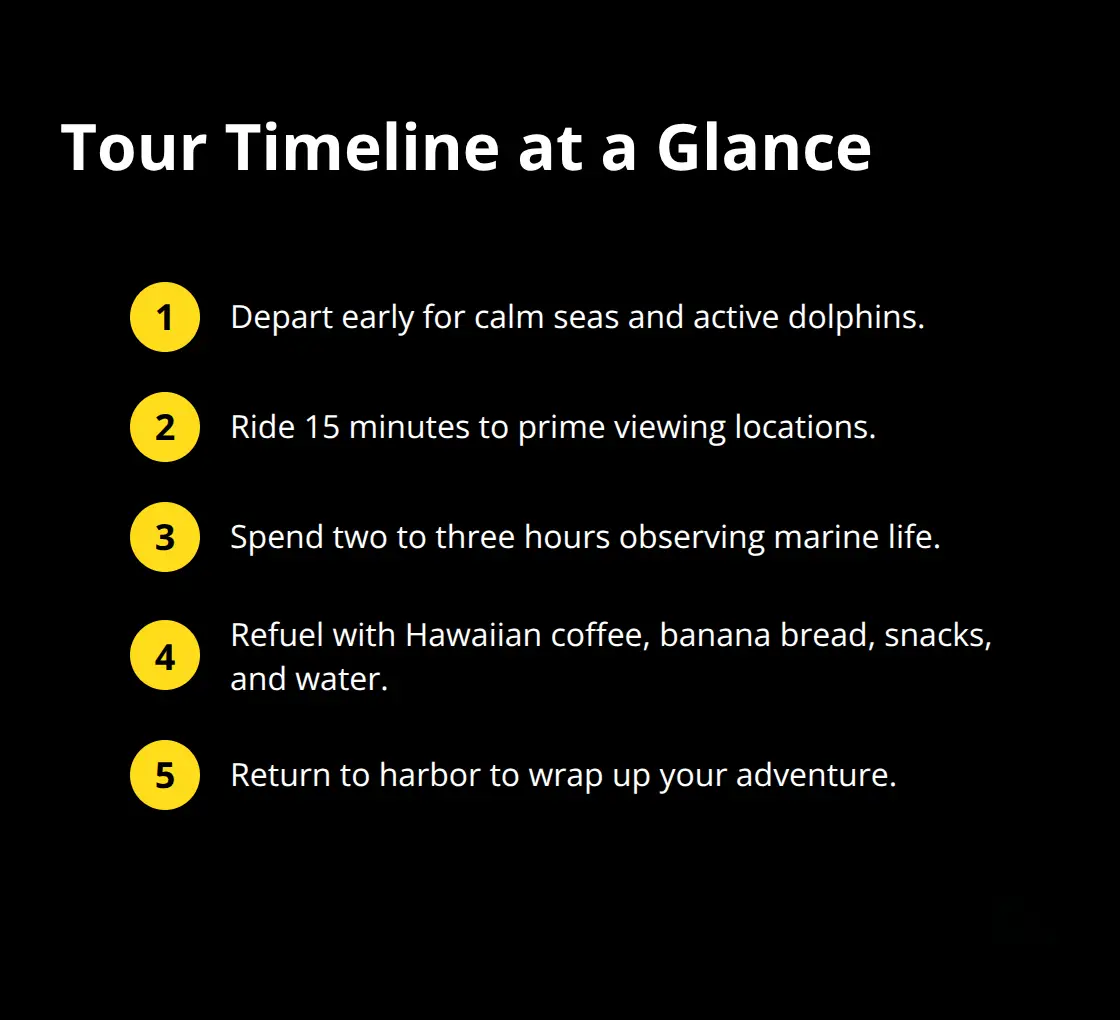
Morning departures matter because dolphin activity peaks at dawn, giving you the best chance at close encounters before the day heats up and ocean conditions become rougher.
Peak Season Runs December Through April
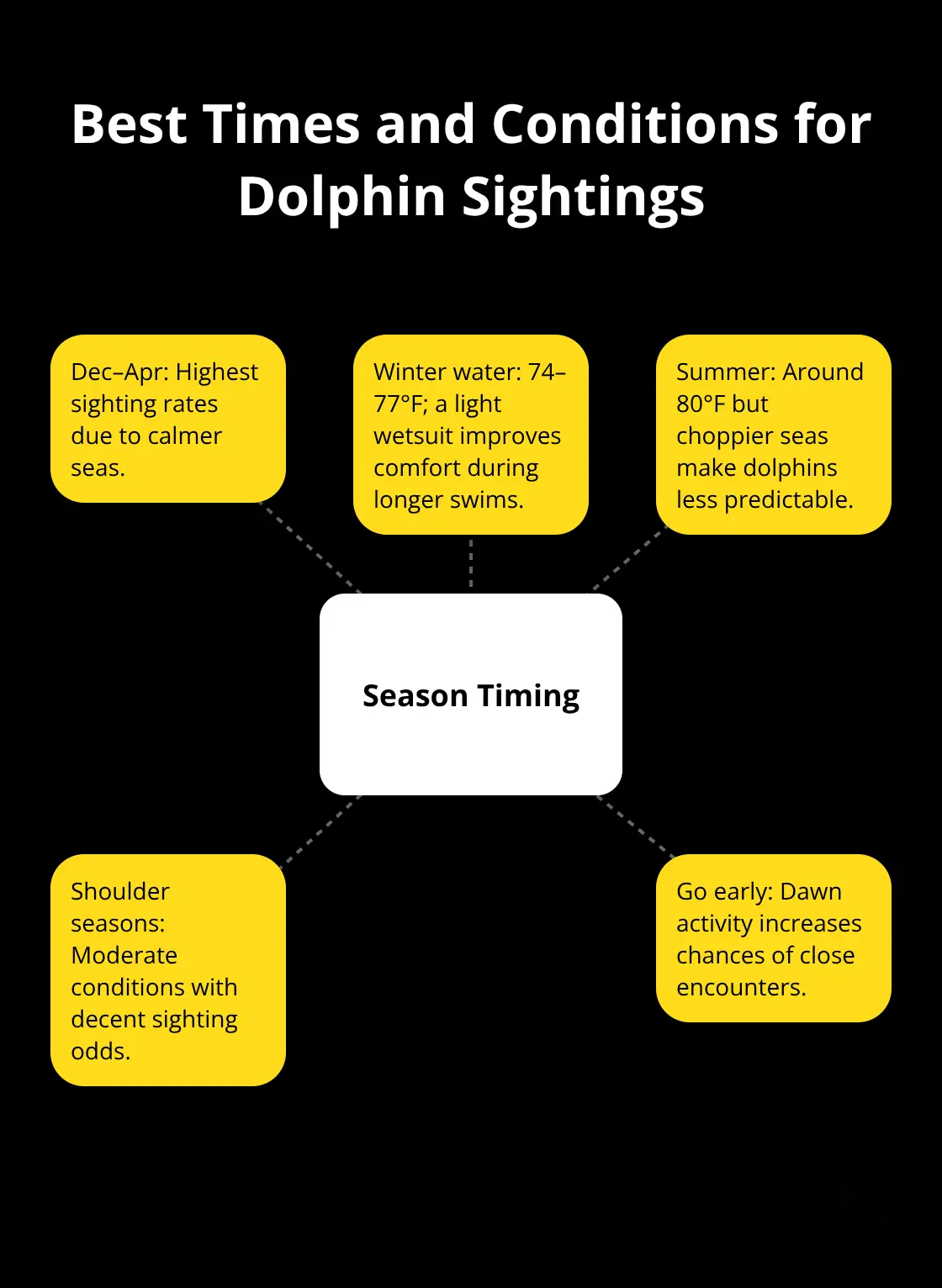
Winter and early spring deliver the highest dolphin sighting rates because calmer seas make it easier for dolphins to hunt and rest near the surface. Water temperatures during these months range from 74 to 77 degrees Fahrenheit, requiring a light wetsuit for comfort during extended snorkeling. Summer months bring warmer water around 80 degrees but choppier conditions that make dolphins less predictable. The shoulder seasons of September through November and May through August offer moderate conditions with decent sighting odds.
How Captains Choose Your Route
Tour operators select daily routes based on actual ocean conditions rather than fixed itineraries, meaning your captain chooses between locations like Turtle Town and Molokini Crater depending on where dolphins are spotted that morning. This flexibility increases your chances of seeing dolphins rather than following a predetermined route where dolphins might not appear. Small-group tours with maximum 20 passengers give everyone adequate space and viewing angles, unlike larger commercial boats that can carry 100 or more people.
Capturing Your Dolphin Moments
A camera with a fast shutter speed helps you capture dolphins mid-leap, though the constant motion makes photography challenging even for experienced photographers. The unpredictable nature of dolphin behavior (sudden direction changes, quick dives beneath the surface) means you’ll want to keep your camera ready at all times. With these details in mind, preparing your gear and understanding what to bring becomes your next priority before stepping aboard.
Getting Ready for Your Dolphin Tour
Packing correctly makes the difference between a comfortable morning and one spent shivering or squinting into the sun. Wear a rash guard or light wetsuit even though Maui’s water feels warm-extended time in ocean water during winter months pulls heat from your body faster than you’d expect, and most visitors underestimate how cold they’ll feel after two hours. Bring reef-safe sunscreen and apply it 15 minutes before boarding, since the sun reflects intensely off the water and you’ll burn faster than on land. A lightweight long-sleeve shirt over your rash guard provides extra protection without overheating you on the boat. Wear water shoes with grip soles because boat decks get slippery, and you’ll move around frequently to get better viewing angles as dolphins surface unexpectedly.
What to Pack in Your Dry Bag
Pack a dry bag with your phone, wallet, and any medications, since saltwater ruins electronics and you’ll want your ID for check-in. Bring a towel and a change of clothes for after the tour-sitting in wet clothes for the return trip creates discomfort, and most operators don’t provide drying facilities. A waterproof camera case protects your device if you’re bringing expensive equipment, though basic smartphone cameras work fine for most dolphin shots.
Fitness and Safety Considerations
Most dolphin tours don’t require athletic ability, but you should be comfortable swimming in open ocean and getting in and out of a boat multiple times. If you have mobility issues, tell the captain during booking so they can position you near the boarding area and adjust the itinerary if needed. The boat rocks constantly in ocean swells, so anyone prone to seasickness should take medication 30 minutes before departure-ginger supplements work for some people, though prescription options like scopolamine patches are more reliable.
Tours operate in all weather conditions except dangerous storms, so expect to get wet and potentially cold even on sunny days. Children under five shouldn’t join these tours because they can’t stay with adult supervision in open water, and the boat’s motion makes them uncomfortable. Anyone with heart conditions or recent surgery should check with their doctor first, as the combination of sun exposure, motion, and physical activity creates real cardiovascular demands. The captain enforces a strict no-touching dolphins policy for marine protection, and swimmers who approach dolphins get removed from the water immediately.
Camera Settings That Capture Dolphins in Motion
Dolphins move unpredictably, so your camera settings matter more than your equipment. Set your shutter speed to at least 1/500th of a second to freeze motion when dolphins leap, and increase it to 1/1000th if your camera allows it. Use continuous shooting mode rather than single shots, since you’ll capture 20 photos and maybe one will be perfectly framed with a dolphin mid-spin. A polarizing filter reduces water glare and makes colors pop, but it also reduces light entering your lens, so you’ll need faster shutter speeds to compensate.
Position yourself on the boat’s side rails where dolphins typically surface rather than staying in the center, and watch for dolphins’ dorsal fins breaking the surface-that’s your warning to get ready. Avoid using digital zoom, which destroys image quality; instead move physically closer to the railing or use a telephoto lens if you have one. Accept that many of your photos will show empty ocean or blurry dolphin tails, and that’s normal even for professionals photographing marine mammals. With your gear packed and your camera settings dialed in, you’re ready to understand why these tours matter far beyond the photos you’ll take home.
Why Your Tourist Dollar Protects Maui’s Ocean
Tourism revenue funds marine conservation in Hawaii, and dolphin tour operators contribute meaningfully to this protection. Visitor spending supports ocean preservation initiatives, with a portion flowing directly to state marine management programs. When you book a dolphin tour, operators pay licensing fees and permits that support these conservation efforts. Tour companies invest resources toward habitat monitoring and research partnerships that track dolphin populations and water quality. Without tourism revenue, government agencies lack the funding to protect the reefs and dolphins you came to experience. Your tour represents direct investment in keeping these waters healthy for future visitors and resident marine life.
Dolphins Reveal How Healthy Maui’s Waters Actually Are
Dolphin presence and behavior reveal ocean ecosystem conditions that scientists monitor closely. Spinner dolphins congregate in shallow bays during daylight hours to rest, and their abundance indicates sufficient fish populations and acceptable water quality. When you spot dolphins hunting at dawn, you witness evidence of a functioning food chain from microscopic organisms up through the predators. The National Oceanic and Atmospheric Administration tracks dolphin distribution patterns across Hawaiian waters as an indicator of environmental health. If dolphins disappear from traditional resting areas or show signs of disease, marine biologists recognize immediate ecosystem problems. Your tour guide explains what healthy dolphin behavior looks like compared to stressed populations, teaching you to read the ocean’s actual condition rather than relying on vague reports. This knowledge transforms casual sightings into genuine environmental literacy.
Respectful Viewing Practices Preserve What You Came to See
Aggressive dolphin interactions from tourists cause measurable harm in other locations, forcing stricter regulations and reducing sighting rates. The Marine Mammal Protection Act requires boats to maintain 50-yard distances from dolphins, though many operators voluntarily stay farther back to minimize stress on animals. Dolphins approached repeatedly by multiple tour boats each day experience elevated stress hormones, reduced feeding efficiency, and behavioral changes documented in peer-reviewed research. When you stay in designated viewing zones and avoid sudden movements or loud noises, you directly prevent these negative outcomes.
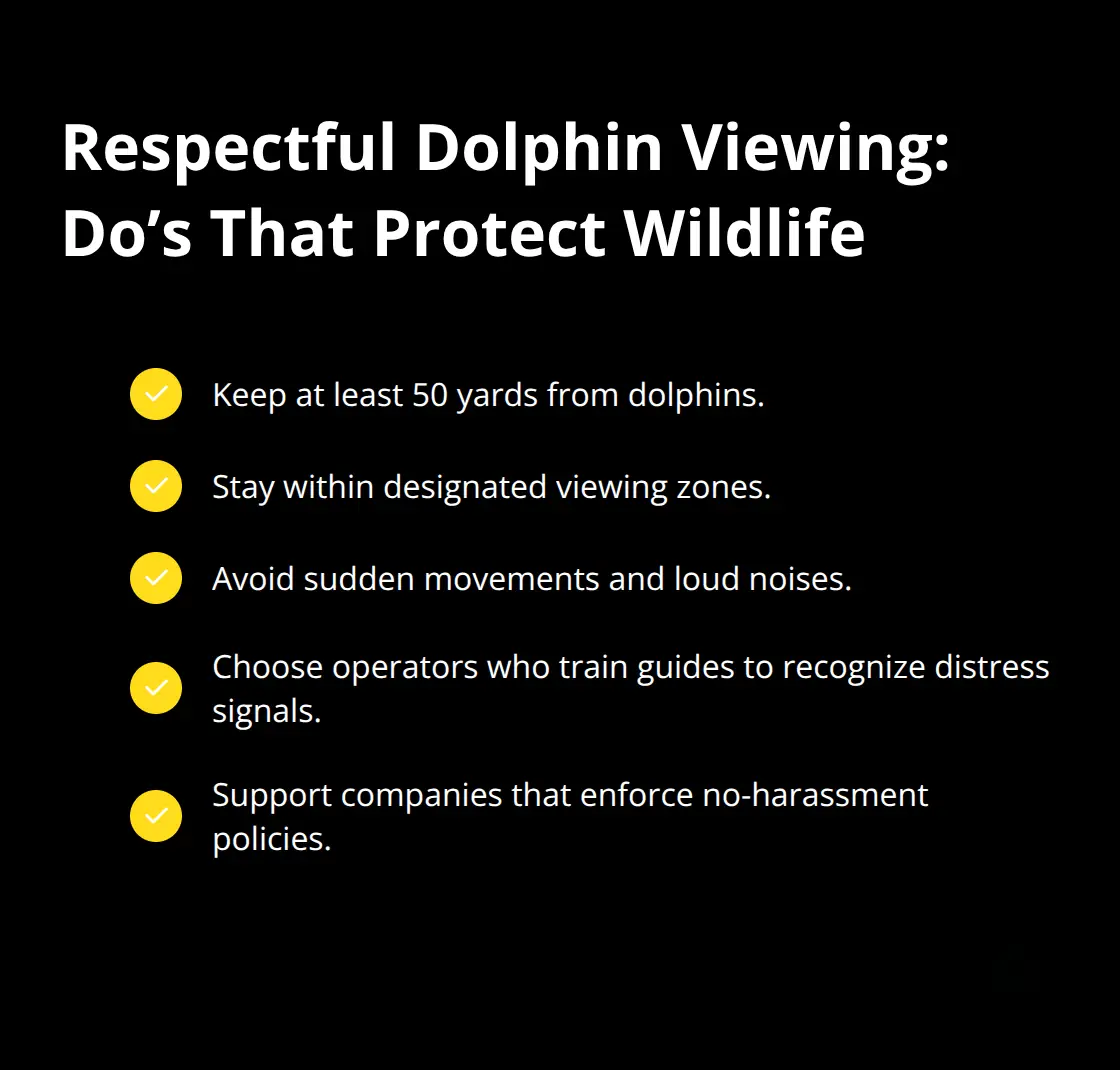
Responsible tour operators train guides to recognize signs of dolphin distress like rapid course changes or diving patterns that indicate discomfort. Supporting operators who enforce these practices means supporting the survival of populations that might otherwise face harassment-related population decline.
Final Thoughts
A dolphin encounter Maui tour transforms how you see the ocean and your place within it. You’ve learned that spinner dolphins and bottlenose dolphins live in these waters year-round, that winter months offer the best sighting odds, and that your presence directly funds marine conservation efforts. The photos you capture matter less than the moment itself-watching an intelligent creature move through its natural world creates a connection that stays with you long after you return home.
We at Maui Snorkel Charters operate small-group tours with a maximum of 20 passengers, meaning you get genuine space and viewing angles instead of fighting for position on crowded boats. Our custom 40-foot vessel departs from Kihei with fast 15-minute runs to prime dolphin-viewing locations, and tours include gear, Hawaiian coffee and banana bread breakfast, snacks, and water throughout your adventure. Pricing starts at $99 per person, and we choose your daily route based on actual ocean conditions rather than fixed itineraries, which increases your chances of seeing dolphins.
Visit Maui Snorkel Charters to check availability and book your departure-most tours fill weeks in advance during peak season, so reserve your spot early if you’re visiting between December and April. Our guides answer questions about dolphin behavior, ocean ecology, and photography tips throughout your morning, and you’ll receive confirmation details including arrival time, parking information, and what to bring.
Call 808-270-8776