
Imagine standing on the deck of a boat as a massive humpback whale breaches just meters away, water cascading off its body in the Hawaiian sun. Every winter, these magnificent creatures migrate to Maui’s warm waters, creating some of the most thrilling Maui whale watching experiences you’ll ever witness.
Whether you’re seeking an intimate small-group adventure or a flexible private tour, there’s a perfect way to connect with these gentle giants. Get ready to discover why whale season transforms Maui into an unforgettable ocean playground.
When Whale Season Peaks in Maui
The Prime Window: January Through March
The humpback whales arrive with remarkable precision. November brings the first scouts, but January through March transforms Maui into a whale-watching paradise-thousands of these 45-ton creatures flood the channels to mate, calve, and nurse their young. January explodes with widespread breaches and tail slaps, February becomes calf season with mothers and newborns dominating calm coastal waters near Wailea and Maʻalaea Bay, and March delivers the highest whale density paired with Maui’s most favorable winter weather. This three-month window offers consistent, dramatic encounters that you simply won’t find elsewhere. After mid-April, the whales begin their return journey to Alaska, and sightings plummet dramatically. The ocean transforms completely from May through October when humpbacks vanish entirely, making those winter months essential for anyone serious about this experience.
Timing Your Daily Outings for Maximum Impact
The time of day matters just as much as the season itself. Early morning departures catch calm seas and excellent visibility before wind picks up, while the late afternoon window from 3 to 6 PM offers golden-hour magic that transforms ordinary sightings into unforgettable moments. Midday outings work if you tolerate potential glare, but they rank as the weakest choice.
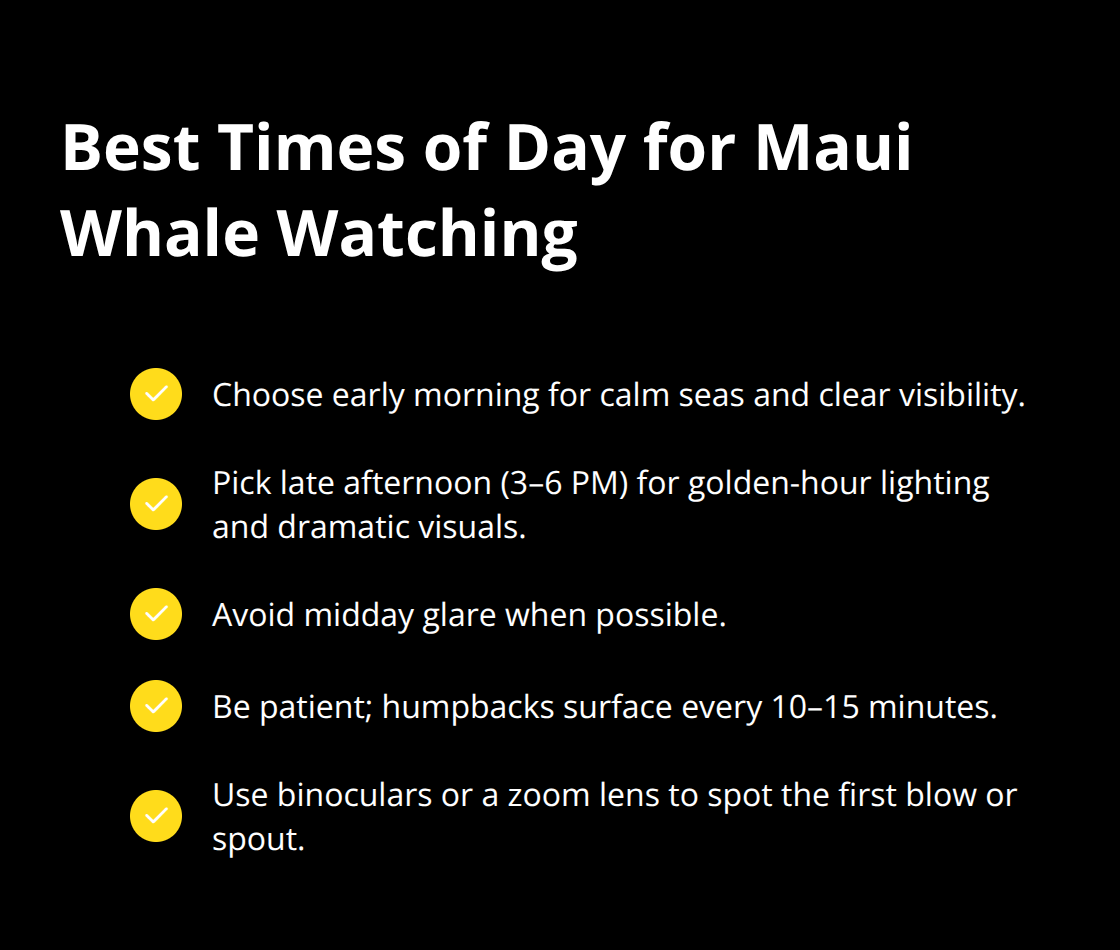
The humpbacks surface every 10 to 15 minutes between breaths, so patience combined with binoculars or a zoom lens pays immediate dividends-spot the first blow or spout, then watch for tail flukes or a breach.
Understanding Why Maui’s Waters Matter
North Pacific humpbacks migrate through Maui’s warm, shallow waters specifically because these conditions allow mothers to teach calves in a protected nursery. You witness one of nature’s most critical life stages unfold when you observe these interactions. The ecosystem supports both dramatic whale behavior and the vulnerable young that depend on these channels for survival.
Land-Based Vantage Points and Strategic Positioning
Land-based vantage points like Kapalua, Wailea, Hoʻokipa, and McGregor Point deliver stunning sightings without leaving shore, though higher elevations prove invaluable when the sun sits bright overhead. Rotate among multiple sites throughout your stay since whale activity varies daily-what worked yesterday might fall flat today, but another location often compensates. This flexibility ensures you maximize your chances of witnessing the breaches and behaviors that make Maui legendary.
Choosing Your Perfect Whale Watching Tour
Small-Group Charters: The Sweet Spot
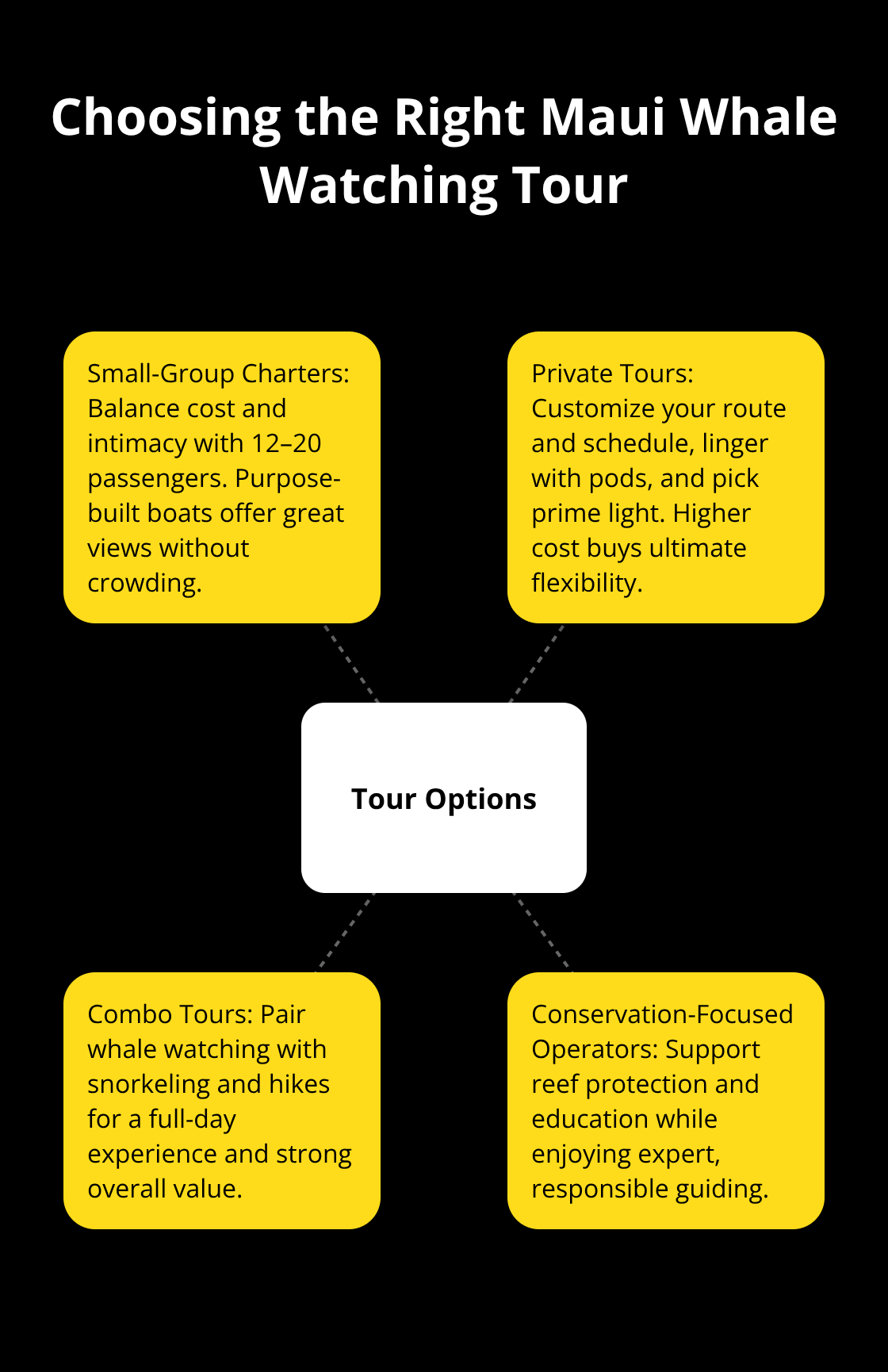
Small-group charters deliver the sweet spot between intimacy and value, typically accommodating 12 to 20 passengers aboard vessels specifically designed for coastal whale watching. These tours cost significantly less than private options while maintaining close enough quarters that you’ll witness dramatic breaches without fighting for viewing space. Morning departures prove essential here since calm seas in early hours provide steadier platforms for photography and unobstructed sightings. Operators rotate among prime vantage points like McGregor Point and Wailea throughout the season, adapting daily to where whale activity peaks.
Private Tours: Complete Control and Flexibility
Private tours flip the equation entirely, offering complete itinerary control and the ability to linger with a specific pod for extended observation rather than adhering to strict schedules. You’ll pay three to four times more than group rates, but this investment buys flexibility that matters enormously when mothers and calves occupy shallow waters near shore. You dictate departure times, can request early morning or golden-hour afternoon slots specifically, and choose whether to prioritize breaches or the acoustic experience of hearing humpback songs underwater during kayak-based private tours.
Combo Tours: Whale Watching Plus Adventure
Combo tours that weave whale watching into snorkeling and rainforest adventures deliver maximum value if you want to experience Maui’s full ecosystem. These multi-activity days typically run 6 to 8 hours and combine coastal whale spotting with snorkeling at reefs teeming with tropical fish and Hawaiian green sea turtles, plus guided hikes to waterfalls through native vegetation. The strategy works brilliantly during peak season since whale sightings peak in mid-April and October, freeing your afternoon for snorkeling without gambling on weather delays.
Supporting Conservation Through Your Choice
Conservation-minded travelers should know that responsible operators direct portions of tour revenue toward environmental education and reef protection, meaning your spending directly supports the ecosystems you’re exploring. Operators with deep seasonal expertise ensure you’re not just chasing whales but connecting with guides who understand Maui’s marine environment intimately. This knowledge transforms your experience from a simple wildlife encounter into a meaningful engagement with the ocean and its inhabitants.
Now that you understand the different tour styles available, the next critical decision involves preparing yourself for what you’ll actually witness on the water-and how to capture those unforgettable moments.
What to Expect When You’re Out on the Water
Whale Behavior and Surface Patterns
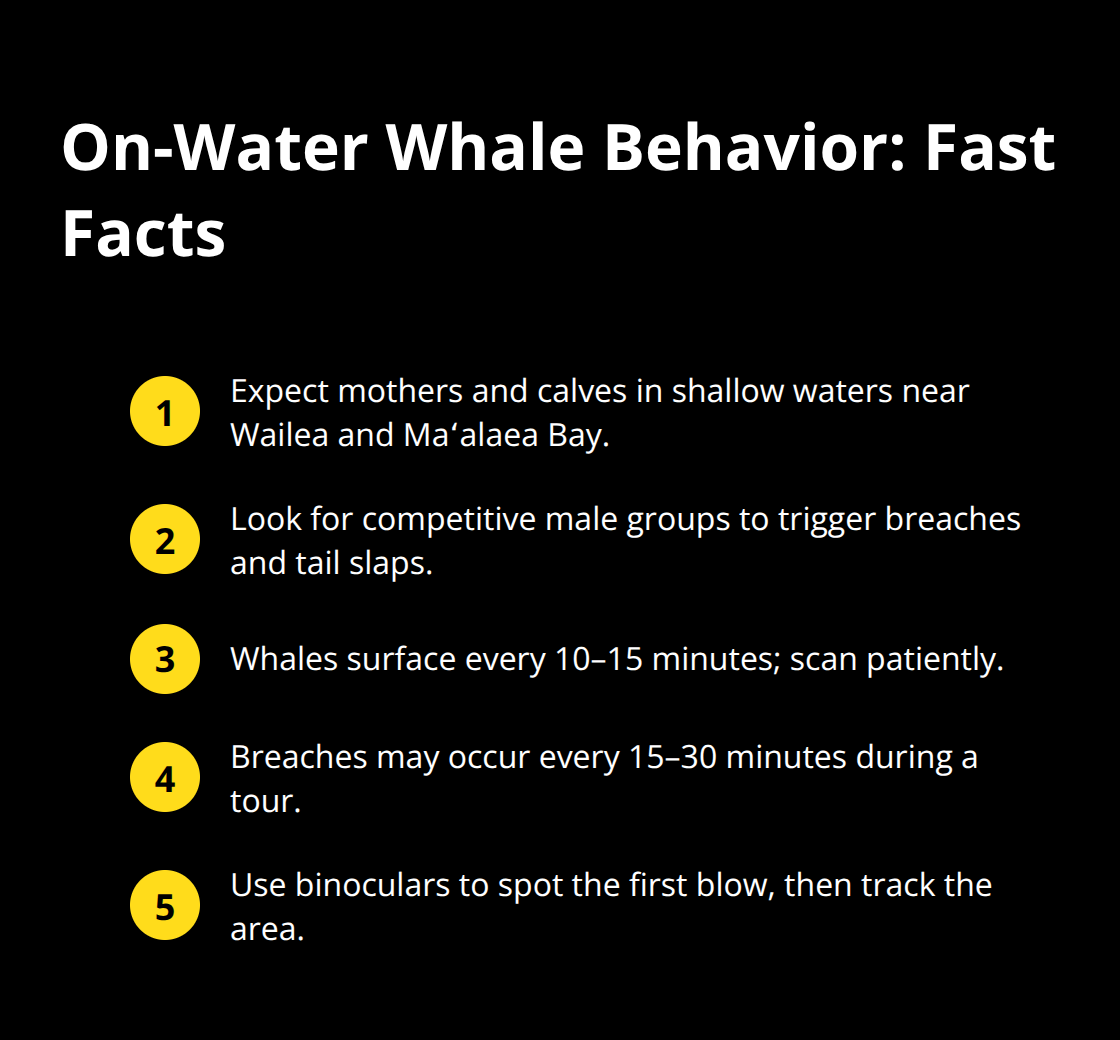
The moment your vessel leaves the harbor, you’ll notice humpback whales don’t perform on cue. During peak season between mid-January and mid-March, you’ll witness sightings with remarkable consistency, but the specific behaviors you observe depend entirely on where whales congregate that particular day. Mothers with calves stick to shallow waters near Wailea and Maʻalaea Bay, where they teach their young in protected nurseries, while competitive groups of males create the dramatic breaches and tail slaps that define January’s peak activity. Whales surface every 10 to 15 minutes between breath cycles, which means constant vigilance pays off. The moment you spot that first blow or spout through binoculars, watch the surrounding water intently because you might witness breaching every 15 to 30 minutes during a whale watching tour.
Positioning and Ethical Observation
Your guide will position the boat to maximize viewing angles without harassing the animals, maintaining the required distance while capitalizing on the 45-ton creatures’ natural curiosity. February transforms the experience entirely because calf season means you’ll observe mothers actively nursing and protecting newborns in waters shallow enough for calves to practice their own breaches. This behavioral window closes fast since calves gain strength rapidly and mothers push them toward deeper waters by late February and March. The guide’s expertise ensures you experience these interactions responsibly while capturing the moments that matter most.
Photography Preparation and Technique
Photography demands specific preparation that most casual visitors overlook. Bring a zoom lens with at least 200mm capability or quality binoculars because whales surface unpredictably and you won’t get a second chance at that perfect breach shot. Golden-hour afternoon departures between 3 and 6 PM deliver superior lighting that transforms ordinary photographs into the images you’ll share for years, while early morning outings provide steadier boat conditions and clearer visibility before afternoon wind builds. Position yourself on the side of the boat where the sun sits behind you, never facing into glare, and keep your camera ready constantly since humpback whales breach without warning.
The Full Sensory Experience
Skip the temptation to chase whales with your lens because the best moments happen when you lower your camera and experience the full sensory impact of a 45-ton creature launching from the ocean. The underwater acoustic dimension adds another layer entirely during kayak-based tours where you’ll actually hear humpback songs echoing through the water, a phenomenon that land-based or larger boat experiences simply cannot replicate. These songs create an intimate connection that photographs alone cannot capture. Even a single whale sighting creates a lifelong memory, so manage expectations around dramatic behaviors while remaining absolutely certain you’ll witness something remarkable.
Final Thoughts
A humpback whale surfaces just meters from your vessel, and you finally understand why Maui whale watching experiences transform ordinary vacations into profound ocean encounters. These gentle giants arrive with clockwork precision each winter, offering you a front-row seat to one of nature’s most remarkable migrations. The memories you create-watching mothers nurture calves in shallow waters or witnessing explosive breaches during peak season-will stay with you forever.
Experienced guides do far more than locate whales; they understand humpback behavior, know where mothers and calves congregate, and position your vessel to maximize sightings while respecting these magnificent creatures. Operators committed to conservation ensure your spending supports environmental protection, meaning your whale watching adventure directly contributes to preserving the ecosystem you’re exploring. This connection transforms your experience from simple tourism into meaningful participation in ocean stewardship.
Plan your Maui whale watching adventure between mid-January and mid-March when whale density peaks and weather cooperates beautifully. Try early morning or golden-hour afternoon departures to catch calm seas and optimal lighting, then book your tour with operators who combine decades of expertise with genuine environmental commitment. Bring binoculars, charge your camera, and prepare yourself for the moment when a 45-ton creature launches from the ocean in front of you.
Call 808-270-8776