
Imagine gliding across crystal-clear waters and locking eyes with a 40-ton humpback whale. Maui whale watching tours offer an unforgettable encounter with these magnificent ocean dwellers during their annual migration.
Whether you’re a first-time visitor or a seasoned traveler, spotting these gentle giants creates memories that last a lifetime. Let’s dive into everything you need to know to make your whale watching adventure truly special.
When Whale Season Peaks in Maui
Peak Months for Maximum Sightings
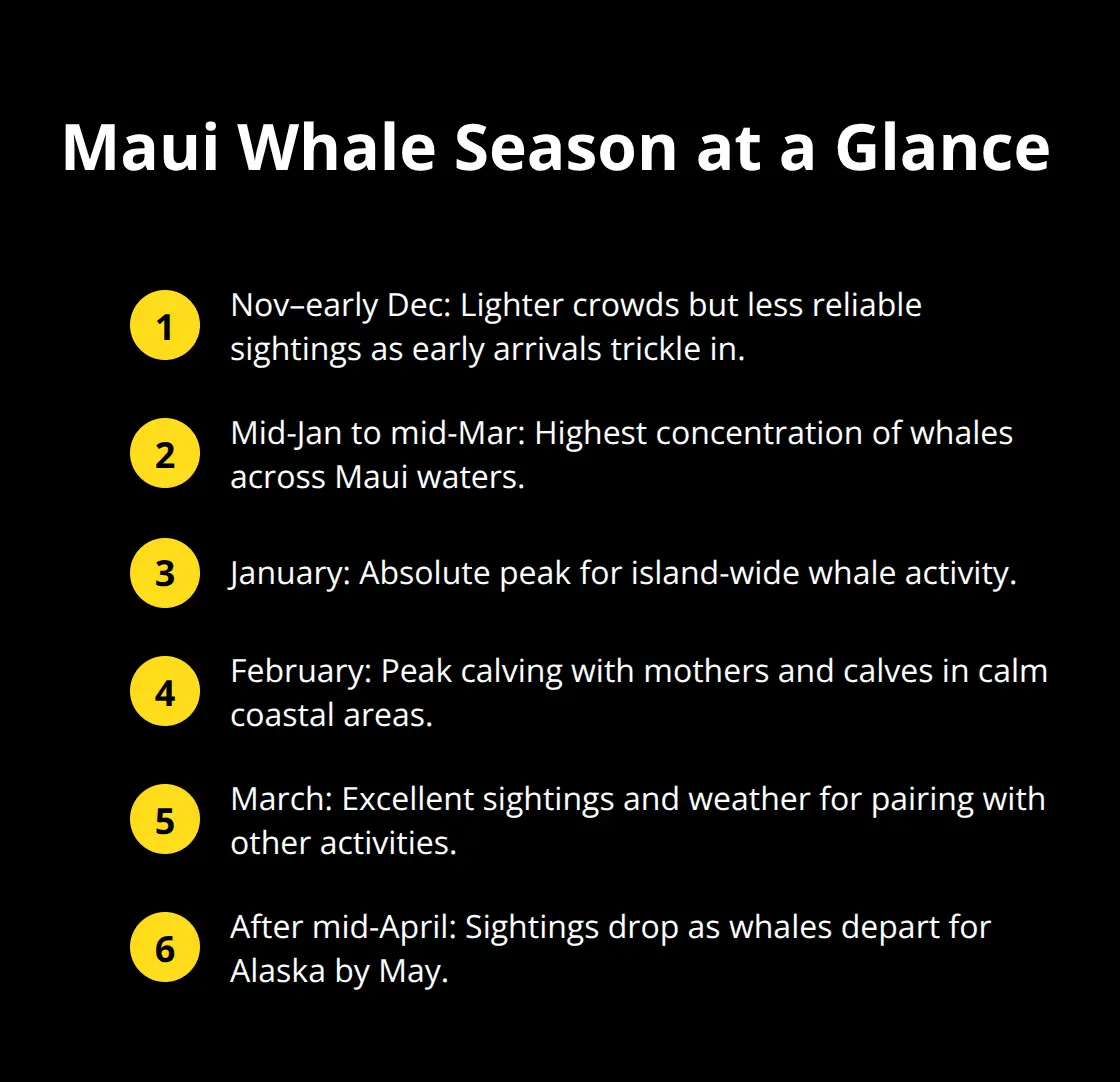
Humpback whales arrive in Hawaiian waters between November and April, but timing matters enormously for your experience. Mid-January through mid-March delivers the highest concentration of whales, with January marking the absolute peak for widespread activity and February becoming peak calving season when mothers and newborn calves cluster in calm coastal waters near Wailea, Kaʻanapali, and Maʻalaea Bay. More than 12,000 humpback whales visit Hawaiian waters each winter, and you’ll statistically see multiple whales during these three months. November and early December attract fewer crowds since early arrivals trickle in, making shoreline viewing quieter but less reliable. March remains excellent for both whale abundance and favorable weather, allowing you to combine whale watching with other Maui activities. After mid-April, mothers and calves linger longest, but sightings drop dramatically, and the whales complete their migration back to Alaska by May.
The North Pacific humpback whale population has recovered significantly in recent decades, making recovery one of conservation’s greatest successes.
Best Times of Day for Whale Spotting
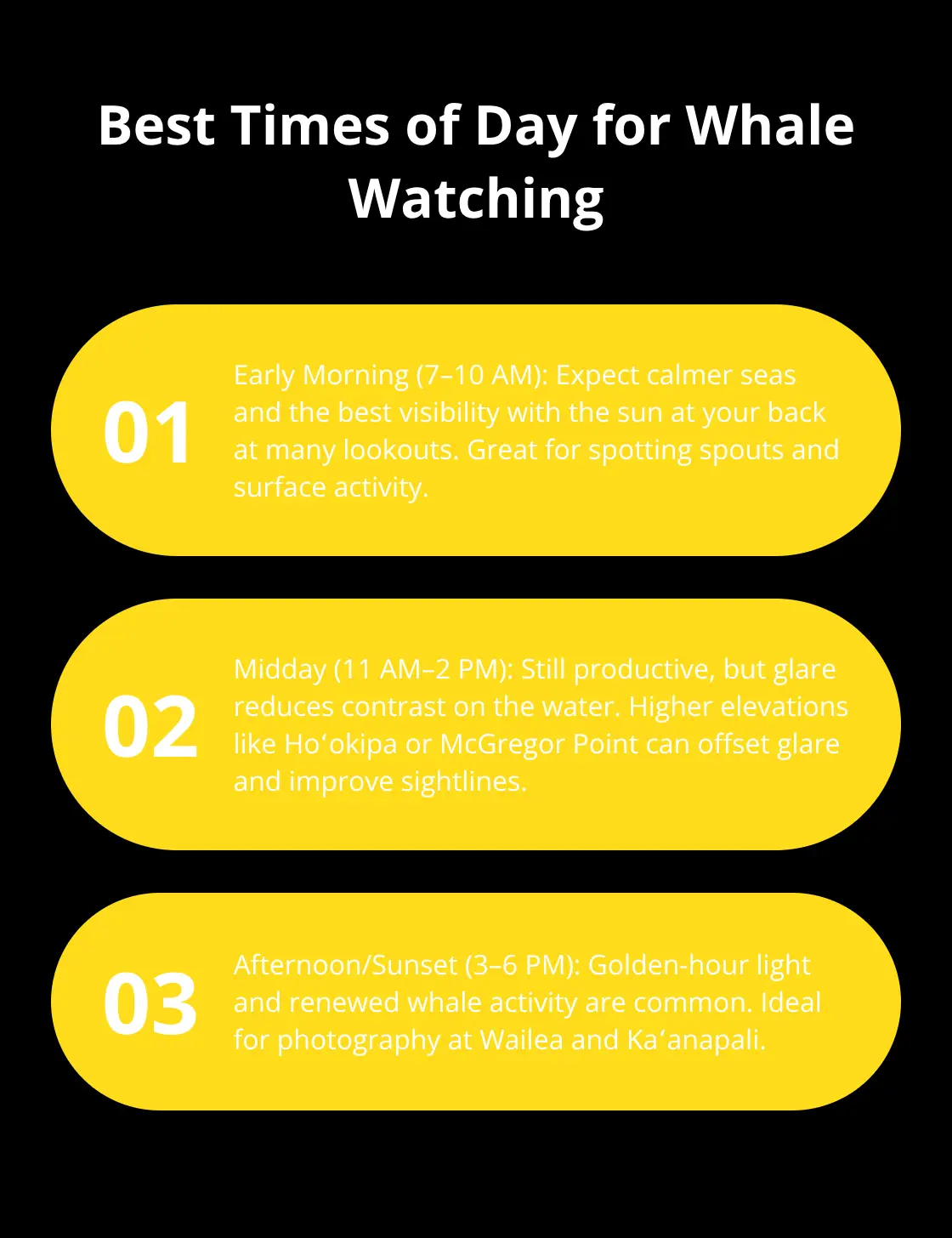
Timing your daily excursion matters just as much as selecting the right month. Early morning sessions from 7 AM to 10 AM provide the calmest seas and best visibility for spotting spouts and surface activity, with the sun at your back at most lookouts. Midday viewing between 11 AM and 2 PM remains productive but suffers from water glare, though higher elevations like Hoʻokipa or McGregor Point offer superior angles. Afternoon and sunset viewing from 3 PM to 6 PM delivers magical golden-hour lighting and often triggers renewed whale activity at spots like Wailea and Kaʻanapali, making this window ideal if you prioritize photography. Whales stay submerged for 10 to 15 minutes between breaths, so patience and slow scanning yield better results than rushing.
Water temperature stays warm and shallow during migration season, creating the ideal breeding and calving environment that makes Maui one of the world’s best land-based whale watching destinations. These conditions persist throughout the winter season, but your sighting odds and experience quality skyrocket when you book during January through March and choose early morning or late afternoon departures. Ready to experience these whales up close? The next section reveals what you’ll actually encounter once you step aboard a tour vessel.
What to Expect on a Maui Whale Watching Tour
The Whales You’ll Encounter
North Pacific humpback whales dominate Maui’s winter waters-the same species that migrates 3,000+ miles from Alaska to Hawaiian waters. These animals weigh up to 40 tons and reach lengths of 45 feet, making them impossible to mistake for anything else in the ocean. During peak season, you’ll spot multiple whales on a single outing, with January through March delivering the highest probability of breaches, tail slaps, and spy hops. Newborn calves in Hawaiian waters measure 12 to 15 feet long and weigh about 2 tons at birth, nursing up to 80 gallons of milk daily while mothers protect them in calm coastal areas near Wailea and Kaʻanapali. You might also hear humpback songs underwater if you kayak during whale season, since all humpbacks in Hawaii sing a common song on the breeding grounds that changes annually.
Marine Regulations and Safe Distances
Federal regulations require maintaining a 100-yard minimum distance from whales, and professional operators strictly enforce this rule to protect whale welfare and your safety. The Hawaiian Islands Humpback Whale National Marine Sanctuary, designated in 1992 to protect humpback whales and their habitat, safeguards this critical area across four islands including Maui, Molokai, Lanai, and Kahoʻolawe. Expect roughly one hour of actual whale watching per tour, though conditions vary significantly based on weather and sea state. Your operator will explain whale identification using fluke patterns-the black-and-white tail marking unique to each individual-and teach you to spot the telltale blow or spout before scanning for a breach.
Choosing Your Vessel Type
Small zodiacs and rafts get closer to whales within legal limits, delivering more intimate encounters but choppier rides, while catamarans provide smoother experiences with onboard bathrooms, snacks, and more comfortable seating for families. Operators emphasizing small-group experiences and flexible routing deliver superior personalized attention and better photo opportunities than crowded mass-market vessels, transforming your encounter from a checkbox activity into a genuine wildlife experience. Your choice depends on whether you prioritize comfort or closeness-both options reveal the majesty of these ocean giants in their natural habitat.
What to Pack and Wear
Dress in layers because ocean spray and wind create surprisingly cool conditions despite the tropical location. Bring binoculars, a 70-300mm zoom lens if you’re serious about photography, sunscreen, and rubber-soled shoes for safe deck movement. These essentials transform your tour from a casual outing into a well-prepared wildlife adventure where you capture memories and stay comfortable throughout your time on the water. Small-group operators often provide personalized guidance on photography techniques and whale behavior, helping you maximize every moment of your experience.
Ready for Your Adventure
The right preparation and vessel choice set the stage for an unforgettable encounter with Maui’s humpback whales. Next, discover why small-group whale watching experiences deliver the most rewarding and intimate connections with these magnificent ocean dwellers.
Why Small-Group Tours Deliver Superior Whale Watching
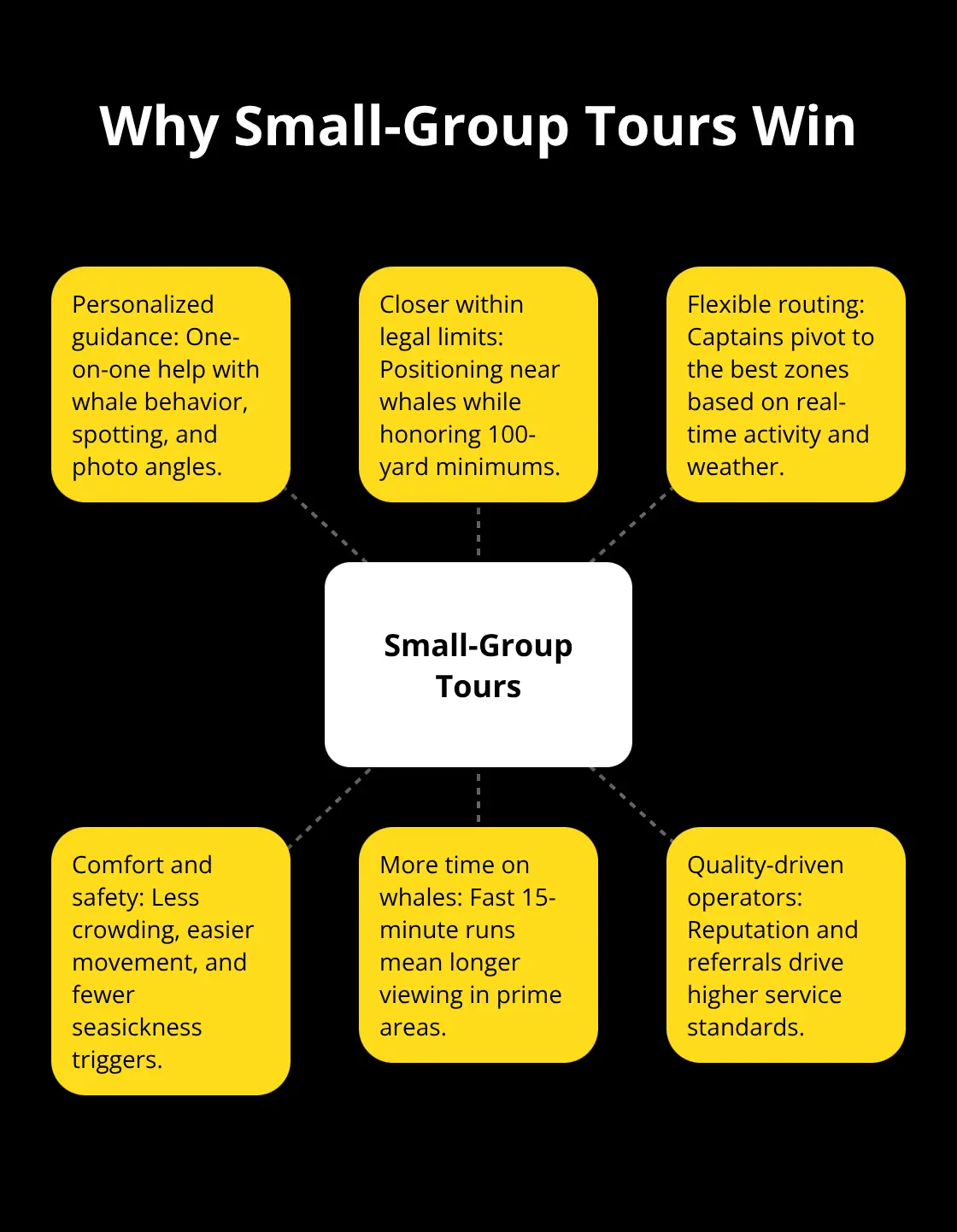
Small-group whale watching with operators limiting capacity to 20 passengers transforms your experience from watching whales alongside 200 strangers to connecting with these animals in meaningful ways. Larger catamarans pack decks with tourists fighting for railing space, forcing you to squeeze between elbows while guides shout facts to crowds who cannot hear properly. Small-group operators adjust routes daily based on real-time whale activity and weather conditions, meaning your captain spots whales near Wailea one morning and pivots to Kaʻanapali the next if conditions favor better sightings there.
This flexibility matters enormously because whale locations shift throughout the season and even day-to-day, and rigid large-boat schedules cannot adapt.
Personalized Guidance and Expert Attention
You receive personalized guidance on photography techniques, whale behavior identification, and the best angles for capturing breaches or tail slaps without the generic announcements blaring across crowded decks. Small vessels position you closer to whales within legal 100-yard minimums, delivering superior photo opportunities with zoom lenses and smartphone cameras alike. The intimate setting means guides notice when you struggle to spot a whale and help you locate it, rather than assuming everyone can see what they describe. Crew members on small boats know individual whale fluke patterns and can identify returning residents, enriching your understanding of these animals as individuals rather than generic marine mammals passing through.
Superior Comfort and Safety
You encounter fewer crying children, less seasickness from crowded conditions, and more space to move safely on deck while scanning for spouts. Small vessels provide fast 15-minute runs to prime whale watching zones, meaning more time observing whales and less time traveling. Operators dedicated to small-group experiences maintain higher standards because their reputation depends on personal referrals and reviews rather than volume sales.
Why Experienced Travelers Choose Small Groups
The difference between watching whales from a packed 300-passenger catamaran and a 20-person zodiac is not marginal-it represents the difference between a forgettable tourist checkbox and a genuine wildlife adventure you recount for decades. When whale season peaks in January through March, small-group operators fill quickly because travelers recognize that intimate experiences deliver the memorable encounters large boats simply cannot replicate. Operators emphasizing small-group capacity and flexible routing attract experienced whale watchers who return to Maui year after year on the same vessels rather than chasing the cheapest mass-market options.
Final Thoughts
Your Maui whale watching adventure awaits, and the memories you’ll create watching these magnificent creatures in their natural habitat will stay with you forever. Standing on deck as a 40-ton humpback breaches beside your vessel or hearing the haunting song of whales underwater during a kayak excursion transforms how you understand the ocean and our place within it. These moments remind us why protecting marine ecosystems matters so deeply and why Maui whale watching tours have become bucket-list experiences for travelers worldwide.
The path to unforgettable encounters is straightforward: book your tour during peak season from mid-January through mid-March, choose a small-group operator that prioritizes personalized attention and flexible routing, and prepare yourself with binoculars, layers, and an open heart. Early morning departures deliver the calmest seas and clearest visibility, while afternoon excursions offer golden-hour magic and renewed whale activity. Whether you’re a first-time visitor or returning to Maui for another season, the whales will be there, migrating through warm shallow waters to breed, birth, and nurture their young in the same channels they’ve visited for generations.
The North Pacific humpback population has recovered from near extinction to over 21,000 whales, and more than 12,000 visit Hawaiian waters each winter, creating unprecedented opportunities for meaningful wildlife encounters. Your small-group Maui whale watching tour operator stands ready to guide you toward these gentle giants, share expert knowledge about their behaviors and migration patterns, and help you capture photographs and memories that will define your tropical adventure. Book your experience today and join thousands of travelers who’ve discovered that watching whales in Maui isn’t just an activity-it’s a transformative connection with nature.
Call 808-270-8776