
Every winter, humpback whales migrate over 3,000 miles to Maui’s warm waters, creating one of the most spectacular wildlife events in Hawaii. Between January and March, you’ll have the best chance to witness these magnificent creatures breaching and playing just offshore.
At Maui Snorkel Charters, we’ve guided thousands of visitors through unforgettable whale watching Maui experiences. This guide covers everything you need to know to make your adventure safe, respectful, and absolutely memorable.
Why Maui Peaks for Whale Watching in Winter
The Migration Numbers That Make Maui Special
Maui sits directly in the migration path of about 12,000 humpback whales each year, and the concentration of these animals in our shallow Auʻau Channel makes the islands one of the world’s most reliable whale watching destinations. The whales arrive in November, peak between January and March, and most depart by April, though some stragglers linger into May. This timing matters because January through March delivers the highest probability of sightings-you’ll encounter whales on the majority of tours during these months rather than the hit-or-miss experience you’d have in shoulder season.
Why Whales Choose Hawaiian Waters
Water temperatures around 75 degrees Fahrenheit in Hawaiian waters provide the perfect breeding and calving environment, which is why mothers bring newborn calves to these islands after traveling roughly 3,000 miles from Alaska. The Auʻau Channel, the shallow strip of ocean between Maui and neighboring islands, concentrates whales into predictable viewing zones, especially along the west and south coasts from Lahaina through Kihei. The National Oceanic and Atmospheric Administration reports that humpbacks don’t eat while in Hawaii, so they remain highly active, breaching up to 18 mph and performing tail slaps that create unforgettable moments.
Viewing Whales From Land vs. Water
Land-based spots include McGregor Point Lookout between Lahaina and Maalaea, which hosts a free information station from December through mid-May, plus Wailea beaches and elevated vantage points like Pu’u Ola’i behind Little Beach. However, boat tours deliver dramatically superior sightings-you’ll get eye-level views from just feet away rather than distant plumes on the horizon. January through April offers the added bonus of witnessing calves born in these waters, giving you chances to see mothers protecting young whales and engaging in protective behaviors.
What Sets Winter Whale Season Apart
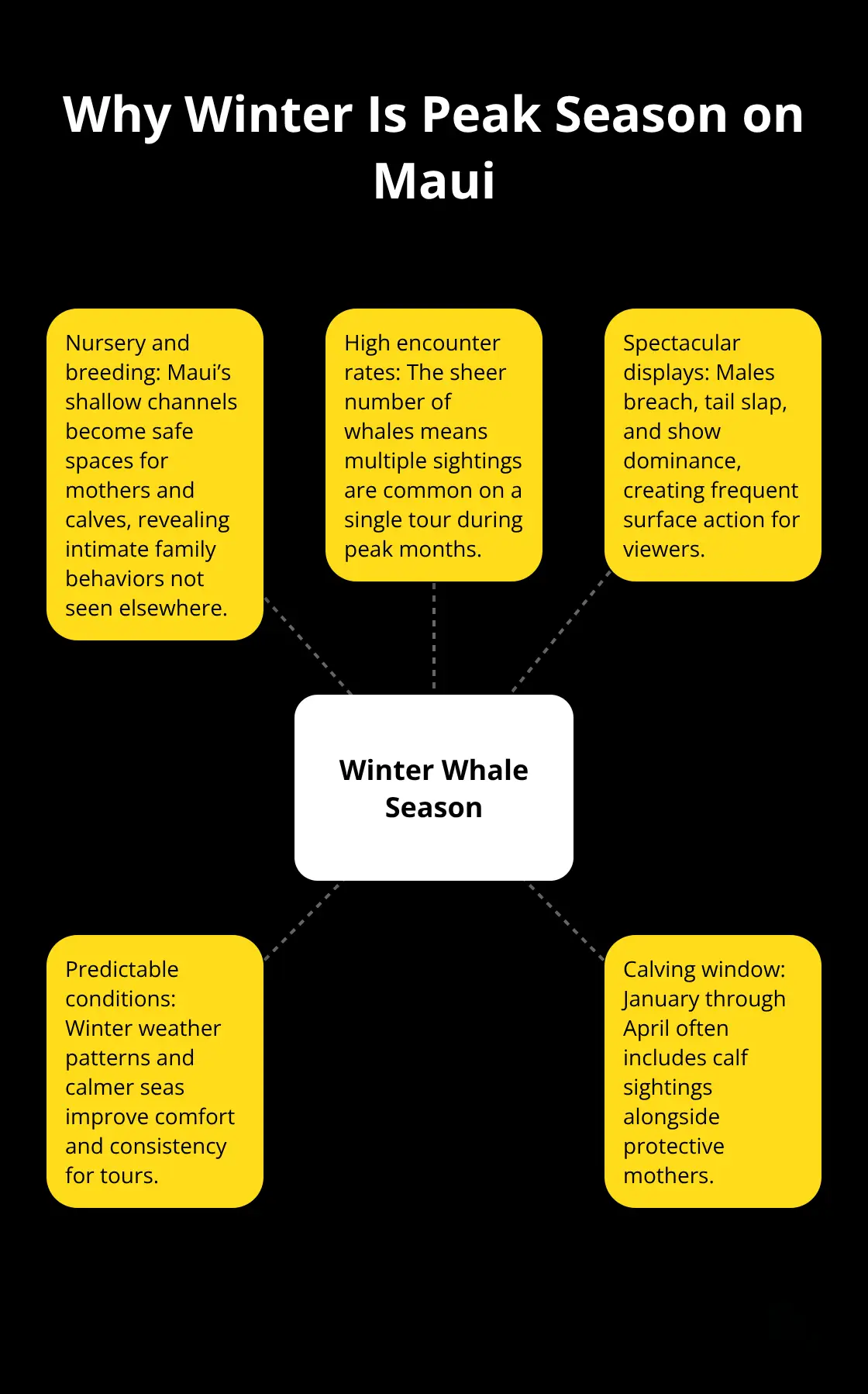
The winter months transform Maui’s waters into a nursery and breeding ground where you’ll witness behaviors impossible to see at other times of year. Mothers and calves interact in shallow channels, males breach to establish dominance, and the sheer number of whales means multiple sightings on a single tour. This concentration of activity, combined with predictable weather patterns and calm seas, makes winter the undisputed peak season for whale encounters.
With the timing and locations locked in, the next step involves choosing the right vessel and operator to maximize your experience.
How to Prepare for Your Whale Watching Tour
Dress for Ocean Conditions, Not the Weather
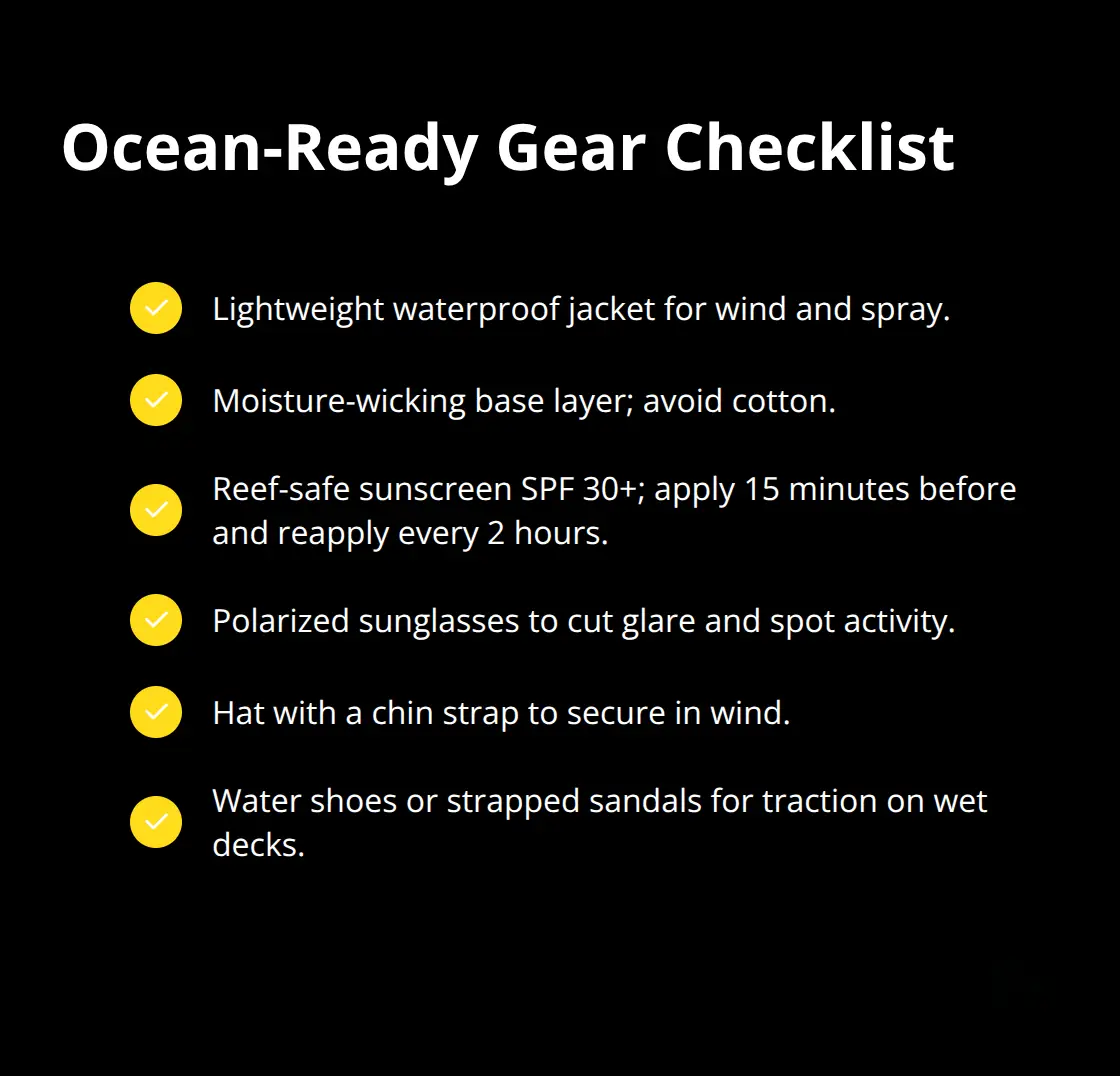
Preparation separates a comfortable, memorable whale watching experience from one where you’re cold, sunburned, and wishing you’d stayed on shore. The ocean environment demands specific gear choices that most first-time visitors underestimate. A lightweight waterproof jacket protects you because spray from the bow soaks everyone on smaller vessels, and ocean winds chill quickly even on warm days. Layer your clothing with a moisture-wicking base layer under your jacket-cotton holds water and makes you miserable, while synthetic fabrics dry fast. Wear reef-safe sunscreen with at least SPF 30, applying it generously 15 minutes before boarding and reapplying every two hours, because water reflection intensifies UV exposure and sunburn happens faster than you’d expect. Polarized sunglasses reduce glare off the water and help you spot whale activity in the distance. A hat with a chin strap prevents ocean breezes from stealing your headwear constantly. For footwear, wear water shoes or sandals with secure straps rather than flip-flops-wet decks become slippery, and you need grip.
Fuel Your Body Before Departure
Eat a substantial breakfast before your tour because seasickness hits harder on an empty stomach, and the boat’s motion combined with hunger creates a miserable combination. Ginger supplements taken 30 minutes before departure reduce nausea for many people, though individual responses vary. This simple step transforms your comfort level dramatically.
Choose Your Timing and Vessel Type
Whale activity occurs throughout the day since humpbacks don’t sleep in the traditional sense, so morning, afternoon, and sunset tours all deliver legitimate sightings-pick based on when you prefer being on water and which light conditions suit your comfort level. Small raft-style tours with 16 to 20 passengers cost around $74 to $93 per adult and position you closer to whales for eye-level encounters, though the ride feels rougher and amenities are minimal. Larger catamaran-style vessels charge approximately $300 per person for combo Lanai trips, offer smoother rides with onboard bathrooms and snacks, but create more distance between you and the action.
Select an Operator With Strong Conservation Standards
Reputable operators like Pacific Whale Foundation, PacWhale Eco-Adventures, Trilogy, and Sail Maui consistently receive strong reviews and maintain conservation standards. Verify current operational status before booking since unexpected disruptions do occur. Operators emphasizing marine naturalist narration, hydrophone technology to hear whale songs underwater, and guaranteed sighting policies (where you return free if no whales appear) typically provide better educational value. Read recent reviews specifically mentioning whale sightings rather than just overall satisfaction scores.
Book Early and Choose Strategic Departure Points
Tours departing from Lahaina’s Mala Ramp or Ka’anapali reach prime viewing zones in the Auʻau Channel faster than southern departure points. Book at least one week ahead during peak season (January through March) since popular operators fill quickly, and flexibility with dates increases your odds of favorable weather and calmer seas. Once you’ve locked in your tour and packed your gear, understanding what whale behaviors you’ll witness transforms your experience from passive observation into active engagement with these remarkable animals.
Whale Behavior and What to Expect
The Spectacular Breaches and Surface Actions
Humpback whales perform a predictable repertoire of behaviors during winter season, and understanding what to expect transforms your tour from passive observation into active wildlife engagement. Whales launch their entire 40-ton bodies out of water at speeds up to 18 mph, reaching heights that dwarf the boats around them, and they typically repeat this action multiple times within minutes. Tail slaps occur when whales raise their flukes and strike the water surface with tremendous force, creating explosions of spray visible from hundreds of yards away and audible across the entire boat. Pectoral fin slaps happen when whales roll sideways and strike their long front fins against the water, often performed near other whales in what researchers believe signals social interaction or dominance. Head lunges send whales vertically upward with their heads breaking the surface first, sometimes revealing their white pectoral fins in dramatic fashion.
Spy Hops and Mugging Encounters
Spy hops involve whales poking their heads straight up out of the water to observe their surroundings, and mothers with calves perform these frequently to monitor their young. Federal regulations require vessels to maintain at least 100 yards from whales, but whales often approach boats voluntarily in behavior called mugging, at which point captains must turn off engines and remain still. These encounters happen regularly during peak season, and your best strategy involves positioning yourself on the side of the boat where whales are approaching rather than the opposite side where you’ll see nothing but other passengers’ backs. Operators use hydrophone technology that lets you hear male whales singing underwater, and these underwater vocalizations provide irreplaceable sensory data about whale communication.
Photography Techniques That Actually Work
Photographing whales demands specific technique because water glare, motion, and distance defeat most casual phone cameras. Use a telephoto lens or digital zoom to capture detail, and shoot in burst mode to increase your odds of catching peak action moments like breaches. Position yourself with the sun behind you so light illuminates whale subjects rather than backlighting them into silhouettes. Respect the 100-yard distance rule absolutely, and never attempt to approach whales or cut off their movement paths regardless of what you see other boats doing (some operators prioritize sightings over conservation standards, but reputable ones maintain strict protocols).
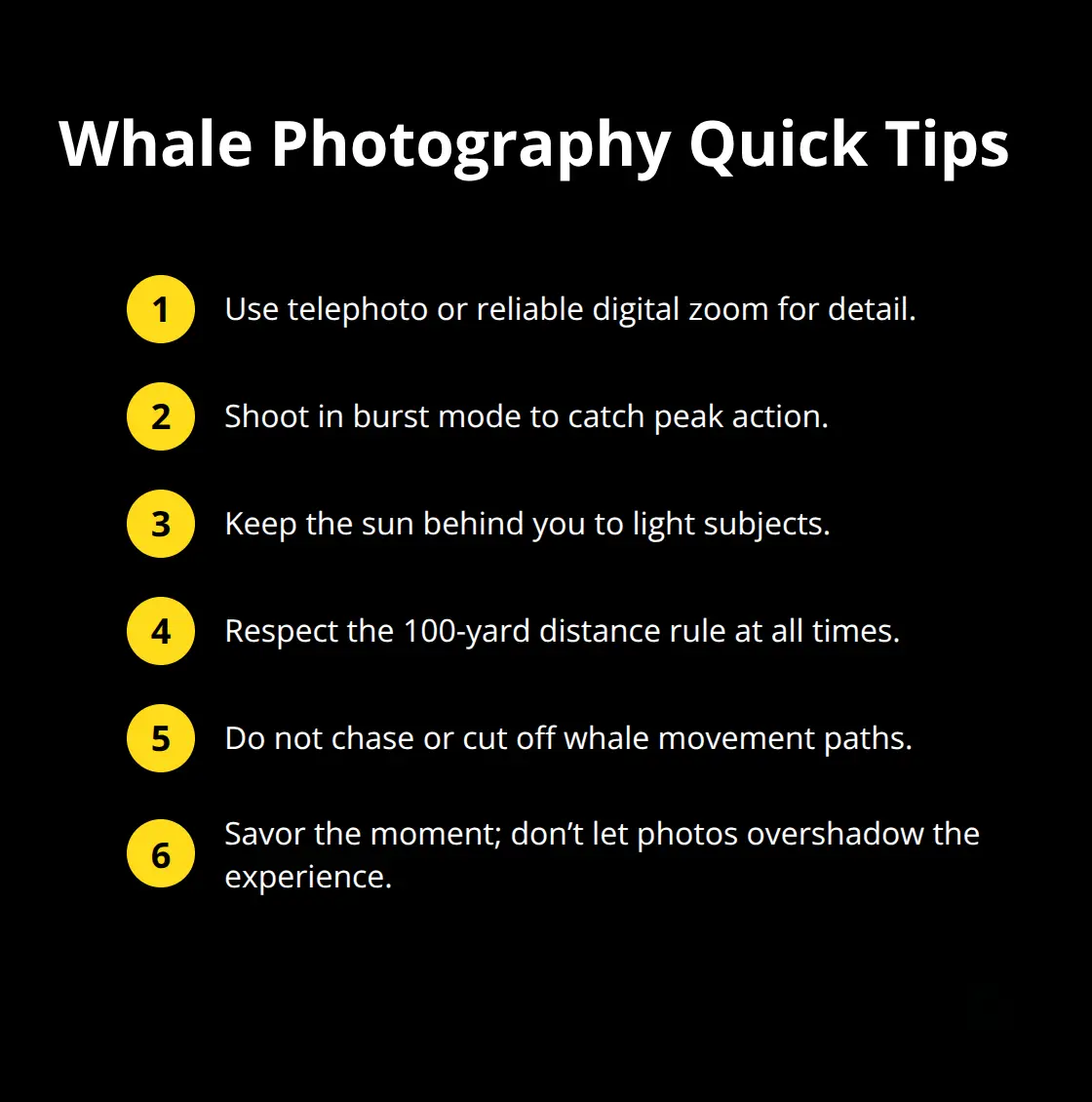
Focus on experiencing the moment rather than chasing perfect shots, because the whales you witness in person will create memories far more vivid than any photograph you’ll produce.
Final Thoughts
Whale watching on Maui ranks among Hawaii’s most unforgettable experiences, and for good reason. You witness one of nature’s greatest migrations firsthand, observe 40-ton animals breach mere feet from your boat, and connect with creatures that travel thousands of miles annually to these islands. The combination of reliable sightings, accessible tours, and genuine conservation efforts makes whale watching Maui genuinely special compared to other destinations worldwide.
Your adventure succeeds when you prepare thoughtfully and select operators committed to both your experience and whale protection. Dress appropriately for ocean conditions, eat before departure, and choose a tour operator with strong conservation standards and recent positive reviews. The difference between a mediocre whale watching tour and an exceptional one often comes down to your preparation and the operator you select.
Book your whale watching adventure with us and experience why thousands of visitors return home transformed by encounters with Maui’s humpback whales. Flexibility with your schedule increases your odds of calm seas and optimal sighting conditions during peak season from January through March. Whether this marks your first whale encounter or you’re returning to witness these migrations again, Maui’s waters deliver moments that stay with you long after you leave the islands.
Call 808-270-8776