
Maui’s underwater world offers few experiences as captivating as exploring the vibrant ecosystem of Molokini Crater. This crescent-shaped marine sanctuary, located just miles off the coast, attracts snorkelers seeking pristine reefs and abundant marine life.
A Molokini crater snorkeling tour combines adventure with accessibility, making it ideal for both beginners and experienced snorkelers. Discover why this protected reserve has become one of Hawaii’s most sought-after snorkeling destinations.
Why Molokini Crater Stands Apart
The Natural Shield: Water Clarity and Visibility
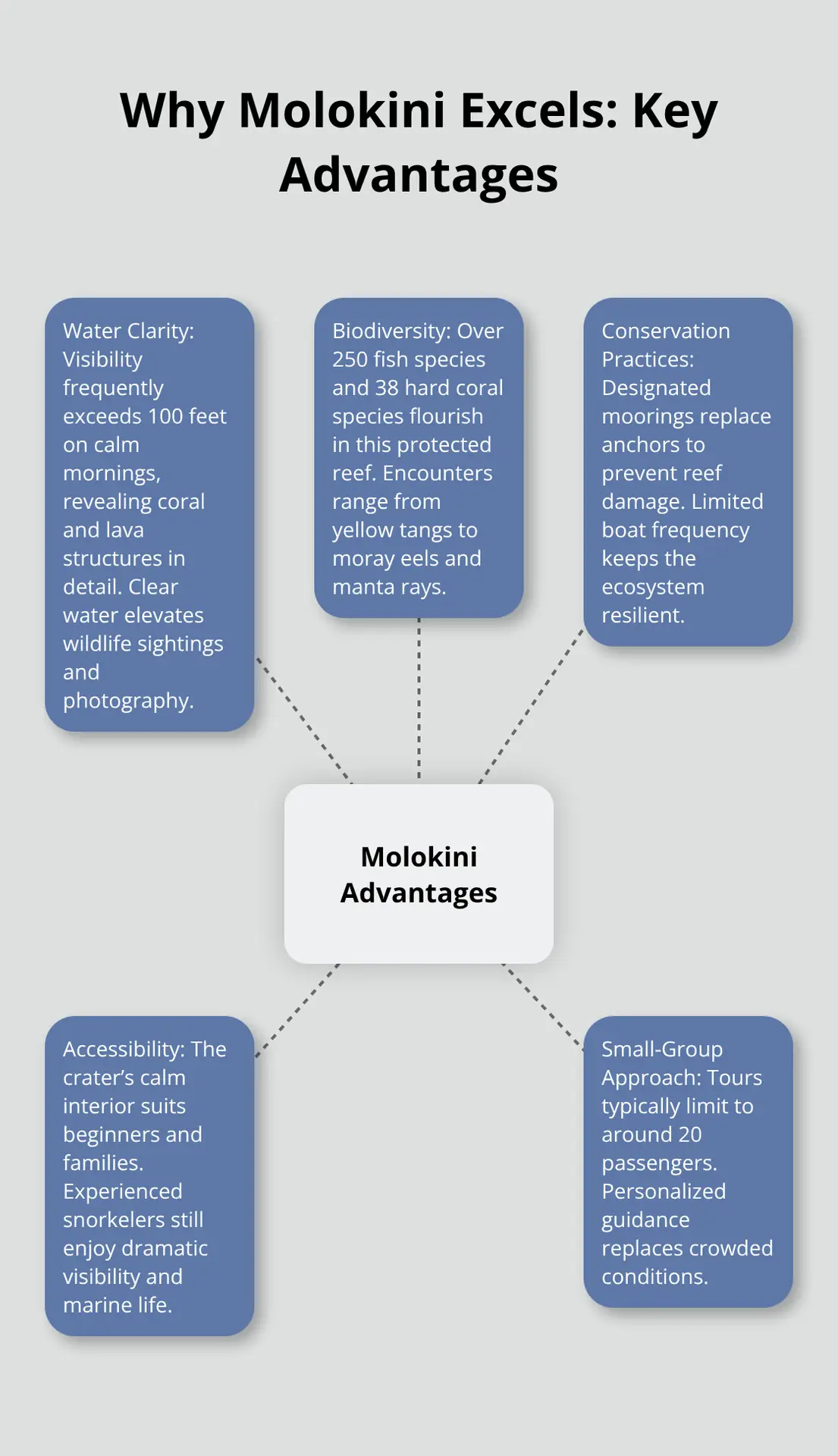
Molokini Crater’s crescent shape creates a natural barrier that shields the interior reef from strong ocean currents and sediment runoff. This geographic advantage produces water clarity that frequently exceeds 100 feet on calm mornings, allowing you to see vibrant coral formations and lava rock structures in stunning detail rather than murky outlines. The exceptional visibility transforms your snorkeling experience, revealing the reef’s complexity and color in ways most other Maui locations cannot match.
A Thriving Marine Ecosystem
The crater’s protected status as a Marine Life Conservation District since 1977 has allowed its reef ecosystem to flourish. You’ll encounter over 250 fish species including yellow tangs, parrotfish, butterflyfish, and Moorish idols, plus 38 hard coral species that create the reef’s foundation. Hawaiian green sea turtles inhabit their natural habitat here, and during winter months from December through April, humpback whales migrate to Hawaiian waters-sometimes allowing you to hear their songs from the surface. White-tipped reef sharks patrol harmlessly, while moray eels, ornate octopuses, and manta rays add to the biodiversity you might witness.
Conservation in Action
The crater’s offshore location and federal protection as a Hawaii State Seabird Sanctuary mean tour operators use designated moorings rather than anchors, directly protecting the reef from damage. This approach limits boat frequency to sustainable levels, ensuring the reef you explore today remains healthy for future visitors. Your choice to snorkel here supports sustainable tourism rather than contributing to reef degradation.
Accessibility Meets Adventure
The calm interior waters make Molokini accessible to first-time snorkelers and families while still delivering the visual impact and wildlife encounters that experienced snorkelers seek. Small-group tours (typically limited to around 20 passengers) provide personalized guidance rather than crowded conditions. This combination of crystal-clear water, thriving marine populations, and active conservation measures creates snorkeling conditions unavailable at most other Maui locations.
What Awaits You Below the Surface
The protected reserve status means you’ll witness a reef ecosystem in its healthiest state. From colorful reef fish to larger marine animals, the diversity you’ll encounter reflects decades of conservation success. Understanding what makes Molokini special helps you appreciate the experience-and prepares you for the practical details of planning your visit.
What to Expect During Your Molokini Snorkeling Tour
Small Groups Create Personalized Experiences
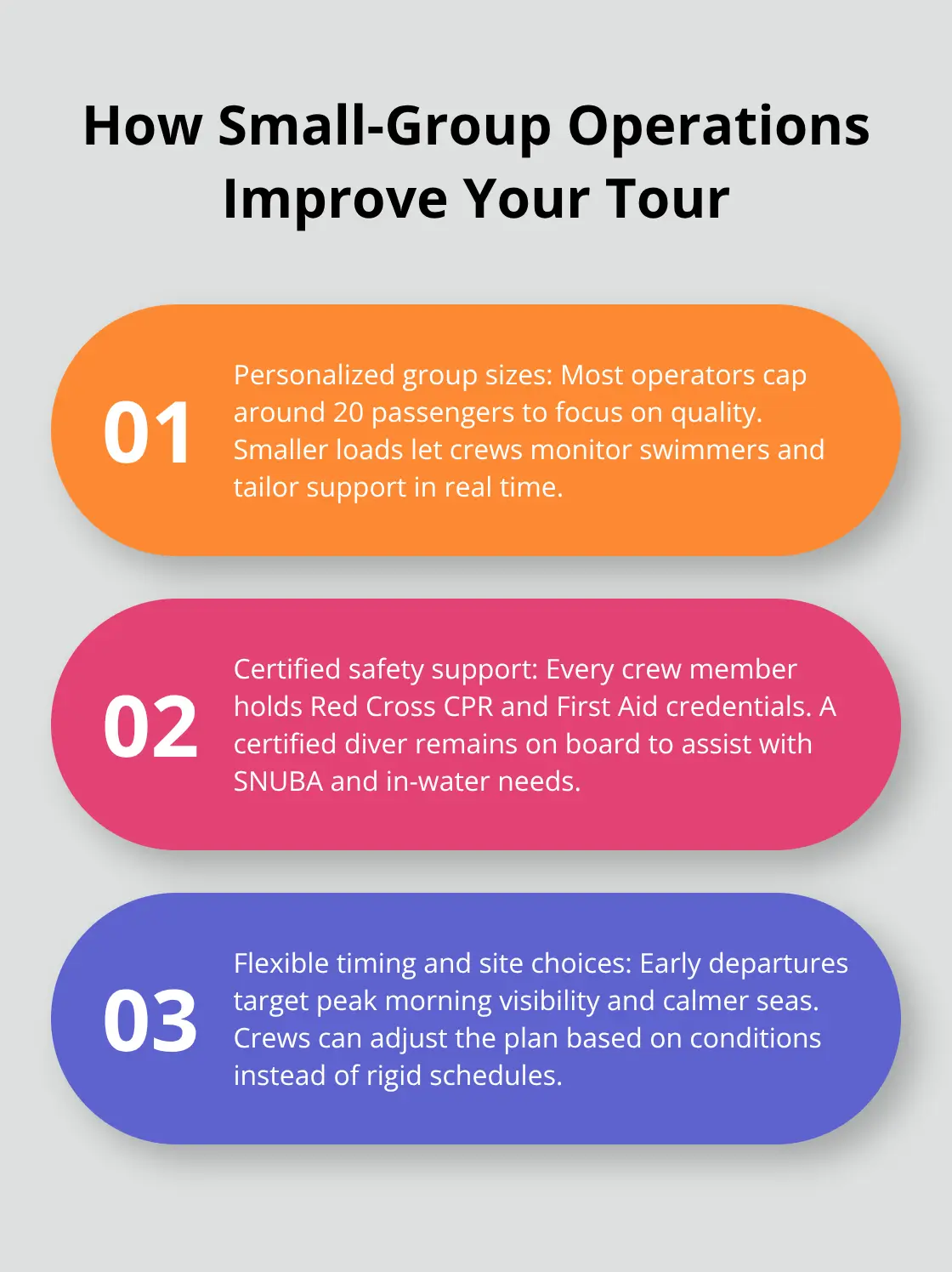
Molokini Crater tours operate with a fundamentally different approach than crowded Maui snorkeling operations. Most reputable operators cap groups at around 20 passengers maximum, which directly impacts your experience quality. A family-owned Kihei operator enforces this limit aboard their custom 40-foot vessel, ensuring you receive guided, personalized attention rather than being herded through the water. The smaller passenger load means your crew can actively monitor snorkelers, provide in-water assistance, and adjust the itinerary based on real-time conditions.
Safety Through Certified Expertise
Safety becomes genuinely personalized-all crew members carry Red Cross certification with CPR and First Aid training, and at least one certified scuba diver remains on board to assist with optional SNUBA experiences. This matters practically: if you struggle with snorkel gear, feel anxious in deeper water, or want to extend time at a particular site, the crew has capacity to accommodate you. Larger operations with 50+ passengers cannot offer this flexibility, forcing them to maintain rigid schedules regardless of your comfort level.
Timing and Conditions Optimization
Your actual time in the water gets protected when tour operators use designated mooring systems rather than anchors, which also signals a crew that prioritizes reef conservation over convenience. Tours typically depart early-many leave between 6:30 and 7:00 AM-specifically to catch calm morning conditions when visibility peaks. The 15-minute transit to Molokini aboard fast vessels allows you to reach the crater when water conditions are optimal, before afternoon swells degrade visibility.
Onboard Amenities That Enhance Performance
Onboard amenities directly enhance your snorkeling performance: snorkel gear with flotation devices accommodates varying comfort levels, multiple boarding ladders prevent bottlenecks when you enter and exit the water, and shade areas let you recover between snorkel sessions without sun exhaustion. Tours include breakfast-typically Hawaiian coffee with banana bread-plus snacks and beverages to maintain your energy throughout the morning. Professional photos and videos are often available as optional add-ons, letting you capture encounters without managing a camera while snorkeling.
Preparing for What Comes Next
This combination of small groups, early departures, certified crew, and thoughtful amenities transforms a snorkeling tour from a logistical exercise into an actual experience where you can focus on the reef rather than managing crowds or equipment frustrations. Understanding these operational details prepares you for the practical steps needed to book your adventure and arrive ready to explore Molokini’s underwater world.
When to Go and What to Pack
Seasonal Timing and Water Conditions
Timing your Molokini visit matters more than most Maui activities because water conditions shift dramatically between seasons and even between morning and afternoon on the same day. December through April brings humpback whale season, when more than 12,000 humpback whales visit Hawaiian waters and you’ll hear their songs from the surface and potentially witness breaching displays during your boat transit, though whales generally stay in deeper channels rather than entering the shallow crater interior. Outside whale season, May through November delivers calmer seas and more predictable visibility, with July and August offering the most stable conditions. Early morning departures between 6:30 and 7:00 AM prove essential for maximizing clarity, as afternoon swells consistently degrade visibility by 30 to 50 feet compared to peak morning conditions.
Maximizing Your Morning Window
Fast-boat operators reach Molokini when visibility peaks rather than wasting time in transit while conditions fade. A 15-minute run to the crater means you enter the water during optimal light and clarity instead of arriving mid-morning when swells have already reduced underwater visibility. This timing advantage separates operators who prioritize your experience from those who simply follow standard schedules. Try scheduling your tour during May through November if you want the most predictable conditions, or embrace December through April if whale encounters appeal to you.
Essential Packing Strategy
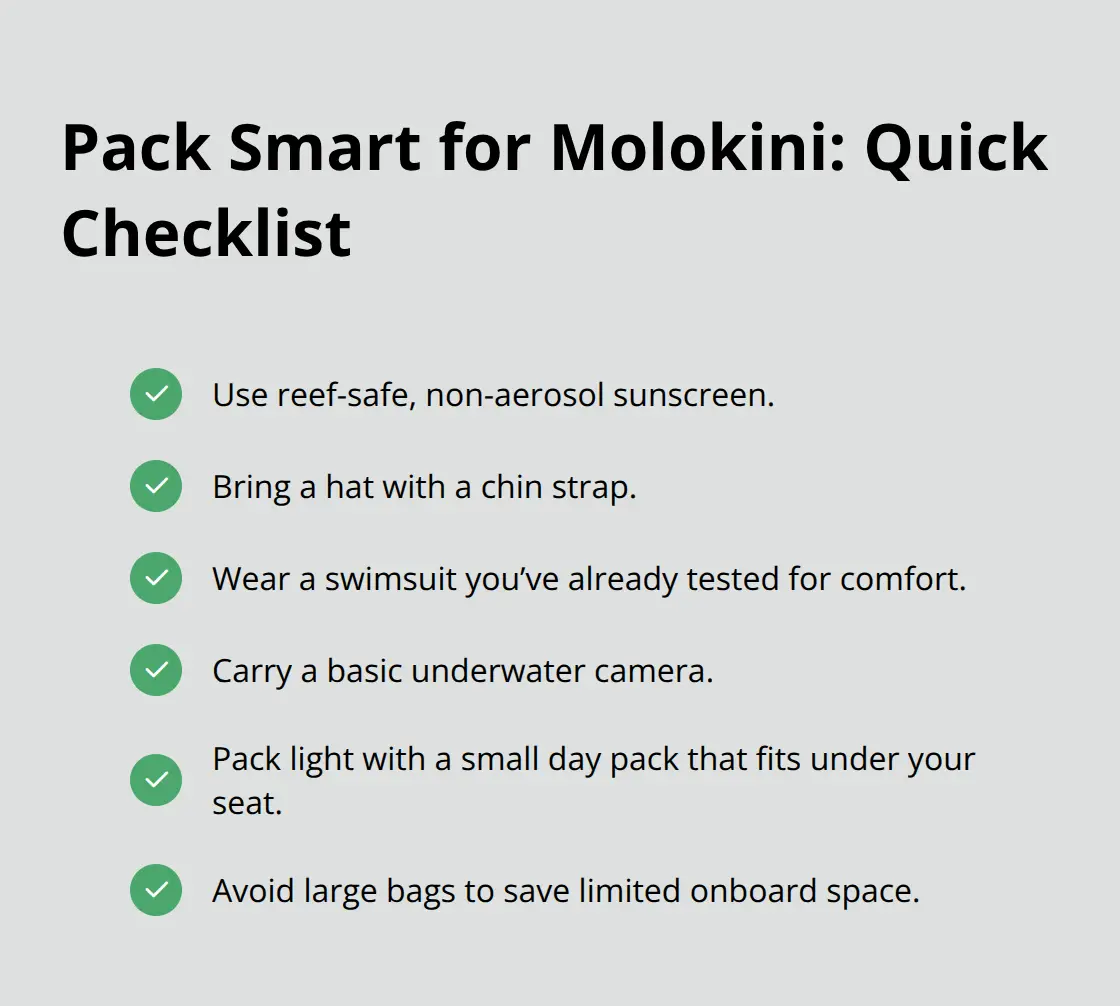
Pack strategically because reef-friendly sunscreen matters legally and environmentally. Hawaii banned oxybenzone and octinoxate, making reef-safe formulations mandatory rather than optional-bring non-aerosol reef-friendly sunscreen or plan to purchase it locally at higher prices. Bring a hat with a chin strap to prevent wind loss during boat transit, a swimsuit you’ve worn before (new suits often shift and chafe during extended water time), and a basic underwater camera if you want photos beyond the optional professional service available onboard. Avoid large bags since storage space on 40-foot vessels is limited; instead pack essentials in a small day pack that fits under your seat.
Optional Add-Ons and Valuables
Bring cash for optional add-ons like underwater camera rental starting at reasonable rates, wetsuit rental from $5, or professional photos that preserve encounters you cannot capture yourself. Leave behind aerosol sunscreen, large luggage, and valuables-theft from boats remains uncommon but unnecessary risk. Arrive 30 minutes early for your 6:30 AM check-in at Ma’alaea Harbor to secure parking and complete paperwork without rushing, and bring a valid ID if you plan to consume included beverages during your return cruise.
Final Thoughts
A Molokini crater snorkeling tour offers far more than a half-day activity-it connects you with one of Hawaii’s most pristine marine ecosystems while supporting sustainable tourism that protects the reef for future generations. The combination of exceptional water clarity, thriving biodiversity, and personalized small-group experiences creates conditions rarely found elsewhere on Maui. Whether you’re a first-time snorkeler seeking accessible adventure or an experienced explorer wanting to witness a protected marine reserve, Molokini delivers the visual impact and wildlife encounters that define a memorable Hawaiian vacation.
Watching sunlight illuminate coral formations in 100-foot visibility, hearing humpback whale songs during winter months, or spotting Hawaiian green sea turtles in their natural habitat creates moments that stay with you long after your return home. These experiences matter precisely because they rest on real conservation success-the reef you explore today remains healthy because tour operators prioritize moorings over anchors and limit passenger loads to sustainable numbers. Your choice to book with reputable operators directly supports this conservation model and ensures the reef thrives for future visitors.
Early morning departures between 6:30 and 7:00 AM from Ma’alaea Harbor ensure optimal water conditions, while packing reef-safe sunscreen and arriving 30 minutes early eliminates common complications. Reserve your spot with a trusted operator today and discover why this protected marine sanctuary has become one of Hawaii’s most sought-after snorkeling destinations. Your Maui experience becomes complete when you’ve explored the reef that makes this island truly unforgettable.