
Imagine descending into waters so clear you can see thirty feet in every direction, surrounded by vibrant coral and tropical fish. A Molokini crater snorkeling trip offers exactly this experience-a protected marine sanctuary where nature thrives undisturbed.
This crescent-shaped reef, just off Maui’s coast, ranks among Hawaii’s most spectacular underwater destinations. Whether you’re a seasoned snorkeler or exploring the ocean for the first time, Molokini delivers unforgettable encounters with sea turtles, rays, and countless fish species.
Why Molokini Stands Apart
Unmatched Water Clarity and Protection
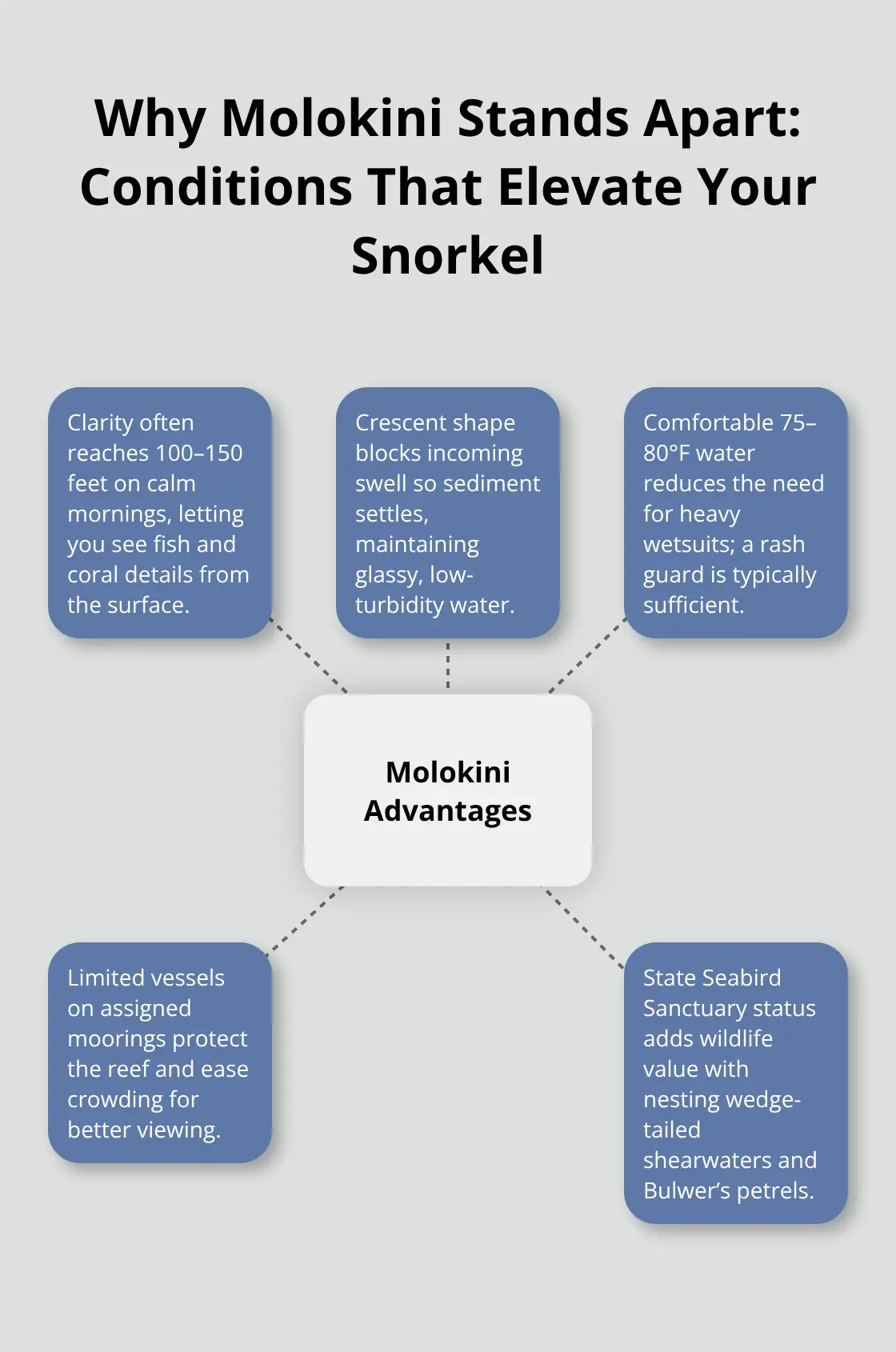
Molokini Crater’s water clarity sets it apart from every other snorkeling destination in Hawaii. Visibility regularly exceeds 100 feet on clear days, which the Boss Frog’s Maui Snorkel Conditions Report tracks across Maui’s top sites. The crater’s distinctive crescent shape naturally blocks incoming ocean swell, creating a protected basin where sediment settles rather than churns. This exceptional clarity allows you to spot fish and coral details from the surface-something impossible at most shoreline alternatives like Honolua Bay or Wailea Beach. Water temperatures stay consistently between 75 and 80 degrees year-round, eliminating the need for heavy wetsuits; a rash guard provides adequate sun and warmth protection for extended snorkeling sessions.
Marine Life Conservation and Federal Protection
The crater functions as a Marine Life Conservation District, a federal designation that shields marine resources and allows only limited fishing and other consumptive uses. Tour boats operate from assigned moorings rather than anchors, and the number of vessels is strictly limited to prevent reef damage and overcrowding. This protection means the ecosystem thrives visibly: you encounter Hawaiian green sea turtles, white-tipped reef sharks that pose no threat when left unprovoked, ornate octopuses, and rays cruising the reefs. The crater’s status as a Hawaii State Seabird Sanctuary adds another layer of wildlife value, with wedge-tailed shearwaters and Bulwer’s petrels nesting on the rocky islet.
Seasonal Wildlife Encounters
During whale season from January through March, humpback whales migrate to these waters, and snorkelers frequently hear their complex songs traveling underwater. The warm, shallow waters between Maui and the surrounding islands provide an ideal sanctuary for these marine mammals at the end of their long Pacific journey. This combination of crystal-clear water, thriving marine protection, and concentrated wildlife encounters means your boat ride to Molokini itself becomes part of the adventure-one where you may witness whales before you even reach the crater.
What You’ll Actually Encounter Underwater
The Marine Life You’ll See
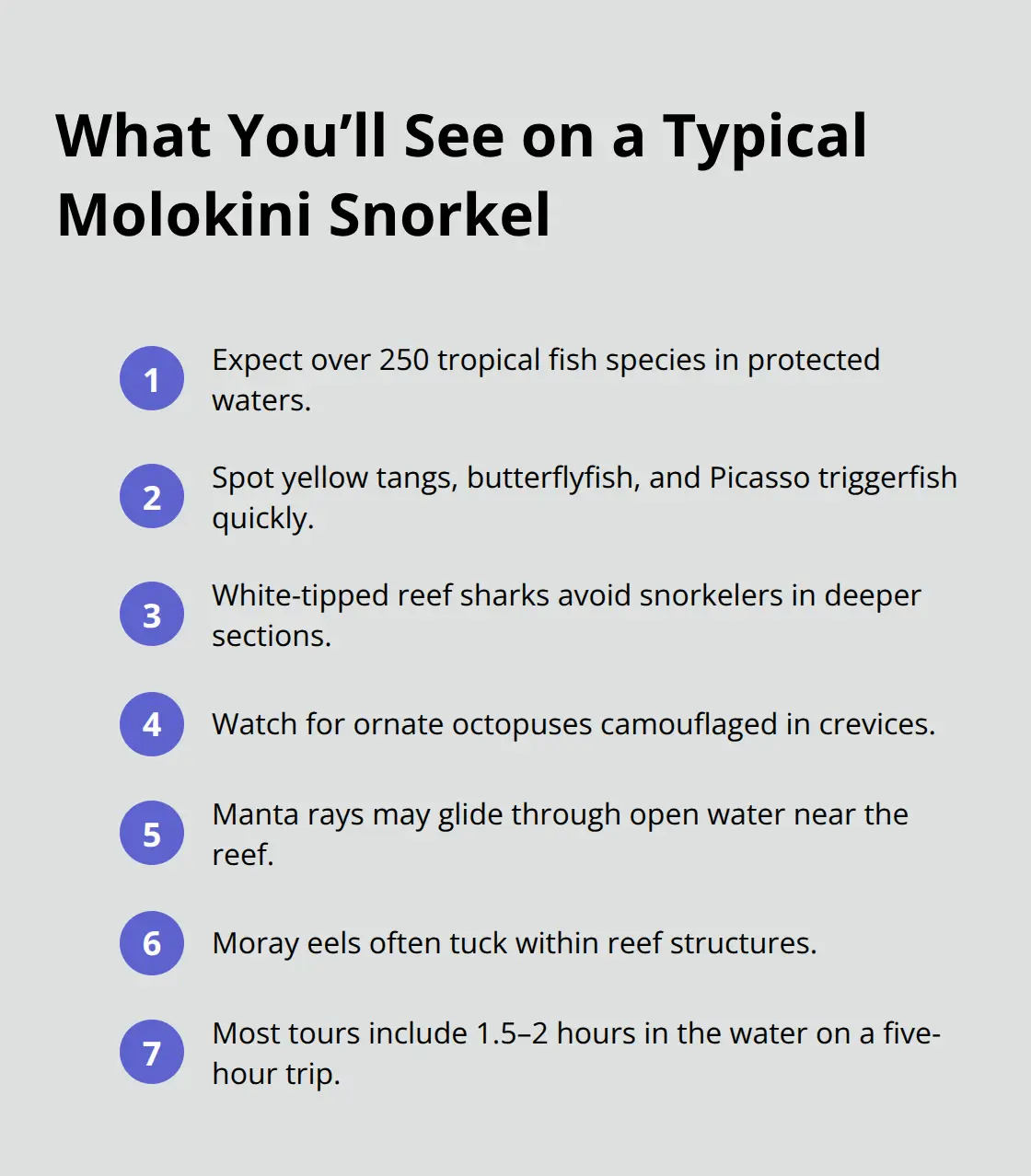
Molokini hosts over 250 tropical fish species that thrive in these protected waters, and this abundance becomes immediately apparent once your group enters the crater. Yellow tangs, threadfin butterflyfish, and Picasso triggerfish dart through coral formations within moments of your descent. White-tipped reef sharks patrol the deeper sections but show zero interest in snorkelers and actively avoid contact. The real excitement arrives when you spot ornate octopuses camouflaged against rock crevices, manta rays gliding through open water, and moray eels tucked within reef structures. Most tours allocate 1.5 to 2 hours in the water during a typical five-hour excursion, which provides sufficient time to explore multiple reef zones without exhaustion.
Professional Guidance and Wildlife Positioning
Professional crew members guide your group to specific high-activity zones rather than allowing random drifting, which dramatically increases your odds of meaningful wildlife interaction. Hawaiian green sea turtles appear frequently along the reef edges, particularly during morning hours when fish activity peaks and visibility reaches its clearest state. The crew knows exactly where turtles shelter and feed, positioning your group for close observation while maintaining the required distance that protects these animals. Your captain and crew members monitor water conditions continuously, adjusting routes based on real-time visibility and wind patterns. This flexibility means your tour adapts to what nature delivers that specific day rather than forcing a predetermined path.
Safety Protocols and Equipment Support
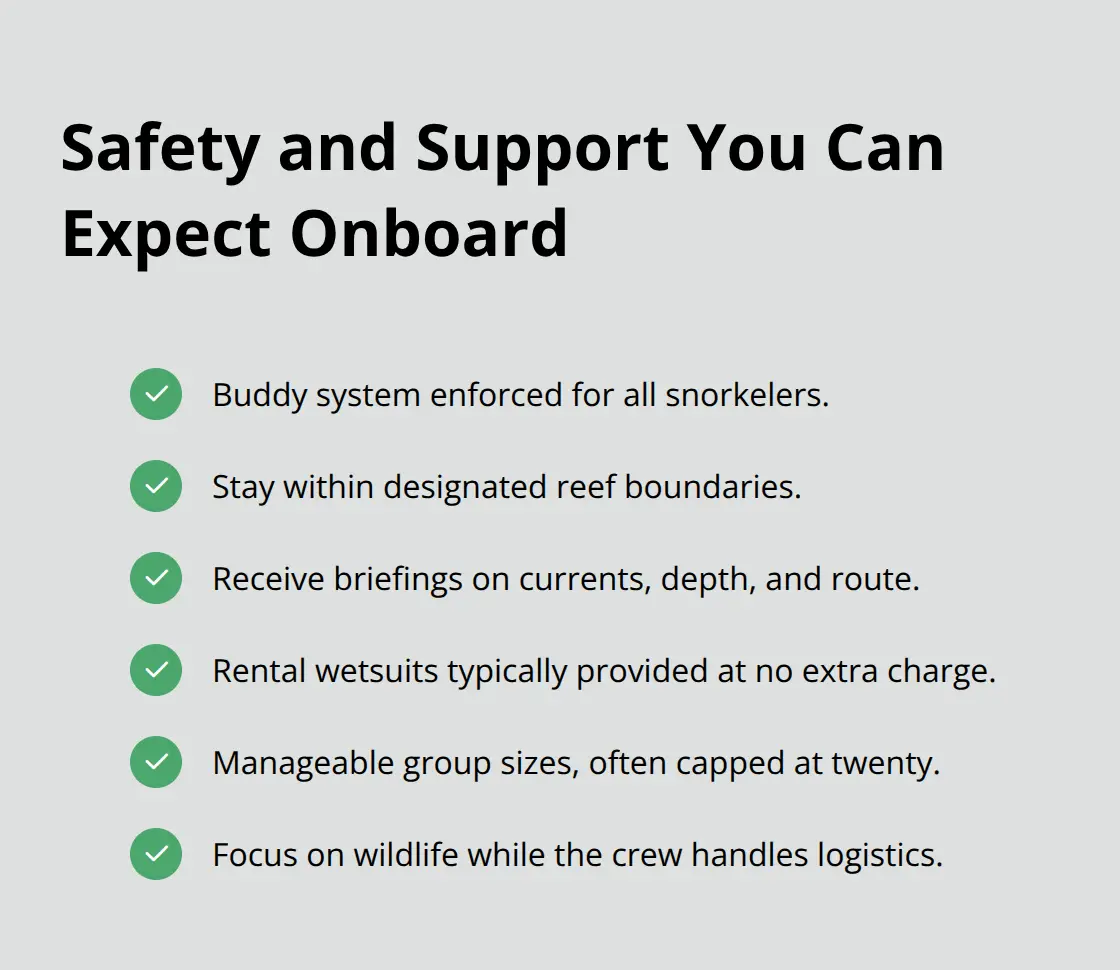
The guided structure differs fundamentally from independent snorkeling at mainland beaches. Crews enforce critical safety protocols-you snorkel with assigned buddies, stay within designated reef boundaries, and receive clear instructions on current direction and depth. Most operators provide rental wetsuits at no extra charge, which extends your comfort during cooler morning water temperatures and allows longer underwater sessions. The combination of professional guidance, manageable group sizes (typically capped at twenty participants), and equipment support removes the logistical burden that makes independent reef exploration frustrating. You focus entirely on observing marine life rather than managing the technical details of your experience, which transforms how fully you engage with Molokini’s underwater world.
How to Prepare for Peak Snorkeling Conditions
Timing Your Visit for Maximum Visibility
Morning departures deliver superior visibility and calmer seas, with morning tours prized for their calm, glassy seas that result in exceptional water clarity with visibility often reaching 100 to 150 feet. Early-morning water sits glassy after sunrise, winds remain light, and fish activity peaks before boat traffic disturbs the reef. Most operators recommend checking daily visibility scores and targeting days rated above seven for optimal underwater viewing. Water temperatures at Molokini range from 75 to 80 degrees year-round, making a rash guard your primary protection rather than a heavy wetsuit. Rent one from your operator if you don’t own gear-most tours include this at no extra charge. If conditions look milky or green, or heavy rainfall has occurred recently, postpone your trip rather than settling for poor visibility. Summer months typically bring the calmest ocean conditions, especially on the South Maui coast, with crystal-clear water that maximizes your viewing experience.
Choosing the Right Departure Location
Beach loading from South Maui locations like Wailea or Makena cuts your boat time significantly, reducing seasickness risk and maximizing water time before other vessels arrive at the crater. This approach works especially well if you’re staying near South Maui and want to snorkel before crowds build mid-morning. Shorter boat rides mean you enter the water fresher and more energized, ready to observe marine life productively rather than recovering from extended travel.
Selecting and Fitting Your Gear Properly
Bring a buddy for every snorkel session-crews enforce this rule because fatigue and disorientation happen fast in open ocean, and a trained partner watches for warning signs you might miss. A good-fitting mask, snorkel, and fins are crucial for comfort and effectiveness underwater. If your rented wetsuit fits poorly, request a different size before departure-ill-fitting gear causes chafing and reduces your ability to stay warm. Fins should feel snug without cutting circulation; loose fins waste energy and cause cramping. Use reef-safe sunscreen to protect both your skin and the marine environment, as mineral-based formulas without harmful chemicals prevent coral damage.
Maintaining Safety and Pacing Your Energy
Stay within designated reef boundaries your crew establishes, never drifting toward open water where currents can carry you away from the boat. Most tours allocate 1.5 to 2 hours in the water during a five-hour excursion, so pace yourself accordingly rather than exhausting your energy in the first thirty minutes. The crew positions your group at high-activity zones rather than random locations, dramatically improving your odds of meaningful turtle and ray encounters. This guidance means you observe marine life productively rather than searching aimlessly. Early morning snorkels position you to spot turtles along reef edges when they’re most active (particularly during the first hour after entering the water), while afternoon trips offer warmer water and a livelier social atmosphere if solitude matters less than comfort.
Final Thoughts
A Molokini crater snorkeling trip delivers experiences that justify its reputation as Hawaii’s premier underwater destination. The combination of crystal-clear visibility, thriving marine ecosystems, and professional guidance creates moments you’ll treasure long after returning home. Whether you encounter Hawaiian green sea turtles gliding past coral formations, watch white-tipped reef sharks patrol deeper sections, or float above vibrant fish species found nowhere else on Earth, Molokini offers genuine connection with ocean life that shoreline snorkeling cannot match.
Morning departures offer calmer seas, superior visibility, and peak fish activity before boat traffic increases. Beach loading from South Maui reduces travel time and seasickness risk while maximizing your water hours. Checking daily visibility reports and targeting days rated above seven ensures you experience Molokini at its best rather than settling for mediocre conditions.
Your next step is straightforward: book your Molokini crater snorkeling trip during your Maui vacation and prepare for underwater encounters that exceed expectations. Bring a buddy, wear reef-safe sunscreen, and pace your energy across the allocated water time. Molokini awaits with its protected reefs, abundant marine life, and waters so clear they seem to disappear entirely.