
Molokini Crater offers some of the clearest waters in Hawaii, but timing matters more than you might think. The difference between a blurry snorkel day and one with 100-foot visibility comes down to knowing when conditions align perfectly.
At Maui Snorkel Charters, we’ve spent years tracking what makes molokini snorkeling best conditions happen. This guide breaks down exactly when to go and what to expect when you arrive.
When Should You Visit Molokini for the Clearest Snorkeling
Summer Months Deliver Peak Visibility and Calm Waters
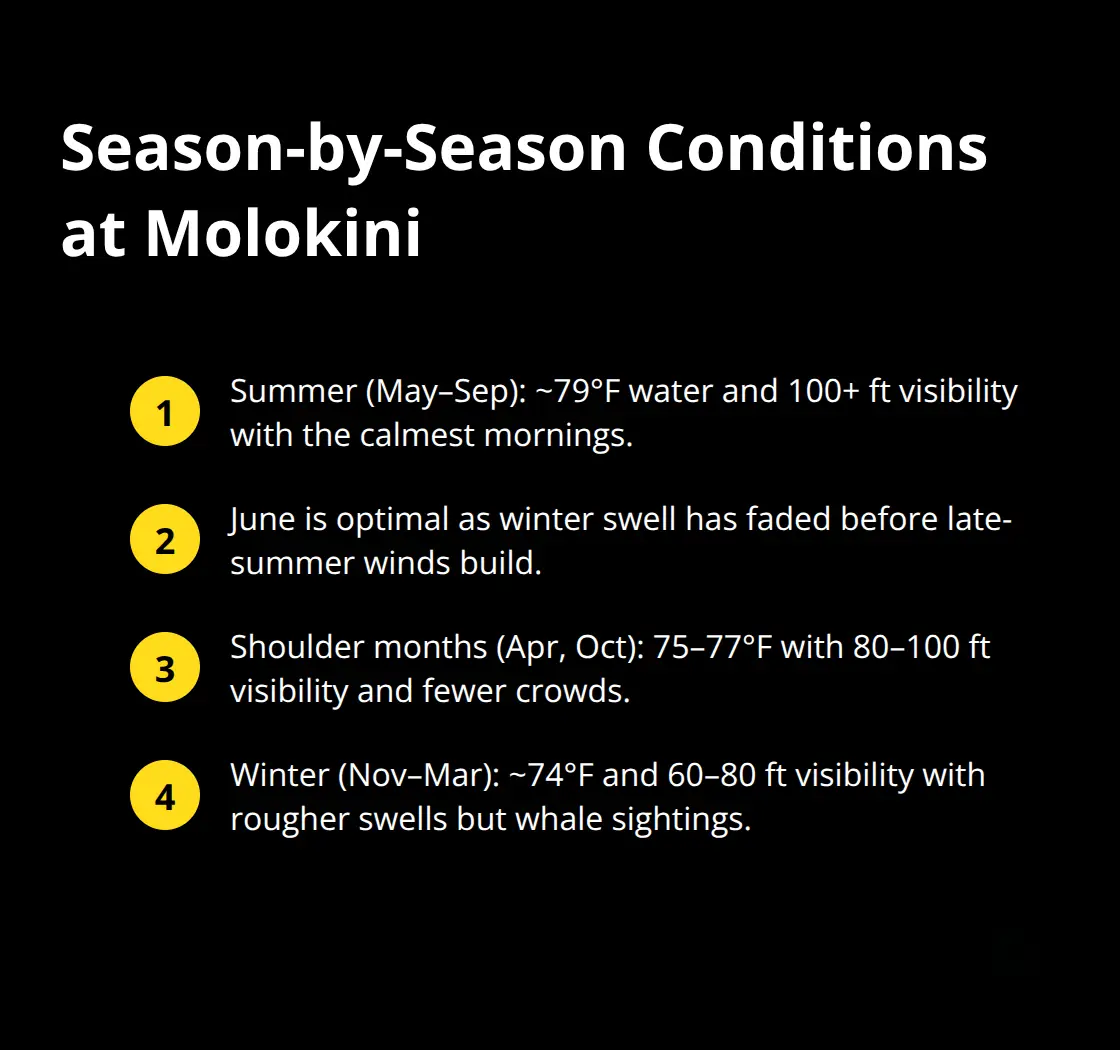
Summer runs from May through September and offers the most reliable conditions at Molokini. Trade winds settle during these months, and water temperatures climb to around 79 degrees Fahrenheit. Visibility regularly hits 100 feet or more, and the crater’s protected interior stays remarkably calm even when the open ocean gets choppy. The smoothest mornings occur during summer, especially in June and July when wind patterns are most predictable. June stands out as the optimal month because the winter swell has fully dissipated without the late-summer wind patterns ramping up yet. The trade-off is significant-summer brings peak tourism, so expect more boats at the crater and busier beaches.
Winter Brings Whales but Rougher Conditions
Winter months from November through March transform the experience entirely. Water temperatures drop to around 74 degrees, and visibility ranges from 60 to 80 feet on good days. Rougher swells make the experience less comfortable for nervous snorkelers.
However, this season rewards you with humpback whales migrating through Hawaiian waters-you’ll spot them breaching and singing from the boat between December and March. If whale encounters matter more to you than perfect visibility, winter delivers that trade-off clearly.
Shoulder Seasons Offer the Sweet Spot
Shoulder seasons in April and October present the smarter choice for most travelers. April offers warming water at 75 degrees, improving visibility as winter swells fade. October delivers similar benefits without the summer crowds. You’ll see 80 to 100 feet of visibility on typical mornings, and the reef activity peaks as water temperatures stabilize around 77 degrees. Wind patterns shift more frequently during shoulder seasons, meaning some days excel while others disappoint. Morning tours nearly guarantee you’ll catch calmer conditions before afternoon winds pick up, making timing your departure critical to your experience.
Weather Patterns and Water Conditions
Early Morning Departures Guarantee the Clearest Water
Timing your Molokini visit down to the hour matters far more than picking the right month. Early morning departures consistently deliver the clearest water and flattest seas at Molokini Crater. Wind speeds remain lowest before 10 AM, and water clarity peaks when sunlight hits the water straight on rather than at steep afternoon angles. Most mornings between 7 and 9 AM offer visibility exceeding 80 feet, while that same location at 2 PM might drop to 40 feet due to afternoon trade winds churning up sediment. The difference isn’t subtle-it’s the gap between seeing individual coral polyps and squinting at blurry shapes. Late departures sacrifice visibility for convenience, and that trade-off rarely feels worth it once you’re underwater.
Wind Direction Controls Your Visibility
Wind direction acts as your second critical variable. Northeast and east winds push water toward the crater’s protected side, actually improving conditions inside the bowl. Southwest winds do the opposite, funneling rough water straight into your snorkel spot and reducing visibility to 30-50 feet on bad days. You can check wind forecasts through the National Weather Service Hawaii office, which provides hourly updates for Maui County. Morning tours almost always beat afternoon conditions because wind speed doubles or triples as the day progresses-a 5-knot morning breeze becomes a 15-knot afternoon gust that destroys visibility and comfort.
Moon Phases and Tides Concentrate Marine Life
Tidal movements and moon phases influence reef activity in ways most snorkelers overlook. The strongest tidal flows occur during new and full moons when lunar gravity pulls hardest on Earth’s oceans, and these periods typically concentrate fish and sea turtles in predictable feeding zones around Molokini. You’ll see more marine life during these peak tidal windows, though visibility doesn’t necessarily improve. Spring tides during new moons create the most dramatic tidal swings, which stir up nutrients and attract larger pelagic fish. Neap tides during quarter moons produce gentler water movement, calmer conditions, and slightly better visibility for nervous snorkelers. The lunar calendar runs on a 29-day cycle, so planning your trip around new moon dates gives you a genuine advantage for reef encounters.
Water temperature fluctuations tied to tidal patterns also shift where sea turtles congregate-warmer afternoon water pushes them into shallower zones, making them easier to spot if afternoon roughness doesn’t bother you.
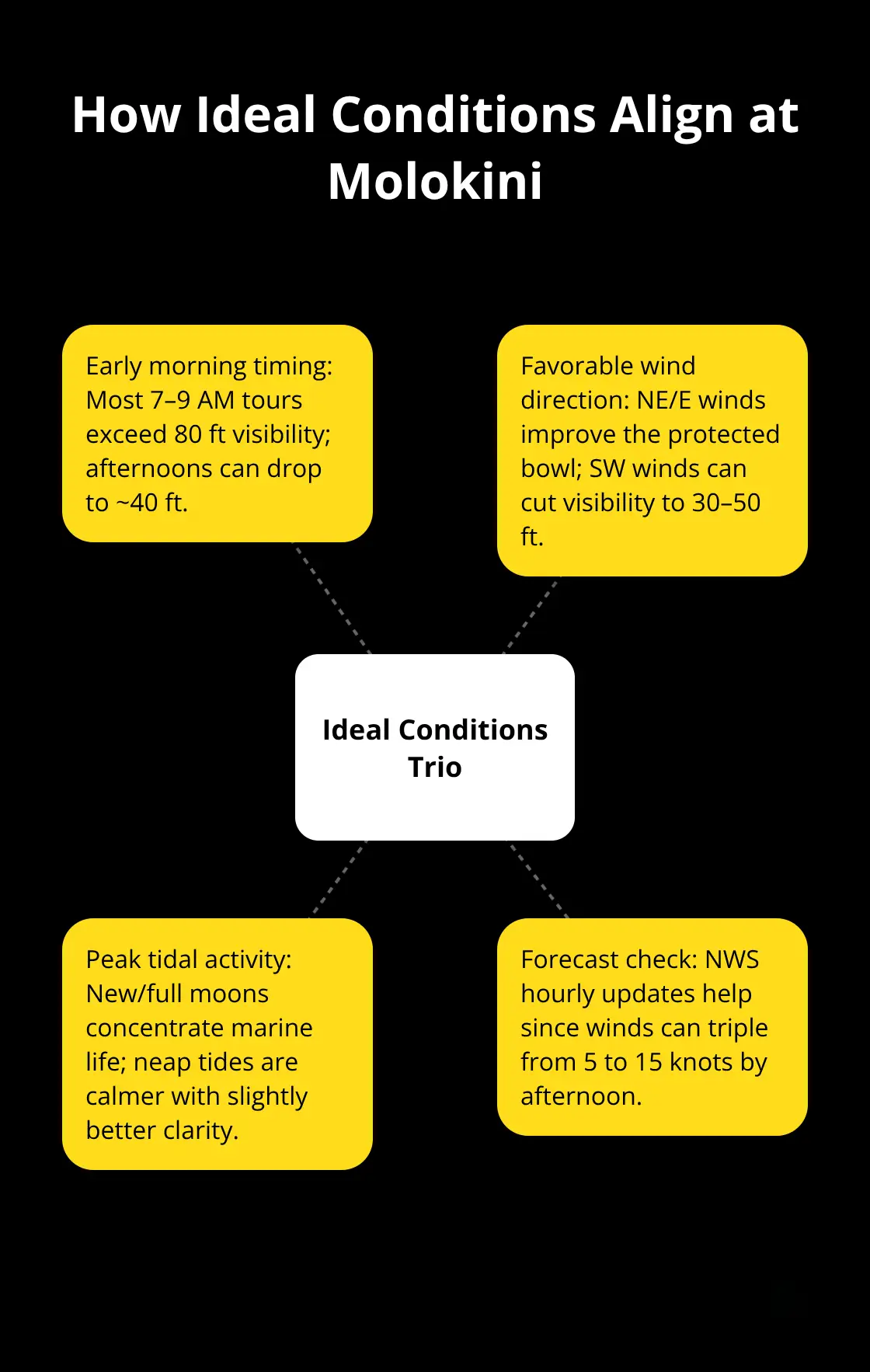
None of these factors work in isolation; the best snorkel days happen when early morning timing, favorable wind direction, and peak tidal activity align simultaneously (which occurs roughly 8-10 days per month depending on season). Understanding how these three elements interact transforms your ability to predict what you’ll actually experience underwater, rather than hoping conditions cooperate on the day you happen to visit.
What You’ll Actually See and Experience Underwater
Visibility Determines Your Underwater Experience
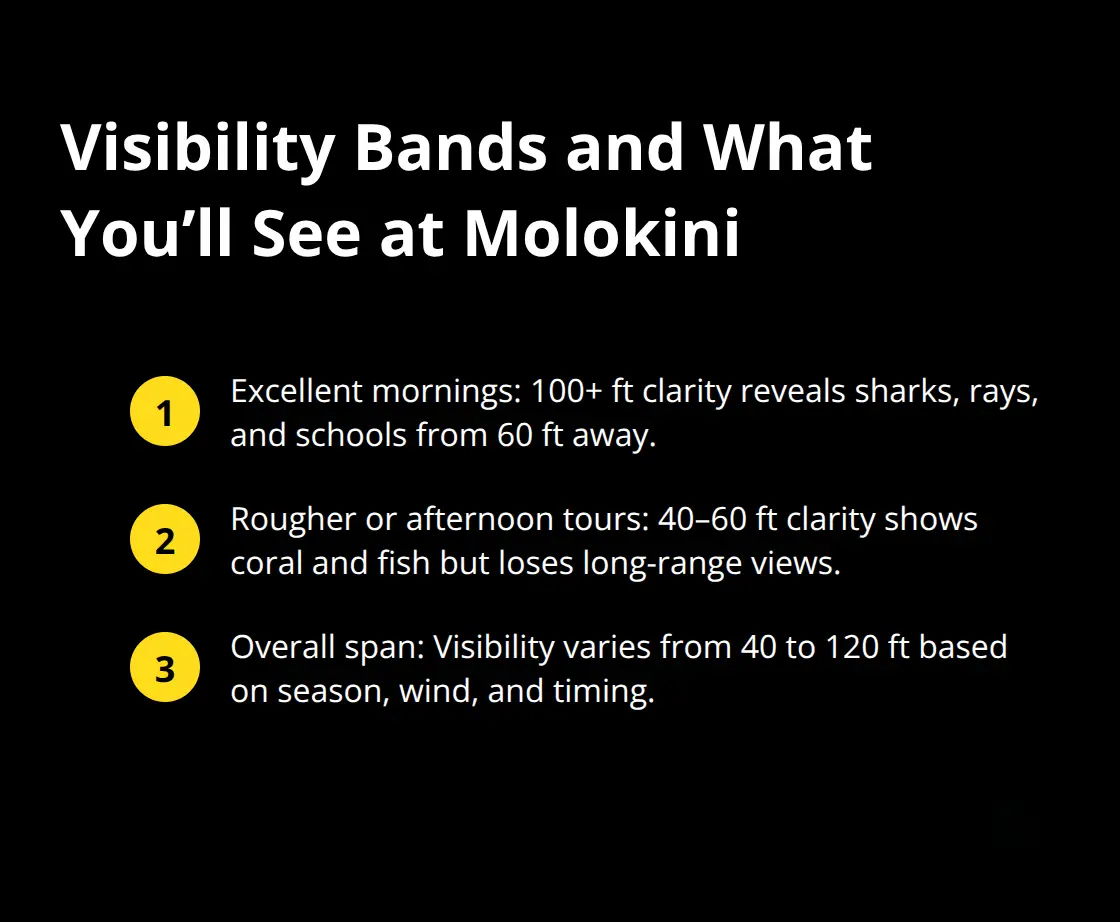
Visibility at Molokini ranges from 40 to 120 feet depending on conditions, and that spread matters enormously for what you’ll encounter. On excellent mornings during summer months, you’ll see 100-plus feet clearly enough to spot reef sharks, eagle rays, and schools of yellow tang from 60 feet away. On rougher winter days or afternoon tours, visibility drops to 40-60 feet, which still shows you plenty of coral and fish but eliminates the dramatic long-distance views.
Most visitors underestimate how much this affects the experience-a 40-foot visibility day feels disappointingly murky compared to a 100-foot day at the same location. The crater’s unique geology concentrates marine life in predictable zones, so even mediocre visibility days deliver sea turtle sightings and reef encounters.
Water Temperature Affects Your Comfort Level
Water temperature shifts from 79 degrees in summer to 74 degrees in winter, which matters more for comfort than for what you see. Water conducts heat away from your body roughly 25 times faster than air does, so pack a rash guard or light wetsuit during shoulder seasons when water sits at 75-77 degrees, even though the air feels warm. A 3mm wetsuit becomes essential during winter months because that temperature difference becomes noticeable after 30-45 minutes in the water, and many snorkelers underestimate how quickly cold water saps your energy and enjoyment.
Maximize Your Reef Encounters
Arrive early enough to acclimate before the main group enters the water, which gives you first access to the best coral heads and calmer zones inside the crater. Bring a waterproof camera or GoPro because the reef colors intensify dramatically in clear summer water, and you’ll want documentation of the green sea turtles that congregate along the crater’s eastern wall. Try morning tours without exception-the difference between 7 AM and 1 PM visibility at Molokini isn’t subtle, it’s the difference between a memorable experience and frustration. Afternoon wind patterns create surge that stirs up sand and sediment, reducing visibility by 40-50 feet compared to morning conditions at the identical location.
Final Thoughts
Summer months deliver the most reliable molokini snorkeling best conditions, with 100-foot visibility and calm waters that make the experience effortless. June and July stand out as peak months when trade winds settle and water temperatures reach 79 degrees. If you’re flexible with timing, these months guarantee the clearest underwater views and the smoothest boat rides, though you’ll share the crater with more visitors.
Winter and shoulder seasons shouldn’t discourage you. Winter brings humpback whales and still offers 60-80 feet of visibility on good days, rewarding those who prioritize marine encounters over perfect clarity. April and October provide the sweet spot between excellent conditions and manageable crowds, with 80-100 feet of visibility and fewer boats competing for space.
The real secret isn’t picking the perfect month-it’s committing to early morning departures. A 7 AM tour in October beats a 1 PM tour in June because wind speeds and afternoon sediment churn destroy visibility regardless of season. Book your molokini adventure with Maui Snorkel Charters and let our experience guide you toward the clearest waters and best reef encounters Maui has to offer.
Call 808-270-8776