
Maui Island snorkeling offers some of the world’s most vibrant underwater ecosystems. Crystal-clear waters reveal colorful coral reefs, tropical fish, and gentle sea turtles in their natural habitat.
Whether you’re a seasoned snorkeler or exploring the ocean for the first time, Maui delivers unforgettable experiences. This guide covers the best spots, what to expect, and how to plan your perfect snorkeling adventure.
Where to Snorkel on Maui
Molokini Crater: Unmatched Underwater Clarity
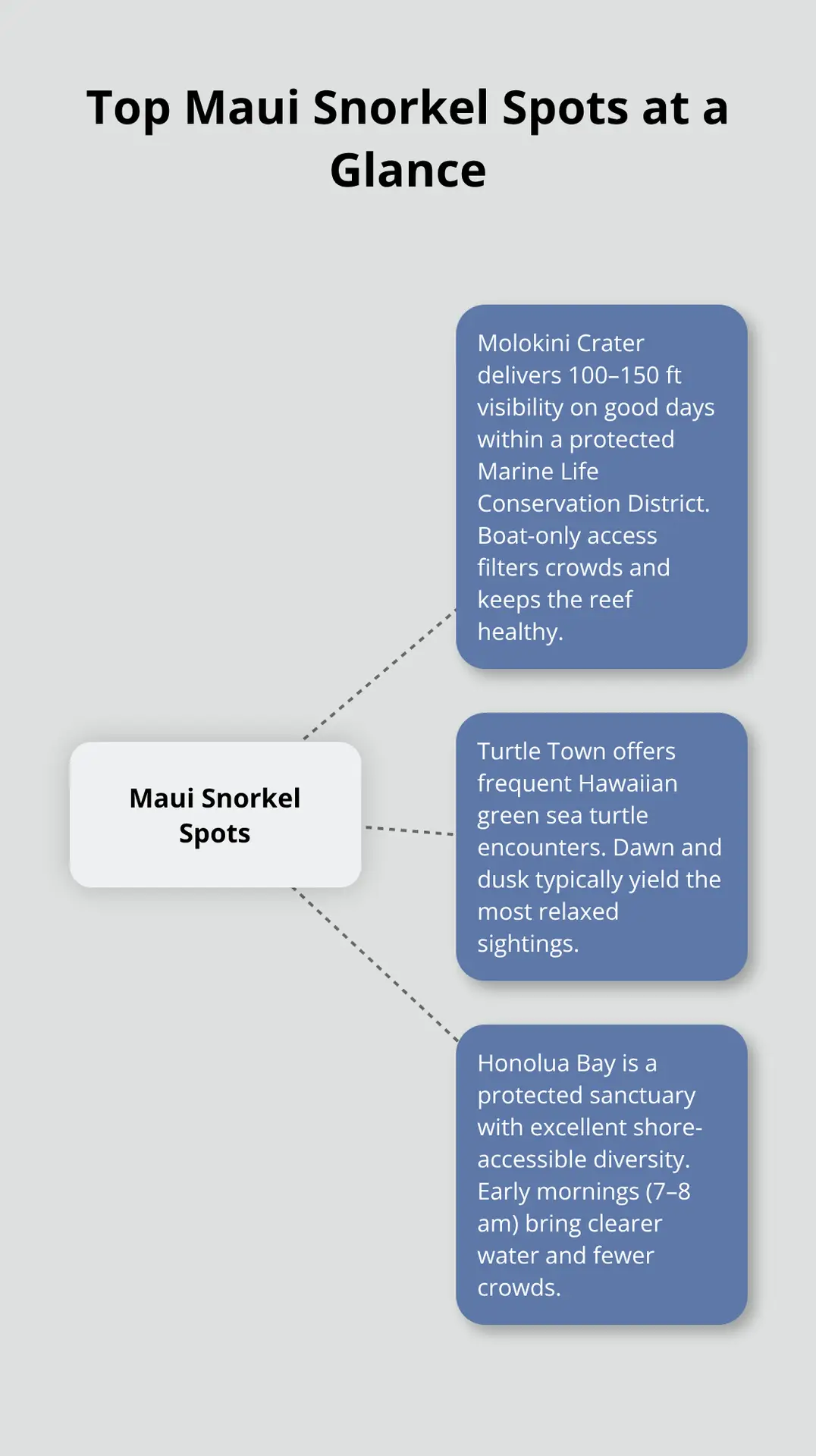
Molokini Crater dominates Maui’s snorkeling landscape because visibility often exceeds 100 to 150 feet on good days-a level most shore-based spots cannot match. The crater sits within a designated Marine Life Conservation District, which keeps the reef healthier and maintains robust fish populations. A boat trip is required to reach it, and this natural filter reduces casual swimmers and manages crowds far better than beach access allows. Maui Snorkel Charters operates fast 15-minute runs from Kihei to Molokini, so you spend maximum time in the water rather than traveling. Once you descend, the sheltered crater environment traps clear water, and you encounter dense schools of yellow tang, chubs, and parrotfish against pristine coral formations (some sections estimated at 500 years old).
Turtle Town: Encounters with Hawaiian Green Sea Turtles
Turtle Town follows as the natural second stop on most Molokini tours, and the name delivers exactly what you expect. Hawaiian green sea turtles congregate around coral towers here, and you will encounter multiple individuals in a single session if conditions align. Timing matters significantly: dawn and dusk produce the most turtle sightings because these animals feed during low-light periods. Most commercial tours hit Turtle Town in afternoon slots, which means you compete with other boats for viewing opportunities. The critical insight is that early morning visits reward patient snorkelers with more frequent and relaxed turtle interactions.
Honolua Bay: Diversity and Coral Health
Honolua Bay operates as a protected marine sanctuary on Maui’s northwest coast, and it outperforms other shore-accessible spots for diversity and coral health. The bay’s calm conditions on clear days reveal peacock groupers, butterflyfish, and occasional manta rays that patrol the reef edge. Entry requires caution since rocks dominate the shoreline, but this natural barrier keeps casual swimmers away and preserves the ecosystem. Morning visits between 7 and 8 am yield superior visibility and fewer crowds than afternoon sessions (when swells typically build and water clarity drops). The rocky entry point separates serious snorkelers from casual beach visitors, creating a more pristine experience overall.
Your choice among these three destinations depends on your skill level, available time, and preference for boat access versus shore entry. Each location offers distinct advantages, and understanding these differences helps you select the experience that matches your goals and comfort level.
What Snorkeling Tours Actually Deliver
Small-Group Advantage and Personalized Attention
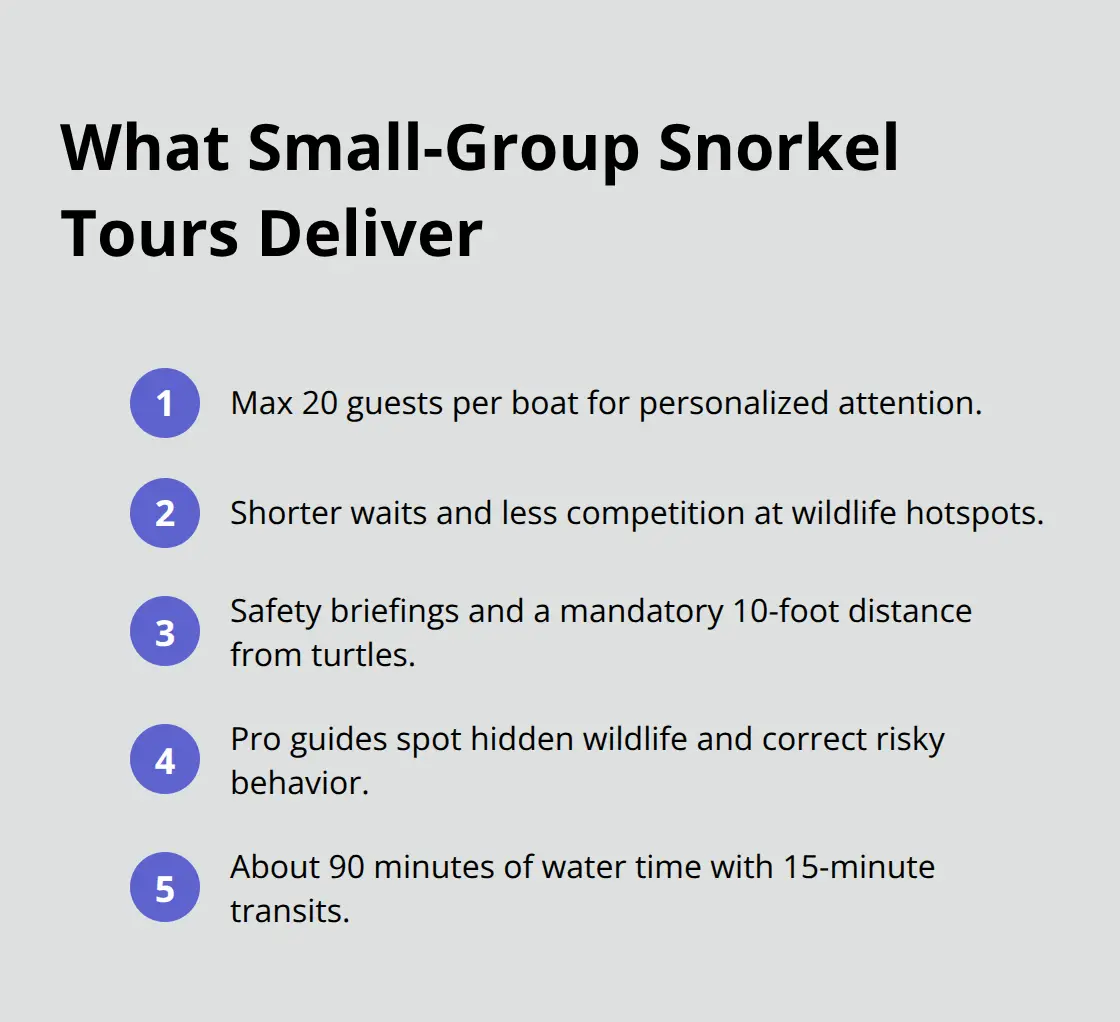
Small-group tours limit participants to a maximum of 20 people per boat, which directly impacts your experience quality compared to larger commercial operations that pack 80 or more swimmers onto a single vessel. Fewer participants mean shorter waits for entry, less competition for viewing spots around coral towers and turtle habitats, and actual one-on-one instruction from guides who assess your skill level and adjust their teaching accordingly. The crew conducts safety briefings before water entry, covering current awareness, proper fin technique, and critical distance protocols around marine life-especially the mandatory 10-foot minimum distance from Hawaiian green sea turtles. Professional guides position themselves strategically to spot wildlife you would miss alone, pointing out camouflaged octopuses wedged in reef crevices and identifying fish species in real time. They also enforce reef protection rules without hesitation, stopping swimmers who drift too close to coral and correcting hand placement that risks damage to fragile polyps.
Efficient Routes and Included Amenities
Tours depart from Kihei with 15-minute runs to Molokini Crater, meaning you spend roughly 90 minutes in the water rather than losing two hours to boat transit. Included amenities make a tangible difference: Hawaiian coffee and banana bread arrive before departure, mid-tour snacks sustain energy levels during extended snorkeling sessions, and professional photographers capture underwater moments you cannot document yourself, with images provided free aboard the boat. Gear rental is included, eliminating the hassle of securing masks and fins separately, though serious snorkelers often prefer bringing personal equipment that fits their face and foot size precisely. Tours start at $99 per person, positioning them competitively against shore-based alternatives that require separate gear rental, parking fees, and transportation costs that accumulate quickly.
Expert Navigation and Adaptive Route Selection
The actual value proposition centers on guided reef navigation and wildlife encounter probability rather than generic water time. Experienced guides know seasonal patterns-when spinner dolphins visit, where manta rays typically patrol cleaning stations, and which coral sections host the densest fish populations on any given day. They select routes based on morning weather reports and real-time ocean conditions, choosing between Molokini’s superior visibility and alternative South Maui locations when wind or swell compromises crater access. This flexibility means your investment adapts to actual conditions rather than locking you into a predetermined itinerary that might disappoint on rough-water days.
Safety Protocols and Risk Management
Safety protocols address rogue wave risks, current drift, and exhaustion management through buddy assignments and regular surface check-ins, reducing drowning incidents that occur when inexperienced swimmers venture beyond their competency zones. These structured safeguards transform snorkeling from a casual beach activity into a managed experience where trained professionals monitor conditions and intervene before problems escalate. Understanding what professional tours provide helps you evaluate whether guided experiences match your skill level and comfort needs-or whether you prefer independent shore snorkeling at locations like Honolua Bay or Kapalua Beach.
Planning Your Maui Snorkeling Trip
Selecting the Right Tour Operator
Selecting the right operator determines whether you spend your money on a crowded cattle-call boat or a genuinely curated experience. Small-group tours capped at 20 participants per vessel directly prevent the chaos of larger operators that pack 80 swimmers onto a single boat. This constraint matters because you actually interact with guides rather than floating anonymously in a crowd. Fast 15-minute runs from Kihei to Molokini mean you maximize water time instead of wasting hours on transit. Tours start at $99 and include gear, breakfast, snacks, and underwater photography, eliminating hidden costs that pile up when you rent equipment separately or pay additional fees for amenities. When evaluating any operator, verify their Marine Life Conservation District protocols and ask how many guides staff each trip-reputable companies maintain one guide per 10 swimmers, not one guide per 30. Private charters cost more upfront but deliver complete route flexibility and eliminate scheduling conflicts if your vacation dates are fixed. If you travel solo or with a partner, a scheduled small-group tour offers better value than a private charter that requires splitting costs with a full boat.
Weather Patterns and Seasonal Timing
Weather patterns on Maui shift dramatically between seasons, and you maximize visibility and comfort when you time your snorkeling around these cycles. Check the Snorkel Report for daily condition updates including current swells and wave size. Morning snorkeling between 7 and 8 am consistently outperforms afternoon sessions because afternoon swells build and reduce visibility-this isn’t theory but observable fact across every major Maui snorkel site. Late April sits at the extreme tail of humpback whale season, with sightings now rare, while water temperatures hover around 75 degrees Fahrenheit, requiring a light wetsuit or rash guard for extended sessions. Winter months deliver the roughest conditions but also the most whale activity, making December through March ideal if marine mammal encounters drive your decision.
Physical and Mental Preparation
You should prepare physically by swimming laps in a pool for two weeks before your trip-endurance matters far more than strength, and fatigue causes poor decision-making in the water. Mentally, you must accept that snorkeling requires surrendering control to ocean conditions; flexibility beats rigid itineraries when swells spike or wind shifts. Start with shore-based snorkeling at Kapalua Bay or Napili Bay if you feel nervous, building confidence before committing to a boat tour. Reef-safe sunscreen is non-negotiable in Hawaii, and you should check daily conditions the night before your tour to reschedule if swells or wind look marginal.
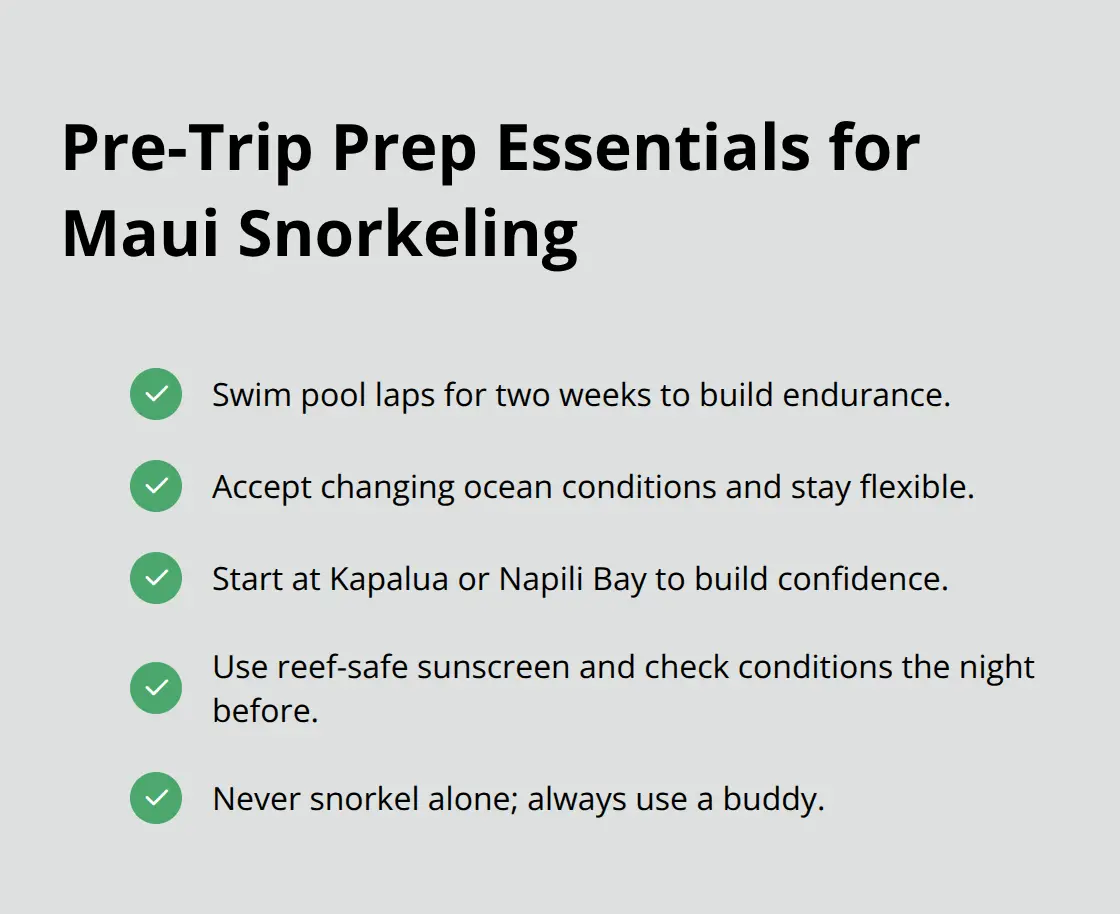
Never snorkel alone-your buddy represents your lifeline if currents push you beyond your planned zone or exhaustion sets in earlier than expected.
Final Thoughts
Maui Island snorkeling transforms your vacation into an unforgettable underwater adventure when you match your expectations to realistic ocean conditions. Morning sessions between 7 and 8 am consistently deliver superior visibility and calmer water compared to afternoon outings, while daily condition reports help you adapt your plans if swells or wind shift unexpectedly. Small-group tours capped at 20 participants provide expert guidance and personalized attention that dramatically increase your wildlife encounter probability, though confident swimmers can also succeed with independent shore snorkeling at protected locations like Honolua Bay or Kapalua Beach.
Your physical preparation directly impacts your performance and safety in the water. Swimming pool laps for two weeks before arrival builds the endurance required for extended snorkeling sessions, while honest assessment of your swimming ability prevents the dangerous situations that occur when inexperienced snorkelers venture beyond their competency zones. Reef-safe sunscreen, proper buddy assignments, and mental flexibility to adapt when conditions shift unexpectedly all contribute to a successful experience.
Book your Maui snorkeling adventure by evaluating operator reviews, verifying guide-to-swimmer ratios, and confirming that included amenities match your needs. Whether you select a scheduled small-group tour or invest in a private charter for complete route flexibility, commit to your decision and prepare accordingly. The underwater ecosystems awaiting you on Maui reward those who approach snorkeling with respect for marine life and genuine enthusiasm for exploring one of Hawaii’s most accessible natural wonders.