
Turtle Town is one of Maui’s most magical snorkeling spots, but seeing these gentle creatures safely requires the right knowledge. We at Maui Snorkel Charters have guided thousands of visitors through these waters, and we’ve learned exactly what separates an amazing experience from a disappointing one.
This guide gives you practical turtle town encounter tips that protect both you and the animals while maximizing your chances of unforgettable sightings.
What to Know Before Visiting Turtle Town
Peak Season and Best Times to Visit
Timing your Turtle Town visit matters far more than most visitors realize. The difference between peak and off-peak conditions shows up immediately in water clarity and turtle activity. The best window runs from May through September, when water temperatures hover around 79-81 degrees Fahrenheit and visibility often exceeds 100 feet. During these months, the ocean stays calmer, which means you’ll actually see the turtles instead of fighting choppy conditions. Winter months bring rougher seas and reduced visibility, cutting your sighting odds significantly.
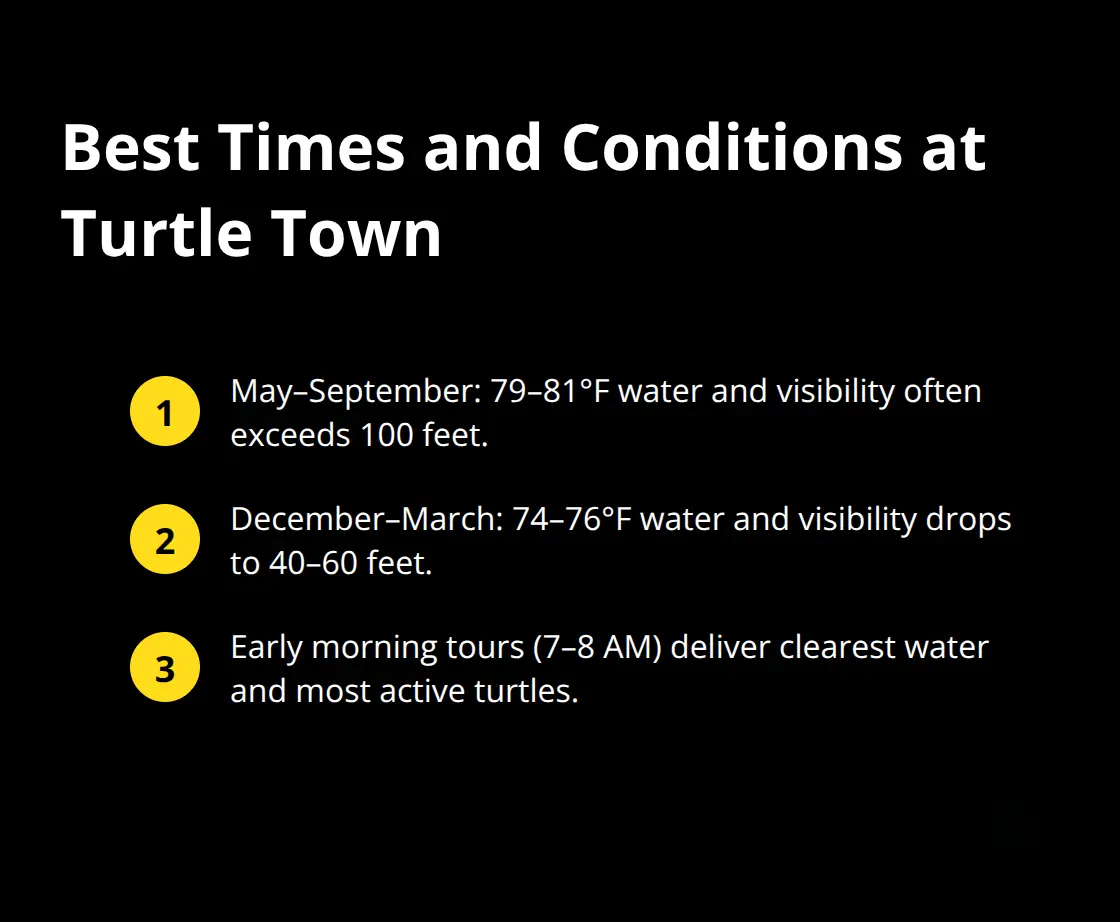
If you visit between December and March, expect water temperatures around 74-76 degrees and visibility dropping to 40-60 feet.
Early mornings always beat afternoons regardless of season. The sun angle in morning light makes spotting turtles easier because you can see deeper into the water column without surface glare interfering with your view. Try scheduling tours between 7 and 8 AM if possible-this timing gives you the clearest water and the most active turtles.
Essential Gear for Comfort and Safety
Bringing the right equipment transforms your experience from uncomfortable to genuinely enjoyable. A quality wetsuit rated for 2-3mm thickness protects you from the sun and keeps you warmer during longer snorkel sessions, which directly improves your ability to stay in the water and spot more turtles. Anti-fog solution for your mask matters more than people think (fogging masks waste precious minutes while you surface to clear them). Reef-safe sunscreen with at least SPF 30 prevents painful burns that ruin your trip and protects the reef ecosystem.
Water shoes with good grip help you navigate rocky entries safely, and a snorkel vest provides flotation so you can relax and focus on watching for turtles rather than treading water constantly. A fitted mask ensures comfort and better visibility since rental masks rarely fit perfectly (this single factor improves your sighting success considerably). With proper gear in place, you’re ready to learn the safety protocols that protect both you and the animals you’ll encounter.
Safety Guidelines for Turtle Encounters
Maintain Proper Distance From Turtles
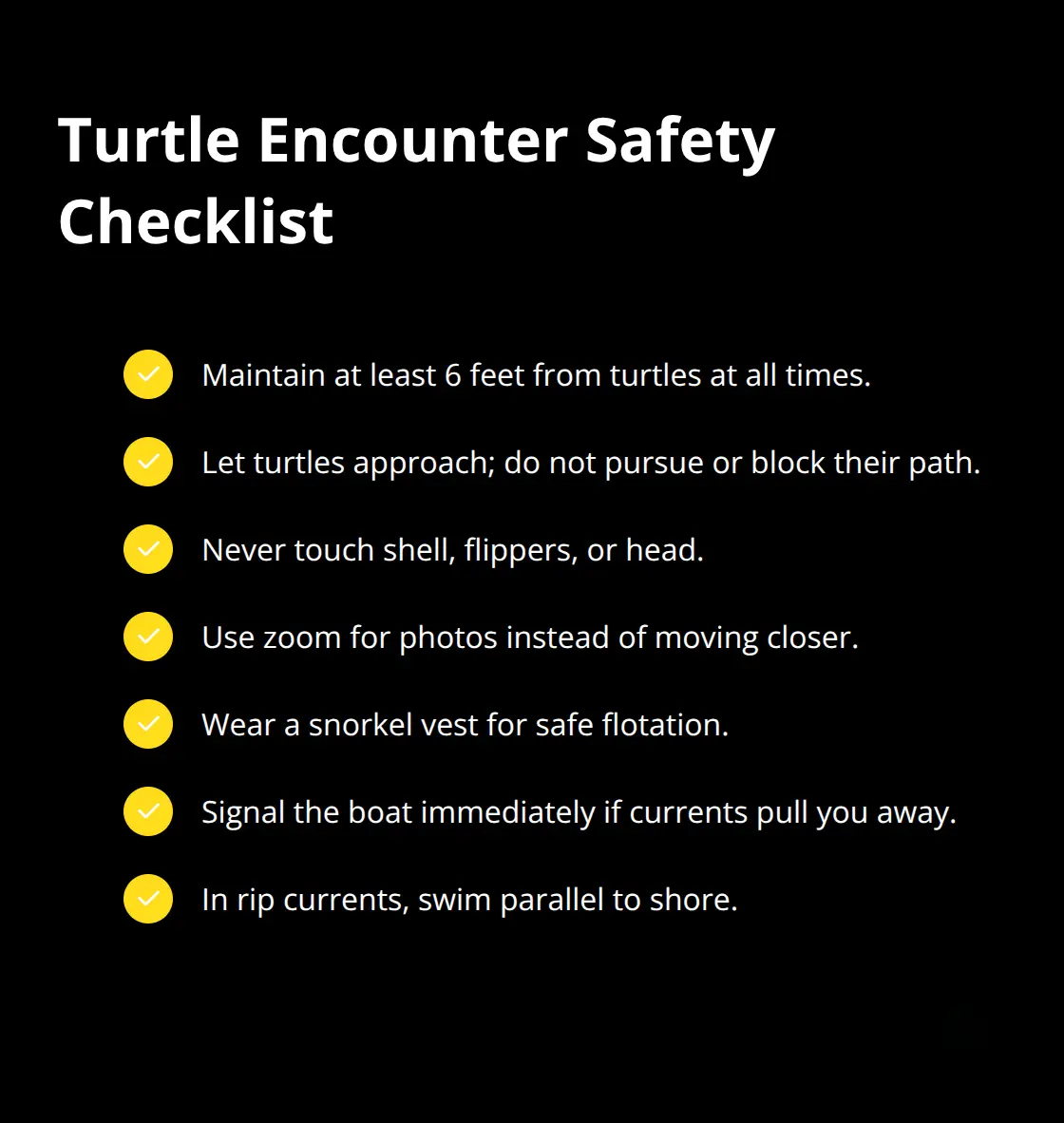
Hawaii’s Marine Turtle Protection Act mandates a minimum 6-foot distance from any turtle you encounter, and violations carry fines up to $5,000. This rule exists because turtles experience stress when snorkelers approach too closely, which forces them to abandon feeding areas or nesting sites. Position yourself so the turtle moves toward you naturally rather than you pursuing it. If a turtle swims away, that signals you to stop advancing immediately. Never circle around to cut off its escape route, and absolutely never touch the shell, flippers, or head under any circumstances.
Touching disrupts the protective mucus layer that covers turtles and causes infections that can prove fatal. The animal’s safety depends entirely on your restraint and respect for its space.
Avoid Chasing or Disturbing Wildlife
Chasing turtles stresses them and ruins your own experience because a frightened animal moves too quickly to observe properly. Instead, position yourself quietly and let the turtle’s natural curiosity work in your favor. Turtles often approach stationary snorkelers, creating far better viewing opportunities than any chase ever could. Stay alert to the animal’s body language-if it tenses or accelerates away, you’ve already pushed too close.
Photography tempts many visitors to creep closer than they should, but the best shots actually come from maintaining distance and using zoom features on your camera or phone. Respect the animal’s boundaries, and you’ll capture better images while keeping the turtle safe.
Navigate Ocean Currents Safely
Ocean currents at Turtle Town shift dramatically depending on tide and season. Many snorkelers underestimate how quickly currents can sweep them away from their group. Wear your snorkel vest for flotation even if you’re a strong swimmer-this keeps you at the surface and prevents exhaustion from fighting water movement.
Stay aware of your position relative to the boat at all times, and signal immediately if you feel the current pulling you away rather than attempting to swim back independently. Rip currents in the area require swimming parallel to shore rather than fighting directly against them (a technique most casual snorkelers don’t know). Sharp coral and rocky outcrops lurk beneath the surface, so water shoes with solid grip prevent cuts that can lead to serious infections.
Prepare for Changing Conditions
Check the daily marine forecast before your tour, as conditions change rapidly throughout the day. Water shoes with good grip protect your feet from sharp surfaces and give you confidence navigating rocky entries. Trust your guide’s judgment completely-they read these waters daily and know exactly when conditions are unsafe for entry. Your guide’s experience matters far more than any online forecast because local knowledge reveals patterns that weather reports miss.
With these safety protocols in place, you’re ready to learn exactly where turtles congregate and how to spot them effectively in the water.
Finding and Photographing Turtles at Turtle Town
Where Turtles Congregate
Turtles at Turtle Town congregate in specific zones based on food availability and water temperature, and knowing these patterns dramatically improves your sighting odds. The sandy areas between 25-40 feet deep hold the highest concentration because seagrass beds in these zones provide consistent feeding grounds. Turtles typically visit the same feeding spots during morning hours between 7 and 9 AM, which explains why early tours outperform afternoon departures significantly. Position yourself along the reef edges rather than in open water, since turtles use reef structures as navigation markers while moving between feeding areas. The western side of Turtle Town near the rocky outcrops sees more turtle activity than the eastern sections, particularly during calm conditions.
Spotting Turtles Effectively
Watch for the telltale signs of feeding turtles: slow, deliberate movements close to the bottom and frequent pauses as they browse on seagrass. Most visitors scan the water surface looking downward, but you’ll spot turtles faster by maintaining a horizontal gaze at mid-water depth where they often swim. Turtles appear darker than the surrounding sand, creating a distinct silhouette against lighter backgrounds. Your eyes adjust to spotting them within 10-15 minutes of focused observation, so resist the urge to dart around constantly. Stay in one productive area for at least 8-10 minutes rather than swimming from spot to spot, since movement itself frightens turtles away.
Capturing Quality Photographs
Photography at Turtle Town succeeds when you abandon the instinct to chase better angles and instead let the turtle’s movement work for you. Zoom features on modern phones capture sharp images from 10-15 feet away, which keeps you well beyond the legal 6-foot distance while still producing frame-filling shots. Shoot with your camera settings favoring fast shutter speeds to compensate for water movement and your own floating position. The morning light between 7 and 9 AM produces the clearest images because water clarity peaks during these hours and overhead sun creates minimal backscatter.
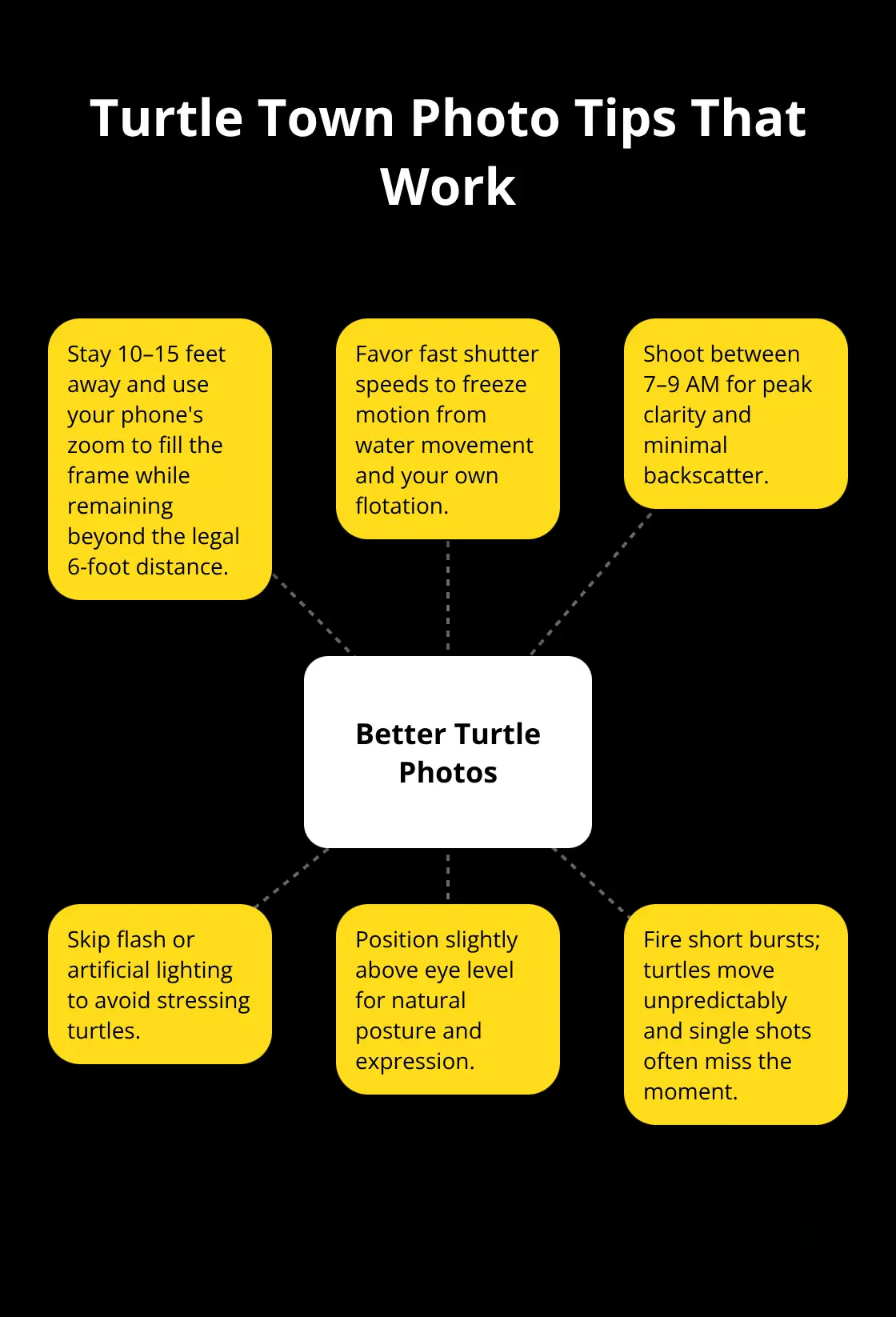
Avoid using flash or artificial lighting since bright bursts stress turtles and disrupt their natural behavior.
Position yourself slightly above the turtle’s eye level rather than directly overhead, as this angle captures more natural posture and expression. Take multiple shots in quick succession since turtles move unpredictably and most frames will miss the moment you want. The best photographs actually come from stationary positioning where turtles approach you out of curiosity rather than you pursuing them for that perfect shot. Patient observers who let turtles come to them (rather than chasing every opportunity) consistently capture superior images compared to aggressive photographers.
Final Thoughts
Your Turtle Town encounter tips succeed when you combine proper preparation with genuine respect for the animals you’re visiting. Safety guidelines aren’t restrictions that limit your experience-they’re the foundation that makes unforgettable sightings possible. Maintaining distance, avoiding pursuit, and understanding ocean conditions transform casual snorkeling into meaningful wildlife observation.
Professional guides make an enormous difference in what you actually see and experience. We at Maui Snorkel Charters have spent years reading these waters and understanding turtle behavior patterns that casual visitors never notice. Our guides know exactly where turtles congregate during specific times and how to position you for the best sightings while conditions shift throughout the day.
Maui Snorkel Charters offers small-group tours with experienced guides who maximize your turtle sightings while keeping everyone safe. Early morning departures, quality gear included, and guides who read conditions daily give you the best possible odds of the experience you’re hoping for. The combination of proper preparation, respectful behavior, and professional guidance creates the conditions for truly remarkable encounters with these gentle creatures.
Call 808-270-8776