
Imagine starting your Maui day with the ocean still quiet, the sky painted in soft pastels, and gentle sea turtles gliding right beside you. A Turtle Town morning snorkel offers exactly that-a peaceful, magical experience that feels like you’ve discovered something truly special.
The waters here are calm at dawn, the marine life is abundant, and you’ll have expert guides keeping everything safe and memorable. This is the kind of adventure that stays with you long after you leave the island.
Why Turtle Town Stands Out for Morning Snorkeling
The Reef Ecosystem and Turtle Habitat
Turtle Town sits along Maui’s southern coast near Maluaka Beach, where the reef ecosystem thrives because of consistent food sources and protected waters that draw Hawaiian green sea turtles year-round. The reef functions as a working cleaning station where honu actively feed on algae buildup on their shells, meaning you witness natural behavior rather than passive wildlife viewing. The shallow reef structure makes Turtle Town accessible for snorkelers aged 8 to 65 with basic swimming skills, and flotation devices are available if needed.
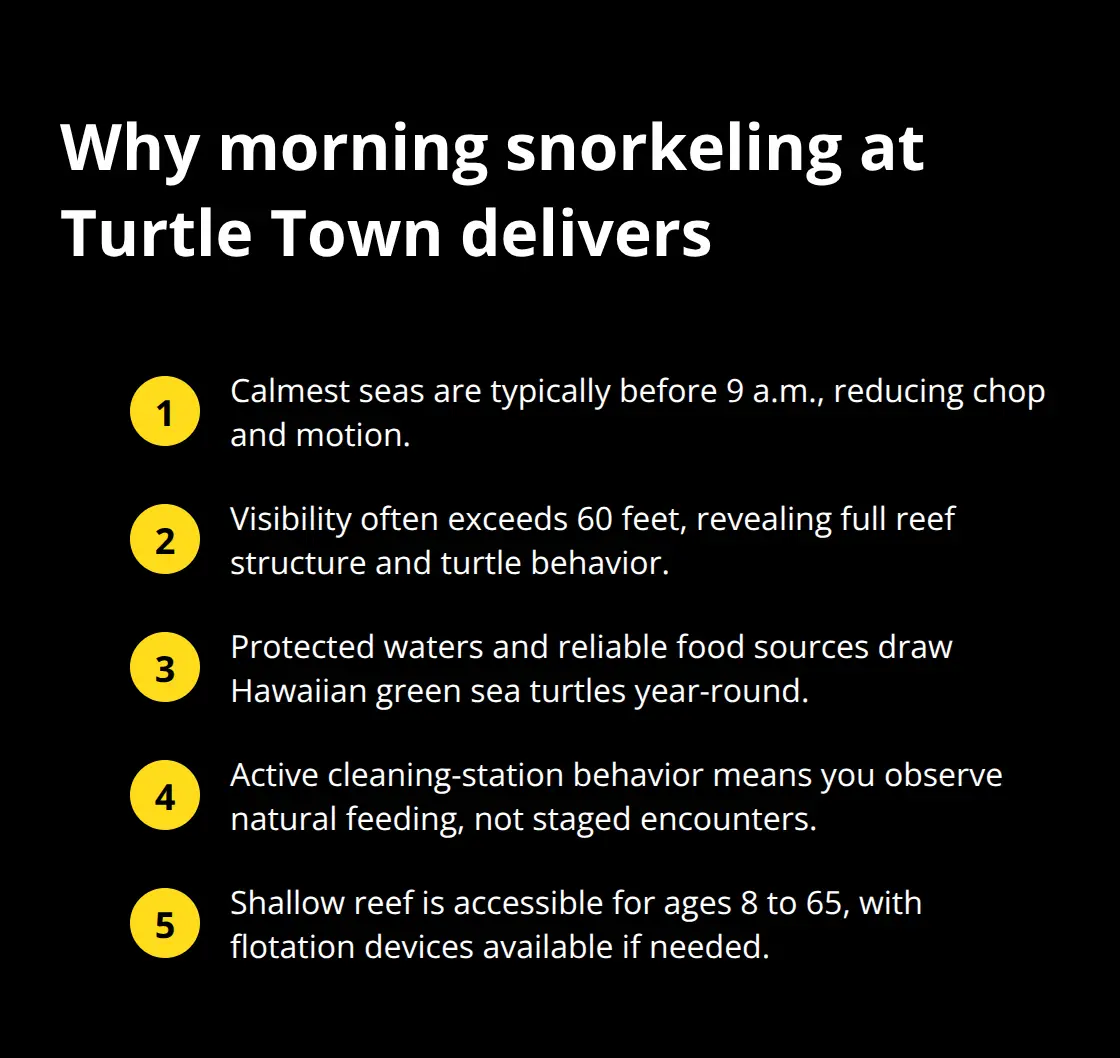
Morning conditions matter significantly-the water remains calmest before 9 a.m., visibility typically exceeds 60 feet, and wind patterns keep the reef undisturbed. Afternoon sessions face stronger winds and choppier conditions that reduce both comfort and turtle sightings, making the early departure genuinely better rather than a marketing claim.
Expert Guidance and Marine Biology Education
Professional guides stay with your group throughout the snorkel, providing real-time observations about reef health, fish behavior patterns, and how coral condition directly influences biodiversity across the site. You gain practical understanding of why this specific reef matters for conservation rather than just floating passively over fish. The 15-foot respectful distance requirement for turtles isn’t arbitrary-it allows you to observe natural feeding and movement without causing stress, and guides enforce this consistently to protect both wildlife and your safety. Expect insightful commentary on Hawaiian green sea turtle biology, reef ecosystem dynamics, and conservation challenges facing these species globally.
Safety, Cleanliness, and Accessibility
All gear gets sanitized and inspected after every tour, addressing a practical concern for shared equipment. The biological richness here stems from vibrant coral formations and diverse tropical fish species that create an ecosystem where turtles naturally congregate. This combination of reliable marine life encounters, calm dawn conditions, expert guidance, and accessible shallow waters creates the strongest foundation for a morning snorkel that actually delivers on its promise-and sets the stage for what you’ll experience once you step aboard and prepare for the water.
What You’ll Actually Experience in the Water
Entering the Water and Finding Your Rhythm
The moment you enter the water, your guide positions the group in a loose formation rather than a tight cluster-this spacing matters because it reduces stress on marine life and gives each snorkeler a genuine view without someone’s fin constantly in your peripheral vision. Your guide stays within arm’s reach throughout, pointing out specific reef sections where turtles feed and explaining exactly what you watch: a honu scraping algae from a rock, smaller fish darting through coral branches, or the subtle color shifts that indicate water depth changes. The first 10 to 15 minutes feel disorienting if you’re new to snorkeling, but guides anticipate this and check your mask seal, breathing rhythm, and comfort level before moving deeper. Visibility is best on calm mornings, meaning you see the entire reef structure below rather than murky shapes, and this clarity transforms the experience from swimming blindly to actually understanding the landscape.
Turtle Encounters and Natural Observation
The turtle encounters happen naturally because guides know exactly where honu congregate at specific times. You won’t chase turtles; instead, you drift slowly toward feeding areas where turtles are already occupied with breakfast, giving you genuine observation time without causing disturbance. Guides enforce the mandatory 15-foot distance consistently, which protects the animals and keeps you far enough away that sudden movements won’t startle them. Most guides carry underwater slates and write specific fish names or turtle facts during the snorkel, turning observation into active learning rather than passive floating. You’ll spot multiple turtles during a typical 45 to 60 minute session-the sweet spot that allows you to adjust to the environment without your neck cramping from mask pressure or your legs fatiguing.
Safety Protocols and Physical Comfort
Safety briefings before entry cover three critical points: how you signal your guide if you need assistance, why you never touch coral or turtles regardless of circumstances, and how you use flotation devices if your legs tire. The water in South Maui stays warm and pleasant year-round, so you won’t feel cold, but sun exposure intensifies at water level-reef-safe sunscreen with at least SPF 30 applied 15 minutes before entry prevents painful burns that ruin your week.
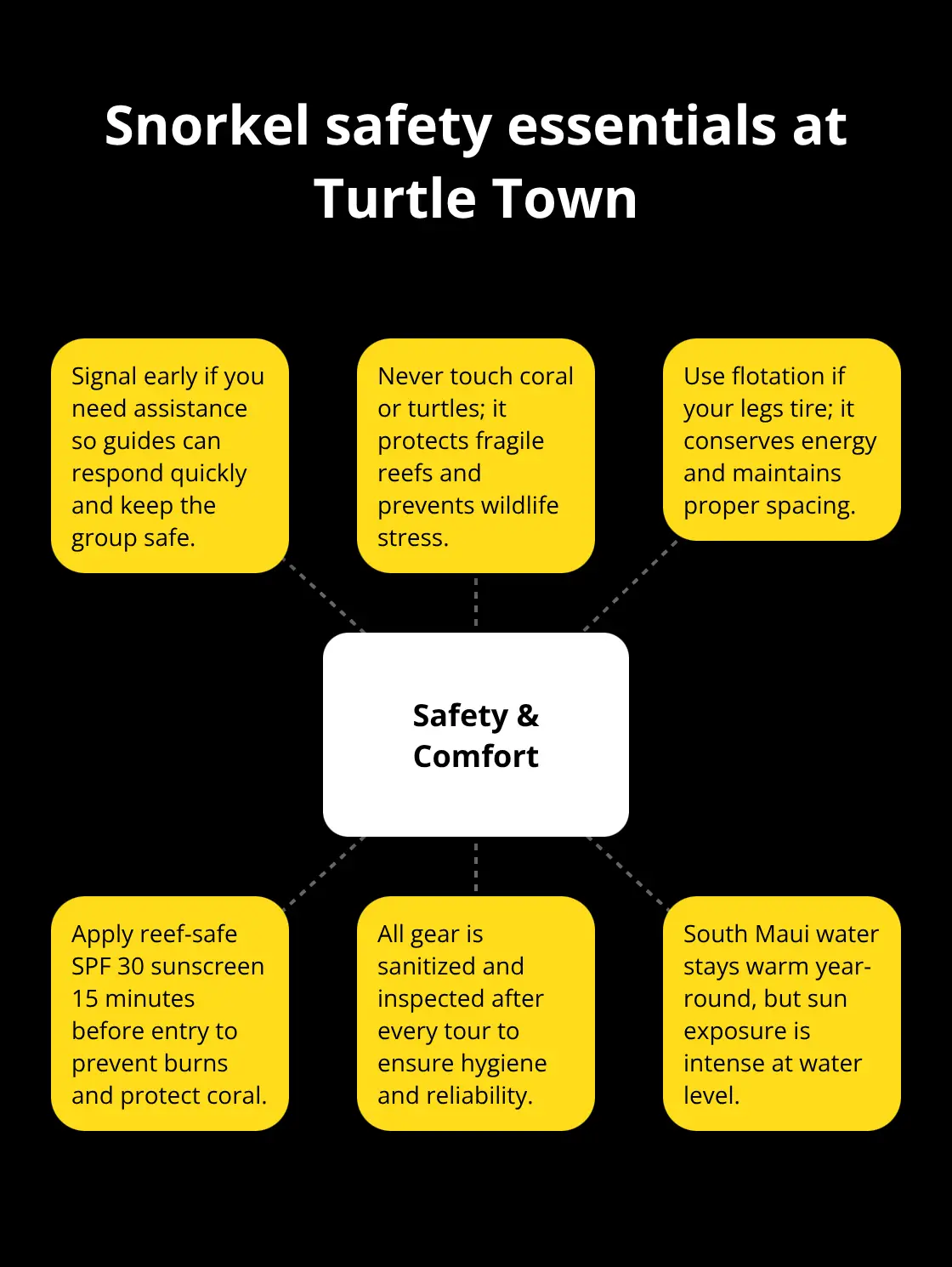
All gear gets sanitized and inspected after every tour, addressing a practical concern for shared equipment. These preparations ensure you stay comfortable and safe throughout your time in the water, setting you up to focus entirely on the marine life around you and the natural behaviors you witness firsthand.
Getting Ready for Your Turtle Town Morning
Hydration and Early Timing
Set your alarm for 5:30 a.m. if your tour departs at 7 a.m.-this gives you time to hydrate properly, eat a light breakfast, and avoid the rushed feeling that makes mornings stressful. Dehydration hits harder in salt water and sun exposure, so drink at least 16 ounces of water before boarding and bring a reusable bottle to refill on the boat. The early start matters because it positions you on the water when conditions are calmest and visibility peaks, so treat your wake-up time as non-negotiable rather than flexible.
What to Pack and Wear
Wear minimal clothing to the dock-board shorts or a swimsuit underneath, a lightweight shirt you’ll shed immediately, and flip-flops you can slip off quickly. Pack your valuables in a waterproof bag that stays on the boat; theft occurs at popular snorkel spots, so leave expensive jewelry, extra cash, and car keys in your hotel room instead.
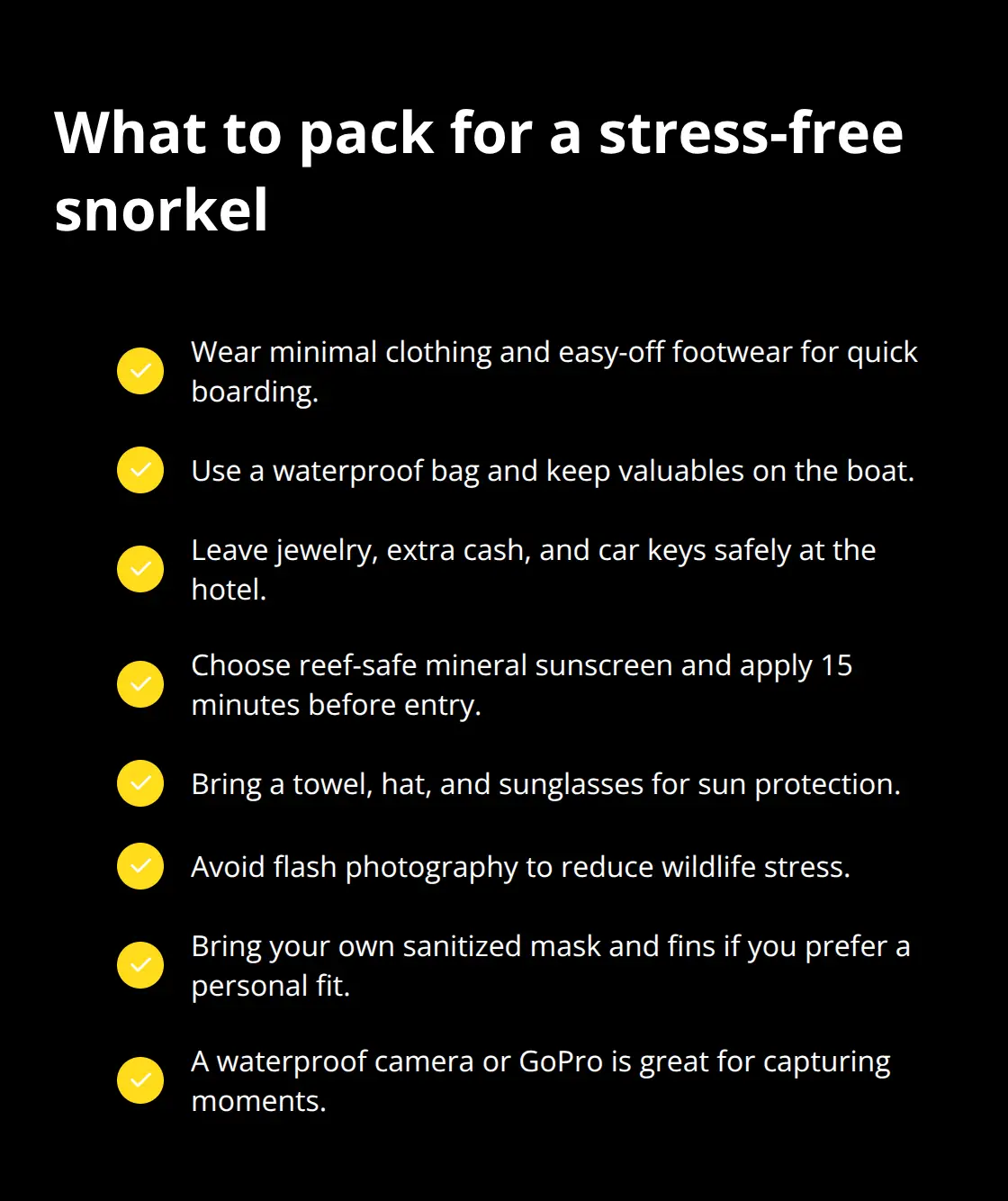
Bring a towel, hat, sunglasses, and reef-safe mineral sunscreen applied 15 minutes before entry-chemical ingredients like oxybenzone and octinoxate damage coral ecosystems, so check your sunscreen label carefully. A waterproof camera or GoPro lets you capture underwater moments, but avoid flash photography since it stresses turtles and disrupts their natural behavior. Most tours provide snorkel gear, but if you prefer your own mask and fins, bring them sanitized and ready to use.
Assess Your Swimming Ability Honestly
Basic swimming ability is genuinely required-you need to float comfortably, control your breathing through a snorkel, and move through water without panic. If you haven’t swum in years, take a refresher lesson or practice in a pool before your tour date. Flotation devices are available and required if you lack confidence, and using them removes zero enjoyment from the experience. Arrive 30 to 45 minutes before departure to handle check-in without rushing, get your gear fitted properly, and take the safety briefing seriously rather than zoning out. Your guide will ask about your swimming experience directly-answer truthfully, because guides adjust their pace and route based on group ability, and false confidence only ruins your experience and potentially endangers others.
Physical Demands and Medical Considerations
The snorkel itself lasts 45 to 60 minutes in the water, so neck and shoulder muscles fatigue if you’re sedentary, but this discomfort is manageable and disappears within minutes of resting on the boat. Pregnant women, people with heart conditions, or anyone with recent surgery should consult a doctor before booking; the physical exertion is moderate but sustained, and ocean conditions create variables that medical professionals should evaluate individually. Your honest assessment of your fitness level ensures you enjoy the experience rather than struggle through it.
Final Thoughts
A Turtle Town morning snorkel transforms how you experience Maui by anchoring your entire day around something genuinely meaningful rather than checking off a tourist checklist. You witness Hawaiian green sea turtles in their natural habitat, understand reef ecosystems that took decades to establish, and support conservation efforts that protect these animals for future generations. The calm dawn waters, expert guidance, and reliable turtle encounters create conditions where the experience actually matches the promise.
Small-group tours amplify this impact because your guide adjusts the pace to your comfort level, points out details you’d miss alone, and enforces wildlife protection standards that keep both you and the turtles safe. Professional guides trained in marine biology transform what could be passive floating into active learning, explaining why coral health matters, how turtles feed, and what conservation challenges these species face globally. This educational foundation deepens your connection to what you’re witnessing and makes you a more responsible ocean visitor.
The Turtle Town morning snorkel experience works because it combines accessibility with authenticity-you don’t need advanced diving skills, expensive equipment, or extreme physical fitness to participate meaningfully. Book your adventure with Maui Conservation Snorkel Tours to prioritize conservation and small-group experiences, arrive early enough to feel prepared rather than rushed, and commit to the safety briefing and wildlife etiquette guidelines. Your Maui day starts better when it begins in the water with honu, and that’s the simple truth of what happens when you prioritize quality over convenience.
Call 808-270-8776