
Turtle Town is one of South Maui’s most rewarding snorkel destinations, and we at Maui Snorkel Charters know exactly what makes it special. The reef here teems with green sea turtles, vibrant coral formations, and tropical fish that few other spots can match.
Whether you’re a first-time snorkeler or returning to the water, our Turtle Town snorkeling trips offer something genuinely memorable. This guide walks you through what to expect, how to prepare, and how to make the most of your time underwater.
What You’ll Actually See at Turtle Town
Crystal Clear Waters and Reef Structure
Turtle Town’s waters stay remarkably clear most of the year, with visibility averaging 60–80 feet on calm days, though swells from the north and west can stir up sediment. The reef structure here isn’t a single formation but rather a series of interconnected lava rock outcroppings and coral gardens that create natural channels and viewing corridors. The seabed depth ranges from 20 to 50 feet in the main snorkeling areas, making it accessible for various experience levels without requiring deep diving skills.
The Marine Life You’ll Encounter
You’ll encounter Hawaiian green sea turtles regularly-we’re talking multiple sightings per trip, not occasional luck. These populations have increased over the last two decades, with almost 500 females nesting annually. The reef itself supports roughly 50 different fish species, with yellow tangs, parrotfish, and moorish idols being the most abundant. Coral coverage remains healthy at Turtle Town compared to other South Maui sites, though the ecosystem has faced pressure from increased boat traffic and water temperature fluctuations.
Seasonal Visibility Patterns
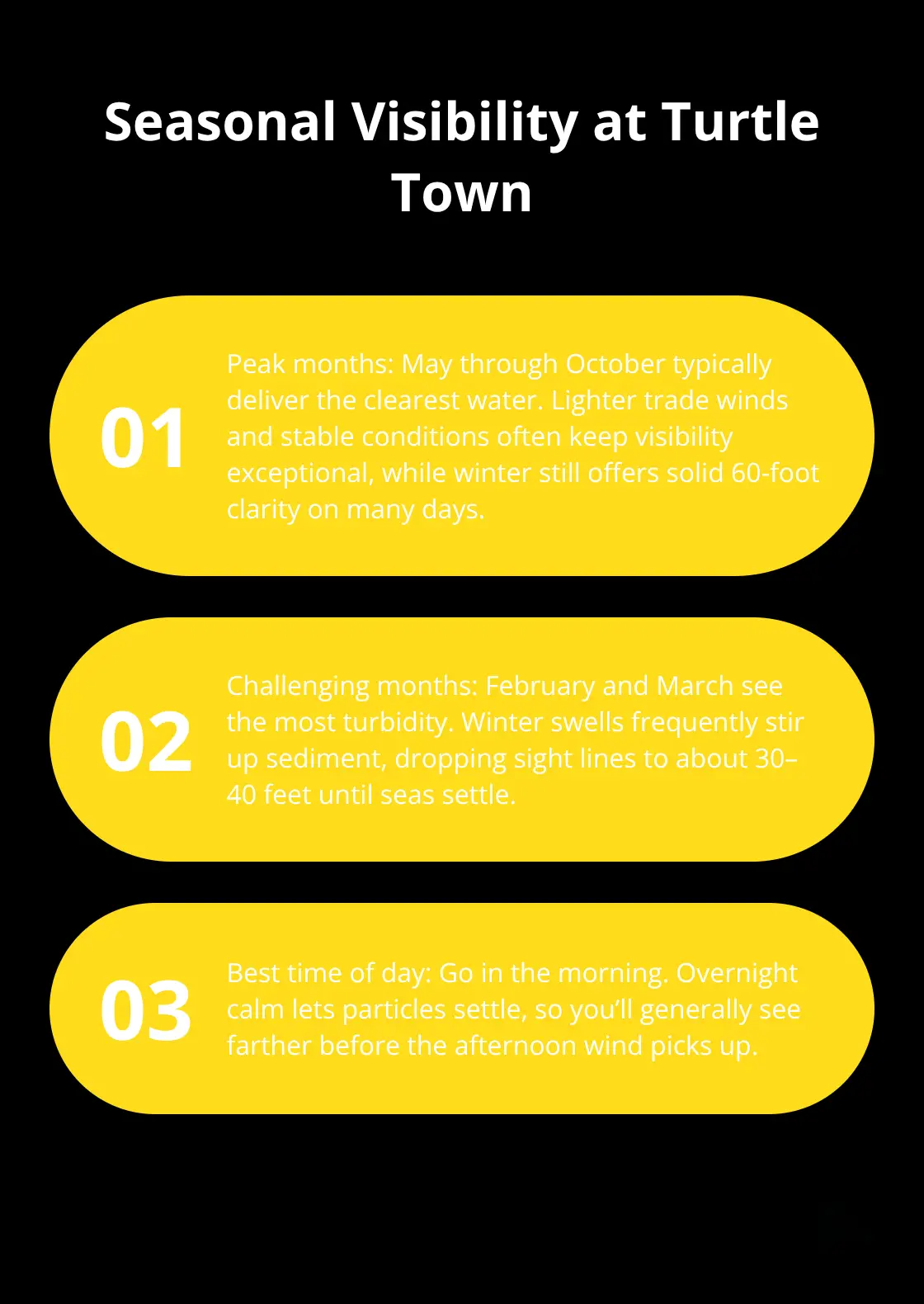
Visibility peaks from May through October when trade winds are lighter and water conditions stabilize, though you’ll still get solid 60-foot visibility during winter months. The worst visibility typically occurs in February and March when winter swells churn up sediment, sometimes reducing sight lines to 30 to 40 feet. Morning trips consistently outperform afternoon excursions because the water settles overnight and wind hasn’t picked up yet.
Water Temperature and Turtle Activity
Water temperature ranges from 79 degrees Fahrenheit in summer to 74 degrees in winter, so a thin wetsuit makes sense during cooler months if you plan to stay in the water longer than 90 minutes. Turtle sightings happen year-round, but the turtles tend to be more active and less skittish during calmer morning conditions. The reef’s best coral formations cluster in the deeper sections near 40 to 50 feet, where light penetration still allows vibrant colors without requiring advanced snorkeling abilities-and that’s exactly where your preparation matters most.
Getting Ready for Turtle Town
Build Your Swimming Fitness First
Showing up unprepared wastes your money and ruins the experience for everyone in your group. Your fitness level matters more than you think at Turtle Town because you’ll swim against occasional current in deeper sections, sometimes for 45 minutes straight without a break. If you can’t comfortably swim 200 meters continuously in a pool, you should spend two weeks building endurance before booking. Start with swimming three times weekly, gradually increasing distance by 10 percent each week.
Understand Water Temperature and Wetsuit Needs
The water temperature ranges from 65 to 75 degrees Fahrenheit, so most people stay comfortable in a standard 2mm wetsuit. If you run cold, wear a long-sleeve rash guard underneath or arrive early so we can fit you with a thicker 3mm suit instead. This simple adjustment prevents discomfort and lets you stay in the water longer to observe the turtles.
Pack Smart and Leave Valuables Behind
Bring a towel, sunscreen rated SPF 50 or higher, and a change of clothes-the boat’s spray soaks everything, and you’ll want dry gear for the 15-minute ride back to Kihei. Leave your jewelry, watches, and phones in a secure location on shore because saltwater corrodes metal fast and losing expensive items to the ocean is entirely preventable. Aqua socks or reef shoes protect your feet from sharp coral and sea urchins; Crocs or neoprene booties work perfectly for this. A small waterproof bag keeps your ID and car keys safe during the trip, and honestly, it’s the one item people regret not bringing.
Manage Motion Sickness and Fuel Your Body
Medications like seasickness pills require taking 30 to 60 minutes before boarding-ginger supplements work for some people, but prescription options like Dramamine prove more reliable if you’re prone to motion sickness. Eat a light breakfast before the trip; we provide Hawaiian coffee and banana bread aboard, but arriving hungry makes the boat motion feel worse and depletes your energy for swimming. Don’t wear heavy makeup or sunscreen that washes off immediately because you’ll reapply it constantly and waste money. Avoid alcohol the night before because dehydration increases seasickness risk and impairs your judgment underwater, where staying calm around the turtles matters significantly.
Know What Techniques Work Underwater
Once you’re in the water, your preparation transforms into action-and that’s where the real skill of observing turtles without disturbing them comes into play.
Getting the Most Out of Turtle Town’s Underwater World
Observing Turtles Without Causing Stress
Turtles at Turtle Town remain calm around quiet, silent swimmers who maintain distance and move deliberately. The moment you thrash around or chase, they vanish into deeper water or hide under coral ledges, and your trip becomes watching empty reef instead of observing these animals in their natural behavior. Approach turtles from their side rather than head-on, which reduces their stress response significantly.
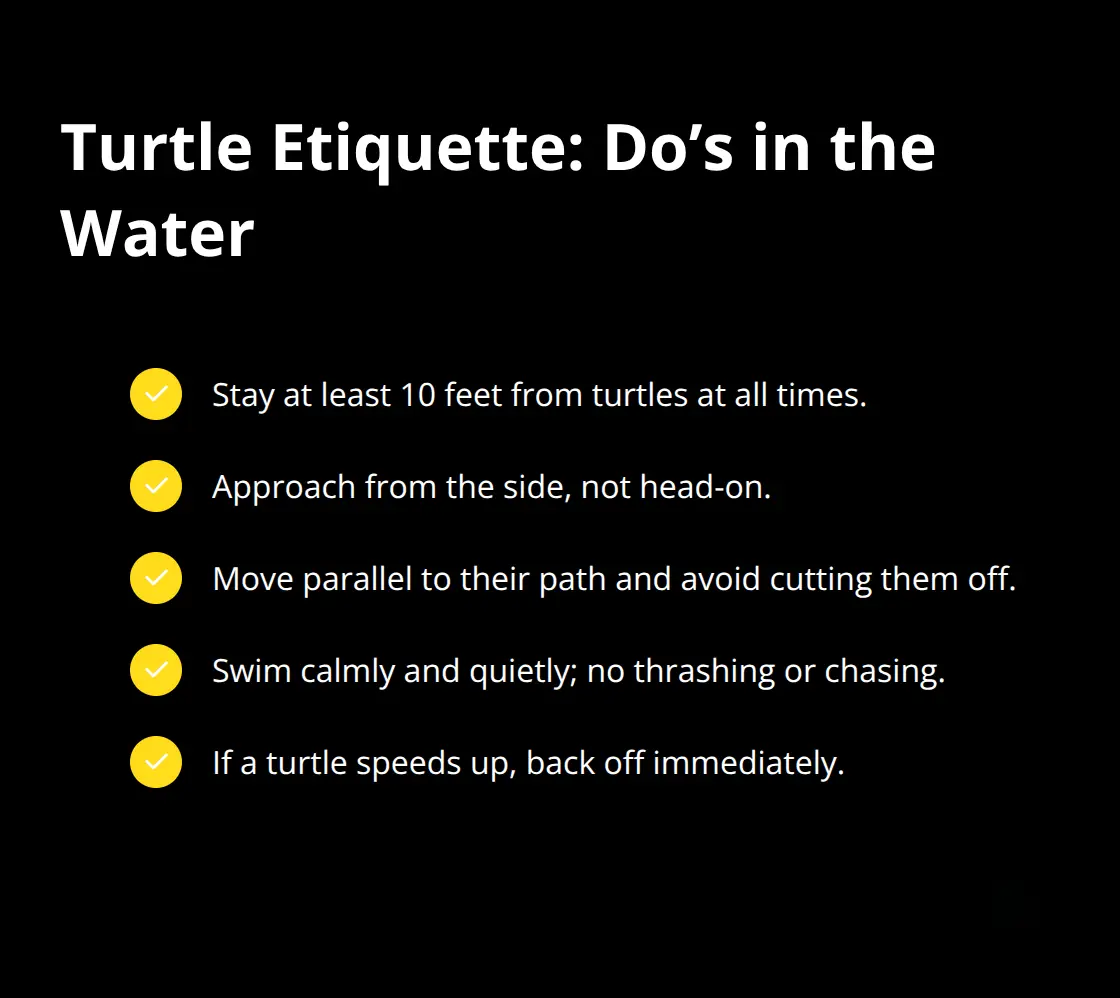
Maintain at least 10 feet of distance and move parallel to their direction of travel rather than cutting them off. If a turtle notices you and accelerates faster than its normal pace, you’ve crossed the boundary-back off immediately and let it settle. Most turtles at Turtle Town tolerate snorkelers and will ignore you entirely if you respect these boundaries, allowing you to watch feeding behavior, shell cleaning interactions with fish, and natural movement patterns that vanish the moment turtles feel threatened.
Where Turtles Congregate
The reef’s coral formations around 40 to 50 feet depth concentrate the healthiest turtle populations, so you’ll find better encounters in those deeper sections where patience actually pays off instead of scanning shallow areas repeatedly. These zones offer the best light penetration for photography while still providing the shelter and food sources turtles prefer. Spend more time in these areas rather than rushing through shallower sections.
Identifying Coral Species
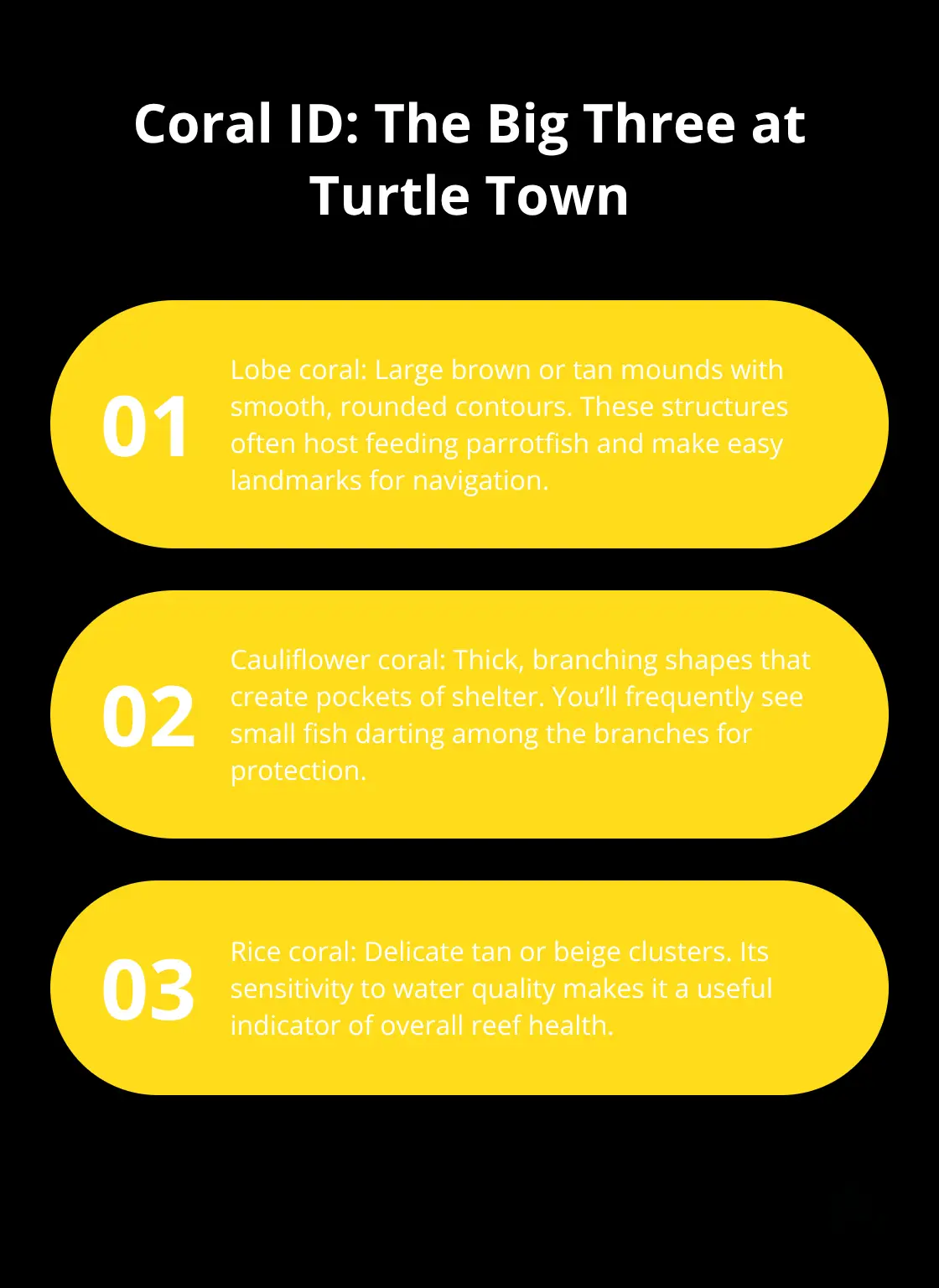
Recognizing coral and fish species transforms a casual snorkel into genuine reef literacy that enriches every future underwater visit. The three dominant corals at Turtle Town are lobe coral, which forms large brown or tan formations with rounded surfaces where parrotfish congregate to feed; cauliflower coral, which appears as thick branching structures often hosting small fish species seeking shelter; and rice coral, which looks like delicate tan or beige clusters and indicates healthy reef conditions since it’s sensitive to water quality changes.
Recognizing Common Fish
Yellow tangs, easily recognizable by their bright coloring and leaf-shaped bodies, indicate good water quality and stable reef conditions. Moorish idols with their distinctive black, white, and yellow stripes travel in pairs and are less common than tangs but more visually striking. Parrotfish come in multiple color variations-the most common at Turtle Town are the yellow-green ones that create a crunching sound underwater as they scrape algae from coral, producing much of the sand you walk on at Maui beaches.
Building Your Species Recognition Skills
Rather than memorizing every species, focus on learning these eight to ten common residents first, which trains your eye to spot behavioral patterns and unusual activity. Underwater photography guides recommend spending your first ten minutes simply observing movement patterns and light conditions rather than immediately snapping photos, which dramatically improves your shot composition and reduces the camera becoming a distraction from the actual experience. This approach transforms your entire underwater perspective and creates stronger memories than rushed picture-taking ever could.
Why Turtle Town Stands Apart
Turtle Town’s ecosystem thrives because of its unique combination of shallow reef structure, consistent turtle populations, and relatively protected waters compared to other South Maui snorkel sites. The reef supports nearly 50 fish species and healthy coral formations that create natural feeding grounds for the Hawaiian green sea turtles you’ll encounter regularly. Molokini Crater requires a longer boat ride and deeper water, making it less suitable for beginners or families with younger children, while Ahihi-Kinau sees significantly higher foot traffic and less consistent turtle sightings.
Green sea turtle populations in Hawaii have recovered substantially over the past two decades, and Turtle Town remains one of the few places where you’ll witness this success firsthand. Supporting responsible snorkel operators who respect wildlife boundaries directly contributes to protecting these animals and their habitat. When you book Turtle Town snorkeling trips with us at Maui Snorkel Charters, you choose an operator committed to small-group experiences that minimize reef impact while maximizing your connection to the ocean.
Your children will remember the moment they locked eyes with a sea turtle far more vividly than any beach photo (parents often tell us that snorkeling together at Turtle Town became the highlight of their entire Maui vacation). These authentic encounters with wild animals in their natural environment create family memories that last far longer than manufactured experiences ever could. Book your Turtle Town adventure with Maui Snorkel Charters and experience why this destination remains unmatched for families and ocean enthusiasts seeking genuine connection with Hawaii’s marine world.
Call 808-270-8776