
Whale watching from Kihei offers something special during winter months when humpback whales migrate to Hawaiian waters. The calm seas and protected coastline make this stretch of Maui ideal for spotting these magnificent creatures up close.
At Maui Snorkel Charters, we’ve guided thousands of visitors through unforgettable whale encounters. Whether you’re planning your first whale watch or you’re a seasoned ocean explorer, this guide covers everything you need to know about timing, safety, and making the most of your experience.
When Humpback Whales Arrive in Maui
Peak Season Timing and Migration Patterns
Humpback whales arrive in Hawaiian waters around November and stay through March, with peak activity occurring between January and February. The National Oceanic and Atmospheric Administration estimates that roughly 10,000 humpback whales migrate to Hawaiian waters each winter, making this one of the largest whale gatherings in the Northern Hemisphere. These whales travel over 3,000 miles from Alaska’s feeding grounds to breed and give birth in the warm shallow waters around Maui. The timing remains predictable enough that you can plan your trip with confidence, knowing that mid-January through early February offers your best odds for multiple sightings during a single outing.
Why Kihei Stands Out for Whale Watching
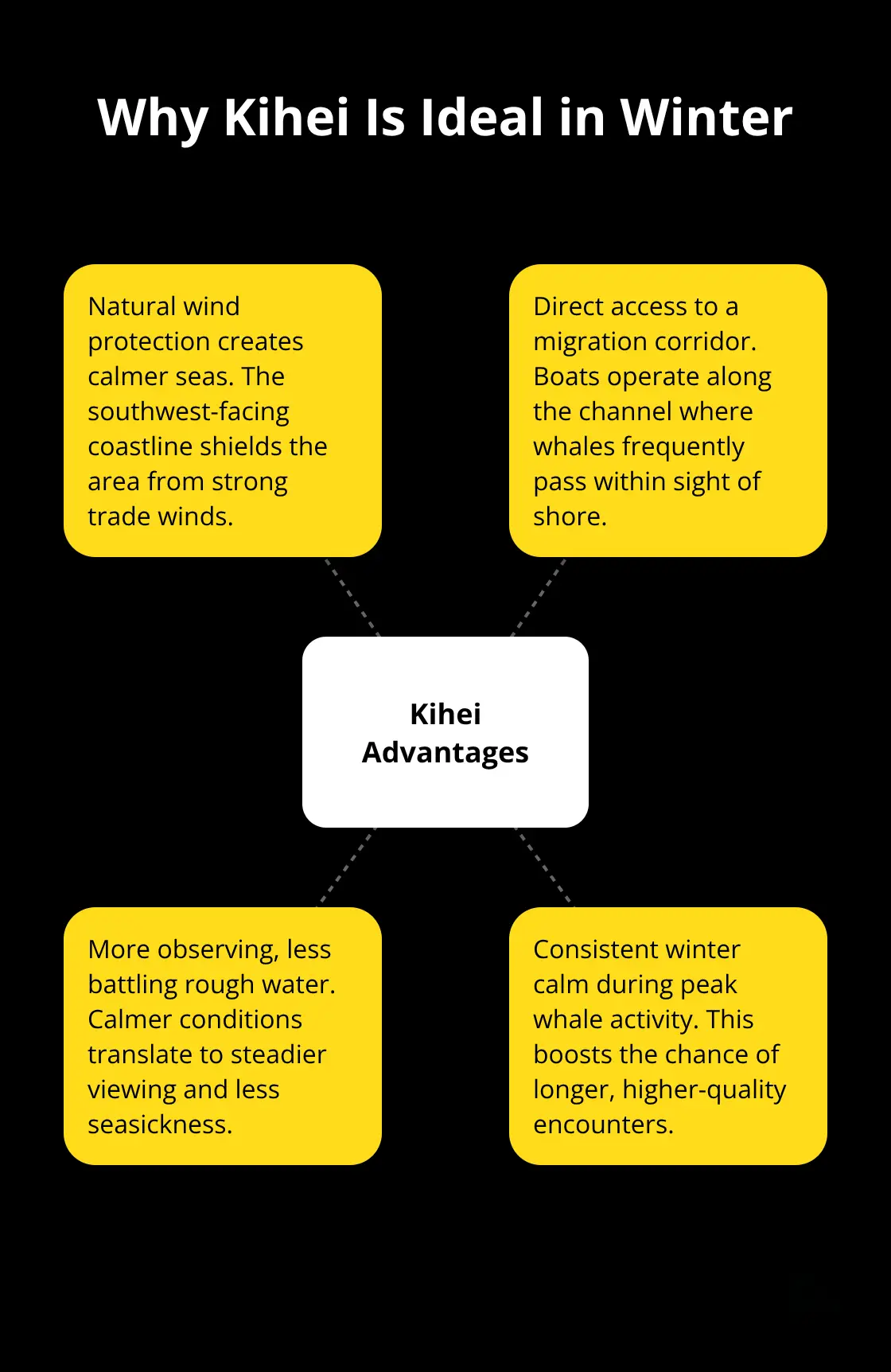
Kihei’s exceptional position for whale watching comes down to geography and water conditions. The coastline faces southwest, which provides natural protection from trade winds that pummel other parts of Maui, resulting in significantly calmer seas during winter months when whale activity peaks. From Kihei’s shores, you’re positioned along the channel between Maui and Kahoolawe-a migration corridor where whales frequently pass within sight of the coast. The calm winter seas that define Kihei mean you’ll spend less time fighting rough conditions and more time actually observing whales, which makes the difference between a memorable experience and a disappointing one spent feeling seasick.
What You’ll Witness During Peak Season
During peak season, you’ll witness behaviors that only happen during these few months: mothers teaching calves to breach, males competing for females through acrobatic displays, and tail slaps that can be heard from considerable distances. These moments reveal the whales’ intelligence and social complexity in ways that photographs rarely capture. The protected waters of Kihei allow operators to position boats where these behaviors happen most frequently, giving you front-row access to nature’s most dramatic performances.
Choosing the Right Whale Watching Experience
Small Group Tours vs. Large Boat Operations
Small-group tours deliver fundamentally different experiences than large boat operations, and the difference matters more than most travelers realize. Large commercial operations running 100+ passengers create crowded viewing decks where half the boat misses key moments while the other half fights for position. The National Marine Fisheries Service requires maintaining a minimum distance of 100 yards from whales, but larger boats often struggle to position themselves quickly when whales surface unpredictably, forcing you to watch from distances where details blur. Smaller groups also mean captains adjust course based on real-time whale activity rather than sticking to predetermined routes designed for maximum passenger comfort. You’ll notice the difference immediately: with fewer bodies on deck, you get clearer sightlines, steadier camera shots, and the ability to actually hear your guide explain whale behavior instead of shouting over engine noise and crowd chatter.
What to Expect On the Water
Whale watching requires patience and timing-whales don’t perform on schedule, and some days they stay deeper or farther offshore than others. Water conditions during peak season typically range from three to six-foot swells in Kihei’s protected waters, manageable enough that most people avoid severe seasickness, though taking ginger supplements or motion sickness medication beforehand eliminates worry. Wear layers because ocean winds cool you quickly even on warm winter days, and bring sunscreen rated SPF 50 or higher since water reflection intensifies UV exposure.
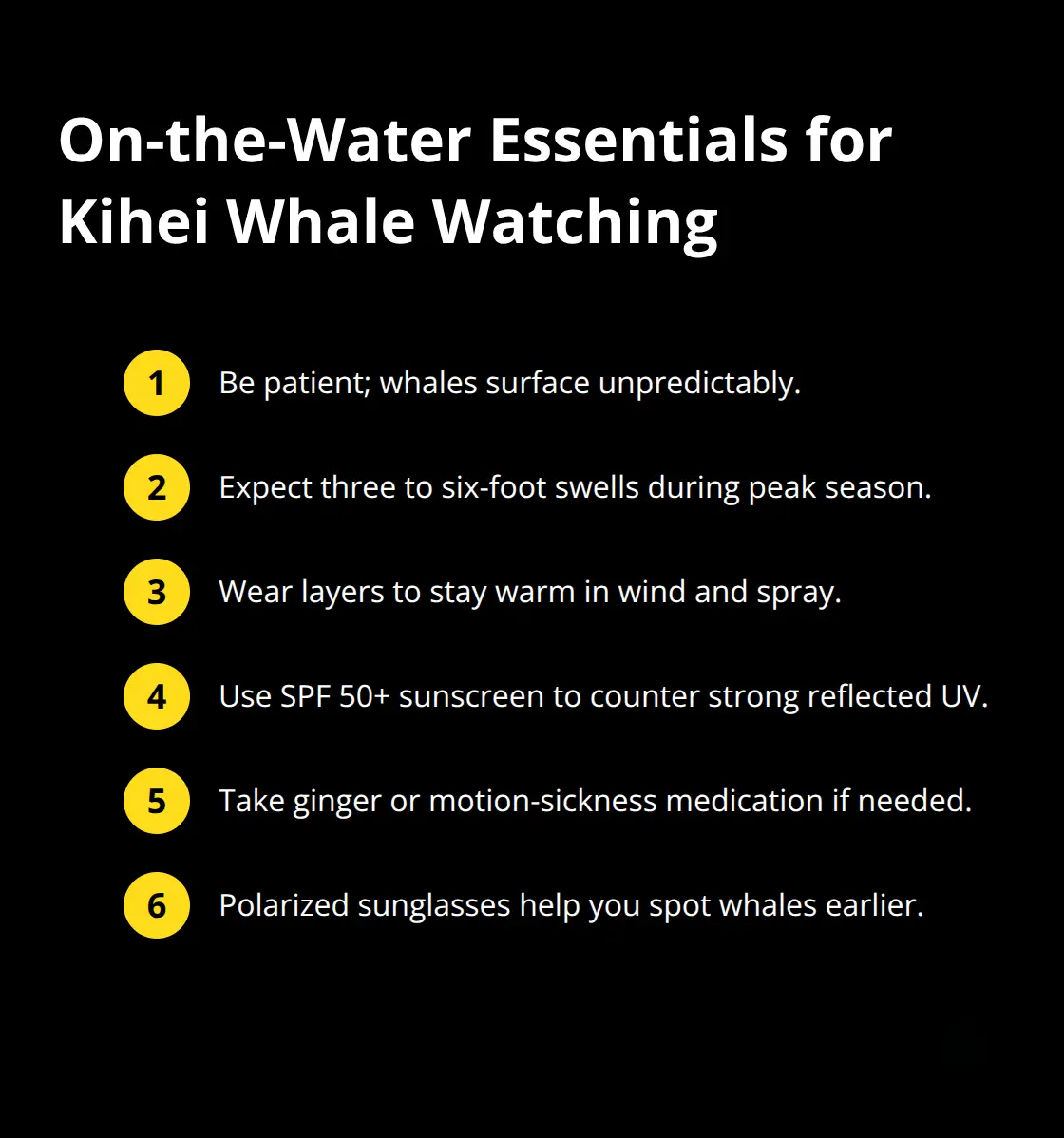
Polarized sunglasses cut glare dramatically and help you spot whales before your guide calls them out.
Essential Gear and Preparation Tips
The best preparation involves eating a light breakfast before departure-heavy meals combined with boat motion create problems you’ll want to avoid. Most operators include refreshments aboard their tours, which keeps your energy up without overwhelming your stomach. Bring a fully charged camera or phone because whale breaches and tail slaps happen in seconds, and you’ll want to capture those moments yourself rather than relying on distant photographs from other passengers. The ocean environment demands respect and proper equipment, which means you’ll also want to pack a light jacket and a hat to protect against wind and sun exposure during your time on the water.
Safety and Conservation While Whale Watching
Federal Regulations and Distance Requirements
Federal law sets the whale watching rules, and the National Marine Fisheries Service enforces a 100-yard minimum distance that protects whales for genuine reasons. Whales under stress alter their behavior, mothers separate from calves, and breeding activity gets disrupted when boats approach too closely. This isn’t arbitrary regulation; it’s the outcome of decades of marine mammal research showing that repeated disturbance affects whale populations across entire seasons.
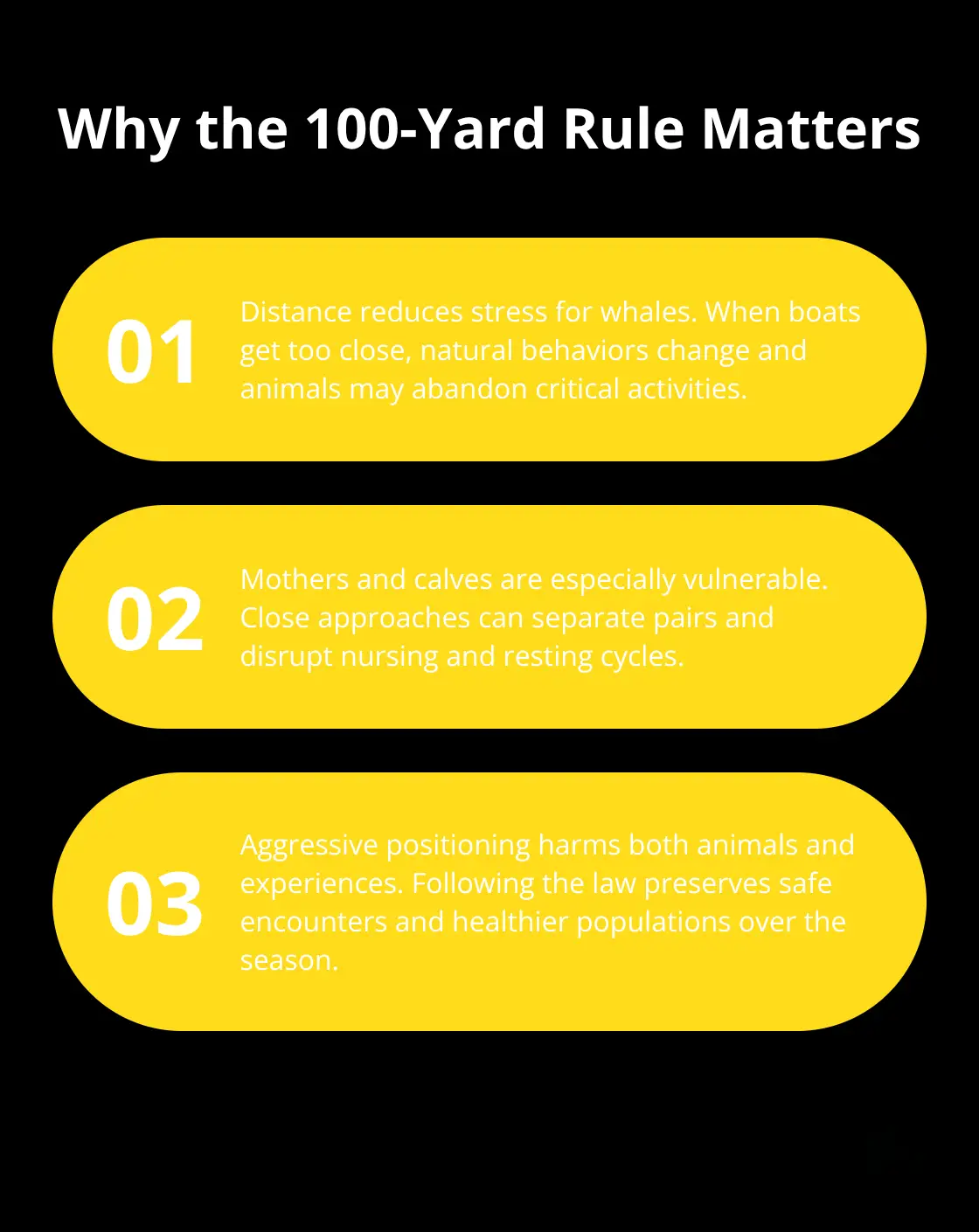
Operators who position boats aggressively close to whales aren’t giving you better views-they’re breaking the law and harming the animals you came to see.
Responsible Operator Practices
Responsible captains position their vessels to intercept whales naturally as they move through their migration corridor rather than chasing them or cutting off their paths. The difference between a compliant operator and one cutting corners becomes obvious on the water: legitimate tours position boats ahead of whale movement patterns and let the animals approach at their own pace, while aggressive operations reverse course repeatedly and gun engines when whales surface unexpectedly. Operators who prioritize marine mammal protection maintain distances that exceed legal minimums because ethical whale watching means the whales’ wellbeing comes before photo opportunities.
Your Responsibilities on the Water
Your role matters just as much as the operator’s choices. Whales hear boat noise from miles away, and excessive talking, loud music, or sudden movements on deck stress animals that are already navigating a challenging migration. Keep voices low when whales surface nearby, avoid running across the deck, and never throw objects overboard no matter how small they seem. The 100-yard approach rule prohibits touching whales, feeding them, or deliberately blocking their movement paths-violations carry significant penalties.
Photography and Observation Guidelines
Operators protecting marine mammals prohibit flash photography because repeated light exposure can temporarily blind whales and disrupt their ability to navigate and locate food. Real whale watching means understanding you’re witnessing wild animals in their natural habitat, not performers in an aquarium. The most memorable experiences happen when you respect these boundaries and accept that sometimes whales stay distant or surface before you get the perfect angle-that’s nature working as it should.
Final Thoughts
Whale watching from Kihei peaks between mid-January and early February when humpback whales are most active and winter seas remain calmest. Booking during these weeks gives you the highest probability of multiple sightings and the smoothest water conditions, which means more time observing whales instead of managing seasickness. The protected waters along Kihei’s southwest-facing coastline create conditions that larger boats simply can’t replicate elsewhere on Maui.
Calm winter seas make the difference between a forgettable trip and one you’ll talk about for years. Rough water forces captains to cut tours short, keeps whales deeper underwater, and leaves passengers exhausted rather than exhilarated. The three to six-foot swells typical of Kihei during peak season allow operators to position boats where whale activity concentrates, giving you genuine opportunities to witness breaching, tail slaps, and mother-calf interactions that reveal these animals’ intelligence and complexity.
When you’re ready to plan your whale watching adventure, visit Maui Snorkel Charters to check availability and book your experience during peak season. We offer small-group Pacific humpback whale watches during winter season with passenger counts that stay manageable and sightlines that remain clear. The whales are coming-the question is whether you’ll be on the water to meet them.
Call 808-270-8776