
Every January through March, Maui transforms into the humpback whale capital of Hawaii. Thousands of these magnificent creatures migrate over 3,000 miles from Alaska to our warm waters, and we at Maui Snorkel Charters know exactly where and when to find them.
Whale watching in Maui isn’t just about spotting whales-it’s about witnessing breaches, tail slaps, and behaviors that’ll stay with you long after you leave the island. This guide walks you through everything you need to know to make your whale season visit unforgettable.
When to Schedule Your Maui Whale Watch
Peak Season Delivers Consistent Whale Activity
From November through April, visitors to the sanctuary can see whales from shore and at sea, offering your best opportunity to witness the behaviors that make humpbacks unforgettable. The official Hawaiian Islands Humpback Whale National Marine Sanctuary marks this window as whale season, and the data tells a clear story: January peaks with strong humpback activity migrating from Alaska, February brings mothers nursing newborns in calm nearshore waters, and March remains strong with favorable weather that simplifies spotting. December can surprise you with early arrivals, though sightings remain inconsistent. April drops off sharply after mid-month as whales return north, so if your schedule allows flexibility, book between mid-January and mid-March instead.
Water Temperature Drives Migration Patterns
Humpbacks migrate from Alaska’s cold waters to Hawaii’s warmer coastal zones to breed, give birth, and nurse calves. This migration follows predictable warm-water biology rather than random timing. Maui’s leeward coast-particularly the Lahaina, Kaanapali, and Maalaea areas-offers the calmest, warmest waters where mothers and calves congregate, making these zones your safest bet for sightings. Early morning departures provide calm seas and excellent visibility for spotting spouts and surface activity. Late afternoon tours catch golden-hour light and often reveal increased whale activity as animals feed before sunset, but if you can only book one tour, the morning window delivers more reliable conditions.
Reserve Your Spot Early
Mid-January through mid-March fills up fast, and tour operators report that weekday departures have better sighting odds than weekends when water traffic increases. Reserve your tour at least two weeks ahead if you’re visiting during peak season. Some operators offer guarantees-certain charters promise humpback sightings with complimentary rebooking or refunds if whales aren’t spotted-so check that protection when comparing options.
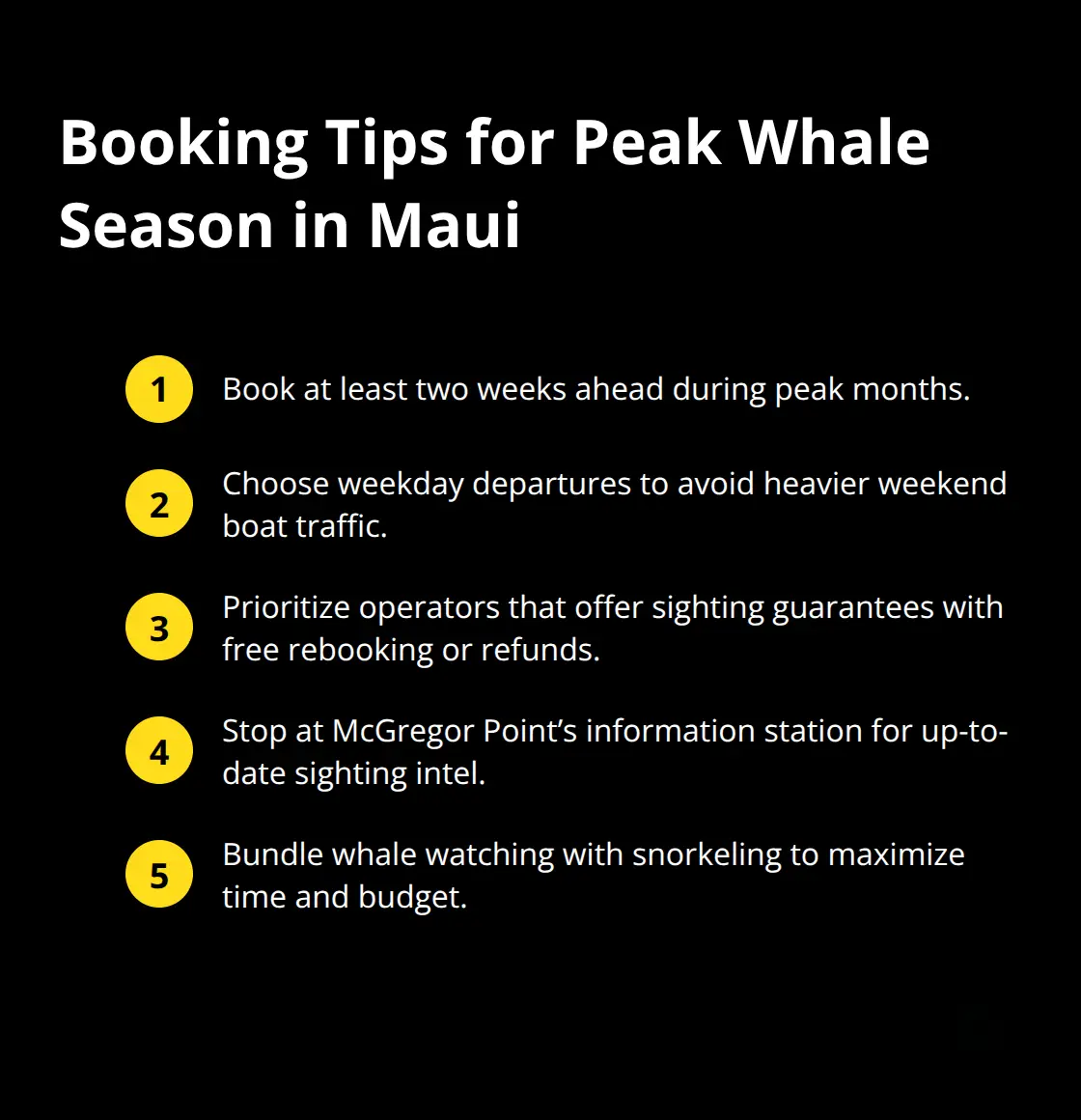
The Pacific Whale Foundation runs a free information station at McGregor Point Lookout between December 1 and May 15, so stop there before booking to ask locals about recent activity patterns. If budget constraints exist, combine whale watching with another activity like snorkeling to maximize your ocean time and spread costs across multiple experiences. This approach also sets you up perfectly for exploring what different tour operators offer.
What You’ll Actually See on the Water
Whale Behaviors That Define Peak Season
Humpback whales breach, tail slap, and spy hop to communicate, play, and strengthen muscles before their migration back to Alaska. When you board a tour during peak season (mid-January through mid-March), you’ll witness these behaviors within the first hour on most trips. A breach launches a 40-ton whale nearly completely out of the water, and the sound and spray hit you from 100 yards away with genuine force. Tail slaps occur when whales smack their flukes against the surface repeatedly, creating thunderous cracks that echo across calm morning seas. Spy hops happen when whales push their heads vertically above water to look around, offering a 10 to 15-second window to photograph their eye and rostrum.
Professional marine naturalists aboard tour vessels narrate what’s happening in real time, explaining that mothers teach calves these behaviors to build strength and confidence. Federal regulations require vessels to maintain 100 yards distance from humpbacks, but whales often approach boats voluntarily-a behavior called mugging that creates the closest encounters you’ll experience. When a whale swims directly toward your vessel, captains cut engines and let the whale decide proximity, sometimes coming within 50 feet. These moments happen unpredictably but occur regularly during peak season when humpback density peaks around Lahaina and Maalaea.
Up-Close Encounters and Mugging Events
The most memorable whale-watching moments occur when whales approach your boat on their own terms. Mugging events (voluntary whale approaches) happen frequently enough during January through March that most visitors witness at least one close encounter. Hydrophones aboard vessels let you hear male humpback songs underwater, a haunting and otherworldly sound that occurs only during breeding season. The combination of surface activity and underwater vocalizations creates an immersive experience that photographs and videos cannot fully capture.
What to Wear and Bring
Ocean wind cools you quickly even on sunny days, so wear layers that you can remove as the sun warms the deck. Apply sunscreen generously since water reflection intensifies UV exposure and catches many visitors off guard. Pack a camera with a telephoto lens if you have one, as breaches and tail slaps reward fast reflexes and zoom capability.
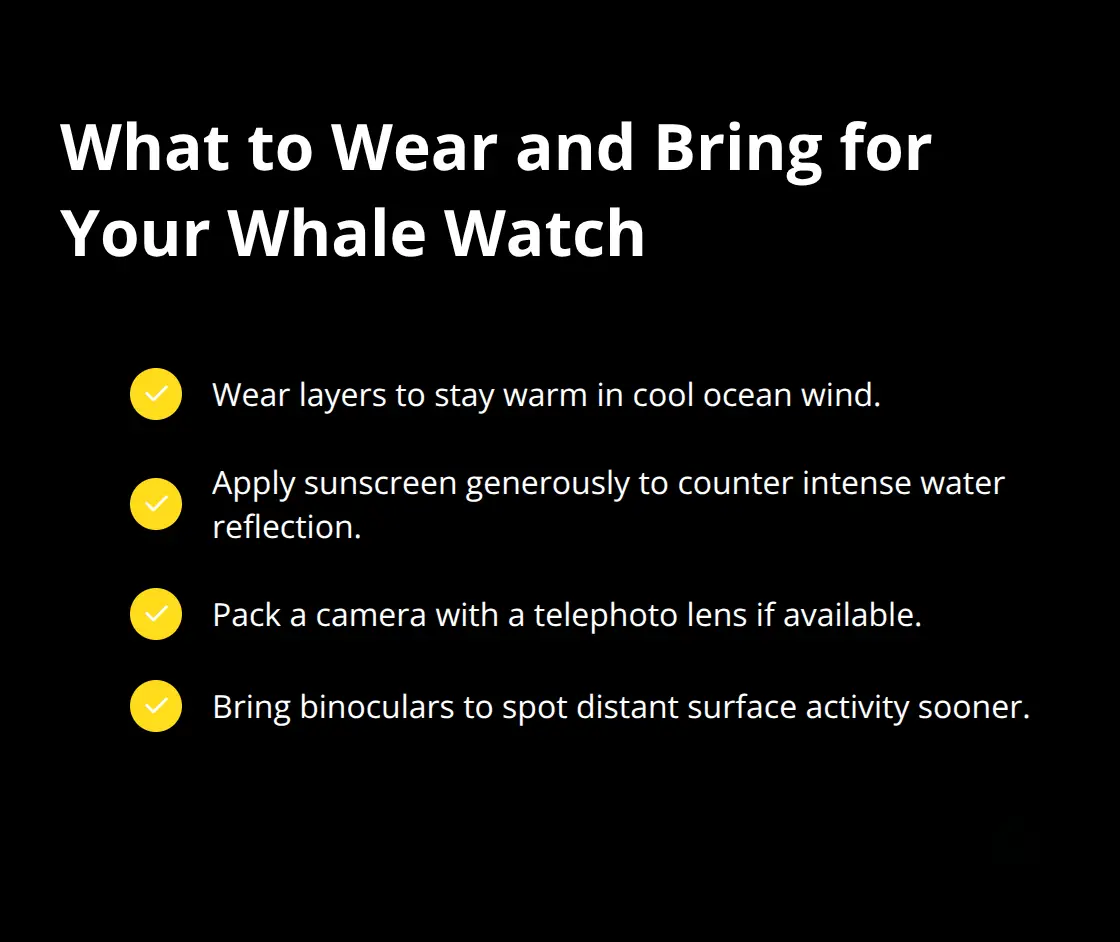
Binoculars prove valuable even on boat tours because whales surface unpredictably, and scanning ahead increases your odds of spotting distant activity before other passengers notice movement.
Safety and Tour Duration
Safety on the water means wearing a life jacket during rough conditions, staying seated when the vessel moves, and keeping hands and arms inside railings. Tours run approximately 90 minutes to 2.5 hours depending on operator and package, with morning departures offering the calmest seas and clearest visibility for spotting spouts (the tall plumes of vapor that signal a whale’s location). Most operators provide complimentary onboard photography services, so you’ll have professional-quality images regardless of your equipment.
Choosing Your Ideal Departure Time
Early morning departures provide calm seas and excellent visibility for spotting spouts and surface activity. Late afternoon tours catch golden-hour light and often reveal increased whale activity as animals feed before sunset. If you can only book one tour, the morning window delivers more reliable conditions for consistent sightings and comfortable seas. The choice between morning and afternoon ultimately depends on your schedule and personal preference for light quality and water conditions.
Choosing the Right Whale Watching Operator
Maui hosts roughly a dozen whale-watching operators, and the differences between them matter more than you might think. Vessel size, departure location, and whether you receive a guarantee on whale sightings all affect your actual experience on the water. Small-group tours operate with maximum 20 passengers per vessel, which means you won’t compete with 100 other people for railing space or fight crowds to see surface activity.
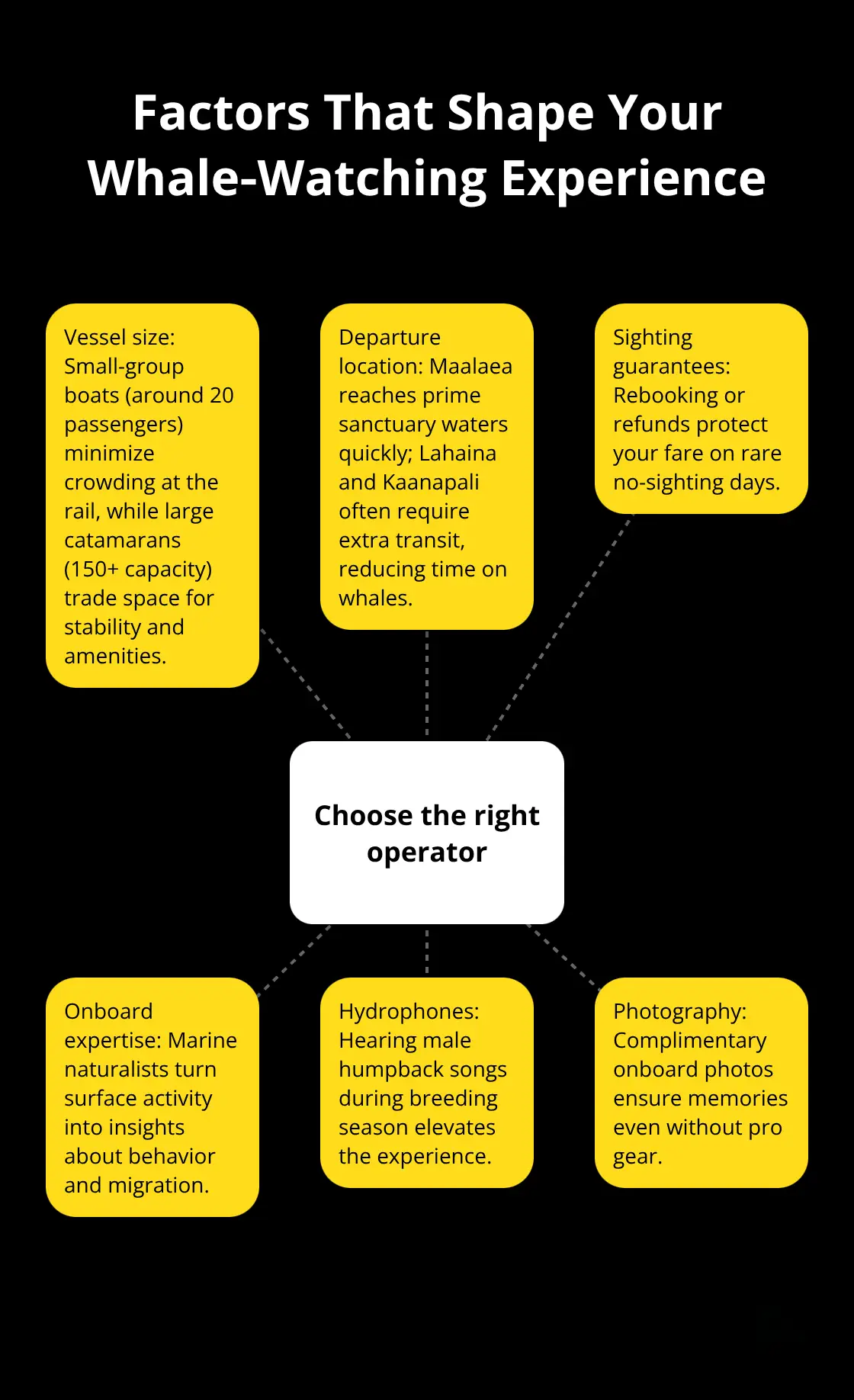
Larger commercial catamarans (like 65-foot luxury vessels) carry 150 or more passengers and offer stability in rough seas plus onboard bars, but you’ll spend significant time navigating crowded decks rather than focusing on whales.
Vessel Size and Passenger Capacity
Small-group tours depart from Maalaea Harbor or Kihei, with Maalaea offering direct proximity to the Maui Nui Basin sanctuary where humpbacks congregate most densely. Tours run 90 minutes to 2.5 hours depending on operator package, though some budget options compress the whale-watching portion into 90 minutes while premium offerings extend to 2.5 hours with additional amenities. Check whether your operator includes a marine naturalist guide, because educational narration transforms random whale sightings into understanding of behavior, migration biology, and conservation status. Hydrophones should come standard on tours, as hearing male humpback songs underwater during breeding season justifies the entire trip alone.
Guarantees and Sighting Protection
Guarantees separate responsible operators from those gambling with your money and time. Several Maui operators offer promises like the Alii Guarantee: if you don’t see humpbacks, they rebook you free or refund your full fare. This protection matters because January and February occasionally produce rough seas or unlucky timing despite peak season conditions. Maalaea Harbor departures access the sanctuary boundary directly, while Lahaina and Kaanapali departures require 15 to 20 minutes of travel before reaching prime whale territory, eating into your actual observation window.
Logistics and Departure Timing
Parking logistics vary significantly, with some harbors offering free QR code parking while others charge $10 to $15 daily, so factor that into your total trip cost. Tour operators running morning departures at 7 to 8 AM consistently report better sighting rates than afternoon trips because whales surface more actively in early hours and seas remain calmer. Try booking morning departures unless sunset photography specifically matters to you. Avoid operators without clear cancellation policies, because rough seas do force reschedules, and you want flexibility to rebook without losing your deposit.
What to Look for in Tour Inclusions
Professional-quality onboard photography services mean you’ll have images regardless of your equipment. Marine naturalist guides transform observations into education about humpback behavior and conservation. Hydrophones let you hear underwater whale songs, a haunting sound that occurs only during breeding season. These inclusions separate memorable experiences from basic boat rides, so compare what each operator includes before booking your tour.
Final Thoughts
Maui stands apart as Hawaii’s premier whale-watching destination because over 10,000 humpbacks migrate to Hawaiian waters annually, and the majority congregate along Maui’s leeward coast where warm, calm conditions favor breeding and calf-rearing. January through March delivers consistent whale activity with breaches, tail slaps, and mother-calf interactions that happen regularly rather than occasionally. The Hawaiian Islands Humpback Whale National Marine Sanctuary protects these waters, meaning regulated, respectful viewing practices keep whales safe while you experience unforgettable encounters.
Your whale season visit succeeds when you book early with an operator offering guarantees, choose morning departures for calm seas, and select a small-group tour that prioritizes experience over passenger volume. Pack layers, bring binoculars, and arrive with realistic expectations about weather-rough seas occasionally force reschedules, but responsible operators protect your investment with rebooking options. Stop at McGregor Point Lookout’s free information station to ask locals about recent sighting patterns before your tour departs.
Pair your whale watch with snorkeling to experience the full range of Maui’s marine life, and we at Maui Snorkel Charters offer small-group whale watches during winter season alongside our year-round snorkel tours to Molokini Crater and Turtle Town. Our custom 40-foot vessel carries a maximum of 20 passengers, ensuring you’ll never compete for railing space or miss surface activity. Visit Maui Snorkel Charters to book your whale watching in Maui adventure.
Call 808-270-8776