
Maui’s crystal-clear waters and vibrant coral reefs make it one of Hawaii’s premier snorkeling destinations. Whether you’re a beginner or experienced snorkeler, the island offers world-class underwater experiences that showcase tropical fish, sea turtles, and thriving ecosystems.
Finding the best Maui snorkeling spots requires knowing where to go and what to expect. This guide covers top locations, seasonal conditions, and practical tips to help you plan an unforgettable adventure beneath the surface.
Where to Go for the Best Maui Snorkeling
Molokini Crater: Unmatched Visibility and Marine Diversity
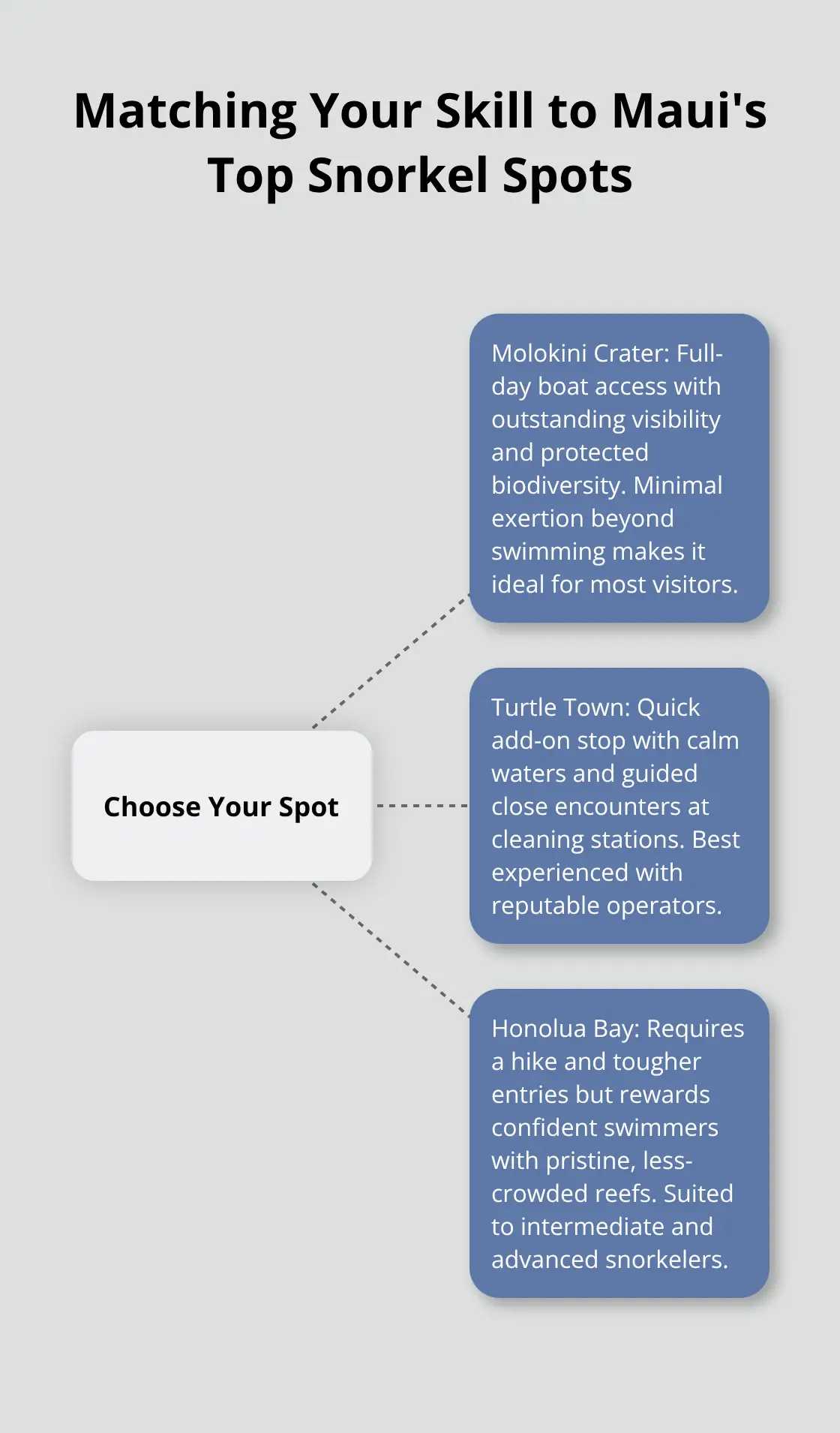
Molokini Crater stands as Maui’s most celebrated snorkeling destination, and for good reason. This crescent-shaped dormant volcano sits about three miles offshore and offers visibility that frequently exceeds 100 feet on clear days. The crater functions as a Marine Life Conservation District, protecting over 250 fish species within its boundaries. Boat tours provide access, which eliminates crowds compared to shore-based spots. Tours departing from Maalaea typically cost around $198 for basic snorkeling, with optional Snuba diving available for approximately $68 more. The tour experience includes continental breakfast, grilled lunch, and an open bar, making the full-day commitment worthwhile. Morning departures prove essential here since afternoon winds deteriorate visibility and sea conditions.
Turtle Town: Cleaning Stations and Close Encounters
Turtle Town, often paired with Molokini Crater on the same tour, features multiple cleaning stations where Hawaiian green sea turtles gather in relatively calm waters. The rock towers and coral formations create natural viewing platforms for up-close encounters. Maui Snorkel Charters operates small-group tours to Turtle Town from Kihei, reaching the site in just 15 minutes aboard their custom 40-foot vessel. Tours include gear, Hawaiian coffee and banana bread breakfast, snacks, and free photos, starting at $99. The operator chooses routes based on daily conditions to maximize your experience.
Honolua Bay: Adventure for Intermediate Snorkelers
Honolua Bay presents a different challenge entirely. This northern Kapalua cove requires a half-mile hike through jungle terrain to reach a rocky beach entry point, which deters casual visitors and preserves exceptional visibility. The protected marine sanctuary hosts diverse wildlife and pristine reefs, but rough conditions during winter swells make it unsuitable for nervous swimmers. Non-swimmers absolutely need flotation devices like boogie boards here due to potentially difficult exits. The snorkeling technique matters at Honolua: head down, kick strongly, and exhale forcefully to clear your snorkel and avoid water ingestion. Early morning visits provide the calmest conditions and clearest water.
Matching Your Skill Level to the Right Spot
The decision between these three spots hinges on your skill level and commitment. Molokini Crater demands a full day and boat access but delivers unmatched visibility and marine diversity with minimal physical exertion beyond swimming. Turtle Town works best as an add-on to Molokini through established operators, reaching the site quickly with guided, up-close reef encounters. Honolua Bay suits adventurous intermediate to advanced snorkelers willing to hike and navigate more challenging entries for the reward of pristine, less-crowded reefs.
Water temperature hovers around 75–77°F year-round, requiring consideration of wetsuits for extended sessions, particularly during winter months when occasional humpback whale sightings near snorkeling routes occur through early April.
Planning Your Visit: Timing and Conditions
Checking the daily snorkel report around 8:00–8:30 AM proves critical before committing to any location, since wind patterns dramatically shift which coast offers the best conditions on any given day. West Maui spots generally favor morning sessions, while afternoon snorkelers should pivot toward the sheltered south coast if conditions deteriorate. Your choice of destination ultimately depends on current ocean conditions, your experience level, and how much time you want to invest-factors that the next section will help you evaluate as you prepare your gear and safety plan.
What Maui’s Waters Reveal
Marine Life Across Maui’s Reefs
Maui’s underwater environment shifts dramatically based on season, location, and time of day, making observation skills as important as swimming ability. The island’s reefs host over 250 fish species across different zones, from parrotfish that actively graze on coral and produce sand, to raccoon butterflyfish with their distinctive black eye masks, spotted moray eels hiding in crevices, and Hawaiian day octopus that change color in seconds. Green sea turtles appear frequently at cleaning stations like Turtle Town and around Kapalua Bay, where they congregate to remove parasites. Federal regulations mandate maintaining at least 10 feet of distance from these turtles-touching or pursuing them violates the Endangered Species Act protections that have allowed their population to grow substantially over the past 30 years. Manta rays with wingspans up to 30 feet occasionally appear near Olowalu’s cleaning stations, while spinner dolphins travel in energetic pods off the coast.
Seasonal Patterns and Water Temperature
Winter months from December through April bring humpback whales ranging 25 to 45 feet long, with occasional calves visible during snorkeling trips near Molokini Crater. Water temperature stays consistently around 75–77°F year-round, creating buoyancy that makes descending to deeper reefs surprisingly challenging even for strong swimmers. This stable temperature means you can snorkel comfortably throughout the year, though extended sessions in winter may warrant a wetsuit for added warmth and protection.
Visibility and Optimal Timing
Morning sessions consistently deliver superior clarity since winds intensify throughout the day, stirring up sediment and deteriorating sight lines by afternoon. West Maui spots like Molokini Crater and Black Rock perform best in early hours, often exceeding 100 feet of visibility on calm days, while south-facing shores become more favorable by afternoon if morning conditions proved rough. Winter swells can make northern sites like Honolua Bay unsuitable for all but advanced snorkelers, but the Snorkel Report, a daily resource emailed around 8:00 AM, provides specific recommendations for which coast offers optimal conditions that particular day.
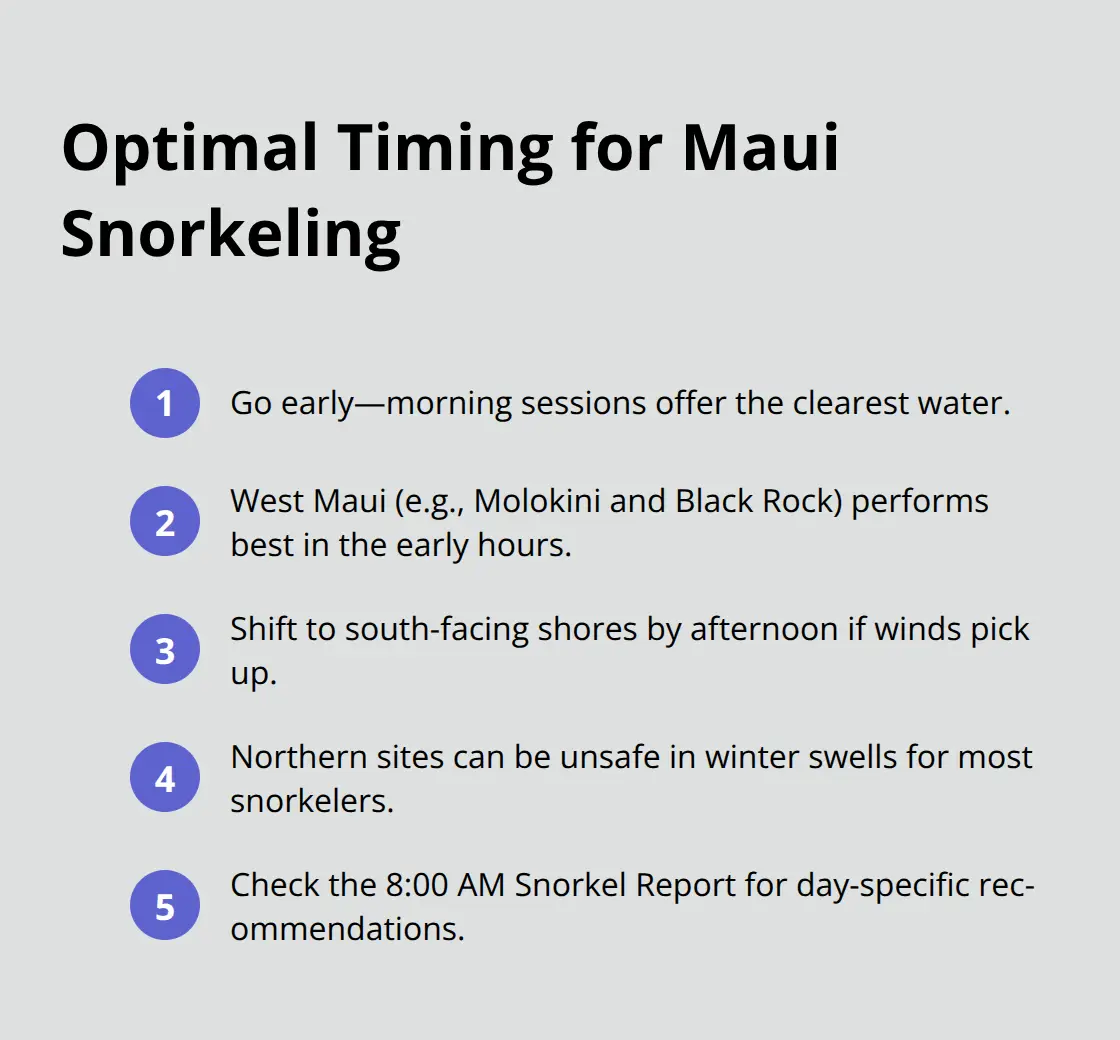
Try scheduling snorkeling sessions between 7:00 AM and 1:00 PM, exiting the water by early afternoon when wind-driven waves intensify.
Protecting Reefs and Yourself
Reef-safe sunscreen matters critically here-mainland brands often contain oxybenzone and octinoxate, chemicals that bleach coral, so purchase reef-safe formulas locally or rely on hotel beach dispensers. Intermediate snorkelers should master the technique of descending head-down with forceful kicks while exhaling sharply to clear snorkels, a skill particularly essential at exposed locations like Honolua where rough exits demand confidence. Always snorkel with a buddy, assigning mutual safety checks every few minutes and staying within sight of each other-Hawaii’s tourist drowning statistics demonstrate that even experienced swimmers face unexpected hazards from rogue waves and sudden swells, so never turn your back on the ocean.
Preparing for Your Specific Conditions
Your choice of destination ultimately depends on current ocean conditions, your experience level, and how much time you want to invest. The next section will help you evaluate these factors as you prepare your gear and select the right safety equipment for your Maui snorkeling adventure.
How to Prepare for Your Maui Snorkeling Trip
Choosing Between Guided Tours and Independent Snorkeling
Guided tours and independent snorkeling each offer distinct advantages, and your choice shapes your entire experience. Tour operators select routes based on daily ocean patterns, which guarantees you reach quality water regardless of morning forecasts. Tours also provide instruction on snorkeling technique, safety protocols, and marine life behavior-invaluable if you struggle with snorkel clearing or managing buoyancy in deeper water. Independent shore snorkeling demands that you check the Snorkel Report by 8:30 AM, assess conditions yourself, and commit to whichever coast the report recommends that day. This approach requires flexibility in your schedule and confidence reading water conditions. For beginners or those visiting just once, a guided tour to Molokini Crater or Turtle Town justifies the $99–$198 investment since you avoid wasted days on poor-condition beaches and gain expert interpretation of what you observe underwater. Experienced snorkelers with multiple visits benefit from independence, pivoting between Kapalua Bay, Napili Bay, and Kahekili Beach Park based on real-time conditions rather than tour schedules.
Selecting and Fitting Your Gear
Gear rental versus ownership depends entirely on your trip length and future snorkeling intentions. Renting masks, fins, and snorkels at your resort’s beach vendor costs roughly $15–$25 per day, but poor-fitting masks cause water leakage and frustration. Insist on adjusting straps until the seal feels airtight when you inhale through your nose. The Snorkel Store in Lahaina offers properly fitted rental gear and staff advice, making it worth the drive if your resort vendor proves unhelpful.
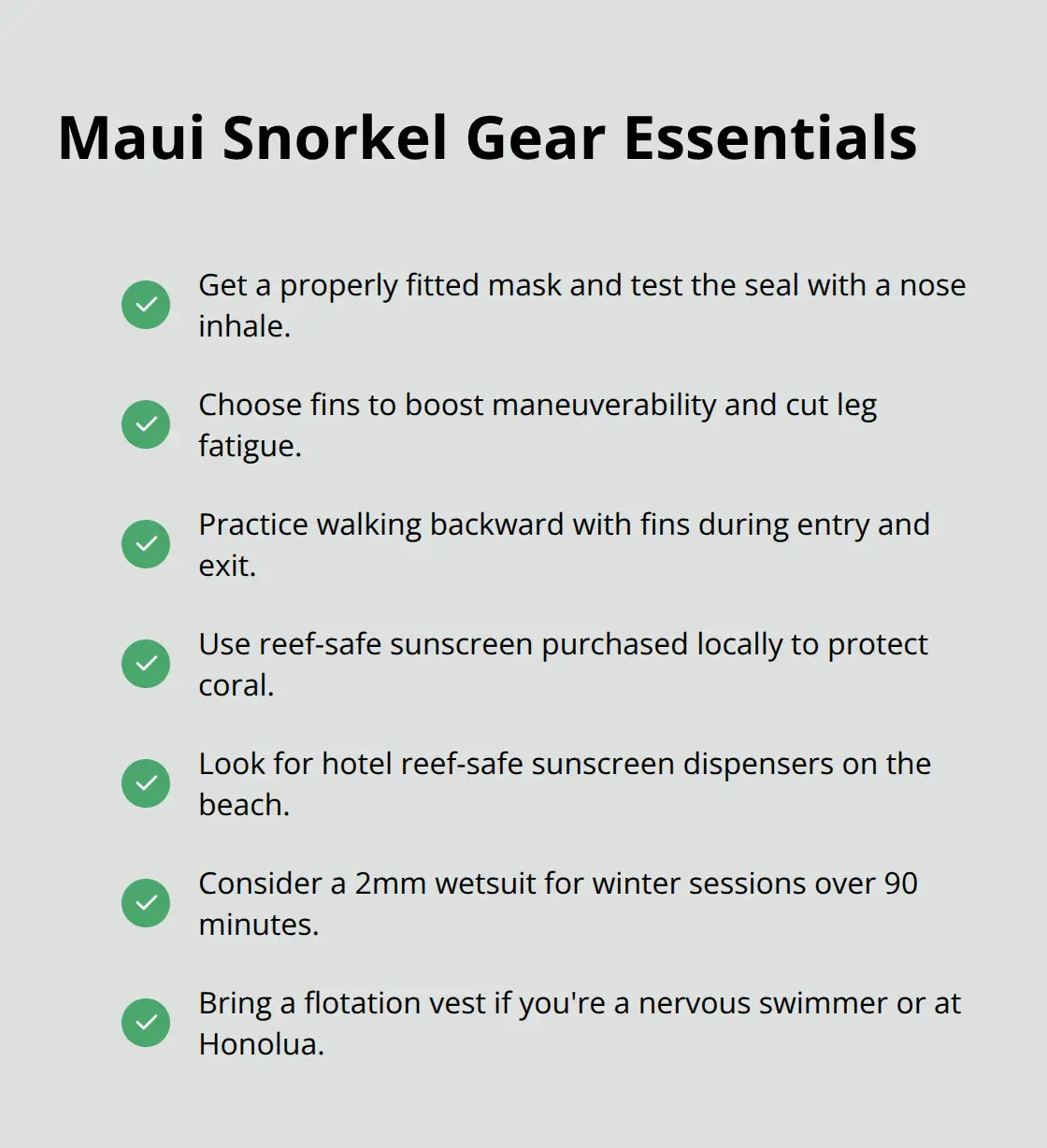
Fins dramatically improve maneuverability and reduce leg fatigue, making them essential for any snorkeling session beyond 30 minutes. Practice walking backward into the water with fins on to avoid tipping forward on entry. Reef-safe sunscreen cannot be skipped-purchase locally since mainland brands contain oxybenzone and octinoxate that damage coral. Many hotels provide reef-safe dispensers on their beaches. Wetsuits remain optional for summer snorkeling when water sits at 75–77°F, but winter sessions extending beyond 90 minutes warrant a 2mm suit for warmth and jellyfish protection.
Essential Safety Equipment and Flotation
Pack a flotation vest if you are a nervous swimmer or snorkeling at Honolua Bay where exits prove challenging. The vest provides confidence without restricting movement, and even strong swimmers benefit from its added buoyancy in choppy conditions. Always snorkel with a buddy and assign mutual safety checks every few minutes, staying within sight of each other. Hawaii’s tourist drowning statistics demonstrate that even experienced swimmers face unexpected hazards from rogue waves and sudden swells, so never turn your back on the ocean. Intermediate snorkelers should master the technique of descending head-down with forceful kicks while exhaling sharply to clear snorkels-a skill particularly essential at exposed locations like Honolua where rough exits demand confidence.
Timing Your Entry and Exit
Arrive at your chosen beach or tour departure point by 7:00–7:30 AM to maximize morning visibility and avoid afternoon crowds. Time your entry to follow a breaking wave into knee-deep water, then repeat this wave-timing technique when exiting to prevent being pulled offshore. Morning sessions consistently deliver superior clarity since winds intensify throughout the day, stirring up sediment and deteriorating sight lines by afternoon. Try scheduling snorkeling sessions between 7:00 AM and 1:00 PM, exiting the water by early afternoon when wind-driven waves intensify. West Maui spots like Molokini Crater and Black Rock perform best in early hours, often exceeding 100 feet of visibility on calm days, while south-facing shores become more favorable by afternoon if morning conditions proved rough.
Preparing for Specific Water Conditions
Your choice of destination ultimately depends on current ocean conditions, your experience level, and how much time you want to invest. Winter swells can make northern sites like Honolua Bay unsuitable for all but advanced snorkelers, but the Snorkel Report provides specific recommendations for which coast offers optimal conditions that particular day. Water temperature stays consistently around 75–77°F year-round, creating buoyancy that makes descending to deeper reefs surprisingly challenging even for strong swimmers. This stable temperature means you can snorkel comfortably throughout the year, though extended sessions in winter may warrant a wetsuit for added warmth and protection. Checking the daily snorkel report around 8:00–8:30 AM proves critical before committing to any location, since wind patterns dramatically shift which coast offers the best conditions on any given day.
Final Thoughts
Maui’s snorkeling best experiences emerge when you match your skill level to the right location and respect ocean conditions. Molokini Crater delivers unmatched visibility and marine diversity through guided boat tours, Turtle Town offers close encounters with Hawaiian green sea turtles at cleaning stations, and Honolua Bay rewards adventurous snorkelers with pristine reefs and solitude. Each destination serves different preferences, from full-day commitments to quick morning sessions.
Tour operators like Maui Snorkel Charters and Pride of Maui accept reservations online or by phone, with most tours departing early morning and including gear, breakfast, and lunch. Independent snorkelers arrive at their chosen beach by 7:00 AM with rented or personal equipment, armed with that morning’s snorkel report recommendation. Either path leads to encounters with tropical fish, sea turtles, and coral ecosystems that justify Maui’s reputation as Hawaii’s premier snorkeling destination.
Check the daily snorkel report by 8:00 AM to identify which coast offers optimal conditions that day, then adjust your plans accordingly rather than forcing a predetermined location. Invest in properly fitted gear and reef-safe sunscreen, recognizing that fins dramatically improve maneuverability while mainland sunscreen damages the very reefs you came to explore. Prioritize safety through a buddy system, wave-timing entries and exits, and exiting the water by early afternoon when wind-driven conditions deteriorate.