
Every winter, thousands of visitors come to Maui specifically for whale watching. Between January and March, humpback whales migrate over 3,000 miles from Alaska to Hawaiian waters, creating one of the most reliable marine wildlife experiences in the world.
At Maui Snorkel Charters, we’ve guided countless guests through these incredible encounters. Whether you’re planning your first whale watching adventure in Maui Hawaii or you’re a seasoned ocean explorer, this guide covers everything you need to know about timing, species, and choosing the right tour operator.
When to Visit Maui for Whale Watching
The whale season on Maui runs from December through April, but timing matters enormously for your experience. Peak activity occurs between January and March, when roughly 12,000 humpback whales migrate from Alaska to Hawaiian waters. During these three months, you’ll encounter the highest concentration of whales, the most dramatic behaviors like breaches and tail slaps, and the best odds of multiple sightings in a single outing. According to Frommer’s, the season builds gradually-December brings early arrivals and the first mothers and calves. January kicks off peak activity with frequent breaches and spy hops ideal for photography.
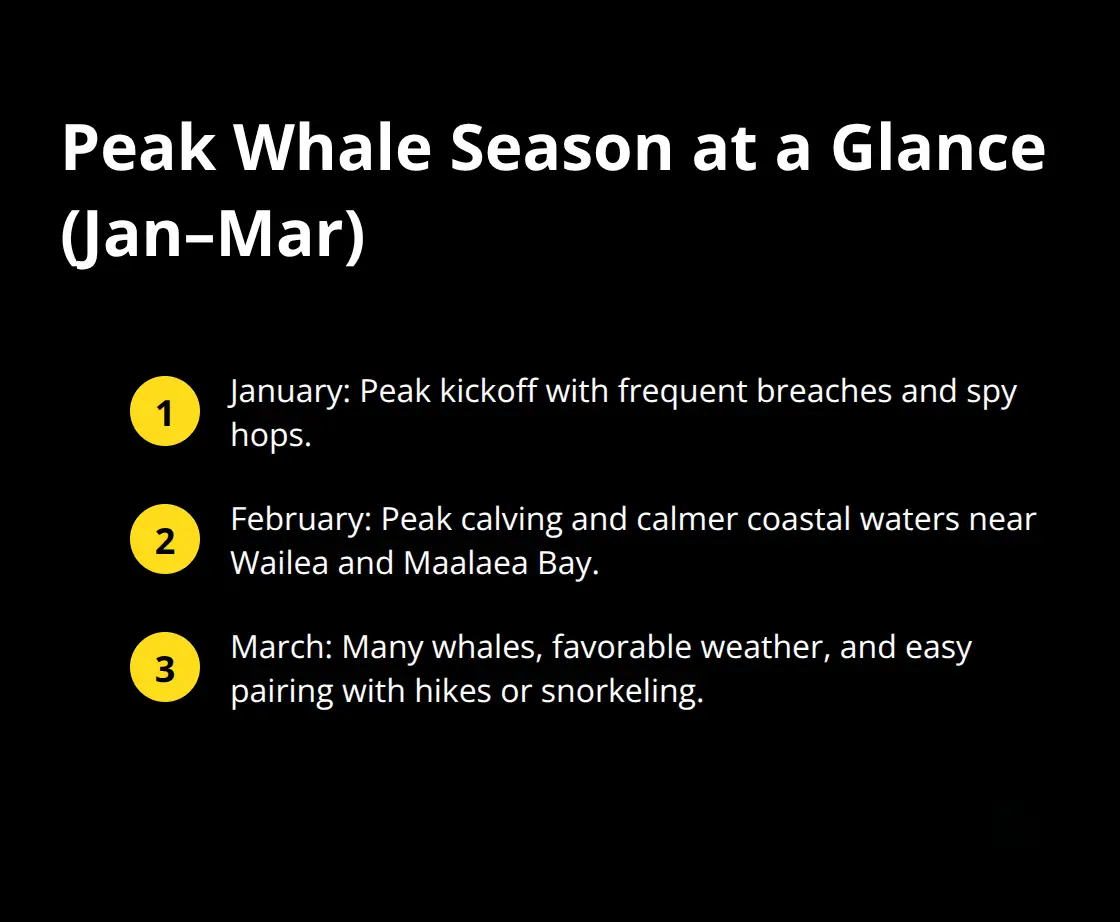
February marks peak calving season, with calm coastal waters near Wailea and Maalaea Bay offering prime conditions for spotting newborn calves in early mornings. March often delivers the whale-watching gold standard, combining many whales with favorable weather and opportunities to pair your tour with hiking or snorkeling. April sees mothers and calves linger longest, but sightings drop sharply after mid-April as migration northward accelerates.
Ocean Conditions Shape Your Viewing Success
Water temperature and sea state directly influence where whales congregate and how easily you’ll spot them. The shallow Auau Channel between Maui, Molokai, and Lanai concentrates whales close to shore, making this one of the world’s premier whale-watching grounds. Calm, glassy seas-most common in early mornings and late afternoons-offer superior visibility and more comfortable boat rides. Midday sun glare between 11 a.m. and 2 p.m. hampers water visibility significantly, so booking early-morning or sunset tours maximizes your chances.
Temperature and Whale Populations Peak Together
February and March typically deliver the calmest waters, making these months ideal for families or anyone prone to seasickness. Ocean temperatures peak around 80 degrees Fahrenheit in February and March, creating comfortable breeding grounds that draw the largest whale populations. If you visit during shoulder months like November or April, you’ll encounter fewer whales but also smaller crowds and lower prices-a genuine trade-off worth considering if flexibility suits your travel plans.
Timing Your Trip Strategically
Schedule your whale watch during your first days in Maui rather than waiting, which gives you flexibility to rebook if conditions disappoint. This approach works especially well since weather and sea conditions shift unpredictably throughout the season. Shoulder months offer real advantages for budget-conscious travelers who prioritize flexibility over guaranteed whale encounters.
What Marine Life You’ll See on a Maui Whale Watch
Humpback Whales: Size, Behavior, and What to Watch For
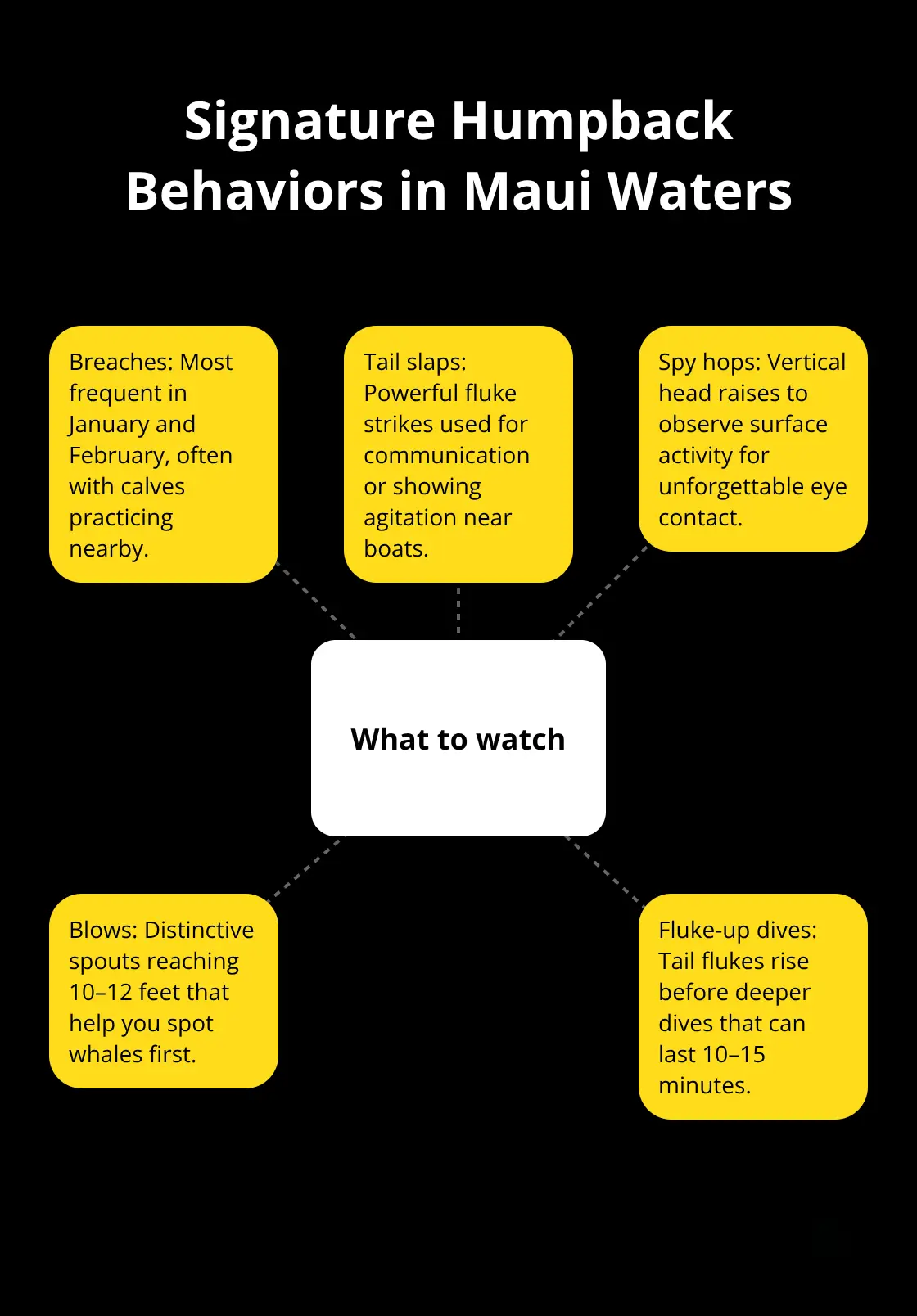
Humpback whales dominate Maui’s winter waters, and understanding their behavior transforms a casual boat ride into genuine wildlife observation. Humpback whales measure roughly 45 feet long, with mature adults weighing between 50,000 to 80,000 pounds when fully grown. You’ll witness specific, predictable behaviors that signal whale activity. Whales breach-launching their entire bodies from the water-most frequently in January and February when young calves practice alongside their mothers. Tail slaps occur when whales smack their flukes against the surface with tremendous force, typically when they communicate or express frustration with boat traffic. Spy hopping happens when a whale raises its head vertically to observe surface activity, offering an unforgettable eye-to-eye moment. Blows, the distinctive spray from their blowholes, travel 10-12 feet into the air and serve as your first spotting cue-look for the blow before scanning for the whale’s body.
Whale Dives and Underwater Sounds
Whales flukes when they dive deeply, raising their tail flukes as a final gesture before disappearing for 10-15 minutes between breaths. Listen carefully during boat tours; hydrophone systems often broadcast whale songs underwater, a haunting acoustic experience unique to the winter season. These vocalizations reveal the whales’ complex social structures and mating rituals happening beneath the surface.
Calves and Peak Calving Season
February and March deliver peak calving activity, meaning you’ll frequently encounter mothers with newborn calves close to shore in shallow waters near Wailea and Maalaea Bay. Calves are noticeably smaller and darker than adults, making identification straightforward. Watching a calf interact with its mother creates memories that last a lifetime.
Other Species in Maui’s Winter Waters
Beyond humpbacks, Maui’s winter waters occasionally host spinner dolphins, particularly in nearshore channels and bays where they rest during daylight hours. The endangered false killer whale appears less frequently but inhabits Hawaiian waters year-round, making any sighting scientifically significant. Pacific Whale Foundation’s research has documented these species’ movements around Maui since 1980, providing the most reliable behavioral data available. Green sea turtles frequent the same shallow reef systems where whale-watching tours operate, especially around Molokini Crater and Turtle Town in South Maui.
Maximizing Your Marine Wildlife Encounters
Sighting multiple species on a single outing remains common; many operators combine whale watching with snorkeling opportunities at no extra charge, maximizing your marine wildlife exposure. Ocean conditions during peak season create ideal visibility for spotting these encounters-the calm, shallow Auau Channel concentrates marine activity where it’s easiest to observe from the water. This abundance of marine life means your tour operator’s choice directly impacts what you’ll actually see, making the next section on selecting the right company essential to your planning.
How to Pick a Whale Watching Operator That Delivers Results
Boat Size and Group Dynamics Shape Your Experience
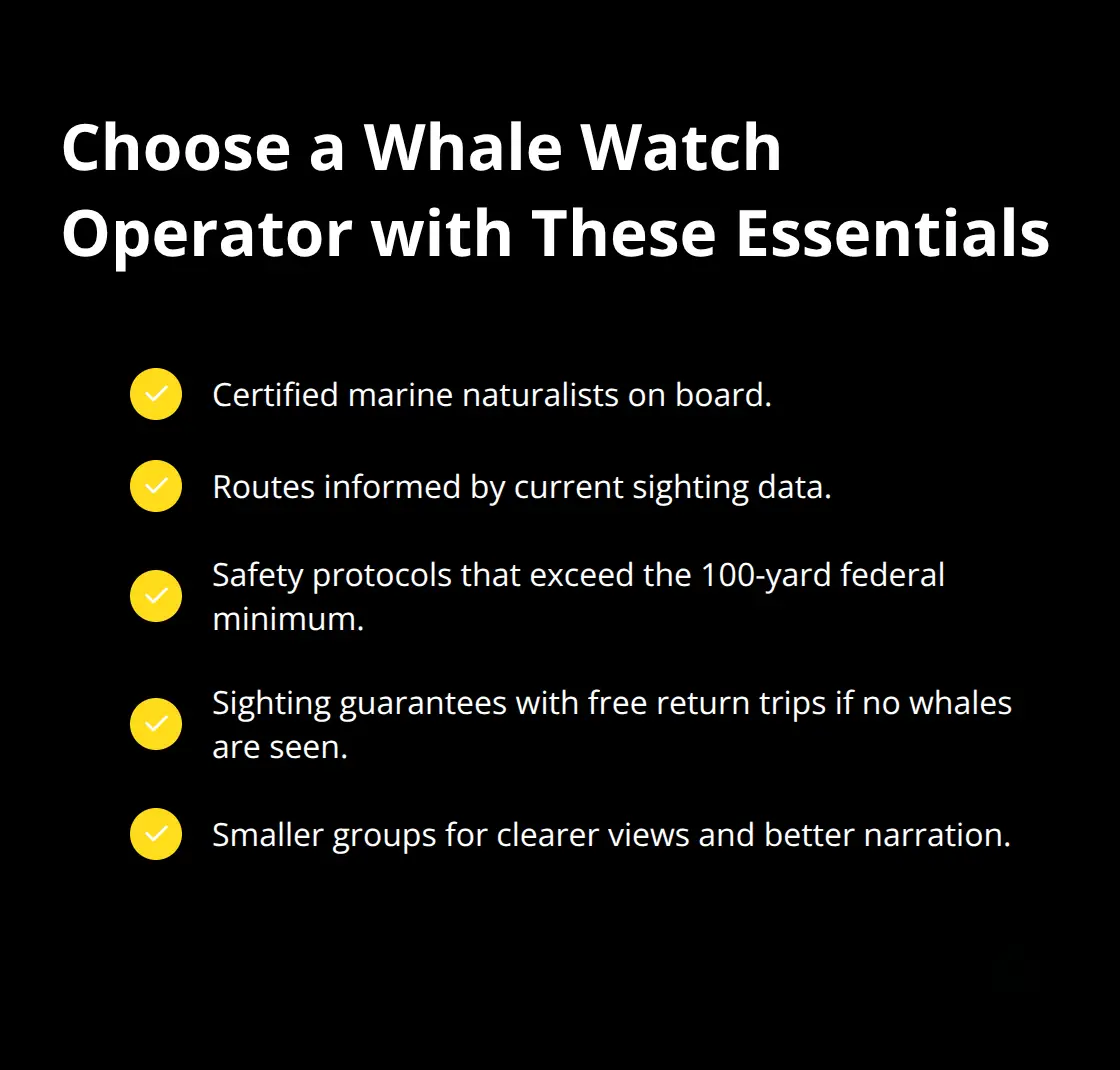
Selecting the right tour operator makes the difference between a forgettable boat ride and an encounter you’ll describe for years. Larger boats offer amenities like refreshments and bathrooms, but they create crowded observation decks and dilute the intimacy of whale encounters. Smaller operators provide closer water-level viewing and more personalized narration from crew members who actually know individual whale behaviors. According to Frommer’s, Pacific Whale Foundation operates roughly 15 daily trips with 2-hour cruises starting around $18 for adults, while Captain Steve’s Rafting Excursions charge approximately $39 for adults from Lahaina Harbor. Mid-range options like Sail Maui’s Saltwater Sail With the Whales tour cost around $90 and carry far fewer passengers than large operators. The price variation reflects boat size, amenities, and crew expertise rather than whale-spotting quality-a smaller, focused group often spots more whales because crew attention remains undivided and guests can actually hear naturalist commentary without shouting over engine noise.
Crew Expertise and Marine Naturalist Credentials
Crew experience matters far more than marketing claims. Look specifically for operators employing certified marine naturalists who can interpret whale behavior beyond basic facts. Pacific Whale Foundation has conducted non-invasive whale research since 1980 and stations marine naturalists at McGregor Point Lookout during peak season from 8 a.m. to 2 p.m., which demonstrates genuine commitment to education and conservation. Verify that your operator uses current sighting data to route boats toward recent whale activity rather than following fixed routes regardless of conditions. Safety protocols should include maintaining at least 100 yards distance from humpbacks under federal Marine Mammal Protection Act regulations, though responsible operators often exceed this standard.
Sighting Guarantees and Operator Confidence
Ask directly whether your operator offers sighting guarantees-if you don’t see whales, you receive another trip at no extra charge. This guarantee reflects operator confidence in their knowledge and local connections. Operators willing to back their expertise with free return trips have invested in understanding seasonal patterns and possess reliable relationships with other captains who share real-time sighting information.
The best operators also publish their research findings and annual reports, showing transparency about their conservation impact and operational practices. This accountability separates operators who genuinely care about whale welfare from those simply chasing profits.
Final Thoughts
Whale watching in Maui Hawaii succeeds because the shallow Auau Channel concentrates roughly 12,000 migrating humpbacks close to shore during winter months, creating viewing opportunities unmatched anywhere else in the continental United States. Visit between January and March for peak whale activity, select an operator with certified marine naturalists and transparent safety practices, and book early in your trip to allow flexibility if conditions shift. These three decisions transform a casual boat ride into a memory that defines your entire Maui experience.
The best operators maintain smaller group sizes, employ crew members who understand whale behavior beyond surface-level facts, and back their expertise with sighting guarantees. They publish research findings and demonstrate genuine commitment to ocean conservation rather than simply extracting profit from whale encounters. When you book with an operator like this, your tour fee directly supports marine research and protection efforts that benefit the whales you’re watching.
Whale watching represents just one piece of your Maui adventure, and we at Maui Snorkel Charters understand that our small-group approach means you’ll actually hear your naturalist’s commentary and experience whales without fighting crowds. Book a winter whale watch with us and pair it with snorkeling at Molokini Crater or Turtle Town during the same trip, maximizing your marine wildlife encounters across multiple species and ecosystems.
Call 808-270-8776