
Humpback whales migrate to Hawaiian waters every winter, and Maui offers some of the best viewing opportunities in the world. Between January and March, thousands of these magnificent creatures swim through our channels and along our coasts, creating unforgettable moments for visitors.
At Maui Snorkel Charters, we’ve guided countless guests through peak whale watching season, and we know exactly where and when you’ll have the best experience. This guide covers everything you need to plan an incredible whale watching Hawaii Maui adventure.
Best Time to See Humpback Whales in Maui
Peak Season: January Through March
January through March marks the absolute best window to see humpback whales in Maui, and frankly, if you visit outside this window, you miss the main event. The North Pacific humpback population migration to Hawaiian waters brings these whales to breed, birth calves, and raise young in warm, protected channels. These whales can complete the 3,000 mile trip in as few as 28 days. Peak activity concentrates in February, when humpback density reaches its highest point and your chances of close encounters skyrocket.
Understanding the Migration Timeline
December marks the beginning of the season as early arrivals start filtering in, while April signals the tail end as most pods start their northbound migration back to feeding grounds. February brings the densest whale populations, making it statistically your best bet for sightings. Late January through February offers the best odds of spotting mothers with calves, an experience that tops most visitors’ wish lists. March still delivers reliable sightings but features fewer calves and increasing numbers of whales heading back north.
Water Conditions and Calf Season
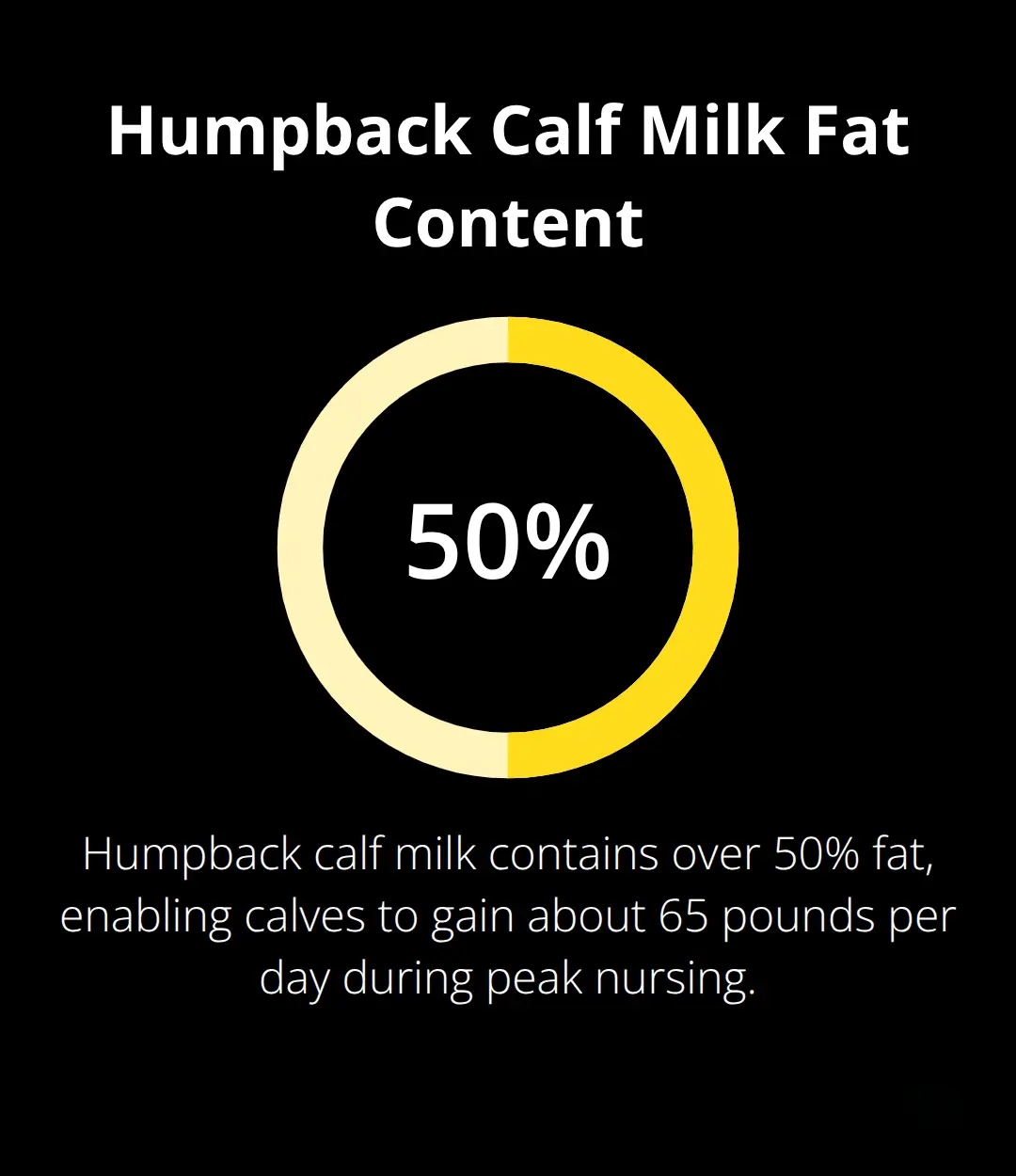
Water temperatures hovering around 74 to 78 degrees Fahrenheit create ideal conditions for breeding and calf-rearing, which is why whales select Hawaiian waters over anywhere else. Newborn calves arrive weighing approximately 2,000 pounds and grow while nursing on milk containing over 50 percent fat, gaining about 65 pounds daily.
February and early March typically offer calmer water conditions that make both boat tours and shore viewing more comfortable. Try mid-February through mid-March when you get the combination of maximum whale presence and the most stable ocean conditions (ideal for photography and comfort alike).
Late season viewers in March still enjoy reliable sightings but face fewer calves and increasing numbers of departing whales. With this timing in mind, your next decision involves choosing where to position yourself for the best views-whether from the water or from Maui’s spectacular coastline.
Where to Watch Whales Around Maui
West Maui’s Prime Whale Corridors
Maui’s geography creates multiple excellent vantage points for whale watching, and your choice between boat tours and shore viewing depends on budget, comfort level, and how close you want to get. The West Maui coast between Māʻalaea and Lahaina offers the most consistent sightings because humpbacks funnel through the shallow channels between Maui and neighboring islands during migration. This area experiences less wind interference and provides natural corridors where whales congregate, making it statistically your safest bet for encounters.
South Maui Viewing Spots
South Maui from Kīhei to Wailea also delivers reliable viewing, though slightly fewer sightings than West Maui since whales concentrate more heavily in the channel areas. If you choose shore viewing, McGregor Point Lookout between Lahaina and Māʻalaea operates a free information station from December through May with interpretive displays and excellent sightline access. Makena Beach Park, Puʻu Olaʻi behind Little Beach, and the lava flow between Little and Big Beach rank among the strongest shore spots on the South side.
Essential Gear for Shore Viewing
Bring quality binoculars regardless of location-watching for tall vapor plumes from blowholes helps you spot whales before they surface, giving you precious seconds to position yourself for better views. Shore viewing costs nothing and works reasonably well with proper binoculars and patience, though you’ll see fewer details and miss the underwater acoustic experience that boat tours provide.
Boat Tours Deliver Superior Encounters
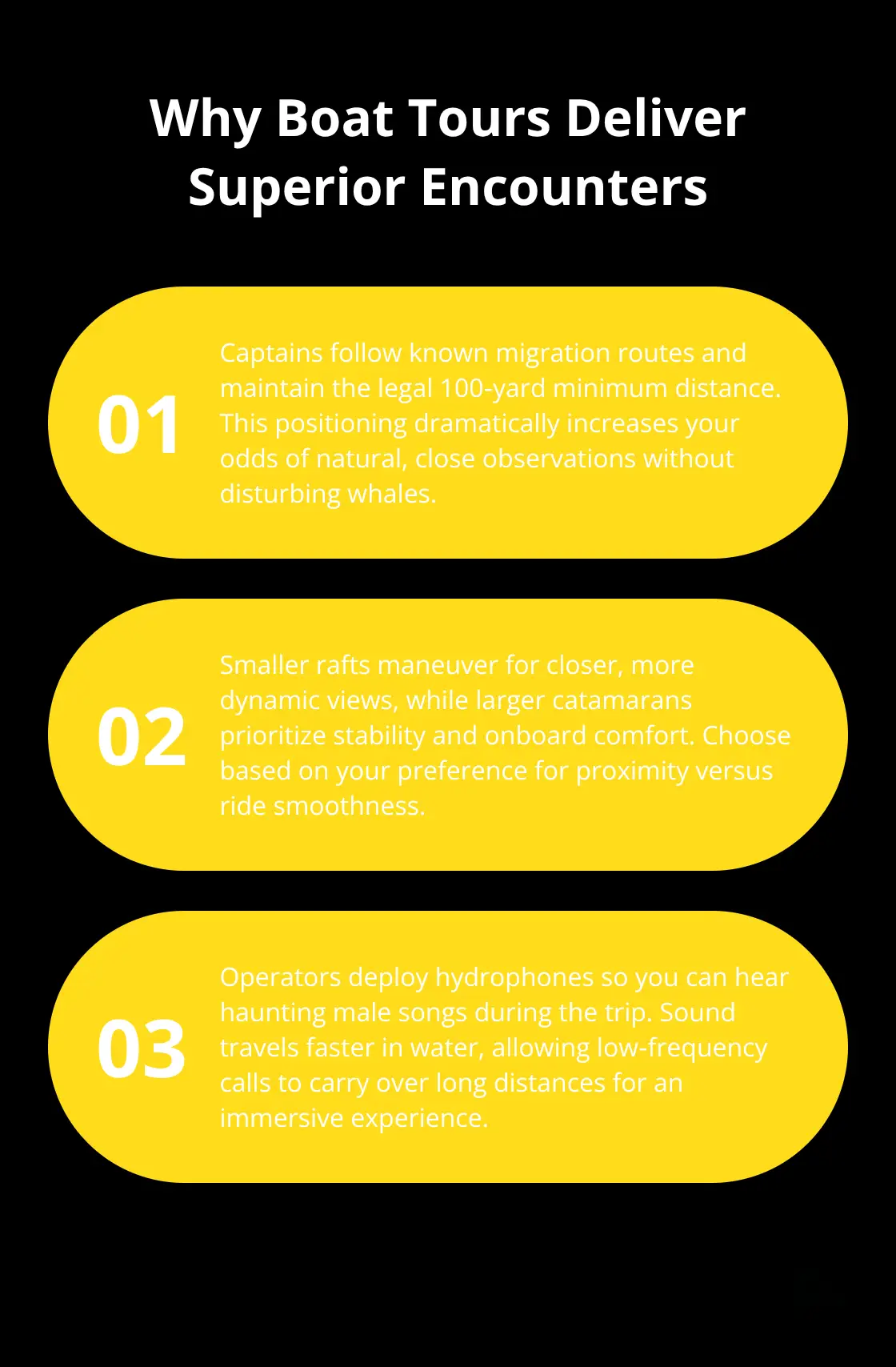
Boat tours absolutely dominate whale watching effectiveness because captains position vessels along known migration routes and wait for whales to approach within legal viewing distance, which Hawaii state law sets at 100 yards minimum. Smaller boats and rafts deliver the closest encounters due to maneuverability, though larger catamarans provide smoother rides and better onboard comfort during rough seas. Tours typically run two hours, and professional operators employ underwater hydrophones so you hear male whale songs during the voyage-sound travels four times faster in water than air, allowing these low-frequency vocalizations to reach distant whales, an experience shore viewing simply cannot match.
Choosing Your Departure Point and Season Strategy
Most boat departures operate from Māʻalaea Harbor or Kihei, with check-in typically 45 minutes before departure. The real advantage of boats shows itself in February when calf sightings peak: mothers nurse calves in predictable areas, and captains who know these locations position you for unforgettable maternal behavior viewing impossible from shore. With your viewing location and method selected, the next step involves preparing yourself physically and gathering the right gear to maximize comfort and safety throughout your adventure.
What to Bring and How to Prepare for Whale Watching
Essential Gear for Ocean Conditions
Ocean spray, intense sun, and unpredictable weather demand gear that actually performs rather than what looks good on Instagram. Reef-safe sunscreen matters more than most realize because some sunscreens may harm corals and other marine life; apply at least SPF 30 and reapply every two hours, especially on boat tours where water reflection intensifies UV exposure. A lightweight waterproof jacket outperforms heavy layers since ocean breezes keep temperatures cooler than land readings suggest, and moisture from spray renders cotton useless within minutes. Quality binoculars become essential equipment whether you choose boat or shore viewing; 7×50 magnification or higher specifically designed for maritime use lets you spot blowholes from greater distances and reveals behavioral details impossible to see with naked eyes. A wide-brimmed hat with a chin strap prevents wind from removing headwear instantly, and the combination of hat plus sunglasses protects your face from both UV rays and salt spray that causes premature aging.
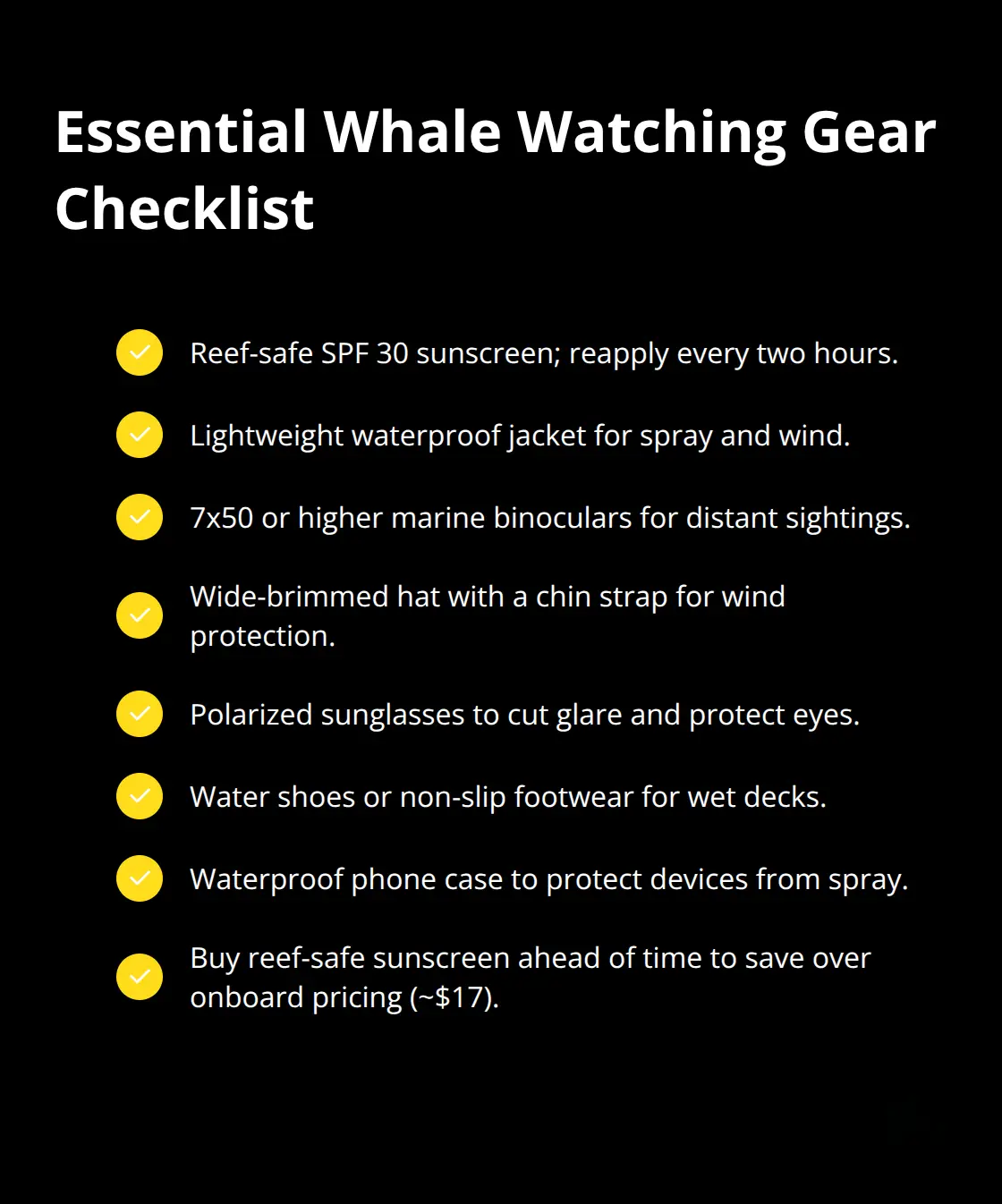
Water shoes or non-slip footwear prevent dangerous slipping on wet boat decks, particularly important during rough seas when maintaining balance becomes critical. Reef-safe sunscreen in a sugarcane tube costs about $17 onboard if you forget to pack it, though purchasing before arrival costs less.
Managing Motion and Physical Readiness
Whale watching requires minimal physical fitness compared to hiking, yet boat motion affects people differently, so take seasickness prevention seriously if you have any history of motion sensitivity. Ginger supplements taken 30 minutes before departure reduce nausea effectively, and focusing on the horizon during the journey helps your inner ear adjust to wave motion. Eat a light breakfast rather than arriving hungry because low blood sugar amplifies nausea and fatigue, though avoid heavy or greasy foods that sit poorly in rough seas. Staying hydrated throughout the experience prevents headaches and dizziness, yet many visitors underestimate how dehydrating ocean sun exposure becomes; bring a refillable water bottle and drink consistently rather than waiting until thirst arrives. Most boat operators limit capacity to ensure passenger comfort and safety, with typical tours accommodating around 20 to 67 people depending on vessel size. Inform crew members about any medical conditions, mobility limitations, or medications that might interact with motion since professional operators adjust their approach when they understand your needs.
Capturing Whales Through Your Lens
Photography tempts visitors to spend entire encounters staring through phone screens rather than experiencing moments directly, so establish a personal rule about camera usage before boarding. Whales move unpredictably, making autofocus essential; set your camera or phone to continuous autofocus mode and use burst shooting to capture multiple frames since one perfect shot among dozens beats missing the moment while adjusting settings. Telephoto lenses between 70mm and 200mm work better than wide angles because they compress distance and reveal behavioral details like tail slaps and spy hops that appear insignificant to naked eyes. Shutter speeds of at least 1/500th second freeze whale motion, preventing blurry images that frustrate photographers later. Waterproof phone cases protect expensive equipment from salt spray and accidental drops, costing $20 to $40 and providing insurance against expensive mistakes. Avoid using flash because it disorients whales and violates ethical viewing principles that responsible operators enforce; natural lighting during morning hours produces superior images anyway since the sun angle creates definition without harsh shadows.
Final Thoughts
Peak whale watching season from January through March delivers the most reliable and rewarding encounters you’ll experience in Hawaii, with February standing out as the absolute best month when humpback density peaks and mothers with calves congregate in predictable areas. Waiting until peak season rather than visiting during off-months dramatically increases your odds of close encounters and behavioral sightings that create lasting memories. Your investment in time and money pays off with unforgettable moments that stay with you long after you return home.
Whale watching pairs perfectly with Maui’s other ocean adventures, allowing you to maximize your vacation without feeling rushed or sacrificing other activities. Many visitors combine whale watching Hawaii Maui with snorkeling trips to Molokini Crater or Turtle Town, experiencing multiple marine ecosystems in a single day while morning whale watches leave plenty of afternoon time for beach relaxation, hiking, or exploring Maui’s towns. This flexibility means you experience cetacean encounters without compromising the rest of your island adventure.
We at Maui Snorkel Charters operate small-group tours with a maximum of 20 passengers, meaning you’ll experience whale watching with personalized attention rather than feeling like a number on a crowded vessel. Our winter season Pacific Humpback Whale watches depart from Kihei starting at $99 per person and include professional guidance with the same commitment to responsible wildlife viewing that defines everything we do. The window for peak whale watching closes quickly each year, so book your adventure with us today and secure your spot during the season when humpbacks gather in the channels surrounding Maui.
Call 808-270-8776