WHALE SEASON BEGINS DEC 15 • EARLY BOOKING OPEN

Reef invertebrates
Hawaiian octopuses — Maui wildlife guide
Day and night octopuses · Heʻe
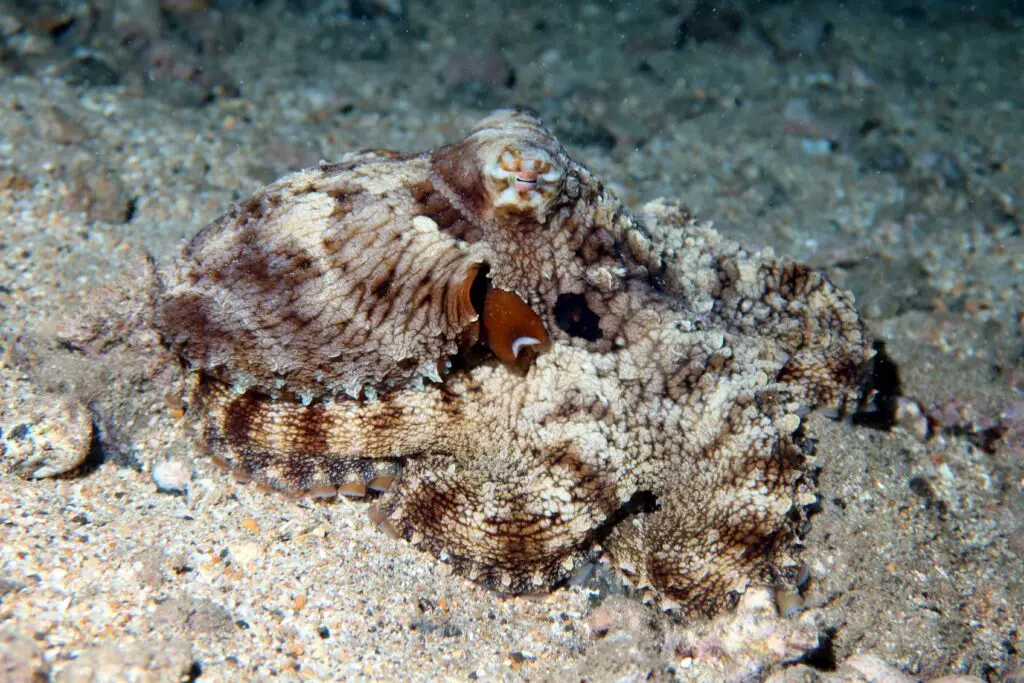
Heʻe are octopuses: eight-armed mollusks capable of remarkable changes in color and texture. On a Maui reef, recognizing one may require noticing a shape that appears to blend into its surroundings. This guide focuses on Hawaiian reef octopuses, not the giant Pacific octopus of colder waters.
Group
Cephalopod mollusk
Arms
Eight
Useful example
Day octopus, Octopus cyanea
Food
Marine animals including crustaceans
An animal without an external shell
An octopus is a mollusk despite lacking the obvious shell of a snail. Its soft body and flexible arms let it use reef shelter. Suckers help it investigate and manipulate its surroundings. These are living sensory and feeding structures, not handles for a visitor. [1]
Camouflage is more than a color change
Octopuses can alter appearance using skin pigmentation and surface texture. A resting animal may resemble the surrounding rock. Notice the eye, mantle and arm arrangement rather than assuming every mottled shape is an octopus. Day and night species differ, so a photograph needs more than the label “Hawaiian octopus.” [1]
Food and movement
Octopuses take animal prey such as crabs and other mollusks. They can crawl with their arms and use jet propulsion through a siphon. An animal retreating or inking should not be pursued for a better view. Leave crevices undisturbed and do not pull objects apart to find hidden wildlife. [1]
Observing a natural reef encounter
If the crew points out an octopus, stay buoyant and allow others room to see. Touching, lifting or passing the animal between people is not a wildlife-identification activity. Photograph from the viewing position rather than moving the animal into a cleaner background.
Connect what you saw with the reef community
The mollusk, moray and lobster pages offer different views of the same habitat. An octopus can be a predator and also prey for other marine animals. Keep species identification separate from the delight of the sighting: an honest “octopus seen on the reef” is useful even before a more exact name is known.
Questions visitors ask
Is an octopus a fish?
No. It is a cephalopod mollusk.
Does every octopus pictured online occur in Hawaiʻi?
No. In particular, a giant Pacific octopus should not be used as a Hawaiian day-octopus photograph.
Can the crew lift one for a photo?
The wildlife guide promotes observation without handling or manufactured encounters.
Sources & further reading
Research sources checked November 16, 2026. Wildlife timing, appearance and sightings vary. This guide is not a live sighting report.

Ocean adventures from Kihei, Maui
Let’s make a Maui memory.
Snorkeling · Molokini · Whale Watching · Sunset Cruises
© Maui Snorkel Charters. Routes and wildlife encounters vary with ocean conditions.