WHALE SEASON BEGINS DEC 15 • EARLY BOOKING OPEN
Fish identification
Acanthocybium solandri · Ono
Ono is the Hawaiian name widely used for wahoo, a streamlined open-ocean fish. A restaurant name, fishing report and underwater sighting describe very different contexts. This profile introduces the living animal and its place in the ocean without suggesting that an MSC snorkel trip is a fishing charter.
Bony fish
Acanthocybium solandri
Tropical and subtropical open water
Long body and pointed snout
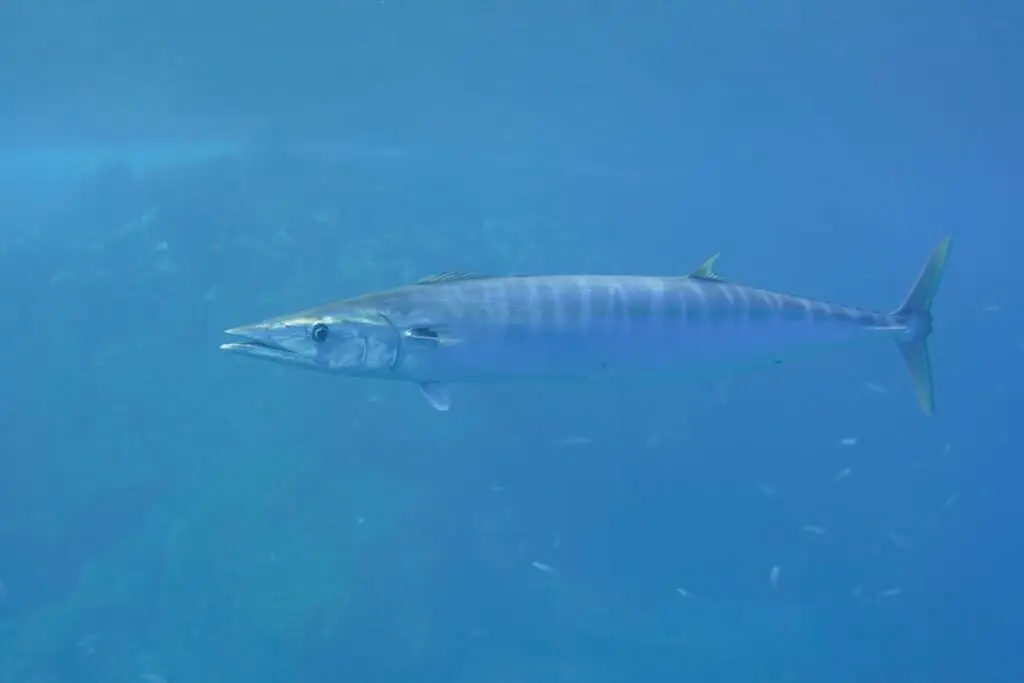
Wahoo have an elongated body, a long pointed snout and a deeply forked tail. The upper body is blue and the sides are lighter, often with vertical bars. Color can change after capture, so a dockside catch photograph may look different from a fish seen alive underwater. [1]
Wahoo occupy warm open-ocean waters and eat other fishes. They can occur alone or in small groups. Their mobile offshore life differs from fish that shelter in one reef crevice or defend a small territory. A named snorkeling stop is not a dependable place to find an ono. [1]
A fish may pass through a boat route without staying long enough for identification. Record shape, color and movement from a safe position rather than leaning out to follow it. Keep an uncertain fish labeled as uncertain until a better photograph or source supports a species name.
MSC tour descriptions determine the activities offered. This wildlife page does not add fishing, handling or a catch to a snorkeling, whale-watch or sunset booking. It is part of a broader ocean reference library for people curious about what lives beyond the reef.
Yes. This guide uses ono for Acanthocybium solandri.
No. Only the activities described for the selected product are included.
Ono are open-water fish, so a reef stop does not guarantee a sighting. This guide helps you recognize one if the opportunity arises.
Research sources checked November 16, 2026. Wildlife timing, appearance and sightings vary. This guide is not a live sighting report.
Ocean adventures from Kihei, Maui
Snorkeling · Molokini · Whale Watching · Sunset Cruises
© Maui Snorkel Charters. Routes and wildlife encounters vary with ocean conditions.
We use necessary cookies to run this site and provide the services you request. With your permission, we also use statistics cookies to understand visits and optional services such as maps and videos. You can accept, reject optional cookies, or change your choices at any time.