

WHALE SEASON BEGINS DEC 15 • EARLY BOOKING OPEN
Fish identification
Rhinecanthus rectangulus · Humuhumunukunukuāpuaʻa
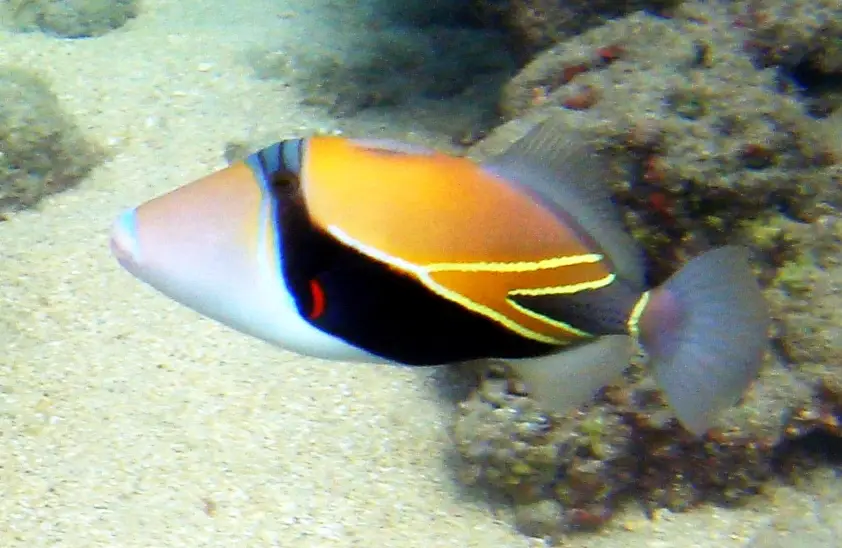
Humuhumunukunukuāpuaʻa is one of Hawaiʻi’s most memorable fish names. The reef triggerfish also has a distinctive angular shape and bold pattern. This guide helps connect the name with a real animal and separates it from related triggerfishes with overlapping common names.
Triggerfish
Rhinecanthus rectangulus
Up to about 10 inches
Shallow outer reefs
This profile focuses on Rhinecanthus rectangulus. Its long Hawaiian name is also used for the related lagoon triggerfish, Rhinecanthus aculeatus. The scientific name and the complete pattern matter when choosing a reference photo or identifying a fish from your trip. [1]
Look for the angular body, small pointed mouth and strong color boundaries. The dorsal and anal fins provide much of its characteristic motion. It often swims near the bottom while looking for food, rather than behaving like a constantly traveling open-ocean fish. [1]
The reef triggerfish eats algae and reef invertebrates, including small crustaceans and other bottom-associated animals. Its jaws are small but powerful. Keep the encounter observational: do not offer food, handle the fish or try to demonstrate its dorsal spine. [1]
A side view showing the head, body and tail can help identification later. If the fish moves away, allow it to do so. Do not let finding the state-fish example distract you from your group, buoyancy or surroundings. The most useful photograph is one made without changing the animal’s behavior.
Ask what looks different between this fish and a moray. Compare the fins, mouth, body shape and way each uses the reef. The reef-fish guide makes those comparisons easy without requiring children or first-time visitors to remember a long list of unfamiliar names.
No. The scientific name used here is Rhinecanthus rectangulus.
No. Common names can overlap; confirm the scientific identity and markings.
No individual fish species is guaranteed during a snorkeling stop.
Research sources checked November 16, 2026. Wildlife timing, appearance and sightings vary. This guide is not a live sighting report.
Ocean adventures from Kihei, Maui
Snorkeling · Molokini · Whale Watching · Sunset Cruises
© Maui Snorkel Charters. Routes and wildlife encounters vary with ocean conditions.
We use necessary cookies to run this site and provide the services you request. With your permission, we also use statistics cookies to understand visits and optional services such as maps and videos. You can accept, reject optional cookies, or change your choices at any time.