

WHALE SEASON BEGINS DEC 15 • EARLY BOOKING OPEN
Whales & dolphins
Stenella longirostris · Naiʻa
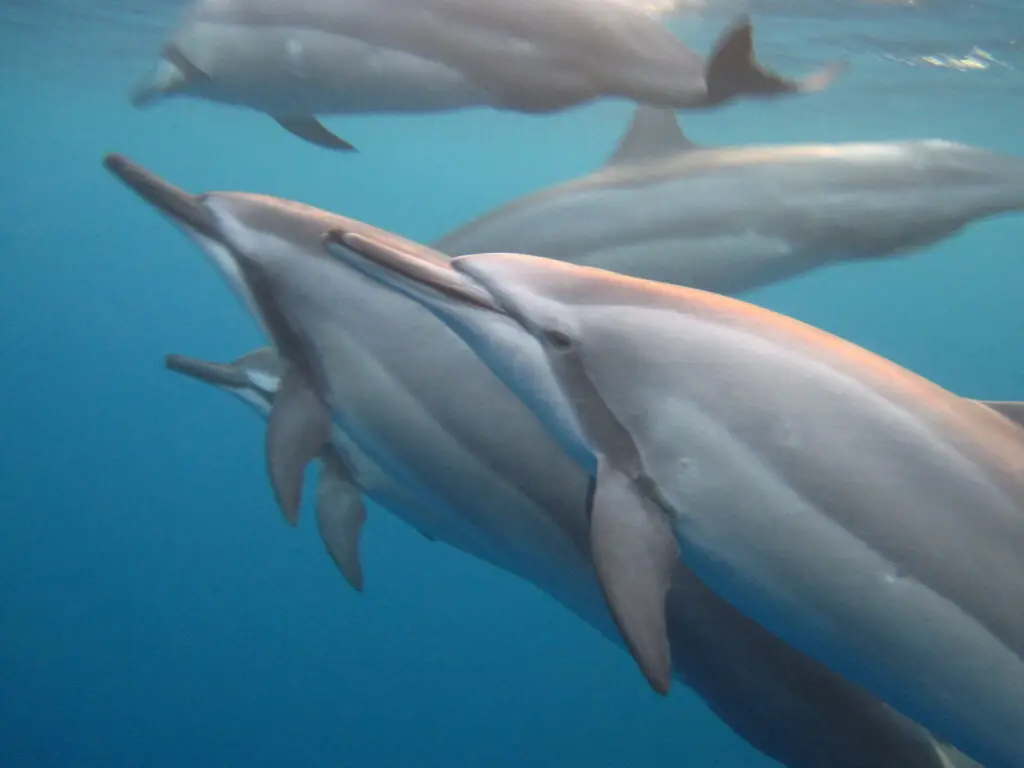
Spinner dolphins are known for spectacular spins, but rest is just as important to their day. Hawaiian spinner dolphins often feed at night and rest in coastal waters by day. Responsible viewing protects that daily rhythm instead of trying to wake or follow a pod.
Toothed whale / dolphin
Stenella longirostris
Slender body and long beak
From the boat
Hawaiian spinner dolphins have a slender body, a long narrow beak and a three-tone pattern: darker above, lighter along the side and pale below. A spin can be distinctive, but normal surfacing may be all that is visible. Different dolphins should not be identified only from an exciting behavior. [1]
They feed at night on small prey such as fishes, squid and shrimp. Daytime rest and social behavior are necessary parts of the cycle. An animal in a sheltered bay is not necessarily seeking interaction; repeated close approaches can interrupt important behavior. [1]
Federal rules prohibit swimming with, approaching or remaining within 50 yards of Hawaiian spinner dolphins in the covered coastal waters. Follow the captain’s instructions and current NOAA guidance. Never enter the water to pursue dolphins or try to turn a boat-based sighting into a swim. [2]
Some MSC itineraries pass coastal areas such as Puʻu Olaʻi, where dolphins may be observed from the boat. The route and the animals’ natural behavior shape each opportunity; a dolphin sighting is not guaranteed.
A group traveling naturally can be just as interesting as a leap. Notice spacing and surfacing, photograph from the boat and leave the animals room. No particular jump or behavior can be promised. The bottlenose profile provides a useful comparison for another kind of dolphin.
No. MSC dolphin viewing is from the boat.
No. Resting, traveling and ordinary surfacing are also normal behaviors.
Follow the crew and protected-wildlife requirements; rest is not an invitation to approach.
Research sources checked November 16, 2026. Wildlife timing, appearance and sightings vary. This guide is not a live sighting report.
Ocean adventures from Kihei, Maui
Snorkeling · Molokini · Whale Watching · Sunset Cruises
© Maui Snorkel Charters. Routes and wildlife encounters vary with ocean conditions.
We use necessary cookies to run this site and provide the services you request. With your permission, we also use statistics cookies to understand visits and optional services such as maps and videos. You can accept, reject optional cookies, or change your choices at any time.