

WHALE SEASON BEGINS DEC 15 • EARLY BOOKING OPEN
Fish identification
Thunnus albacares; Thunnus obesus · ʻAhi
ʻAhi can mean yellowfin or bigeye tuna in Hawaiʻi. These are distinct open-ocean fishes, not two names for one identical animal. Understanding the difference connects a familiar island term with the fish’s appearance, feeding and habitat.
Tunas
Thunnus albacares
Thunnus obesus
Open ocean
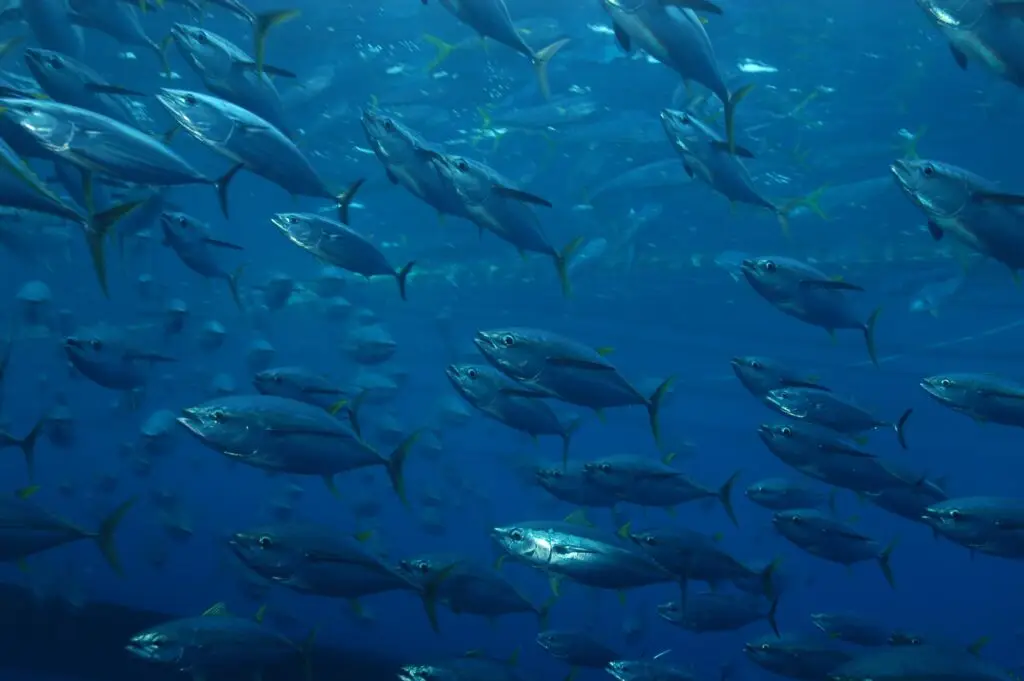
Yellowfin have a streamlined body, a metallic blue back and lighter sides. Their dorsal and anal fins and finlets have characteristic yellow coloring; large adults can have long fins. Juveniles are harder to distinguish, so a whole-body image is more useful than a single fin. [1]
Bigeye tuna resemble yellowfin but have proportionally larger eyes and other differences. They use deeper water as part of their behavior. An image described only as “ahi” should not be assumed to show either species without further identification. [2]
Explore this guide to learn about tuna in Maui’s surrounding ocean. For your boat day, choose from MSC’s listed itineraries by duration, route and participation requirements; tuna fishing, catch handling and a dedicated tuna encounter are not included.
Each photograph should name the species where known and identify the source. Appearance after capture can differ from the living fish. A yellowfin example can illustrate the yellowfin section, but it should not silently stand in for a bigeye identification. Uncertainty is better shown than hidden behind a confident generic caption.
No. It is used for yellowfin and bigeye; this page separates them.
A tuna is not a promised feature of an MSC snorkeling stop.
A direct comparison answers the common naming question while preserving the biological differences.
Research sources checked November 16, 2026. Wildlife timing, appearance and sightings vary. This guide is not a live sighting report.
Ocean adventures from Kihei, Maui
Snorkeling · Molokini · Whale Watching · Sunset Cruises
© Maui Snorkel Charters. Routes and wildlife encounters vary with ocean conditions.
We use necessary cookies to run this site and provide the services you request. With your permission, we also use statistics cookies to understand visits and optional services such as maps and videos. You can accept, reject optional cookies, or change your choices at any time.