

WHALE SEASON BEGINS DEC 15 • EARLY BOOKING OPEN
Whales & dolphins
Tursiops truncatus · Naiʻa
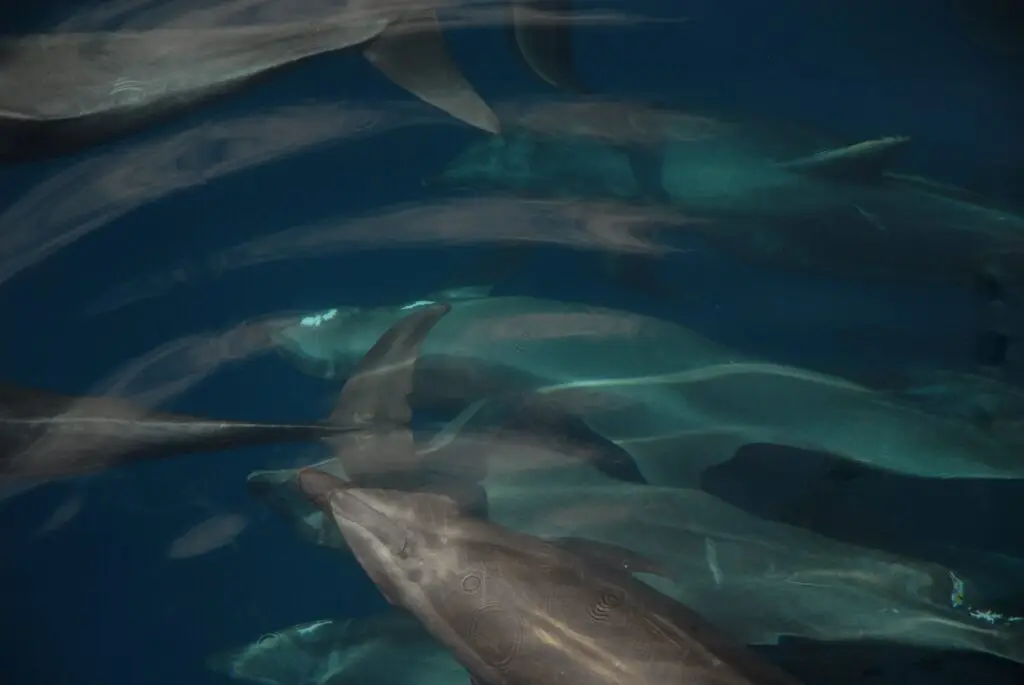
The common bottlenose dolphin has a sturdier outline and shorter, thicker beak than a spinner dolphin. It is an air-breathing marine mammal with a complex social life. A natural sighting can be rewarding without entering the water or encouraging the animal to follow a boat.
Toothed whale / dolphin
Tursiops truncatus
Robust body and short beak
Fish, squid and crustaceans
Common bottlenose dolphins are gray with a relatively robust body and short, thick rostrum. A curved dorsal fin is another useful feature. Size alone is not sufficient, especially during a brief view. Compare several traits with the spinner guide before assigning a species. [1]
Bottlenose dolphins use sound to investigate their surroundings and locate prey. They eat fish, squid and crustaceans, with feeding behavior varying among habitats. Social groups can change rather than remaining in one permanent arrangement. [1]
Observe from the boat and follow the crew’s directions. Do not feed, touch or pursue a dolphin, and do not enter the water because an animal happens to come near the vessel. NOAA’s wildlife-viewing guidance provides further context for appropriate separation. [3]
A dolphin sighting may add to an ocean day, but the selected product’s route, duration and activities should drive the booking decision. No bottlenose dolphin or behavior is promised. Use the comparison guide after a sighting to build on what was actually observed.
No. These are different dolphin species.
No dolphin-swim activity is part of the itineraries described here.
No. Let the animal move naturally and follow the crew’s instructions.
Research sources checked November 16, 2026. Wildlife timing, appearance and sightings vary. This guide is not a live sighting report.
Ocean adventures from Kihei, Maui
Snorkeling · Molokini · Whale Watching · Sunset Cruises
© Maui Snorkel Charters. Routes and wildlife encounters vary with ocean conditions.
We use necessary cookies to run this site and provide the services you request. With your permission, we also use statistics cookies to understand visits and optional services such as maps and videos. You can accept, reject optional cookies, or change your choices at any time.