
WHALE SEASON BEGINS DEC 15 • EARLY BOOKING OPEN
Reef invertebrates
Acanthaster spp.
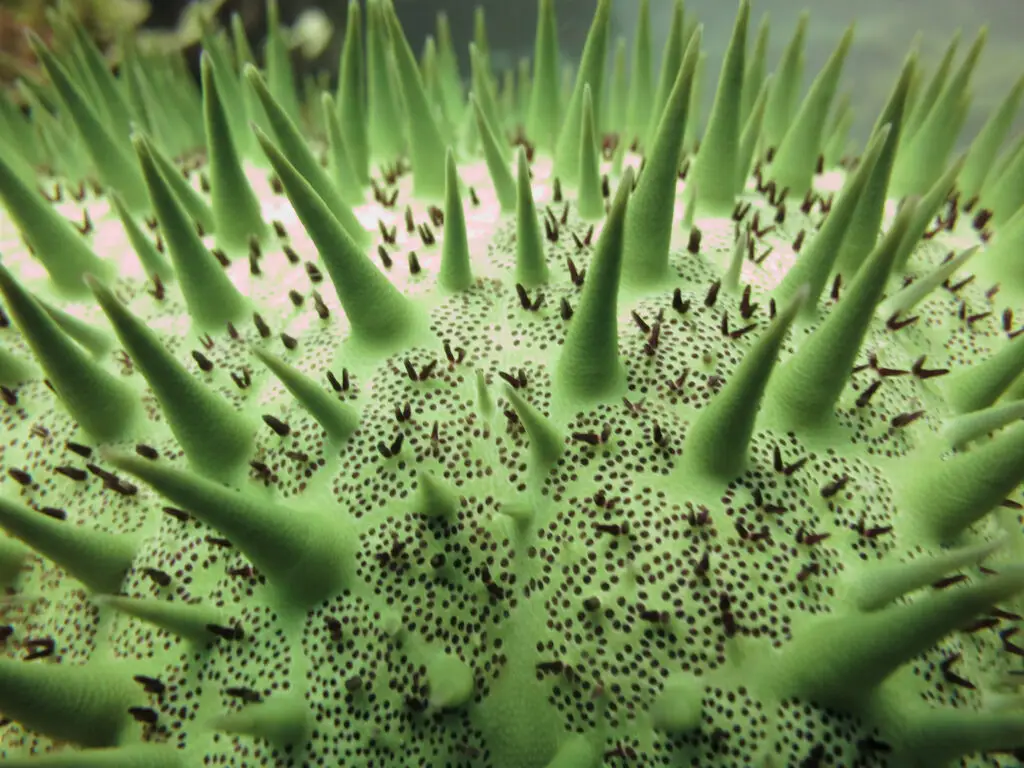
A crown-of-thorns is a many-armed, heavily spined sea star that feeds on coral. Its appearance can be startling, but the Hawaiian animal is native—not automatically an introduced pest. Understanding the difference between ordinary presence and an outbreak prevents a visitor from making a harmful decision.
Echinoderm
Acanthaster species complex
Coral tissue
Observe; do not handle or remove
Numerous arms and long spines distinguish crown-of-thorns from a small, slender-armed sea star. Do not touch the spines or attempt to turn the animal over. Identification does not require handling, and a photograph from a normal viewing distance can document what was seen. [1]
Crown-of-thorns feed on living coral. At ordinary levels, this predation is part of reef ecology; unusually dense outbreaks can cause substantial damage. Those two statements can both be true. The Maui Invasive Species Committee explains the Hawaiian population’s native status and the need for context. [1]
A visitor cannot determine reef-management action from an alarming common name. Do not kill, move or collect an animal during a tour. Record a useful observation and allow qualified local researchers or managers to interpret unusual concentrations.
Crown-of-thorns taxonomy is complex, and sources may use different Acanthaster names. This group guide does not assume that a photo from a distant reef establishes the Hawaiian animal’s exact current scientific designation. Preserve location and identification information with each licensed image.
Sea stars, corals, snails and fishes belong to a larger food web. The mollusk and other-sea-star guides offer useful comparisons. A reef can be interesting without a dramatic outbreak story, and an animal page should explain what is known rather than encourage sensational claims about today’s snorkel site.
The Hawaiian population is native; an outbreak and an introduced invasive species are not the same thing.
No. Do not undertake wildlife control during a snorkeling trip.
No. The sea-star group includes animals with different feeding habits.
Research sources checked November 16, 2026. Wildlife timing, appearance and sightings vary. This guide is not a live sighting report.
Ocean adventures from Kihei, Maui
Snorkeling · Molokini · Whale Watching · Sunset Cruises
© Maui Snorkel Charters. Routes and wildlife encounters vary with ocean conditions.
We use necessary cookies to run this site and provide the services you request. With your permission, we also use statistics cookies to understand visits and optional services such as maps and videos. You can accept, reject optional cookies, or change your choices at any time.