
Identification reference

WHALE SEASON BEGINS DEC 15 • EARLY BOOKING OPEN
Sharks & rays
Carcharhinus galapagensis
The Galapagos shark does not live only in the Galápagos Islands. It is recorded in Hawaiʻi as well, but that does not make it a routine Maui snorkeling encounter. This guide separates a species’ broad range from the expectations for a particular boat tour.
Identification reference
Requiem shark
Carcharhinus galapagensis
Strong Northwestern Hawaiian Islands association
Species education
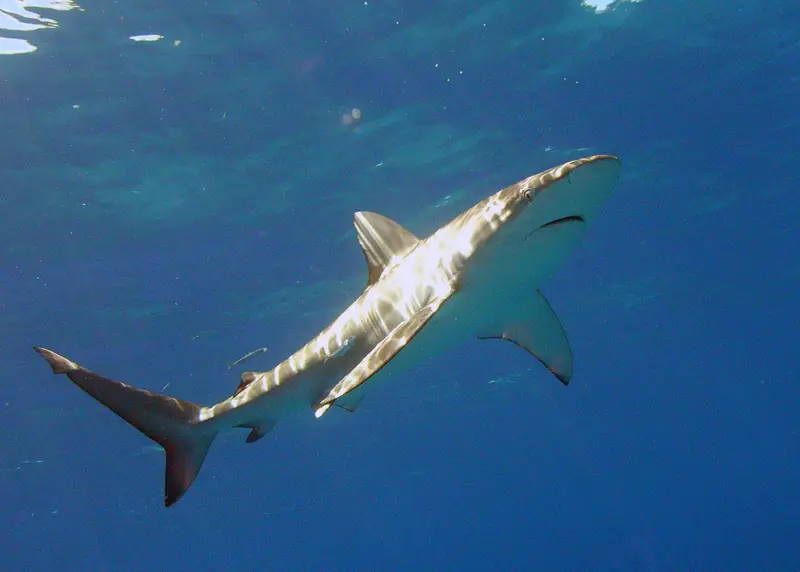
Galapagos sharks have a gray-brown upper body and lighter underside, with fin and body proportions that help distinguish them from similar sharks. A brief surface view may not reveal those traits. Use the complete animal and a reliable reference rather than naming every large gray shark from memory. [1]
Hawaiʻi DLNR describes this species as especially associated with the Northwestern Hawaiian Islands. A photograph taken around a remote island is not proof of a routine encounter near Kihei or Molokini. Captions should retain the actual source location whenever known. [1]
These sharks use marine habitats around oceanic islands and feed on animal prey such as fish and cephalopods. Their feeding role differs from plankton-filtering whale sharks and manta rays. A shared shark label does not imply identical behavior. [1]
This profile helps you recognize the Galapagos shark as part of Hawaiʻi’s ocean wildlife. Choose an MSC tour for its listed itinerary, duration and participation requirements. These departures do not include travel to the Northwestern Hawaiian Islands or a baited shark encounter, and wildlife sightings are not guaranteed.
A wide photograph and careful notes can support later identification. There is no need to approach an animal simply to prove its species. Keep wildlife movement unobstructed and follow the crew. The related profiles provide comparisons, not instructions for independently finding sharks.
No. It occurs in other areas, including Hawaiʻi.
This is a wildlife reference guide; a Galapagos shark sighting is not part of a guaranteed tour itinerary.
Often not. Several body features and context are needed.
Research sources checked November 16, 2026. Wildlife timing, appearance and sightings vary. This guide is not a live sighting report.
Ocean adventures from Kihei, Maui
Snorkeling · Molokini · Whale Watching · Sunset Cruises
© Maui Snorkel Charters. Routes and wildlife encounters vary with ocean conditions.
We use necessary cookies to run this site and provide the services you request. With your permission, we also use statistics cookies to understand visits and optional services such as maps and videos. You can accept, reject optional cookies, or change your choices at any time.