
Every winter, humpback whales migrate thousands of miles to Maui’s warm waters, creating one of the world’s most spectacular natural events. Between January and March, these magnificent creatures fill our channels, and whale watching tours in Maui, Hawaii become the ultimate ocean adventure.
At Maui Snorkel Charters, we’ve guided thousands of visitors through these unforgettable encounters. This guide walks you through everything you need to know to book the perfect tour and witness these gentle giants up close.
When to Book Your Whale Watching Tour
January through March stands as the unquestionable prime window for whale watching on Maui, with January marking absolute peak season when humpback whales reach maximum numbers in our waters. February shifts focus to calving season, where mothers with newborn calves stay close to shore, creating opportunities to witness calves practicing breaches alongside their mothers near Wailea, Kaʻanapali, and early-morning sessions in Maʻalaea Bay. March delivers what many consider whale watching gold-consistent sightings combined with stable weather that lets you pair ocean time with hiking or snorkeling without compromise. After mid-April, migration accelerates northward to Alaska, and sightings drop sharply, making early booking non-negotiable if you want reliable encounters. The shoulder months of December and early May still offer whale activity, but you’re gambling with fewer animals and less predictable conditions.
Booking at least 4–6 weeks ahead during January through March secures your spot on quality operators, especially if you’re planning multiple activities or traveling with a group.
Timing Your Tour for Maximum Impact
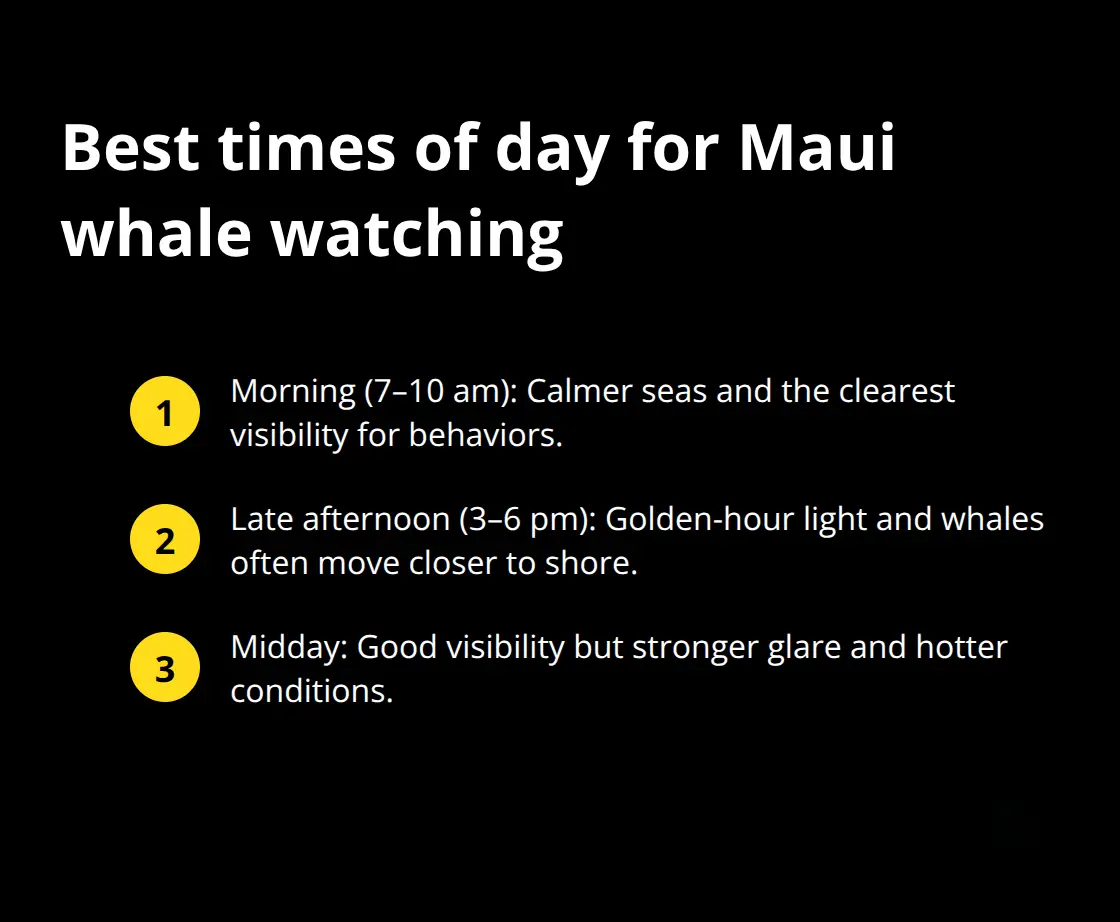
Morning departures between 7 and 10 am deliver calm seas and superior visibility-your best shot at spotting the blow and watching sustained behaviors like tail slaps and breaches. Late afternoon trips from 3 to 6 pm bring magical golden-hour lighting and sometimes renewed whale activity as animals move closer to shore. Midday sailing offers strong visibility but can mean intense glare and hotter conditions on the water.
The McGregor Point Lookout between Lahaina and Maalaea operates a free information station staffed by the Pacific Whale Foundation from 8:00 AM to 2:00 PM during whale season, where you can check real-time conditions and recent sighting reports before committing to a tour. Whales surface roughly every 10–15 minutes, so patience during any tour pays dividends.
Avoiding Crowds and Choosing Your Departure
Avoid peak tourist Saturdays and Sundays if crowds frustrate you; weekday departures deliver smaller groups and more relaxed boat dynamics. Wind patterns shift dramatically across Maui’s coast, so Lahaina-based tours typically experience calmer conditions than Maalaea departures, which face stronger trades and choppier seas. Your choice of departure location and day directly shapes your comfort and viewing quality on the water.
What Happens on a Maui Whale Watching Tour
Humpback whales dominate Maui’s winter waters, and you’ll encounter them in their natural state-unpredictable, powerful, and absolutely mesmerizing. These animals weigh up to 40 tons and can breach completely out of the water, creating moments that last only seconds but feel timeless. You won’t see other whale species reliably during peak season; December through March is considered whale season, with February as the peak. Most tours last between two and three hours on the water, though some operators compress the experience into 90 minutes while others stretch it to four hours depending on departure location and sea conditions.
Choosing Your Boat Type
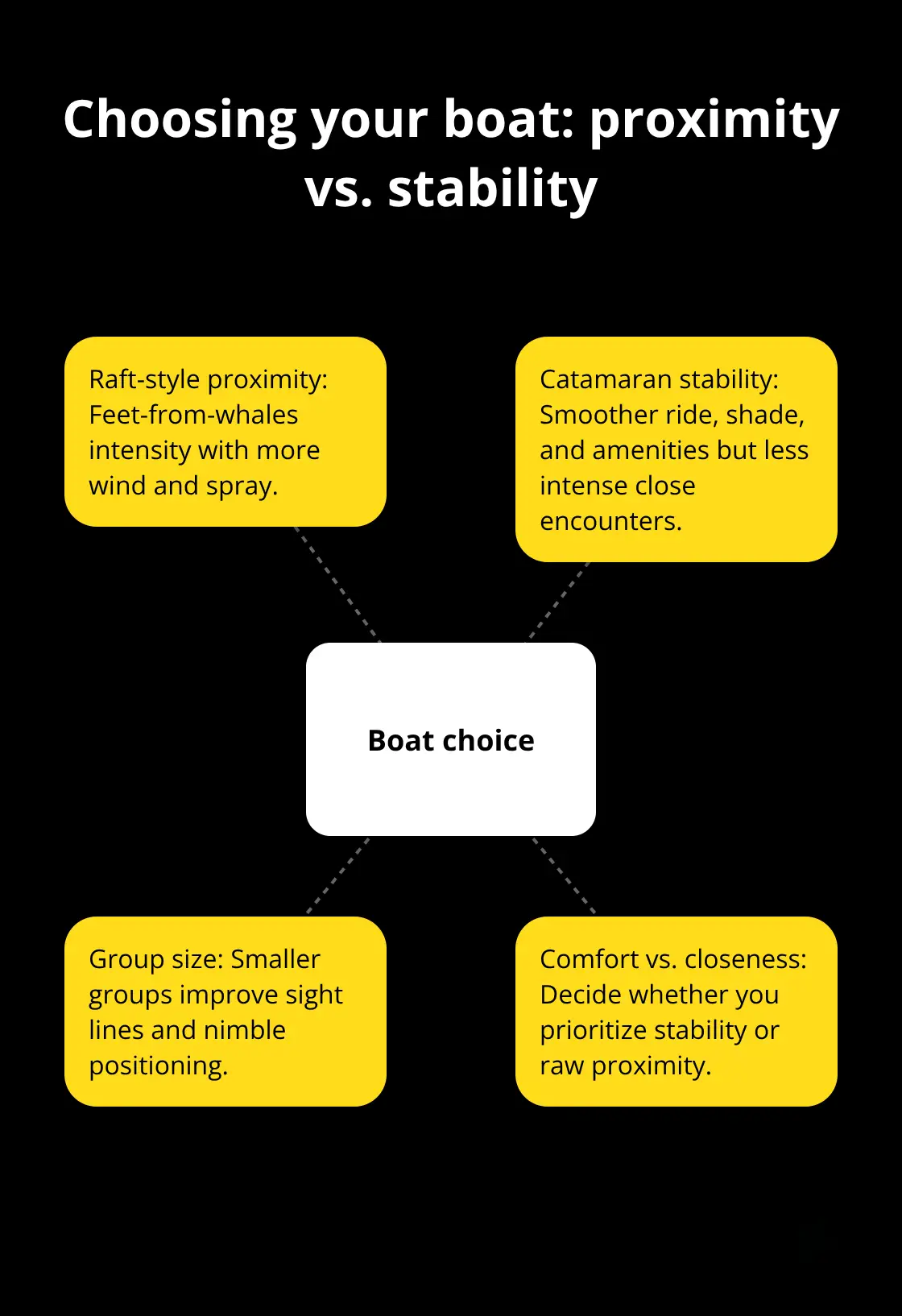
Raft-style boats like the 50-foot vessels used by premium operators deliver the most dramatic proximity-when a whale surfaces near you, you’re talking feet away, not hundreds of yards. Larger catamarans carrying 36 to 54 passengers provide more stability and shade but sacrifice the intensity of close encounters. Smaller groups fundamentally change the experience; maximum group sizes keep boats nimble and let everyone actually see what’s happening instead of craning over shoulders. The boat you select shapes whether you prioritize comfort or raw proximity to these magnificent animals.
Dress for Ocean Conditions
What you wear matters more than most people realize. Reef-safe sunscreen with mineral UV-blocking ingredients protects both your skin and the marine environment-regular sunscreen damages coral and harms fish, so this isn’t optional. A long-sleeved UV shirt prevents brutal sunburn when you’re exposed for hours, especially if spray soaks you. Polarized sunglasses cut glare dramatically and let you spot whale blows from farther away; regular sunglasses fail here. Ocean wind cools you fast, so bring a lightweight jacket or hoodie and layer your clothing. A brimmed hat with a chin strap stays on your head in wind gusts. Wear tennis shoes or sandals you don’t mind getting wet-some boats require removing footwear, and spray happens. Leave expensive cameras and phones at your hotel unless they’re in waterproof cases; a GoPro or action camera inside a dry bag solves this without adding stress.
Understand Marine Protection Laws
Hawaii law requires boats to maintain at least 100 yards from whales, though whales often approach closer on their own. When they do, the captain must hold position and let the animal move away at its own pace. This regulation exists to protect the whales, and you benefit because it means responsible operators prioritize marine safety over aggressive pursuit. Captains who respect these boundaries demonstrate genuine commitment to whale welfare.
Experience Whale Behavior and Songs
The real magic happens when the captain lowers a hydrophone-an underwater microphone that broadcasts male whale songs through the boat’s speakers. You’ll hear haunting, complex vocalizations that male humpbacks produce during breeding season, a sensory experience that photographs cannot capture. These songs change yearly, and scientists still don’t fully understand their purpose, but hearing them live transforms your understanding of whale intelligence. Tail slaps, breaches, and spy hops occur regularly during peak season, each behavior revealing something about whale communication and social dynamics. Breaches happen when whales launch their entire body out of the water, and February brings the highest frequency because calves practice this behavior near their mothers. Spy hops occur when a whale positions itself vertically to look above the surface-they’re genuinely curious about boats and people. Tour naturalists aboard quality operators decode these behaviors in real time, explaining what you’re watching rather than letting you guess. Understanding what you’re witnessing makes the difference between a pleasant boat ride and a transformative encounter with one of Earth’s most intelligent creatures.
Choosing the Right Whale Watching Operator
Your whale watching experience hinges entirely on which operator you select, and the differences between tour companies are far more dramatic than most visitors realize. Raft-style boats deliver unmatched proximity-when a whale surfaces near you, you experience it within feet rather than watching from a distance-but they demand physical tolerance for wind and spray, making them unsuitable for anyone with back problems or children under six years old. Larger catamarans carrying 36 to 54 passengers provide stability, shade, and amenities like restrooms and breakfast service, but they sacrifice the intensity of close encounters and often feel crowded when whales appear. The fundamental choice isn’t comfort versus adventure; it’s whether you prioritize proximity or stability.
Top-Performing Raft and Small-Group Operators
Captain Steve’s Early Bird option stands out as a top-performing raft tour because they include hydrophones, operate a 50-foot vessel (the largest raft in Hawaii), maintain a 20-plus-year track record, and guarantee whale sightings during season or your money back. Hawaii Ocean Rafting limits groups to 14 passengers maximum and runs 2-hour tours from Lahaina with hydrophones included, though they restrict participation for pregnant travelers and children under six. These operators prioritize proximity and personal space over volume.
Mid-Size and Larger Catamaran Options
Trilogy operates from three separate locations (Maalaea, Lahaina, and Kaʻanapali) with boats ranging from 36 to 54 passengers, hydrophones on every departure, and naturalists aboard to interpret behavior. Pacific Whale Foundation offers guaranteed whale sightings on select Lahaina and Maalaea departures during season, holds an A rating from the Hawaii BBB, and combines tours with specialty experiences like their Whale Song Full Moon Cruise featuring an astronomer discussing space and lunar science. Teralani departing from Kaʻanapali provides 2-hour morning whale watches with naturalist narration, hydrophones, continental breakfast, and guaranteed whale sightings January through March. Aloha Blue Charters runs a 30-passenger catamaran with a naturalist aboard from Maalaea Harbor and maintains an A rating from the Hawaii BBB.
What Separates Quality Operators from the Rest
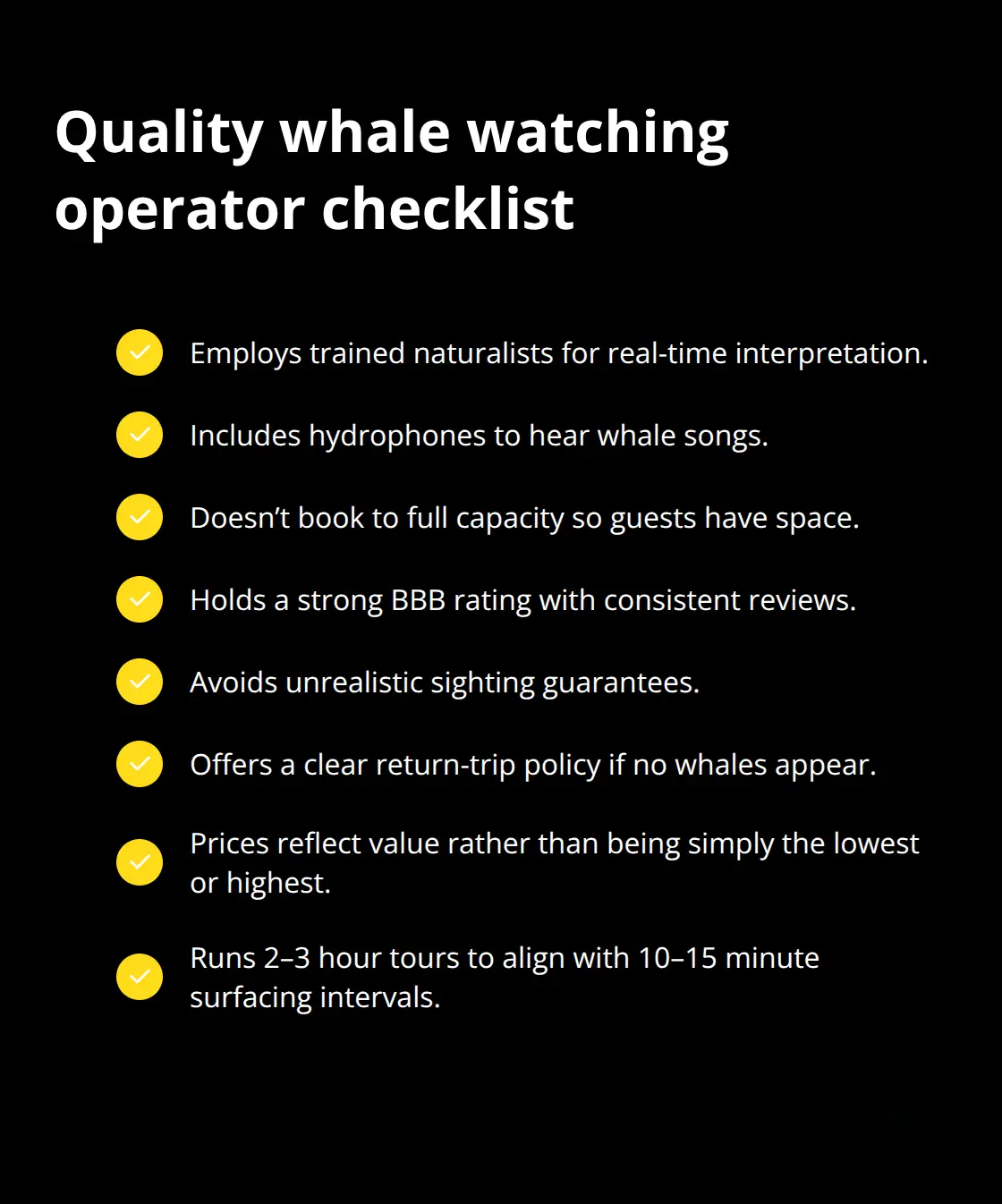
Quality operators share specific traits that separate them from mediocre competitors: they employ trained naturalists who decode whale behavior in real time rather than letting you guess what you’re watching, they include hydrophones so you hear whale songs, they don’t book to capacity which means you actually have space to move and view, and they maintain excellent BBB ratings because they deliver consistent experiences. Avoid operators who make guarantees they can’t keep-no honest tour operator can guarantee whale sightings because whales are wild animals, except for the specific Pacific Whale Foundation departures that explicitly offer free return trips if no whales appear. Pricing ranges wildly from budget raft tours around $99 to premium experiences exceeding $200, but the lowest price doesn’t indicate quality and the highest price doesn’t guarantee better whales.
How to Evaluate and Book Your Tour
Evaluate operators by checking BBB ratings, reading recent reviews on independent platforms, confirming they employ naturalists, and verifying whether they include hydrophones because these features directly impact what you’ll learn and experience. Tours departing from Lahaina consistently report calmer seas than Maalaea departures, which face stronger trade winds and choppier conditions. Book at least four to six weeks ahead during January through March because quality operators fill quickly, and last-minute slots often go to less experienced companies or less desirable departure times. Tours running 2 to 3 hours on the water deliver better value than 90-minute compressed experiences because whales surface every 10 to 15 minutes, meaning longer trips statistically increase your chances of multiple sightings and sustained behavior observation.
Final Thoughts
Maui stands alone as the world’s premier whale watching destination because warm, shallow waters, calm channels, and massive humpback populations converge here every winter. Between January and March, you won’t just hope to see whales-you’ll enter an environment where encounters happen regularly and behaviors like breaches, tail slaps, and calf interactions unfold before your eyes. The whales select Maui’s waters for breeding and calving, which means you witness one of nature’s most vital life events rather than observe animals passing through.
Your perfect whale watching experience starts with honest self-assessment about what matters most to you. If proximity and intensity drive your choice, raft-style tours deliver unmatched closeness and the sensory power of hearing whale songs through hydrophones. If stability, comfort, and amenities matter more, larger catamarans with naturalists aboard provide excellent viewing without physical demands. Book four to six weeks ahead during peak season, select a Lahaina departure for calmer seas, and pick an operator with BBB ratings, trained naturalists, and hydrophones included-these details transform ordinary boat rides into unforgettable encounters.
We at Maui Snorkel Charters offer whale watching tours in Maui Hawaii during winter season alongside our year-round snorkel adventures to Molokini Crater and Turtle Town. Our small-group approach means you experience genuine attention and flexibility rather than feel like a number on a crowded vessel. The moment a whale surfaces near your boat, the moment you hear their songs underwater, the moment you witness a calf practicing its first breach-these become the stories you tell for the rest of your life.
Call 808-270-8776