

WHALE SEASON BEGINS DEC 15 • EARLY BOOKING OPEN
Sharks & rays
Multiple species, including whitetip reef sharks
“Reef shark” is a group description, not one species. Hawaiian waters support sharks with different markings, habits and habitats. Start with the whitetip reef shark, then compare carefully rather than assigning a name from one fin tip or a distant silhouette.
Cartilaginous fishes
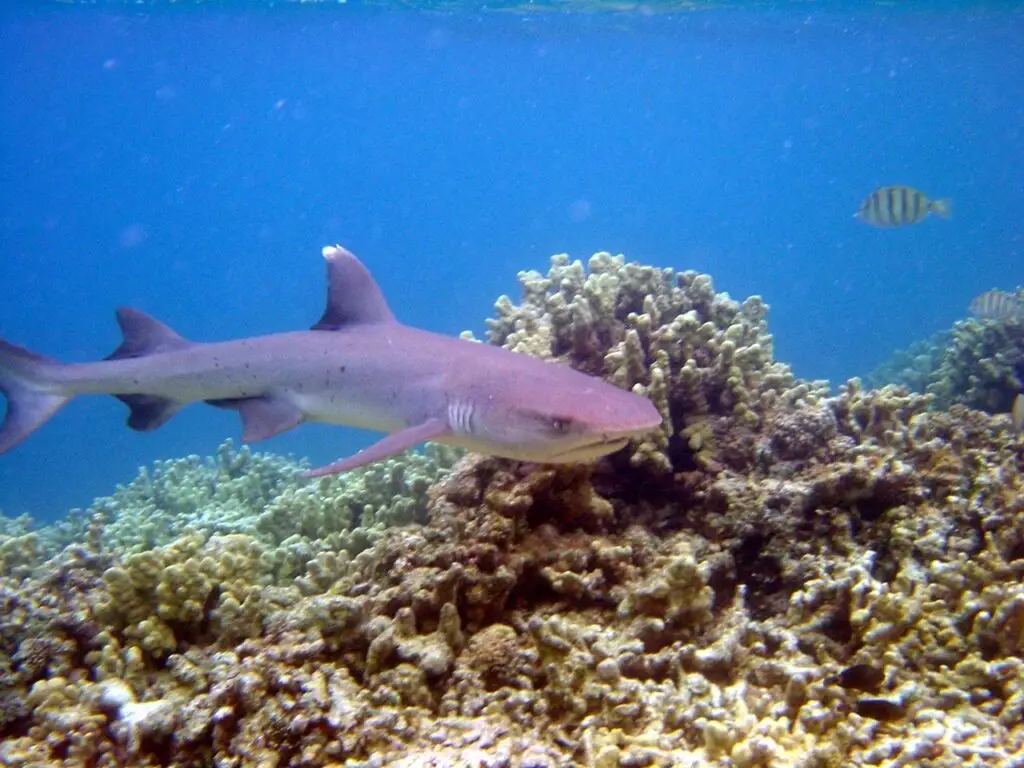
Whitetip reef shark
Triaenodon obesus
Wildlife observation, not feeding
Whitetip reef sharks have a slender body and pale tips on prominent fins. They may rest on the bottom or within reef shelter. The name should not be confused with oceanic whitetip shark, which is a different species with different habitat and appearance. [1]
Blacktip reef and gray reef sharks have different fin markings and body proportions. One dark tip or one passing shadow does not settle identification. Hawaiʻi DLNR’s illustrated guide lets visitors compare several features without pretending every gray shark is the same animal. [2]
Whitetip reef sharks eat marine prey such as fishes, octopuses and crustaceans. A resting shark remains wildlife; stillness is not permission to reach into its shelter. Leave caves and crevices undisturbed and let the animal move freely. [1]
Use this guide to recognize a shark if you observe one during a snorkeling trip. MSC does not guarantee shark sightings or offer a baited encounter. Stay with the group and follow the crew’s briefing and directions; the guide is background information, not a current safety assessment.
Was the shark resting or traveling? Were multiple fins visible? Did the full head and tail appear in a photograph? Those observations support a useful discussion. Compare with the separate tiger and Galapagos profiles rather than applying facts from one shark to another.
No. Several shark species use reef habitats.
No. Keep your distance and never reach into wildlife shelter.
No. Animal information does not change the tour’s promised activities.
Research sources checked November 16, 2026. Wildlife timing, appearance and sightings vary. This guide is not a live sighting report.
Ocean adventures from Kihei, Maui
Snorkeling · Molokini · Whale Watching · Sunset Cruises
© Maui Snorkel Charters. Routes and wildlife encounters vary with ocean conditions.
We use necessary cookies to run this site and provide the services you request. With your permission, we also use statistics cookies to understand visits and optional services such as maps and videos. You can accept, reject optional cookies, or change your choices at any time.