

WHALE SEASON BEGINS DEC 15 • EARLY BOOKING OPEN
Reef invertebrates
Panulirus marginatus; Panulirus penicillatus and other spiny lobsters · ʻUla
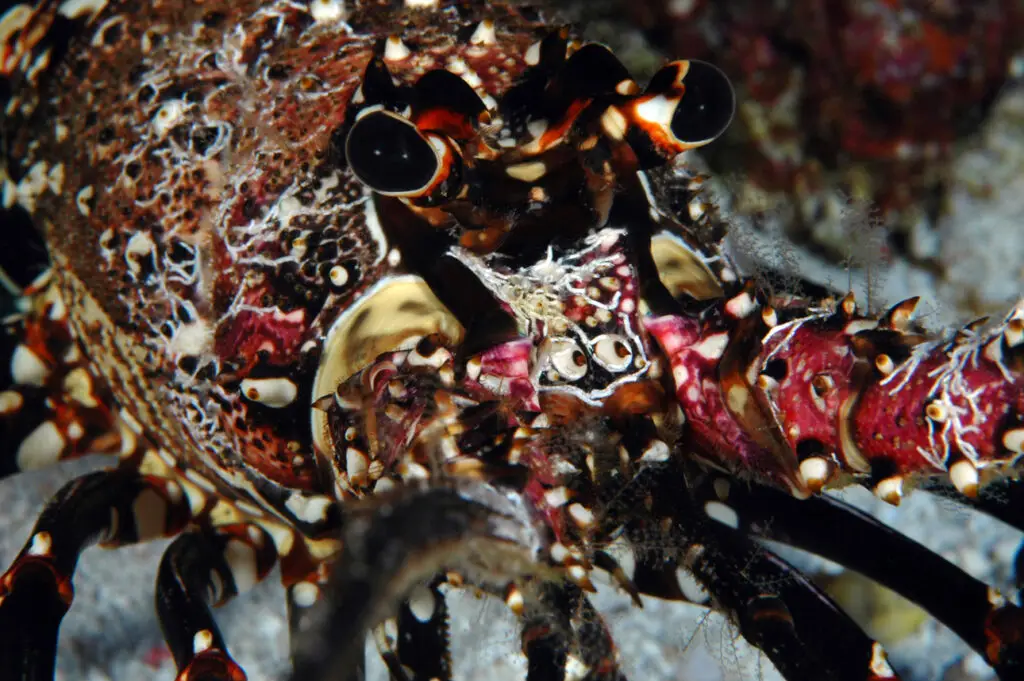
Long antennae extending from a reef ledge may reveal a spiny lobster before the body is visible. Hawaiian lobsters are crustaceans with armor-like outer skeletons and an important role as predators and scavengers. “Giant spiny lobster” is not a precise species identification.
Crustaceans
Spiny exoskeleton
Ledges and crevices
Often more active at night
Spiny lobsters lack the large front claws associated with Maine lobsters. Long antennae, body spines and retreating into reef shelter are important defenses. Tail muscles can power a quick backward escape. [1]
The external skeleton must be shed as the animal grows. After molting, the new covering is soft, making shelter particularly important. A lobster hidden deep in a crevice should not be pulled out for a closer look. [1]
Hawaiian spiny lobsters forage at night and help process animal material in the reef community. Females carry eggs beneath the abdomen, and the young pass through a planktonic larval stage. This life history is more useful than treating the animal only as a seafood item. [1]
Keep hands out of holes and leave wildlife in place. This library is for observation, not harvesting instructions. Fishing rules and protected-area restrictions require separate current checks; a snorkeling tour does not grant permission to collect a lobster.
The lobster may be sheltering under a ledge or within a crevice.
No. Size alone does not determine its identity.
This guide does not offer collecting or fishing as part of a snorkeling booking.
Research sources checked November 16, 2026. Wildlife timing, appearance and sightings vary. This guide is not a live sighting report.
Ocean adventures from Kihei, Maui
Snorkeling · Molokini · Whale Watching · Sunset Cruises
© Maui Snorkel Charters. Routes and wildlife encounters vary with ocean conditions.
We use necessary cookies to run this site and provide the services you request. With your permission, we also use statistics cookies to understand visits and optional services such as maps and videos. You can accept, reject optional cookies, or change your choices at any time.