
WHALE SEASON BEGINS DEC 15 • EARLY BOOKING OPEN
Seabirds & island wildlife
Multiple species
Not every small seabird above Hawaiian water is a gull. Terns and noddies include pale and dark species with different appearances and nesting habits. This guide introduces black noddies and white terns as useful contrasts while keeping the distribution of each bird clear.
Seabirds
Black noddy / noio
White tern / manu-o-Kū
Bill, crown, tail and flight
Black noddies have dark plumage, a pale cap and a slender dark bill. They often fly low and forage nearshore, taking small fish at or near the surface. Their Hawaiian breeding range includes coastal cliffs and offshore islets; a sea cave used for nesting is not a place to intrude for photos. [1]
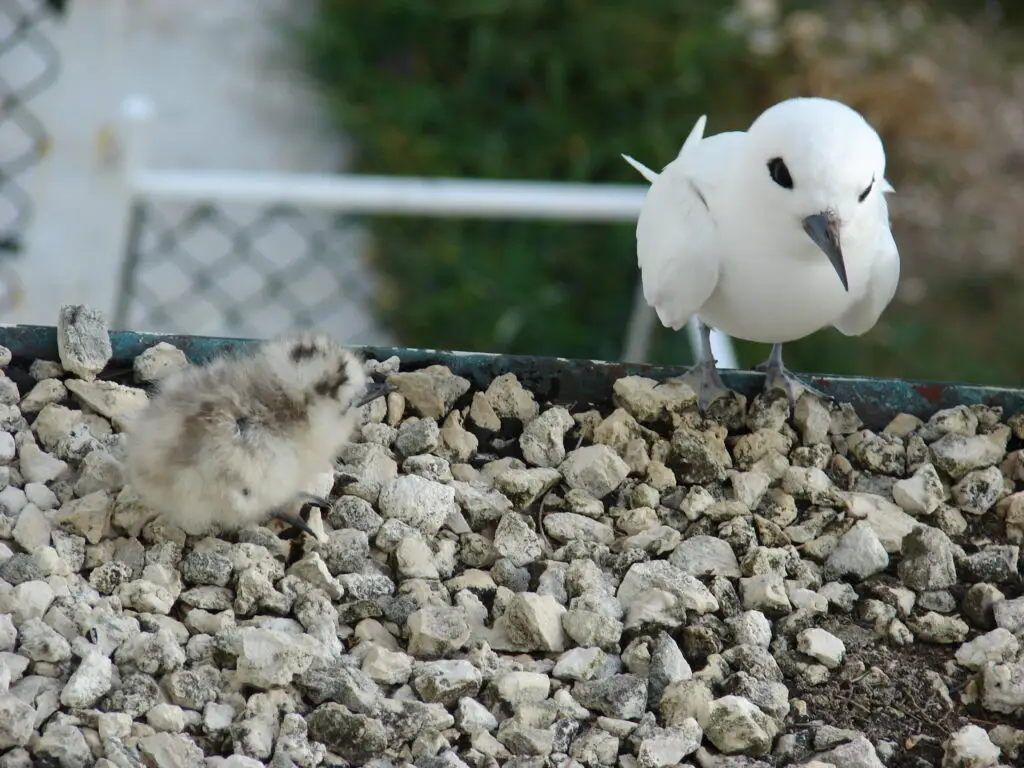
White terns have white plumage, dark eyes and a pointed bill. They do not build a conventional nest; a single egg can rest in a suitable depression on a branch or other support. Their breeding distribution in Hawaiʻi differs from the noddy’s, so this is not a claim that every species is common on Maui departures. [2]
A dark noddy and an all-white tern may share a general ocean setting but are not color variants of one species. Start with the whole bird and the location. Age, light and distance can complicate an identification, so avoid forcing a name onto a brief splash or one blurred frame.
Use a secure viewing position and leave birds to find their own food. Throwing food from the boat changes the encounter and can bring wildlife into conflict with vessels. Keep away from occupied nests and follow posted restrictions along shore viewpoints.
Compare a tern or noddy with the soaring ʻiwa and the plunge-diving boobies. These different hunting styles offer a simple way to understand the ecosystem beyond a list of names. The library links the species information without promising a bird on any particular tour.
No. The black noddy and white tern have different identification and nesting traits.
No. Range and habitat differ, and a Hawaiʻi-wide guide is not a Maui encounter checklist.
Do not handle wildlife. Follow official instructions if you believe a bird needs help.
Research sources checked November 16, 2026. Wildlife timing, appearance and sightings vary. This guide is not a live sighting report.
Ocean adventures from Kihei, Maui
Snorkeling · Molokini · Whale Watching · Sunset Cruises
© Maui Snorkel Charters. Routes and wildlife encounters vary with ocean conditions.
We use necessary cookies to run this site and provide the services you request. With your permission, we also use statistics cookies to understand visits and optional services such as maps and videos. You can accept, reject optional cookies, or change your choices at any time.